117. Durban Beach Bath
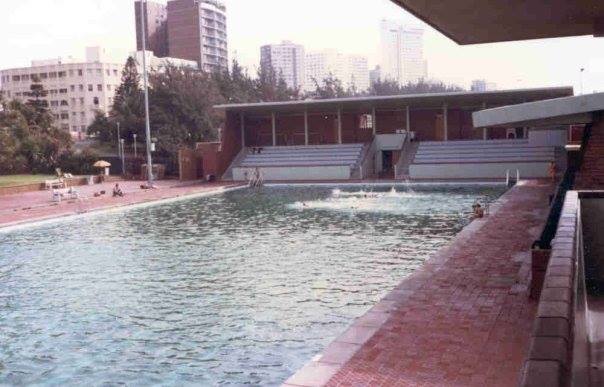
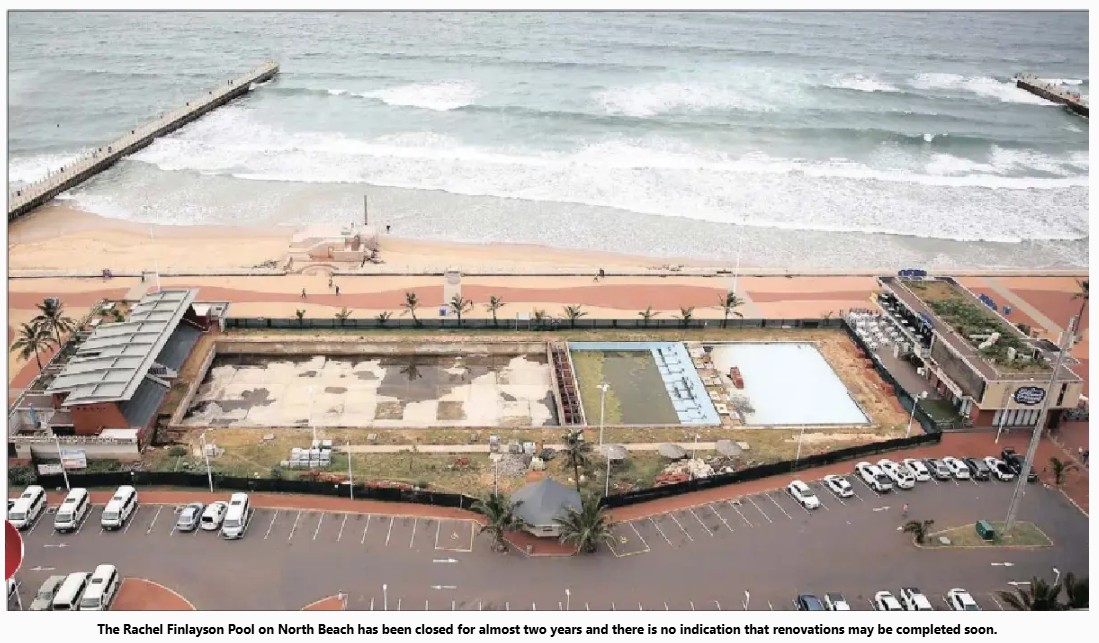
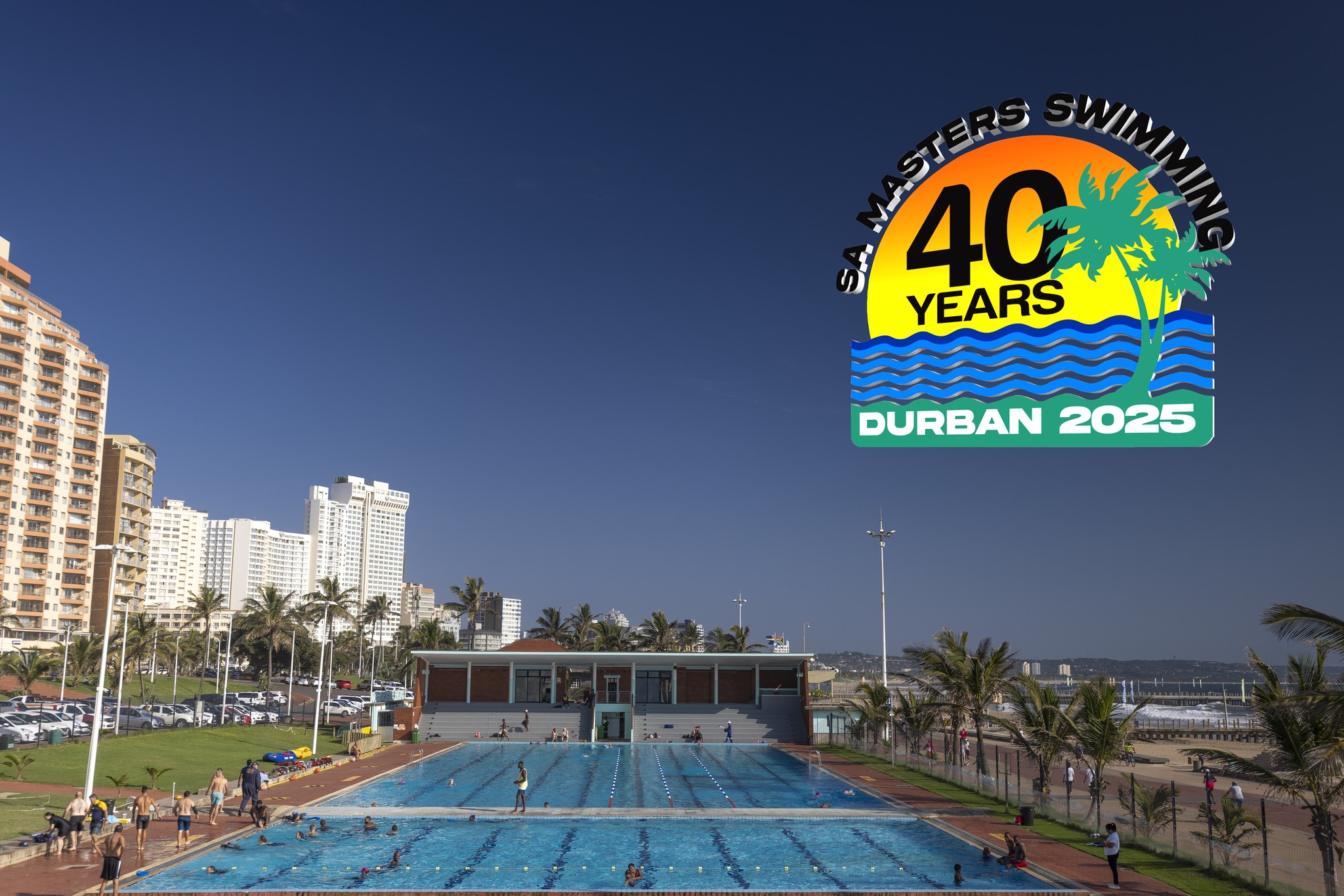
Renamed for famous local swimming coach Rachael Finlayson, the iconic Beach Bath was a 100-yard-long saltwater swimming. It was the venue for a number of world record swims by Karen Muir, Ann Fairlie, and Penny Heyns. Over the years, it has evolved into a freshwater pool.
118. Durban Swimming Enclosure
Tidal pools are built to provide a safe swimming space. Besides the dangers created by rip currents and waves, swimmers in the sea have always been exposed to the risk of shark attack. In Durban, the chosen solution was using nets to create a large enclosure in the surf where sharks could not enter. A similar solution was used in Portuguese Mozambique at the Polana Hotel →
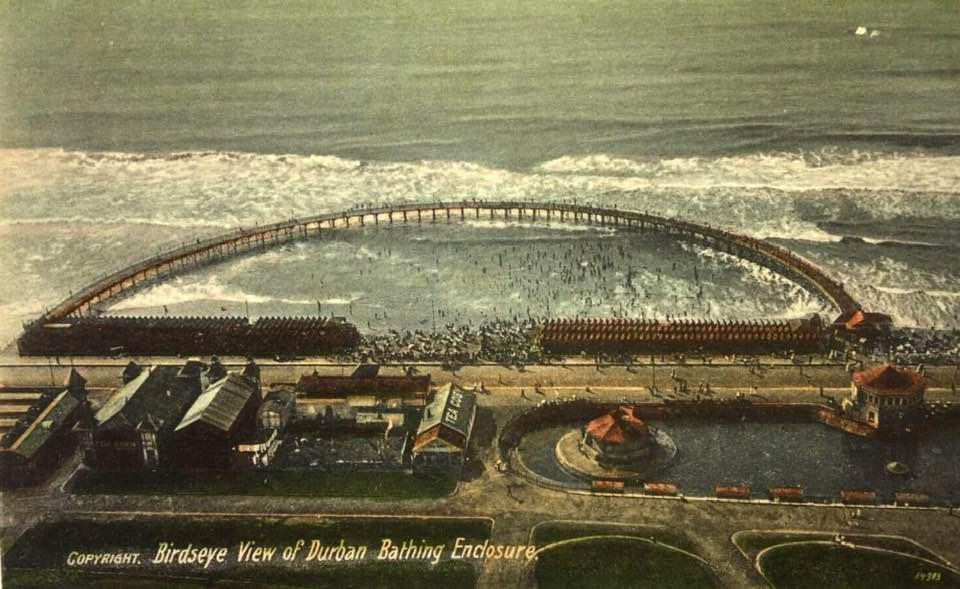
"In 1906 Fletcher proposed a high level esplanade stretching from Bell St (Point) through to a point near the Umgeni mouth (now Marine and Snell Parades), secondly a 1500 foot lower marine promenade, reclamation of the beaches and provision of bathing areas and public gardens. His plan included four enclosed bathing options, of which only one was adopted. This was a semi-circular steel netted enclosure combining a promenade and a safe bathing area. The enclosure was a safe guard against shark attacks and dangerous currents. As an interim measure public access to the beach was made by clearing an opening at the bottom of West St. The Ocean Beach project was commenced in 1907. The bathing enclosure had a radius of 300 feet and its depth was 6 to 8 feet at low spring tide. The project commenced with the installation of the bathing enclosure and levelling and developing that part of the lower esplanade roughly from the Model Dairy (now demolished) to South Beach. Paddling ponds and retaining walls and rockeries were also put in."
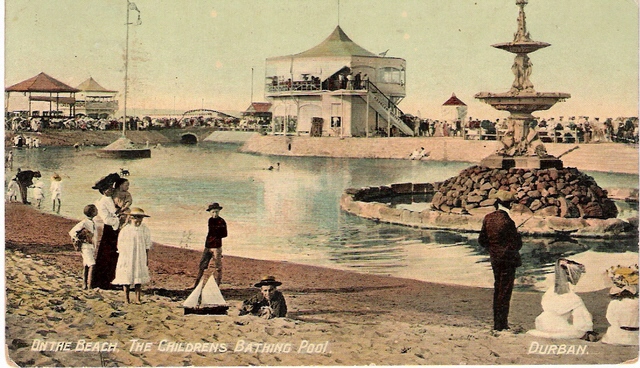
Whaling started off Durban about 1907, and that drew sharks into Durban Bay mouth where the whaling slipway was. Whaling boats dragging bleeding, harpooned whales from out at sea, sometimes two or three at a time, would surly have led sharks to the Durban beach area. But the reason for the enclosure was that Durban's "Main" beach was previously along the Esplanade in the harbour. It was closed in 1905 because of harbour development. The enclosure was eventually removed in 1928 after a particularly heavy storm and high seas
119. Umdloti Tidal Pool
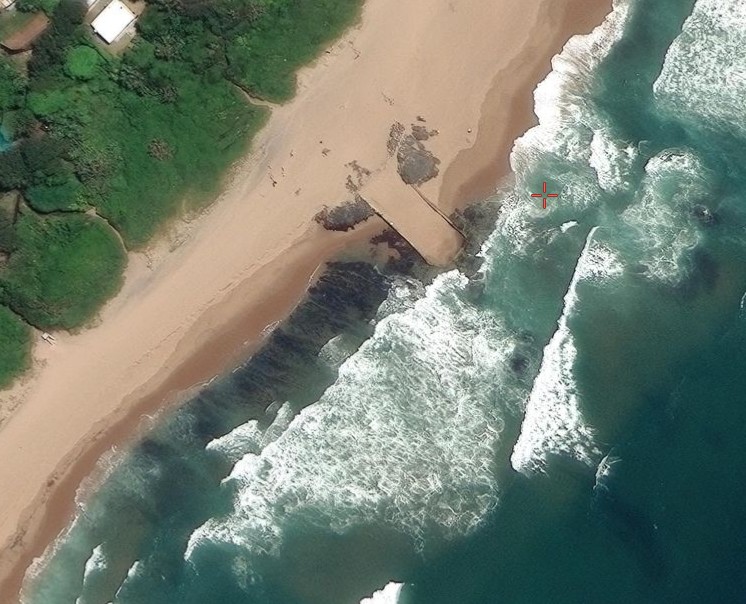
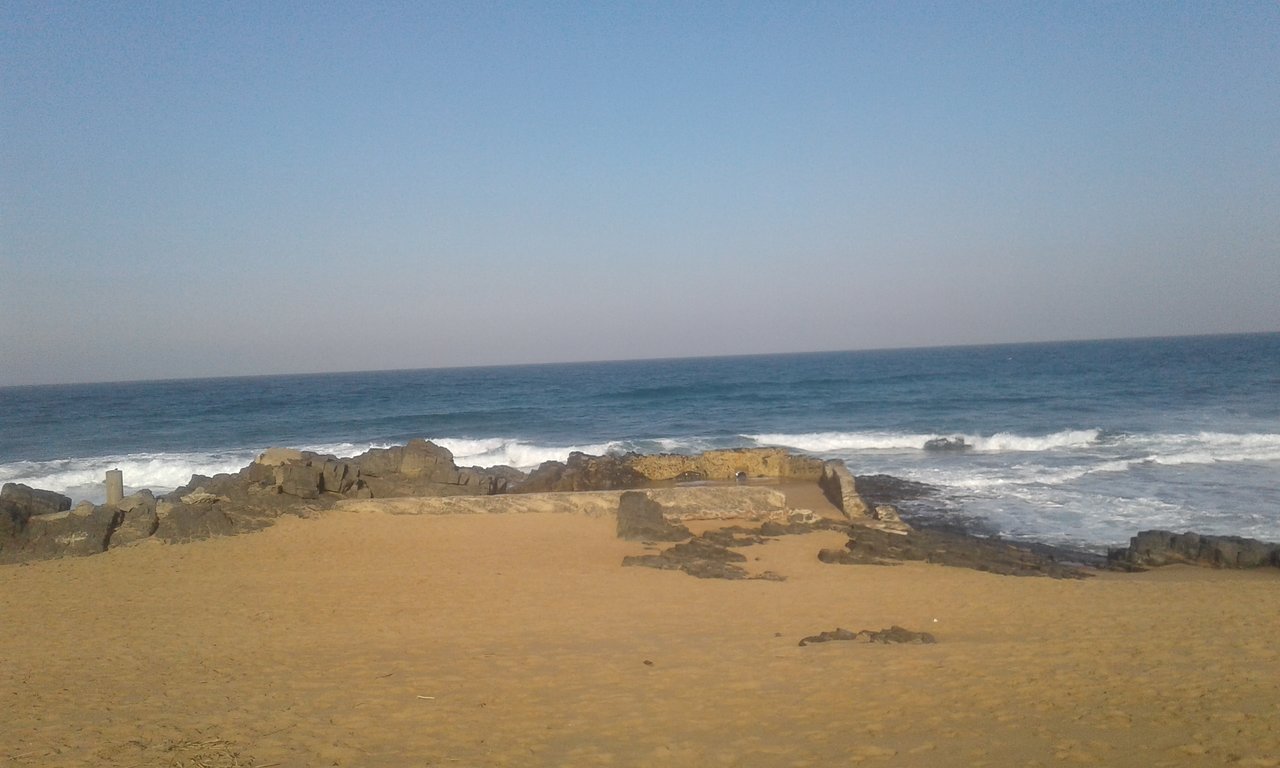
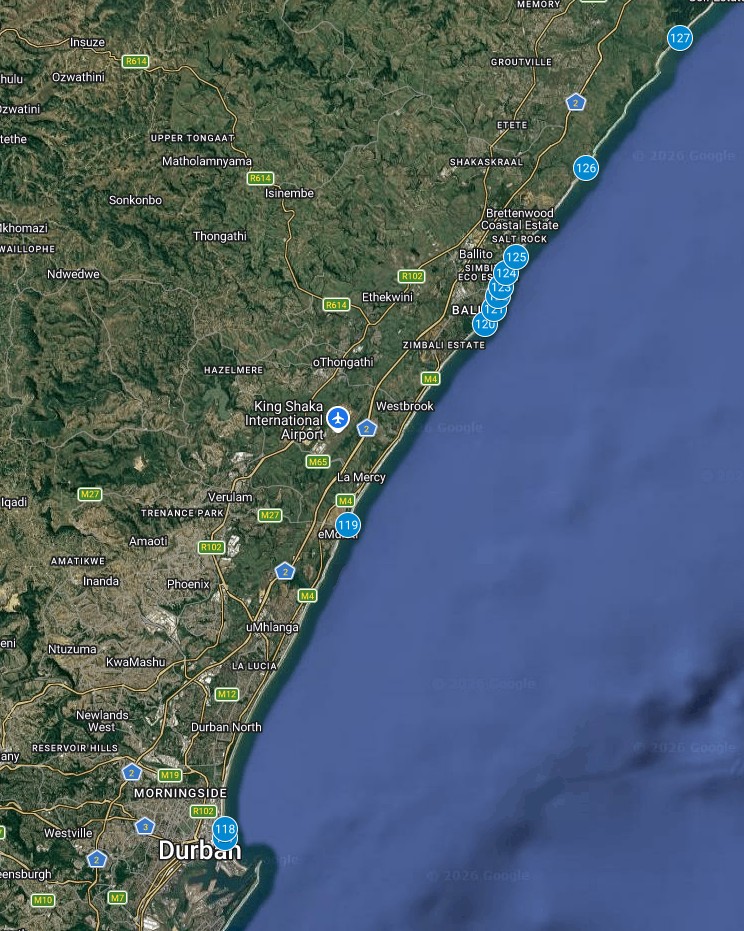
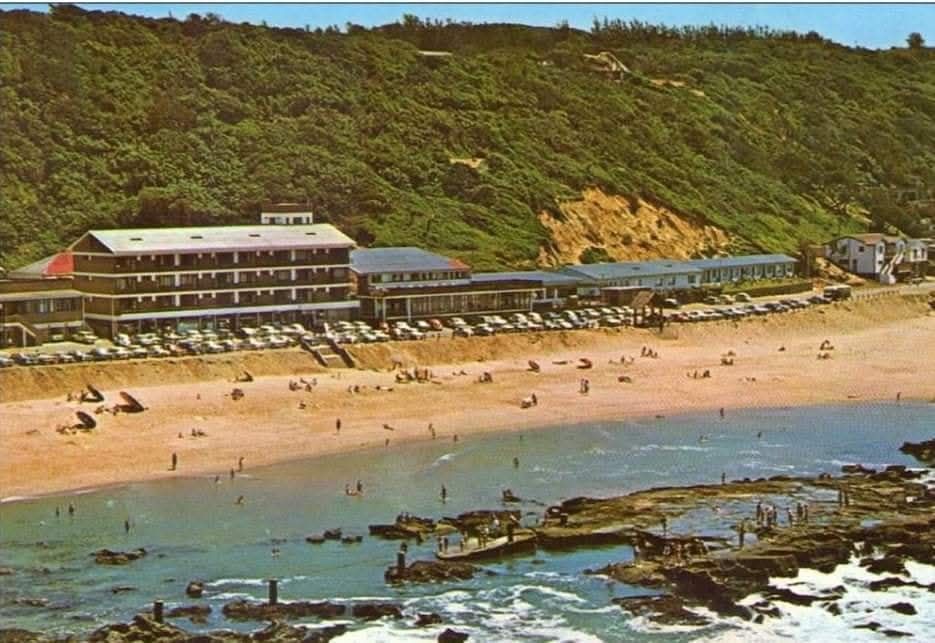
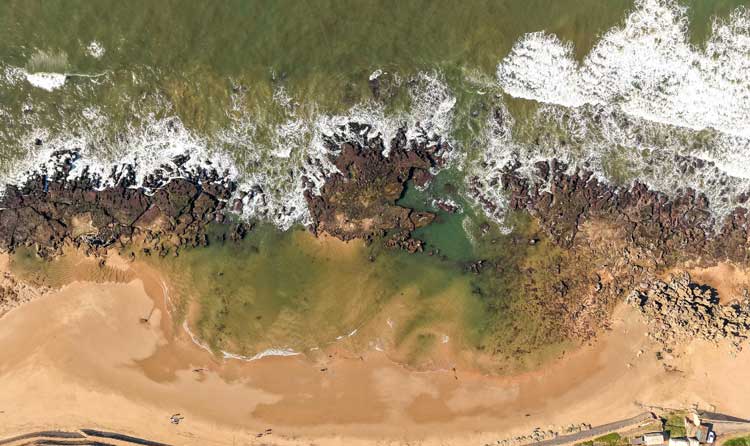
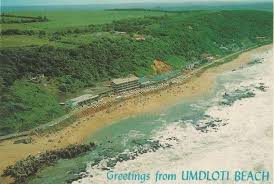
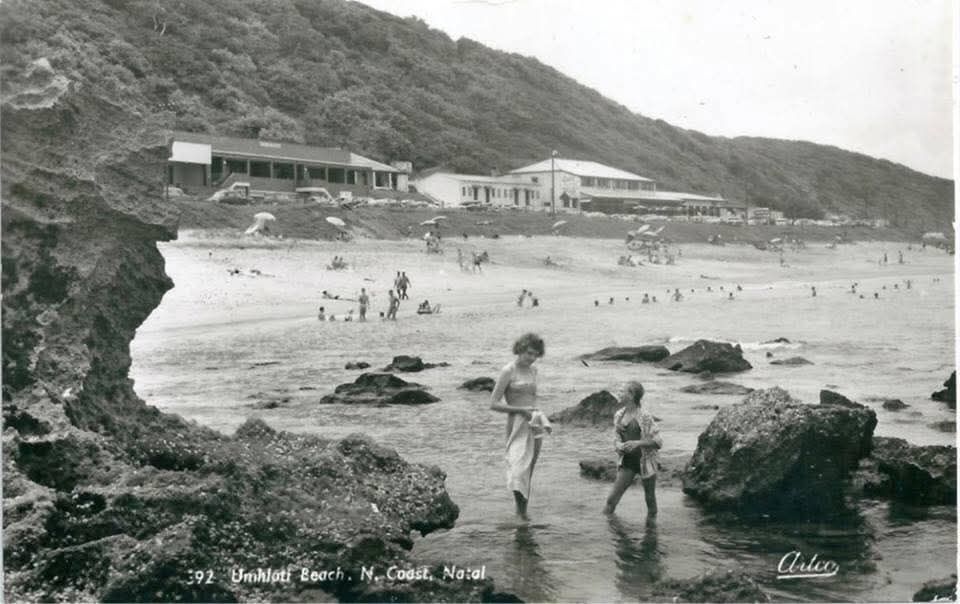
The first tidal pool along the Dolphin Coast lies some 27 km north of Durban at Umdloti. The tidal pool at Umdloti Beach opened in 1957. It was constructed as an artificial concrete seawall augmentation of the existing natural offshore rocky reef, helping to create a safe, protected swimming area for visitors.
The first 16 coastal holiday plots were created in 1895, and the township was established in 1932.
120 - 125 Balito
Balito was established in 1954, and by 1964, town planning incorporated residential zones, hotels, and a caravan park stretching from Willard Beach to Salmon Bay. There are six tidal pools along the coast in Ballito, which were described in a marketing brochure with the slogan "Buy, Build & Play at Ballito Bay, The Caribbean of the North Coast – Natal".
Shaka's Rock and Salt Rock are two smaller towns north of Balito that have grown and merged into the greater Balito township. Each has a tidal pool. Basil Hullett (grandson of sugar pioneer Liege Hulett) and Gwen Hulett developed Salt Rock in the 1930's.
North of Salt Rock are two more resort towns with tidal pools - Tinley Manor and Blythdale.
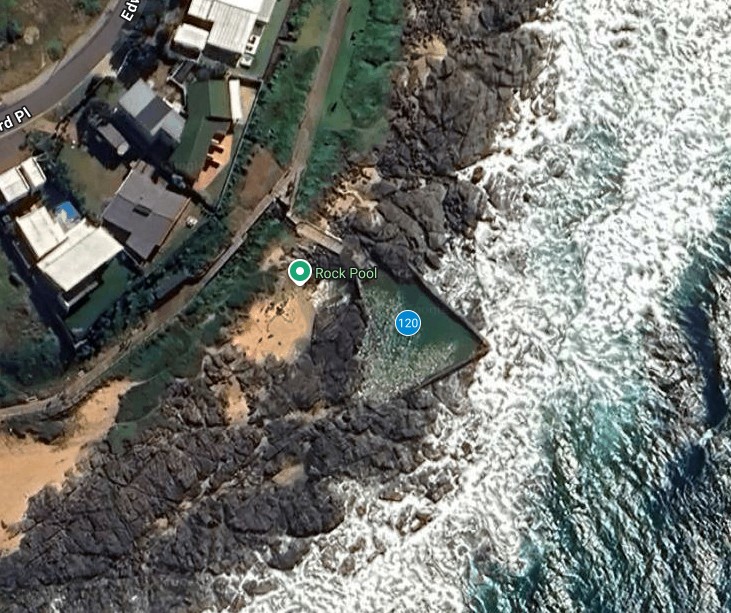
120. Rock Pool, Ballito
Rock Pool in Ballito.
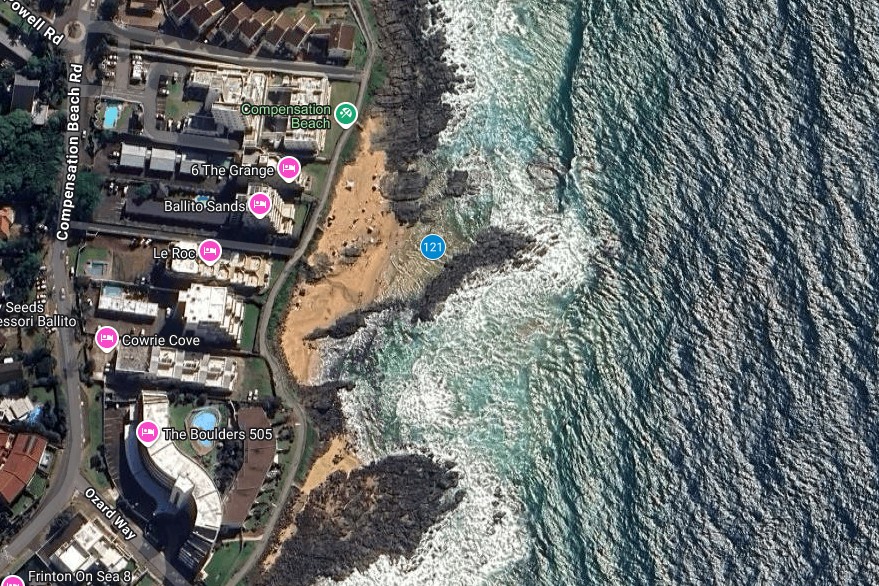
121. Granny's Pool, Ballito
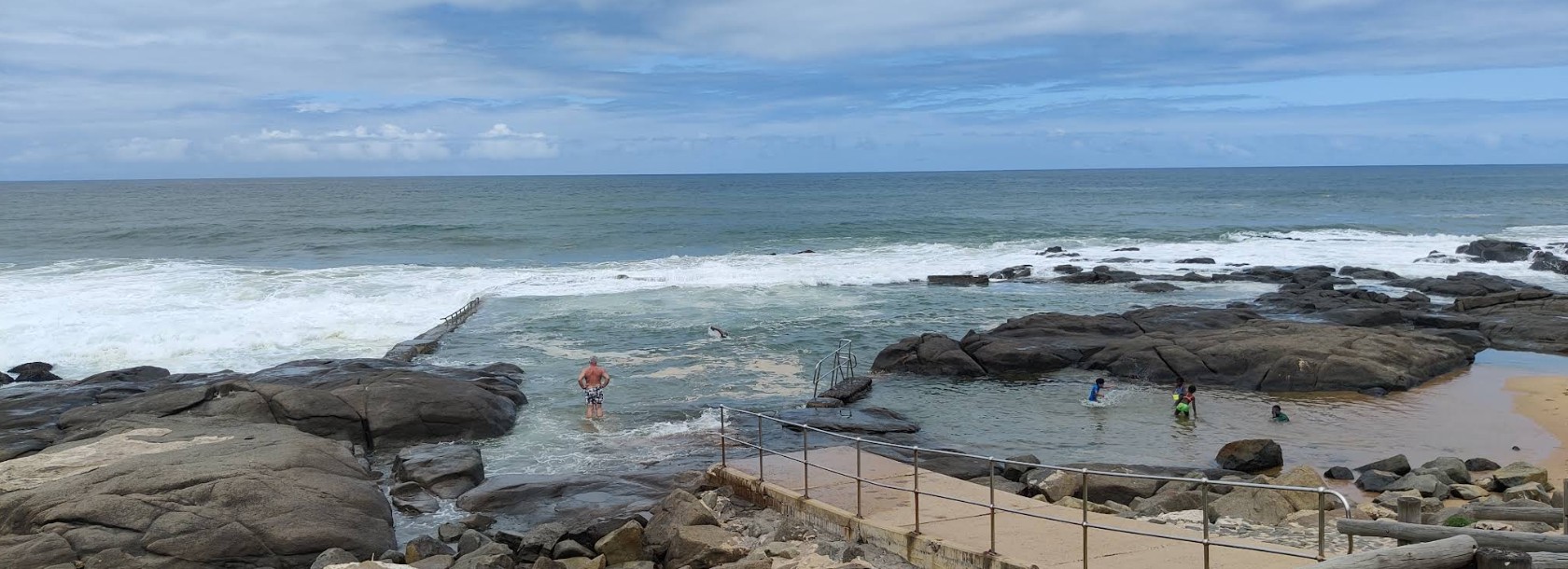
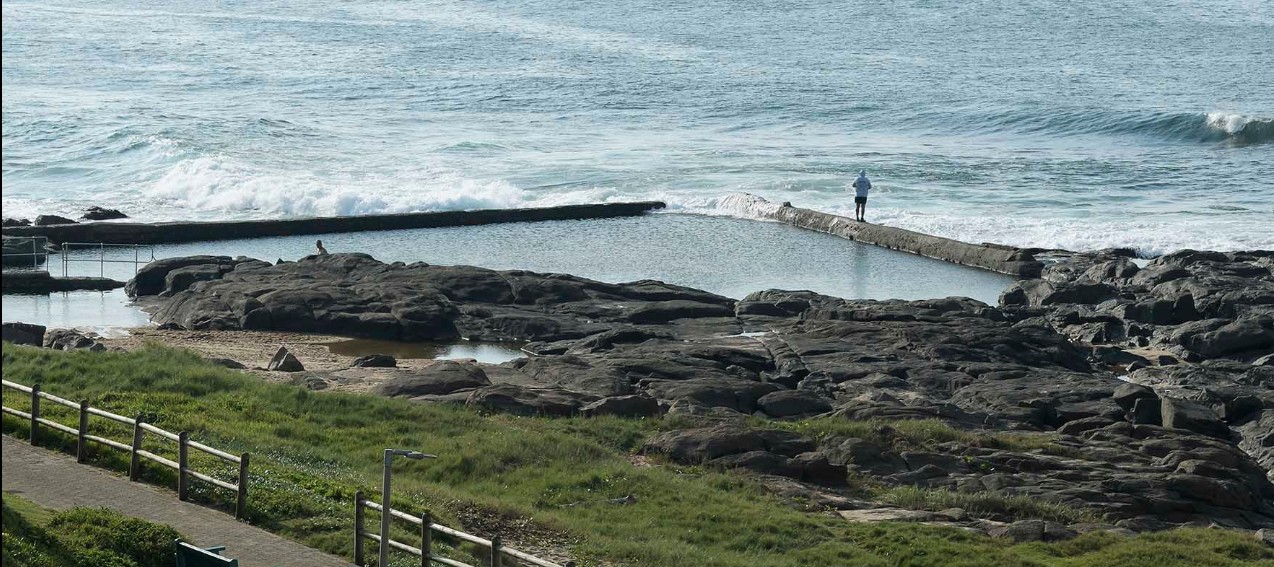
Granny's Tidal Pool is a safe, shallow, rock gulley. It forms a natural swimming pool protected from the waves. (note: some other local tidal pools are also sometimes online named as Granny's Pool - I'm sure the locals will know which is which)
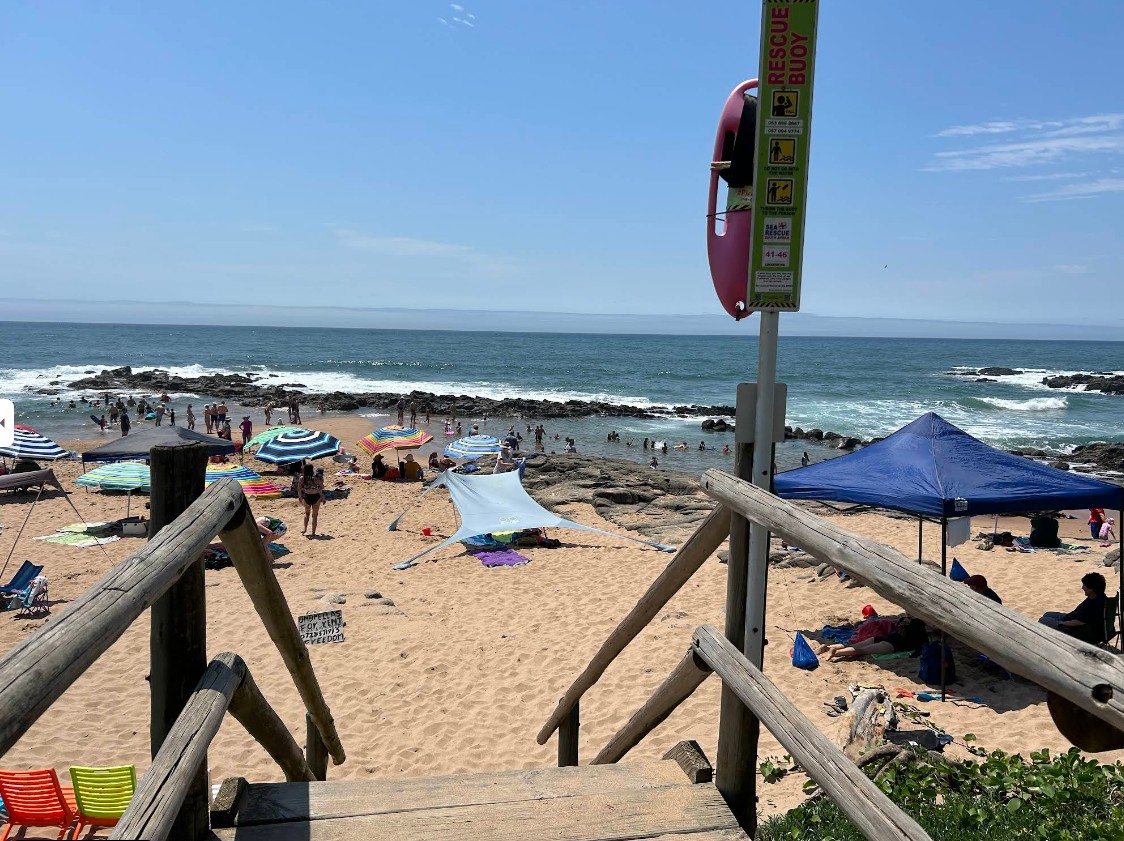
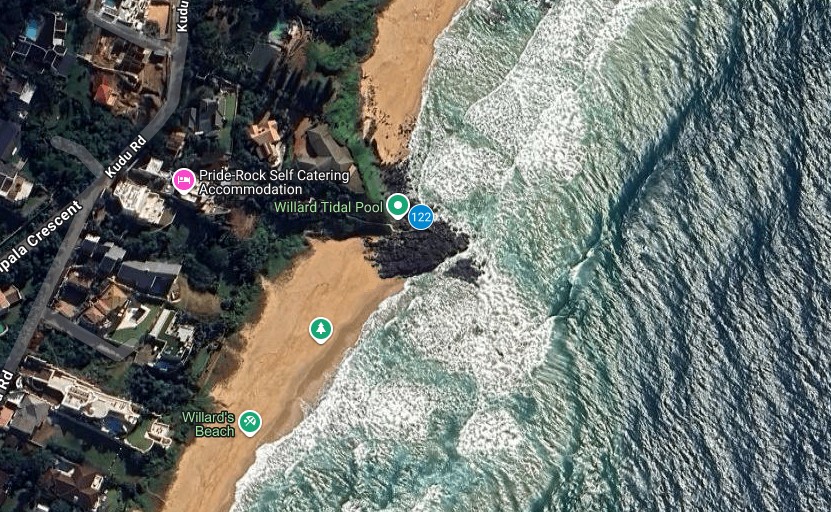
122. Willard Tidal Pool
A small tidal pool at the northern end of Willard Beach.
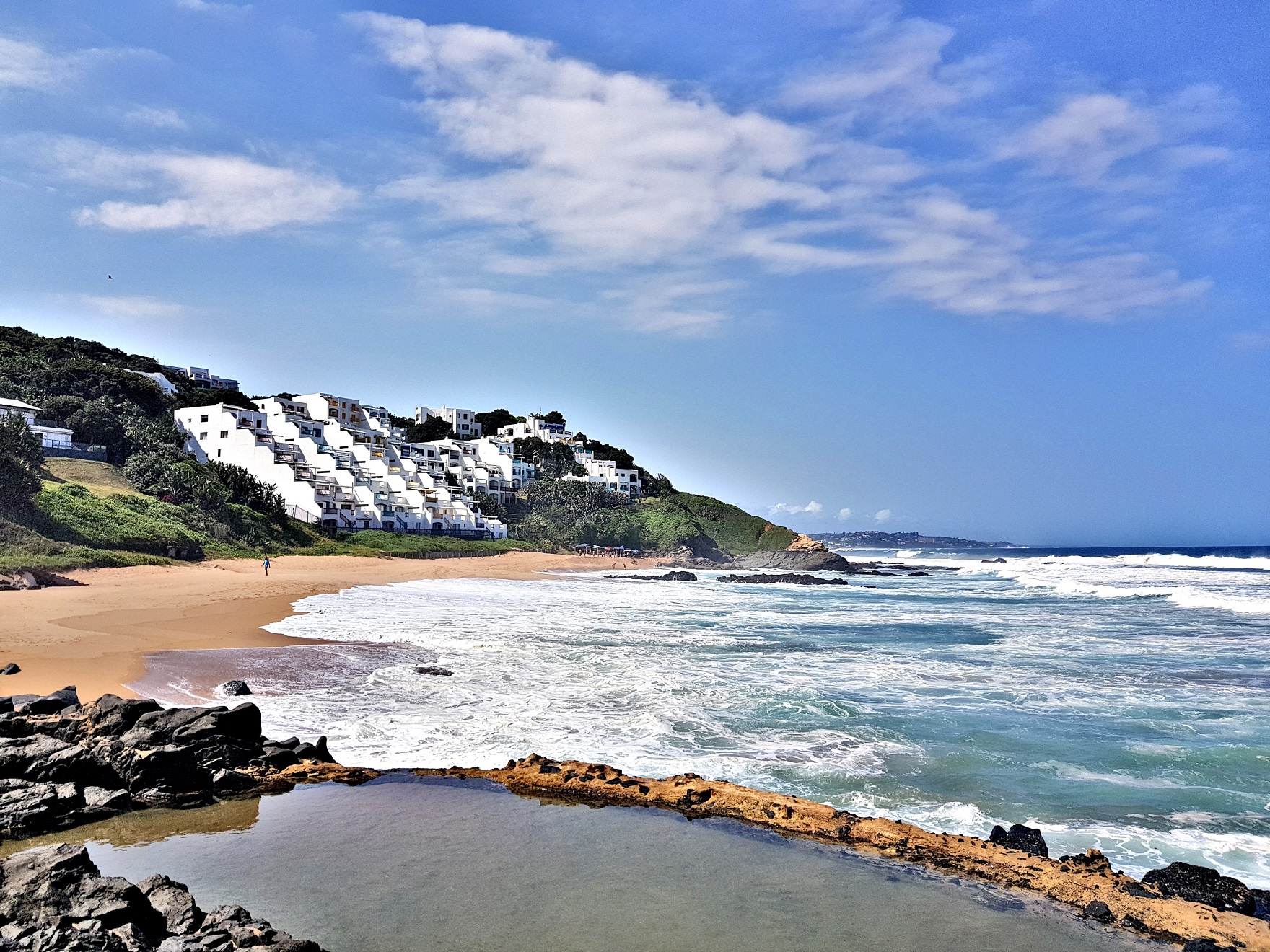
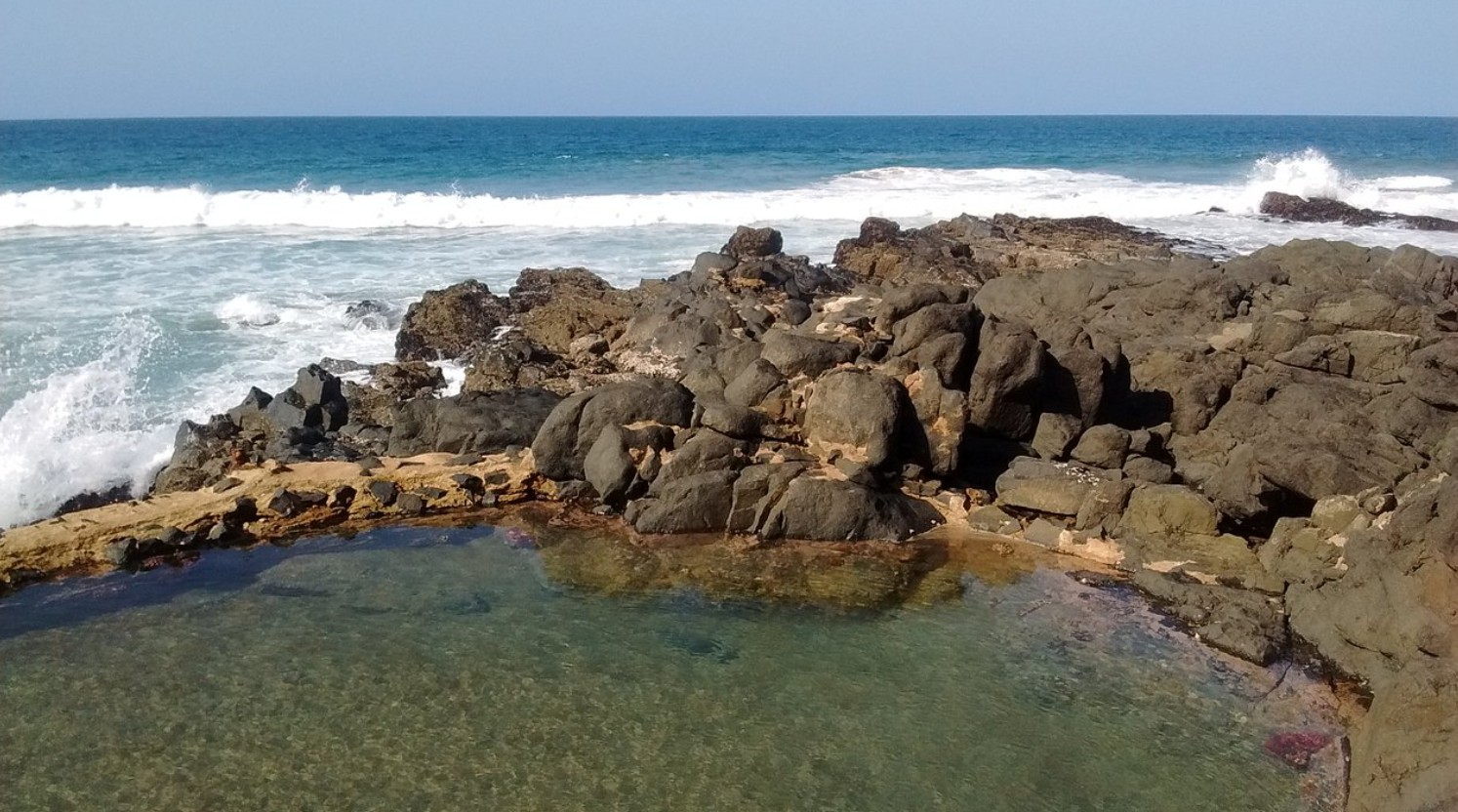
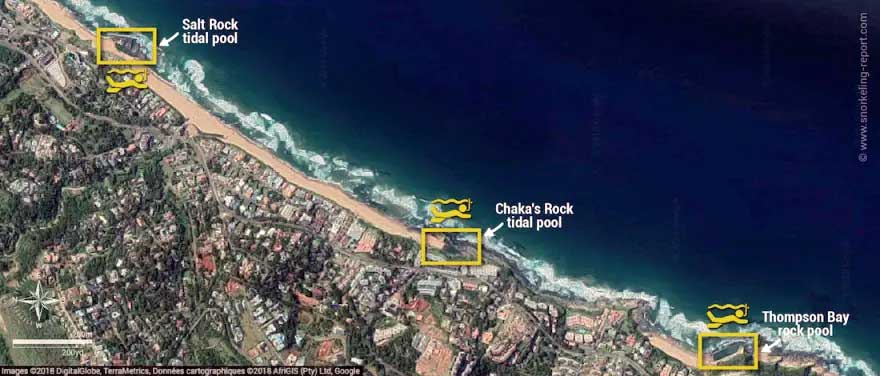
The Dolphin Coast (or “North Coast”) refers to a section of scenic coastline just north of Durban, in KwaZulu Natal. It boasts dozens of beautiful “tidal pools”, small rocky pools at the coast that are filled with seawater.
https://www.snorkeling-report.com/spot/snorkeling-tidal-pools-south-africa/
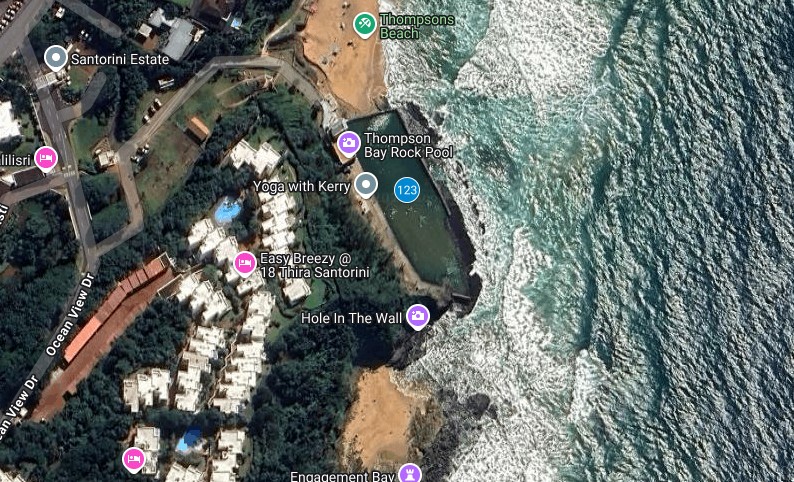
123. Thompsons's Bay Rock Pool
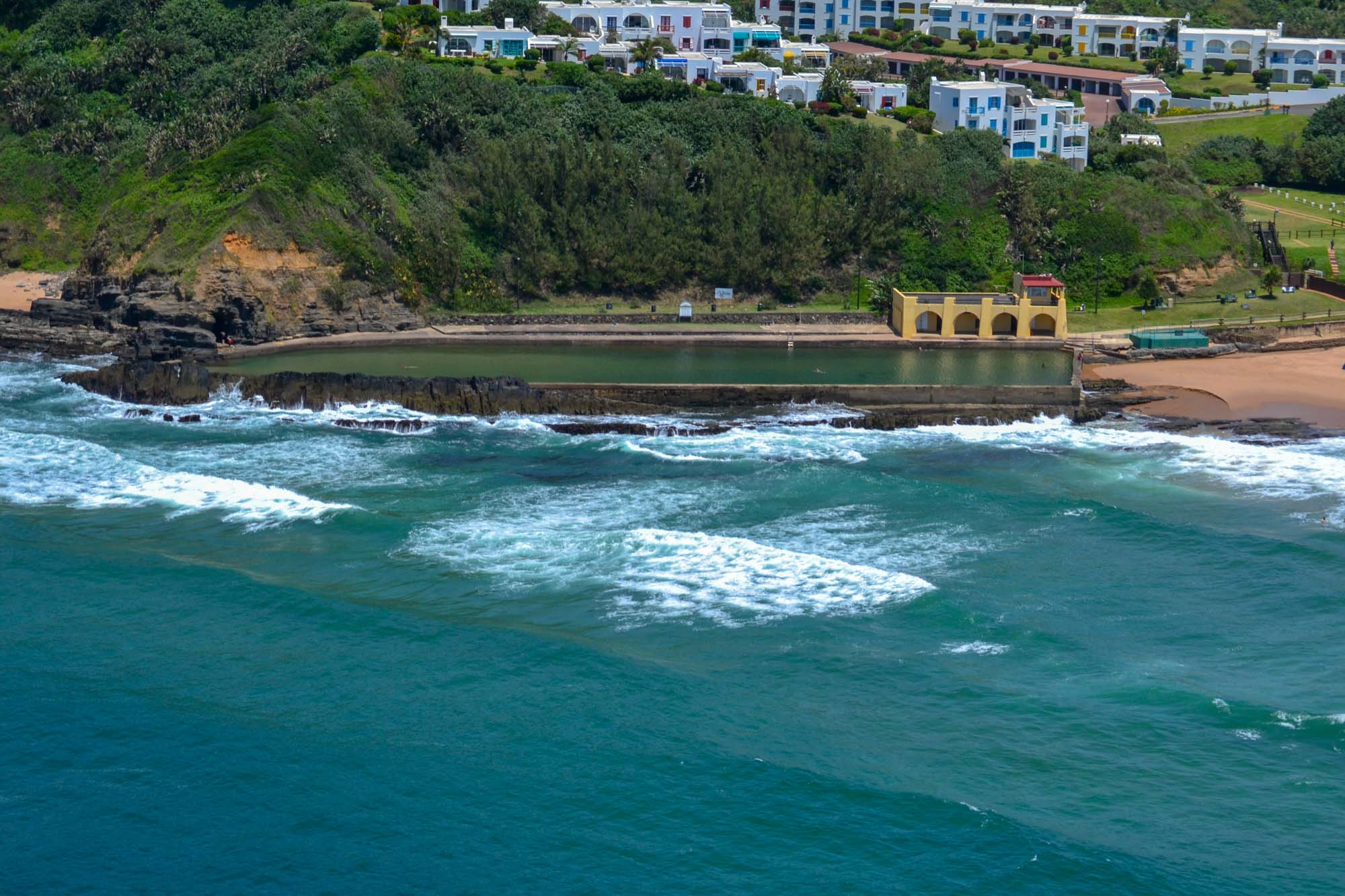
The Thompson’s Bay Rock Pool (officially known as Charlie’s Pool) is an iconic, Olympic-sized tidal pool located in Shaka's Rock. Built in 1962, the pool was a monumental community effort spearheaded by Charles "Charlie" de Charmoy, a successful French-Mauritian sugarcane farmer.
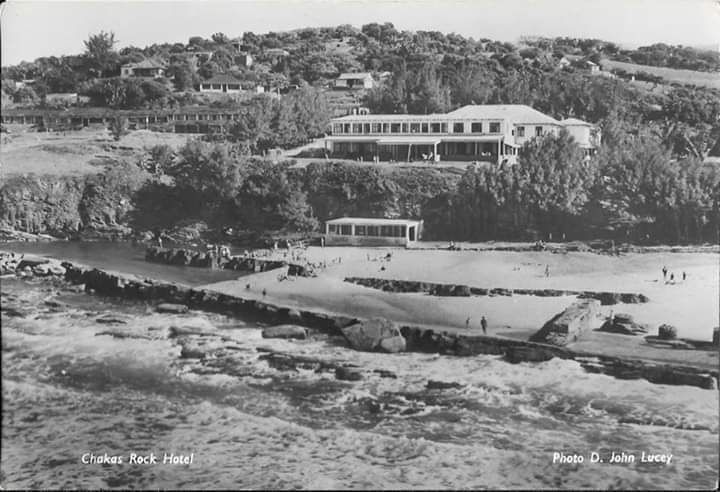
The 1940s brought a wave of French-Mauritian families to the region from Mauritius. Many of them established sugar cane farms along the north coast. Among these settlers was Charles (Charlie) de Charmoy, who arrived from Mauritius at the age of 15. He would go on to become a highly successful sugar cane farmer. In the 1940s, he constructed the Chaka’s Rock Hotel, situated across the road from where Salt Café now stands.
Charlie wanted a safe, wave-free environment where families could swim in the ocean without dealing with dangerous riptides. In 1962, Charlie, his sons (Roland and Cyril), and his sons-in-law (Maxime and Michel Robert) took it upon themselves to engineer and construct the pool. Working alongside their farm labourers, the family spent seven weeks manually mixing and laying approximately 2,000 bags of cement right into the natural rock face. The final product was an engineering marvel for its time, measuring a massive 106 metres long and 30 metres wide.
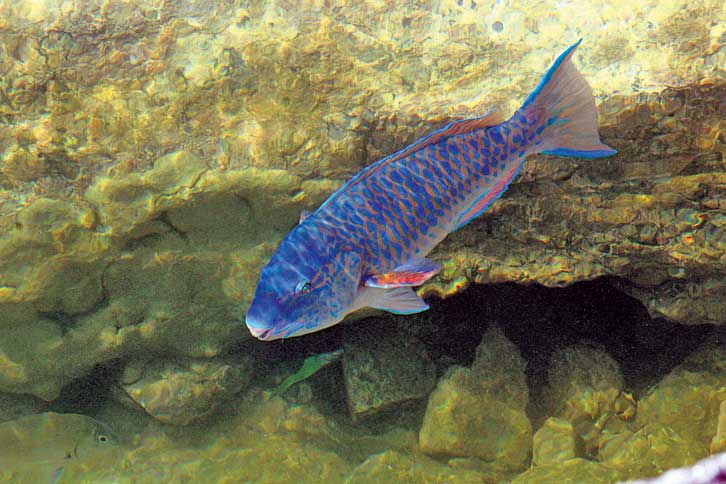
Today, Charlie's Pool is celebrated as a pristine marine sanctuary. Because the high tide naturally flushes and cleans the pool twice a day, it has developed a thriving ecosystem. It is a premier destination for safe snorkelling, where visitors regularly swim alongside lionfish, parrotfish, trumpet fish, and live branching coral reefs.
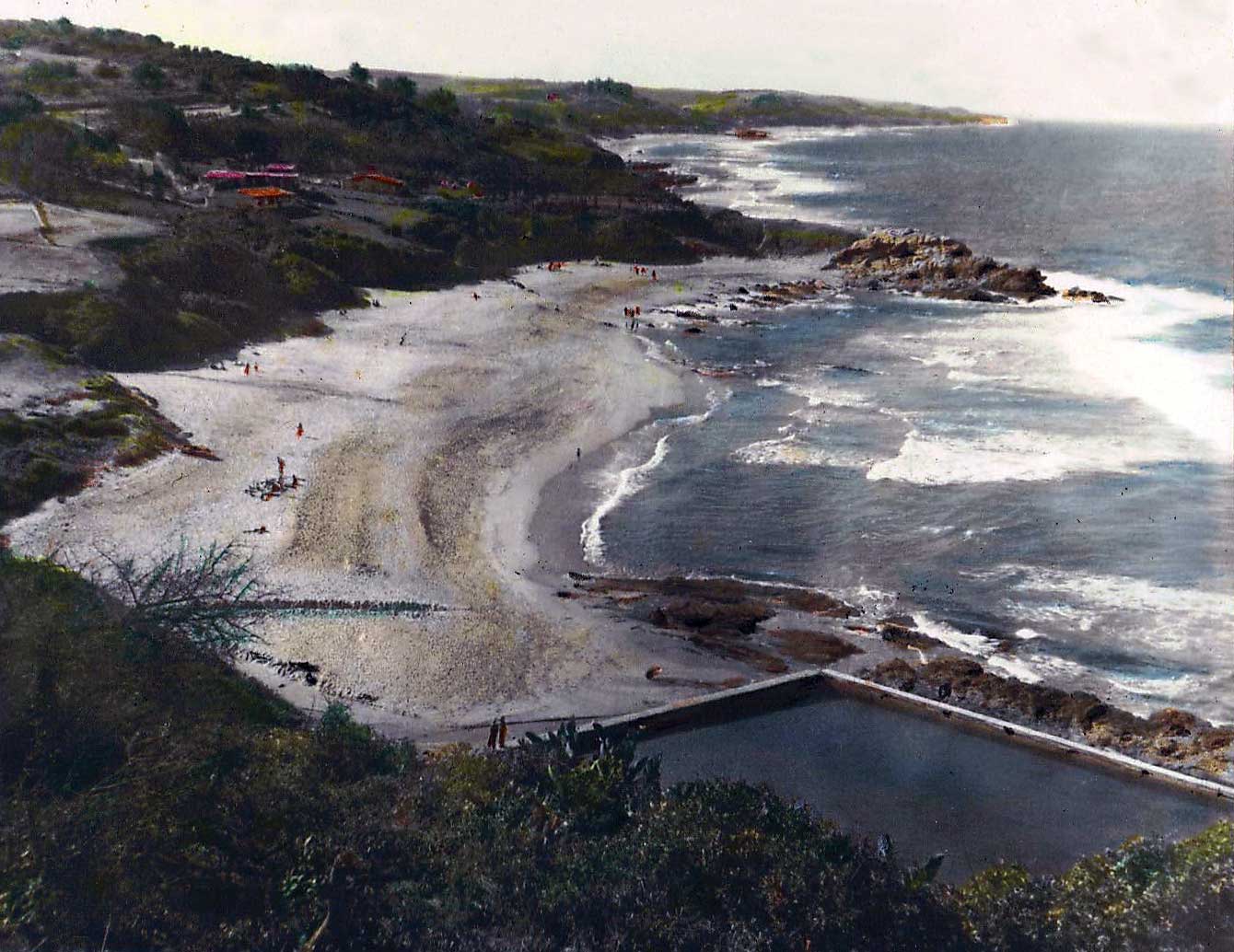
The first image predates the 1964 tidal pool.
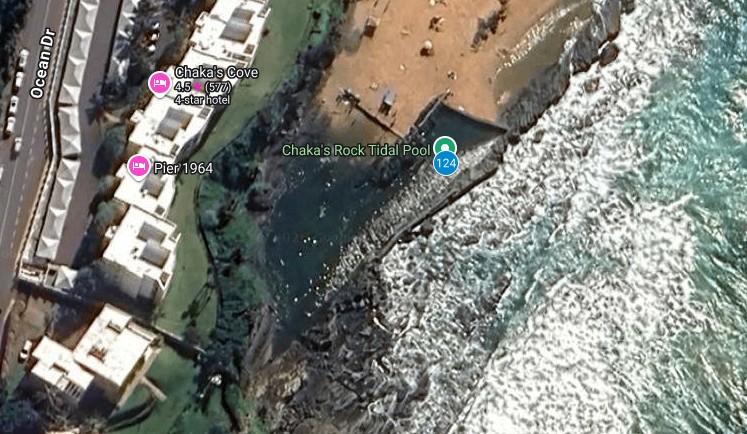
124. Chaka's Rock Tidal Pool
To create safe, shark-free swimming zones amidst the wild Indian Ocean currents, developers began building concrete walls across natural rocky gullies.
The pool is classified as the local Marine Protected Area. Following a rise in illegal poaching of marine species like parrotfish, the local Ballito Urban Improvement Precinct (UIP) and community groups stepped in to actively monitor and preserve the pool's biodiversity.
A group of Chaka’s Rock residents have banded together to protect their tidal pool after the poaching of the much-admired school of parrot fish at Chaka’s Rock tidal pool on Saturday afternoon. A Chaka’s Rock resident said she saw four men helping themselves to the almost tame fish, but as a woman living alone with her grandchildren, she was afraid to approach the poachers.She alerted other residents but they did not arrive in time. The entire school has been removed from the pool.
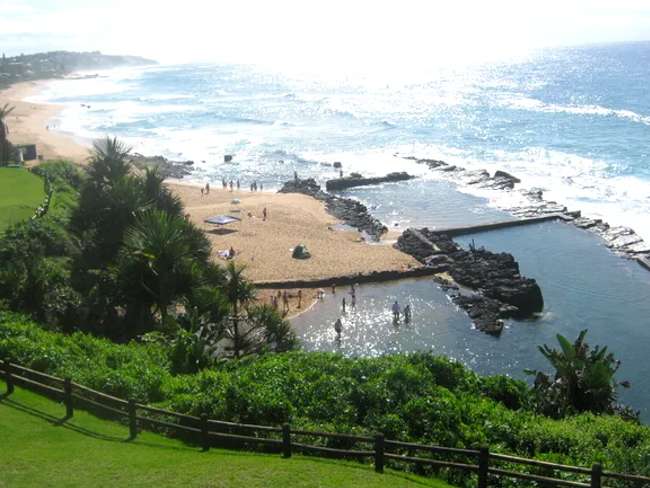
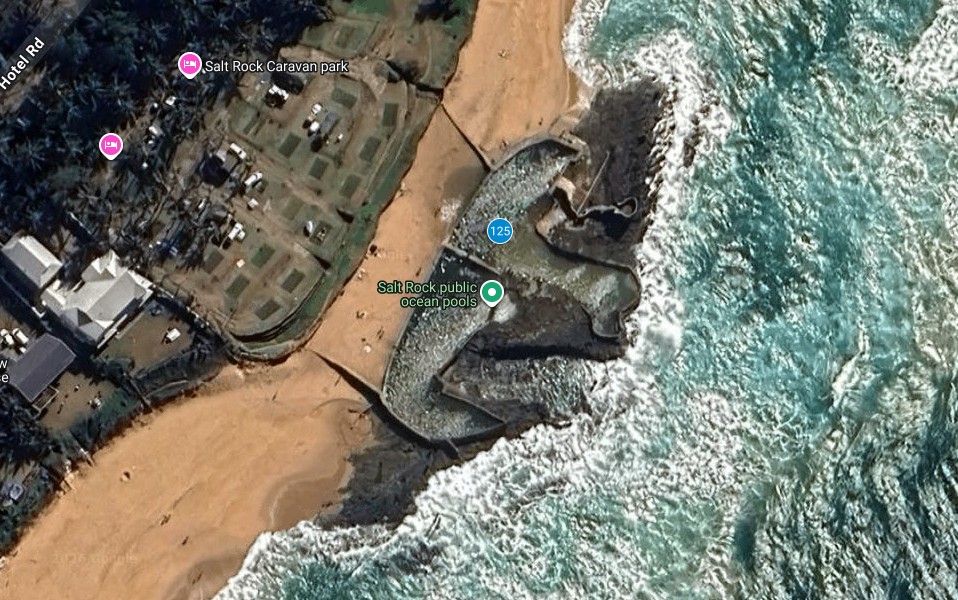
125. Salt Rock Tidal Pool
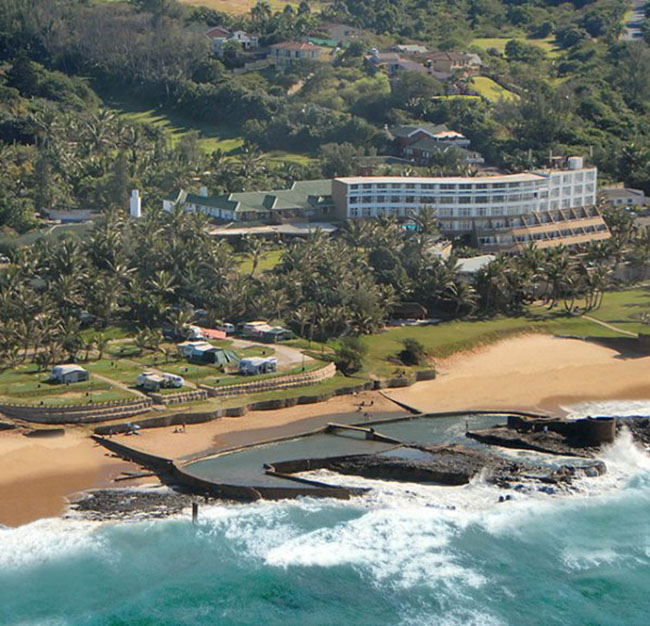
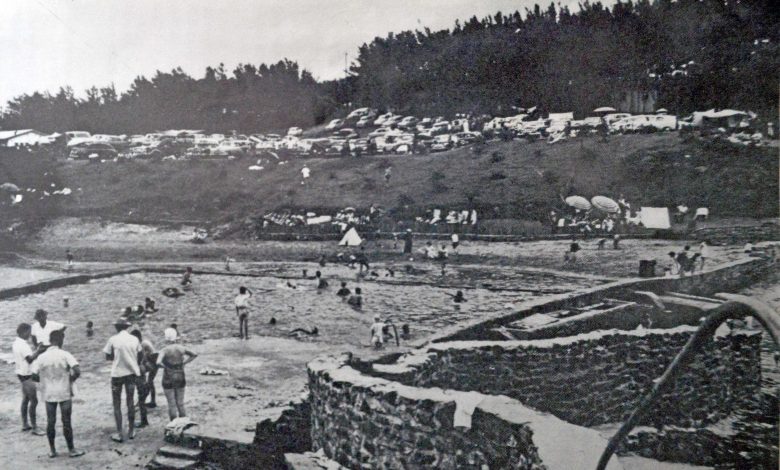
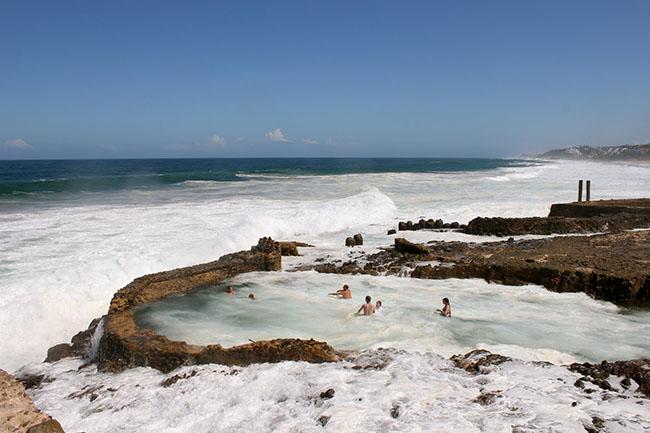
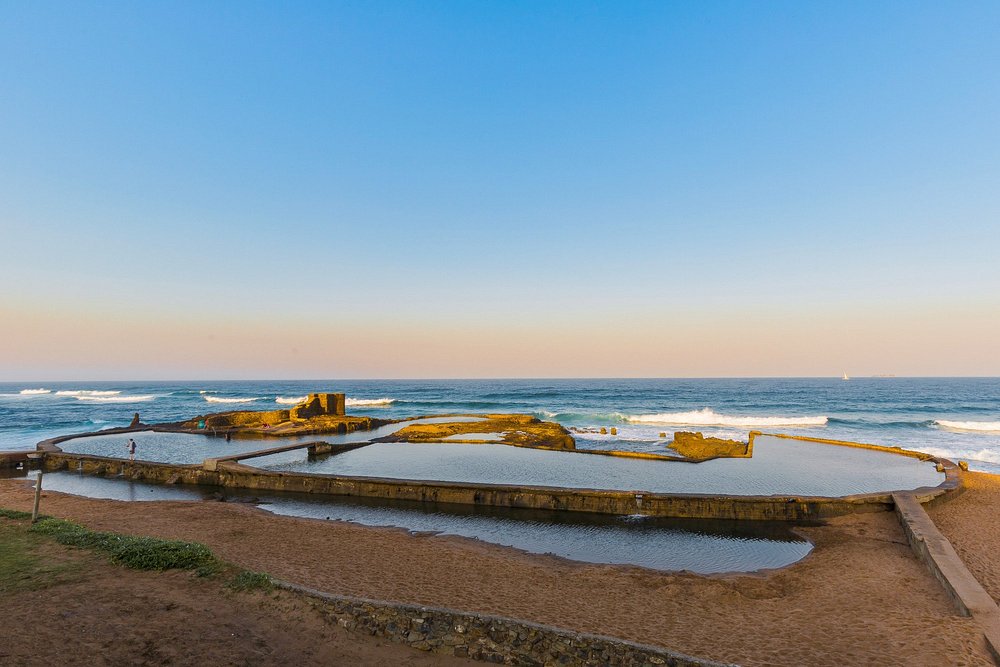
The Salt Rock tidal pool was built in the 1940s by sugar cane farmer and township developer Basil Hulett. It was developed alongside the Salt Rock Hotel and surrounding infrastructure to serve hotel guests and residents, offering safe, shark-protected swimming, and it remains a popular, large tidal pool. There is still a popular caravan park next to the pool.
126. Tinley Manor Tidal Pool
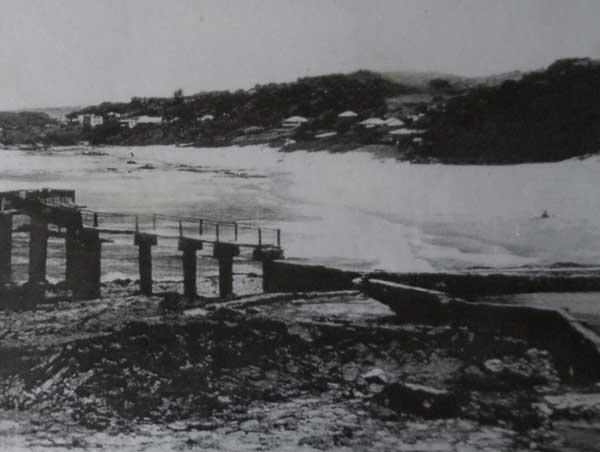
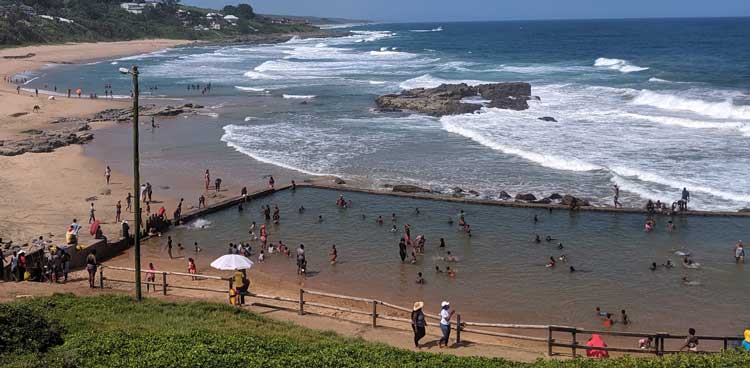
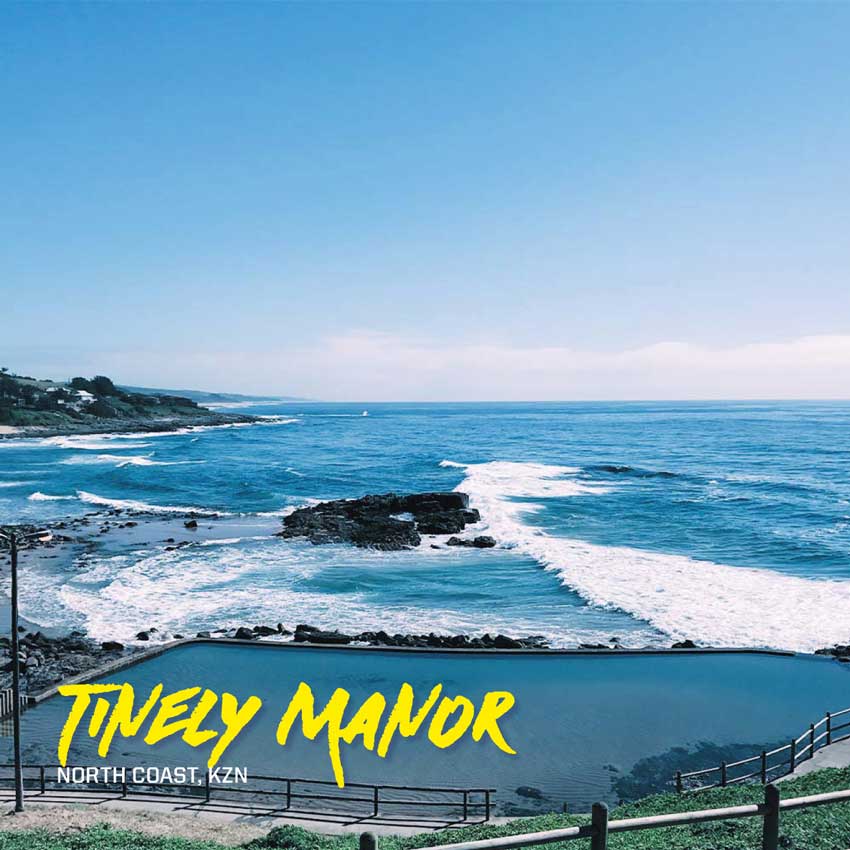
The last functioning tidal pool along the South African North Natal coast is at Tinley Manor. The pool was concrete-engineered directly onto the rocky intertidal shoreline. This design uses the daily high tide to naturally flush out, clean, and replenish the pool with fresh seawater twice a day.
The beach and its immediate facilities have achieved Blue Flag status, cementing strict modern standards for water quality, safety, and environmental management around the pool zone. South Africa has 50 beaches with Blue Flag staus in 2025.
127. Blythdale
Blythedale Beach is widely known for its unspoilt shoreline and warm Indian Ocean waters, but its specific tidal pool facilities have recently been described as "broken down" and poorly maintained. While the beach remains popular for long walks, birdwatching near the Umvoti River mouth, and swimming in the surf under the watch of lifeguards, those specifically seeking a functional tidal pool experience often visit nearby alternatives.
While the main beach is protected by shark nets and monitored by lifeguards, the strong waves and steep shoreline can make deep swimming in the open ocean challenging.