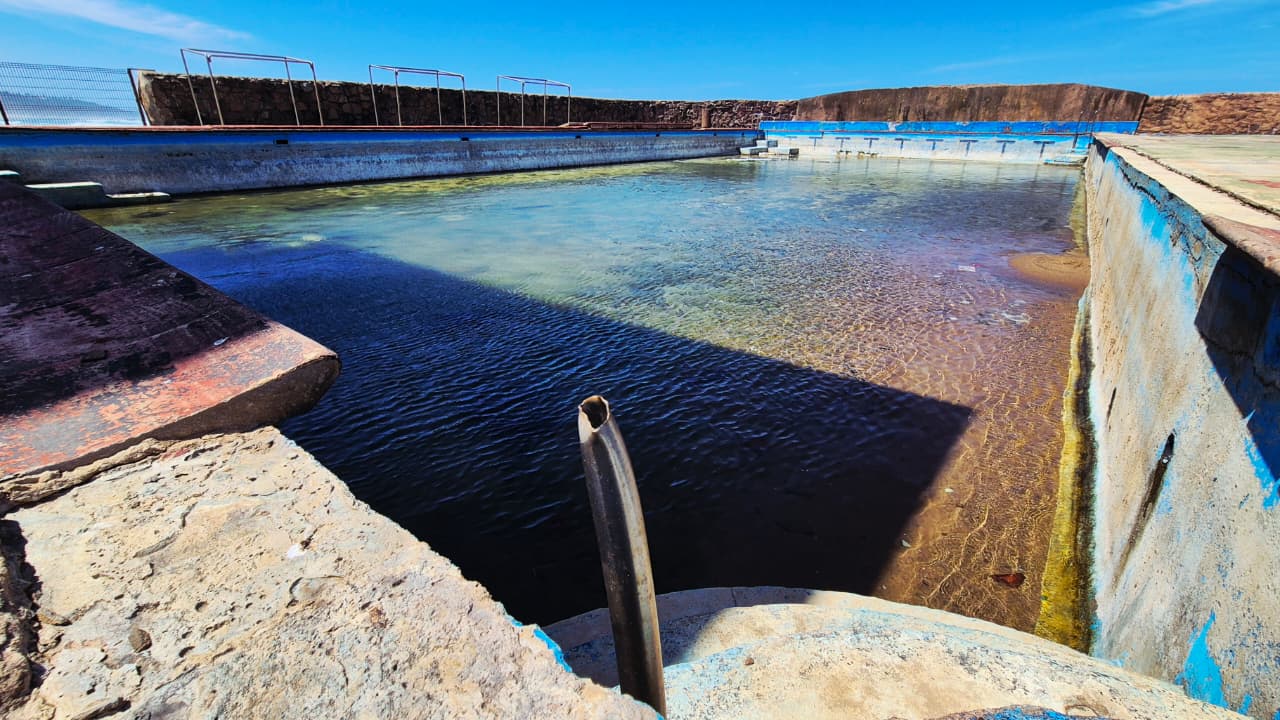
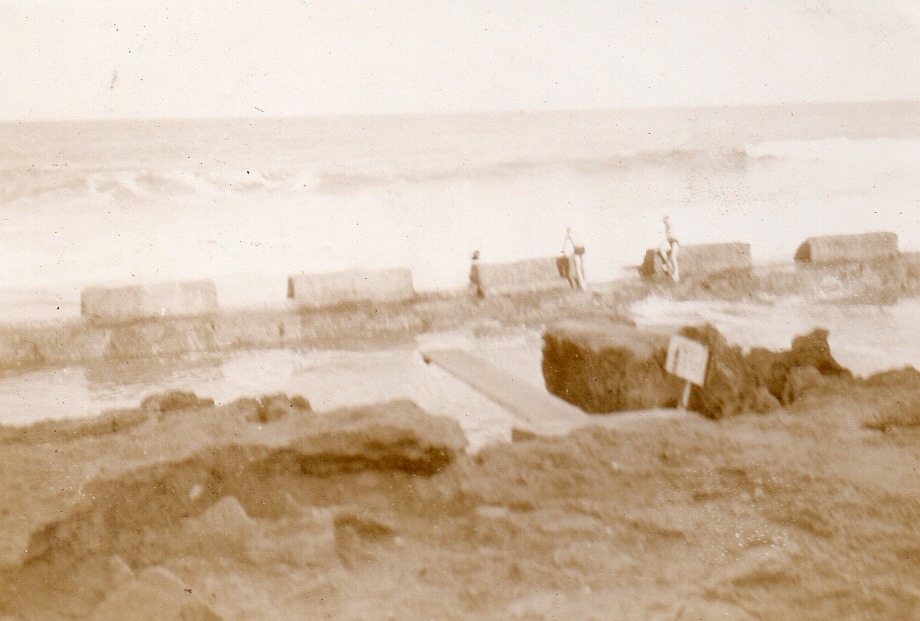
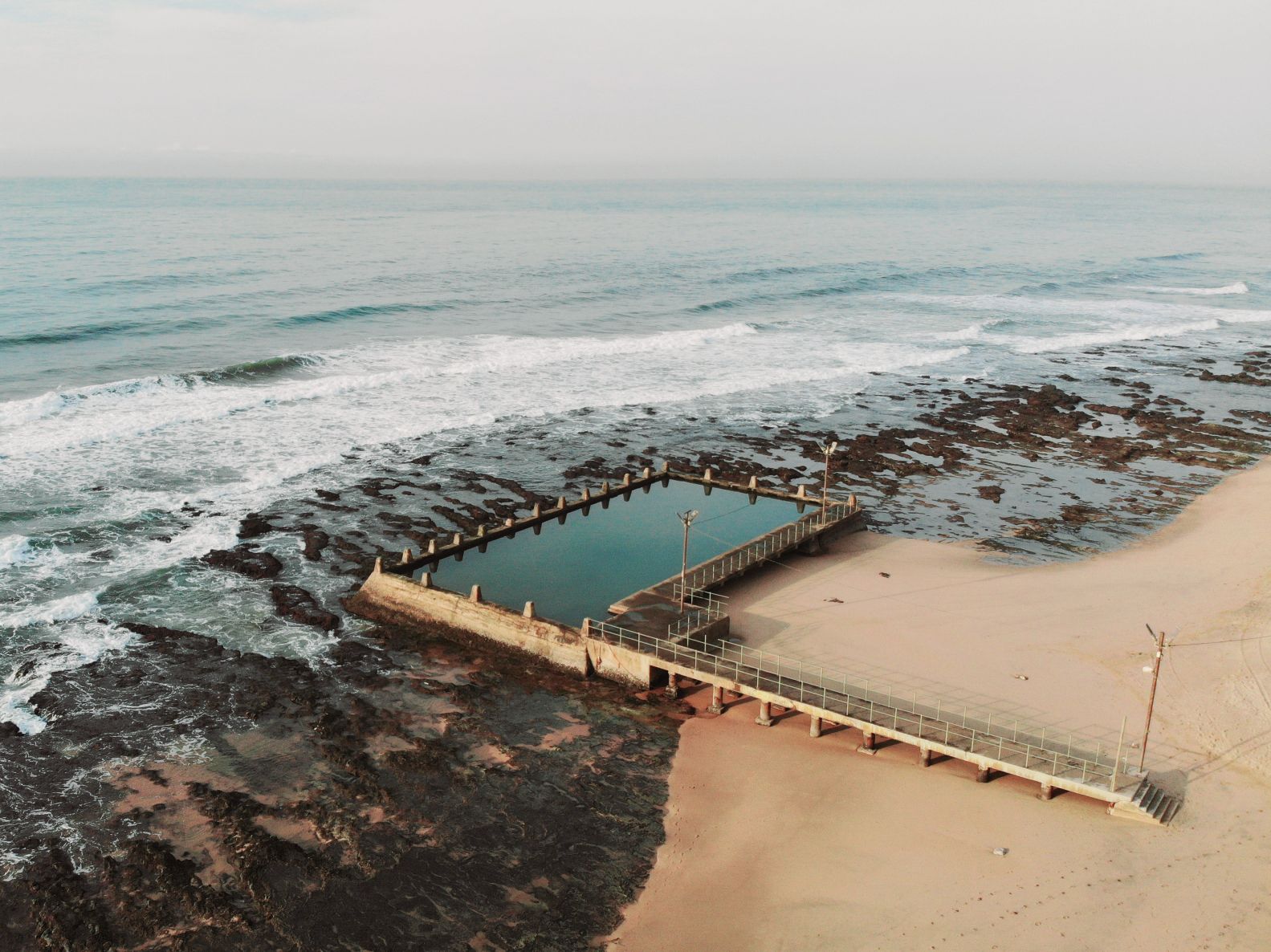
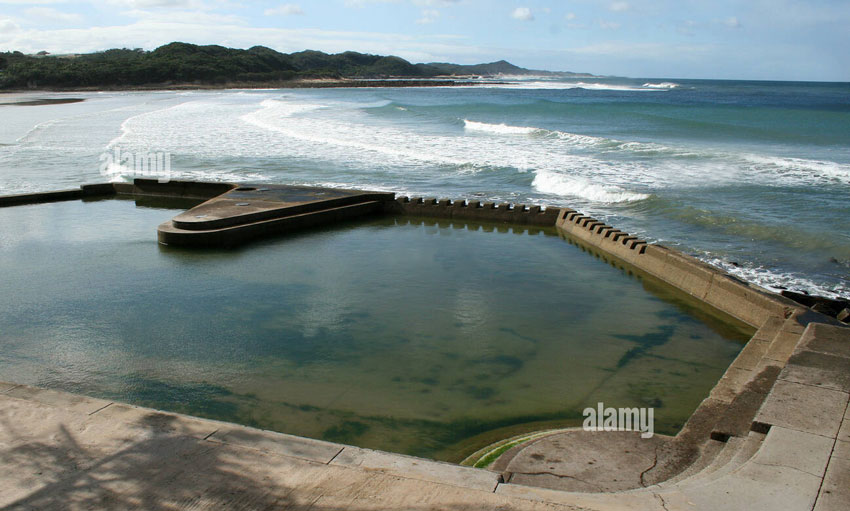
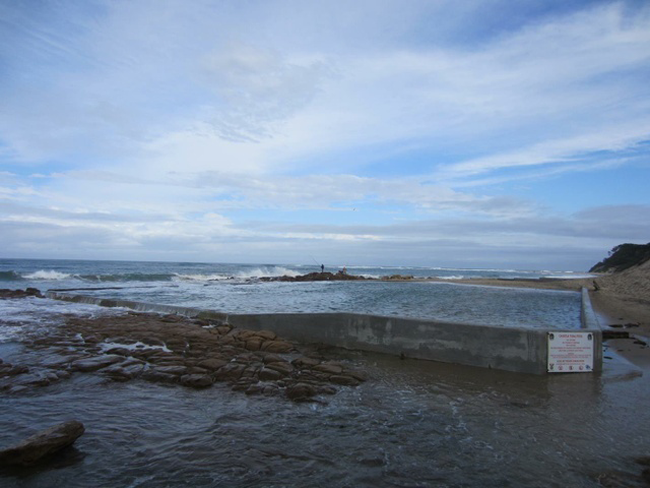
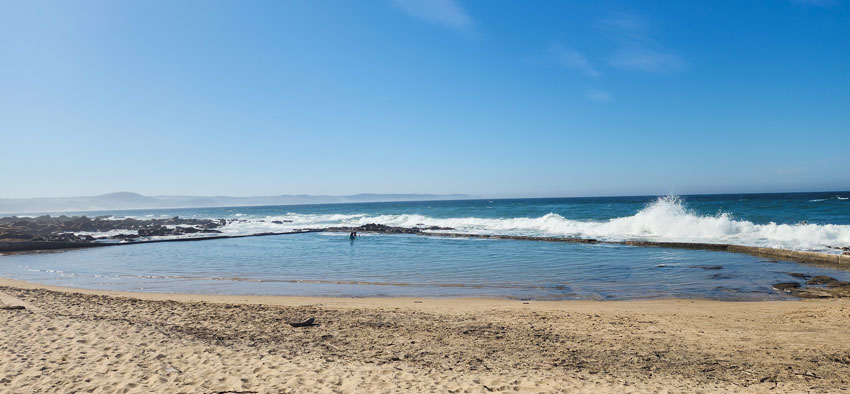
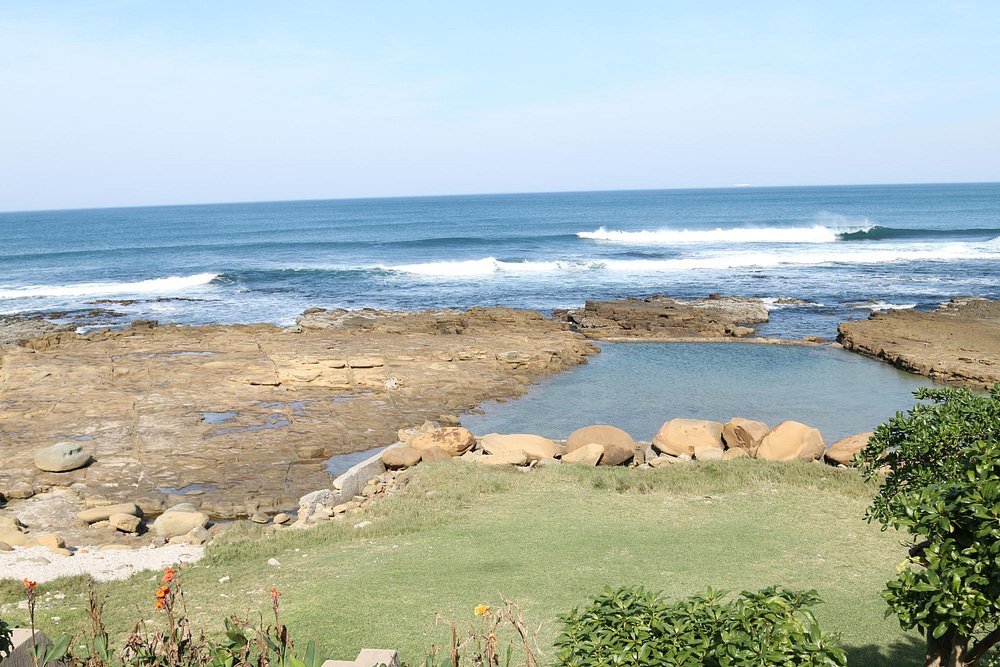
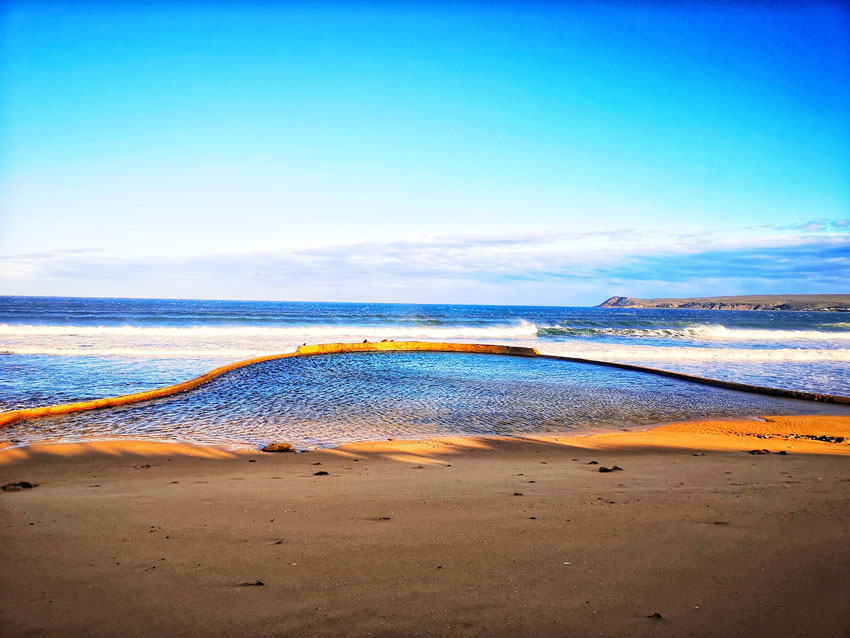
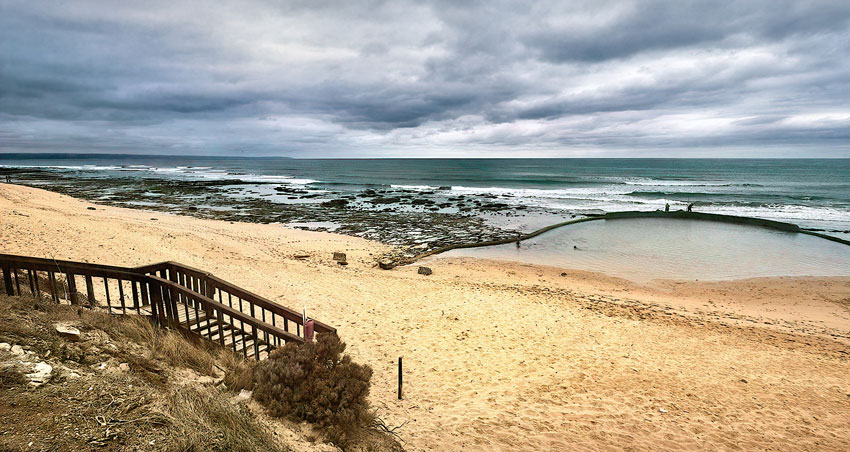
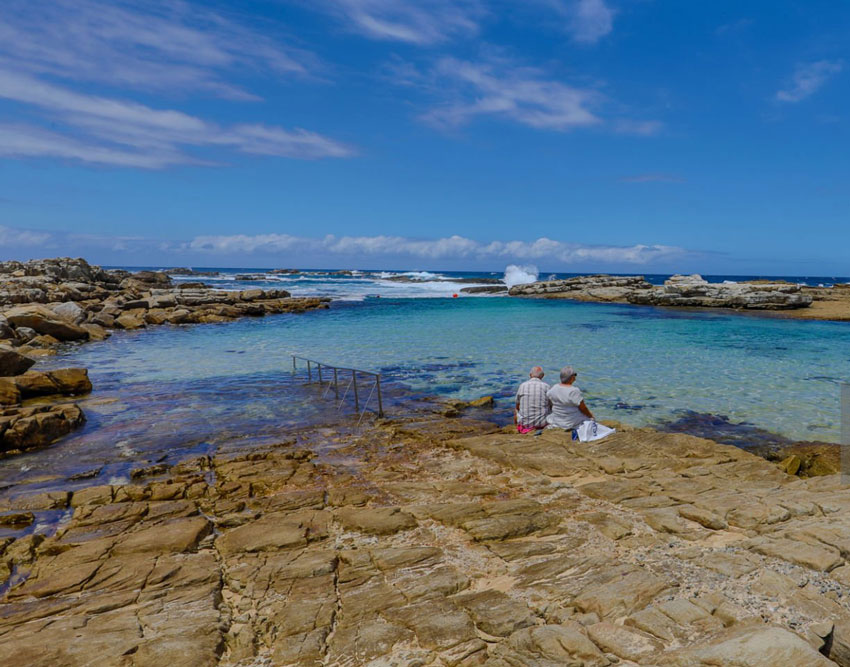
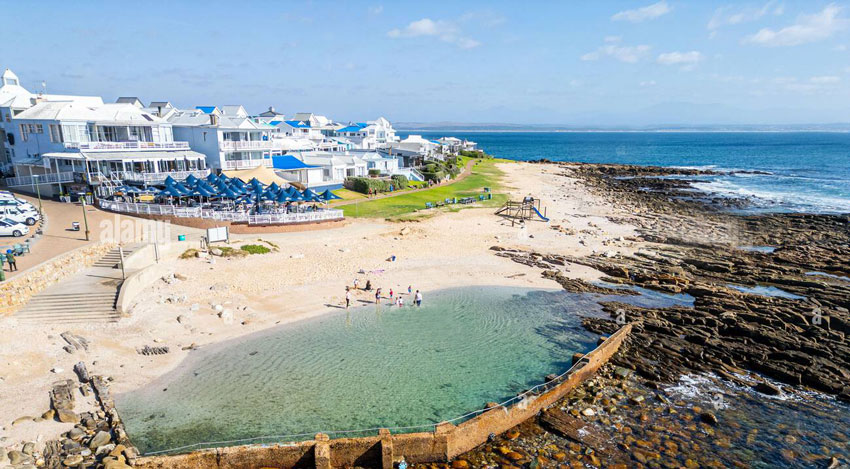
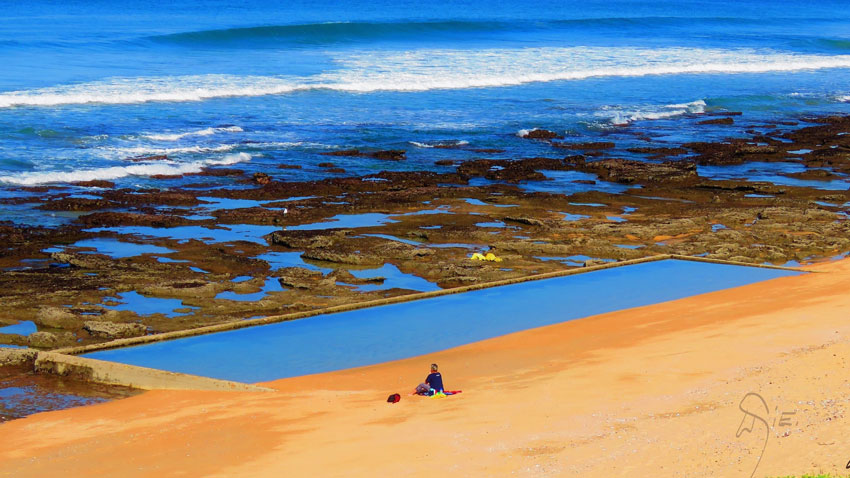
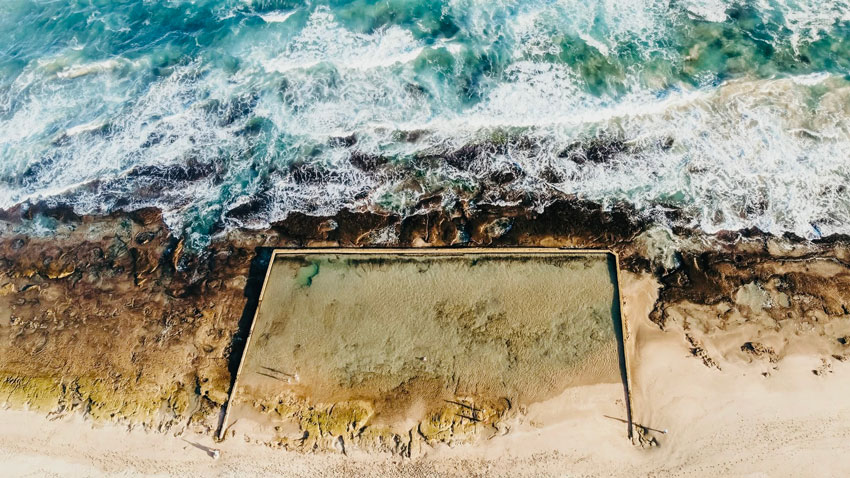
Natal South Coast

Tidal Pools of the Natal South Coast

The northern border of the Transkei is at the Umtamvuna River, which today also serves as the border between the Eastern Cape and KwaZulu-Natal.

Across the river lies Port Edward, where on the 8th of June 1552, the Portuguese galleon São João ran aground at what is now Port Edward. This is noted as the first recorded encounter between Europeans and southern Africans

The Natal South Coast has been a popular holiday destination since colonial times. This is reflected in the large number of small towns and tidal pools found between Durban and Port Edward. The Natal South Coast Railway brought holidaymakers to the tidal pools and beaches. The remains of the rails are still visible, as it was built close to the shoreline. 

Click here to see the whole map

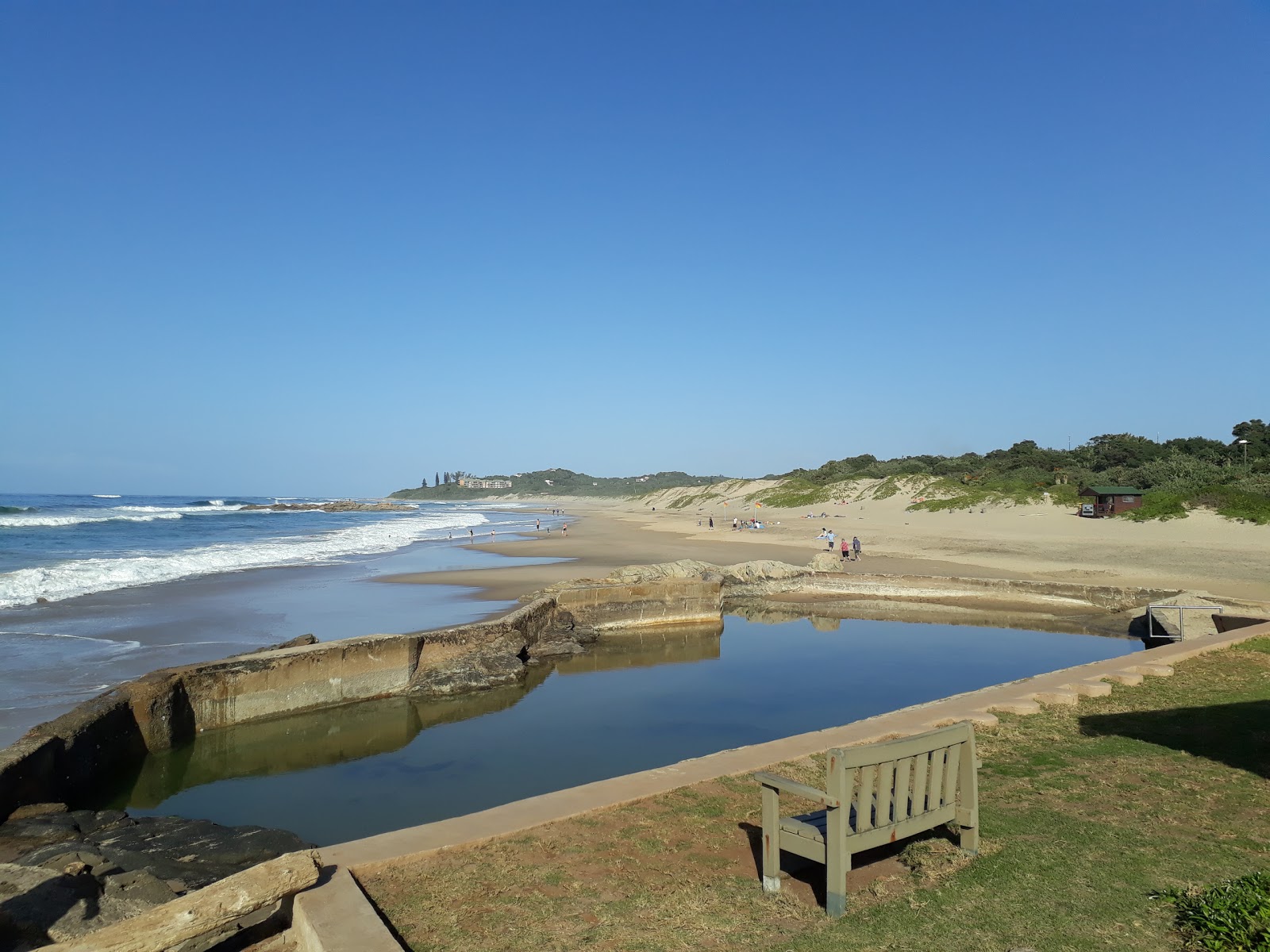
79. Palm Beach Tidal Pool

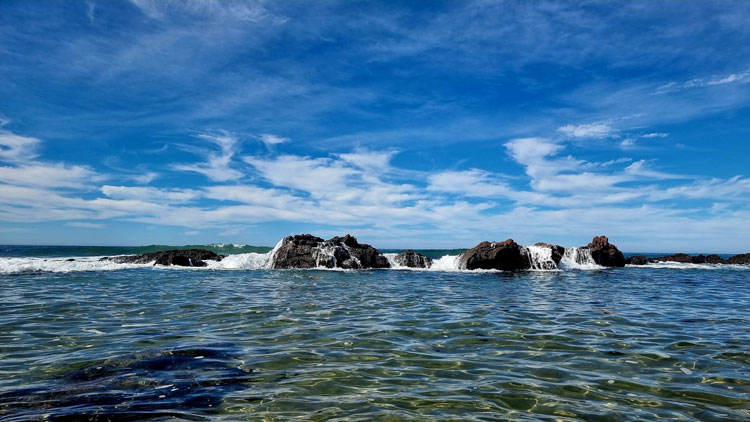
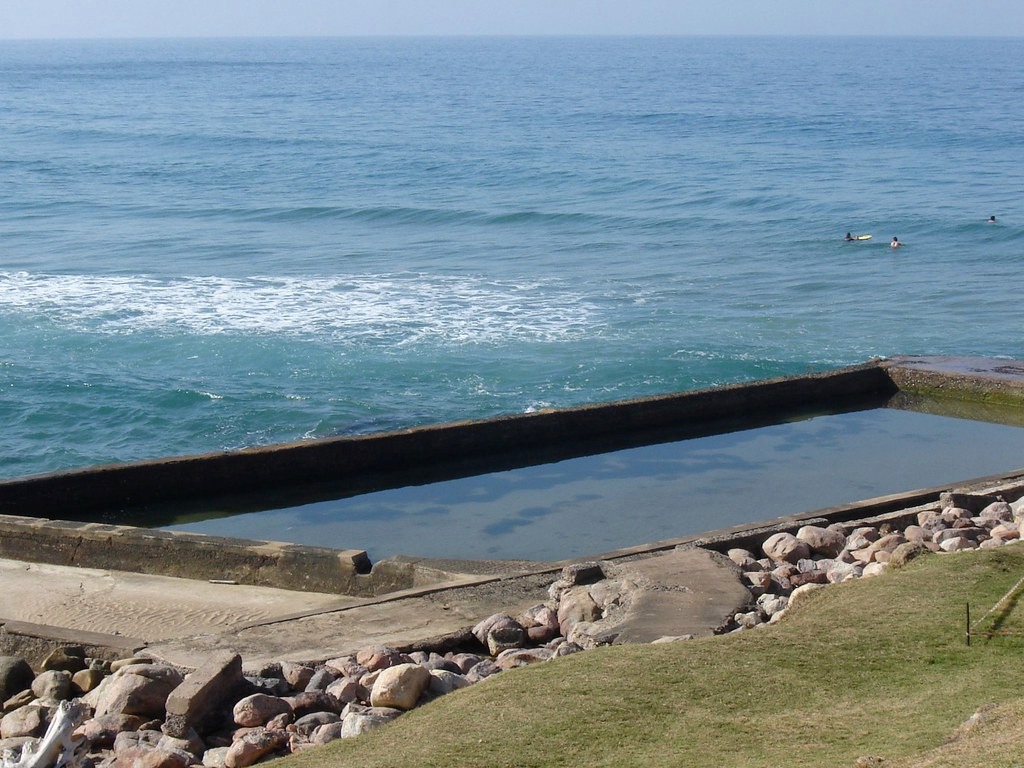
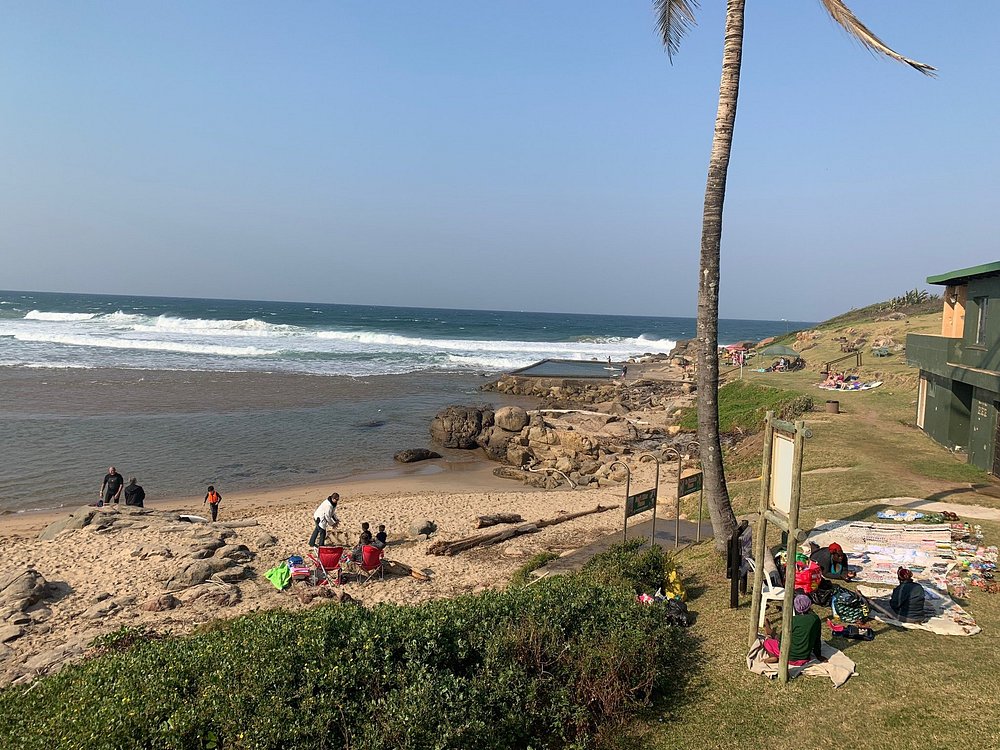
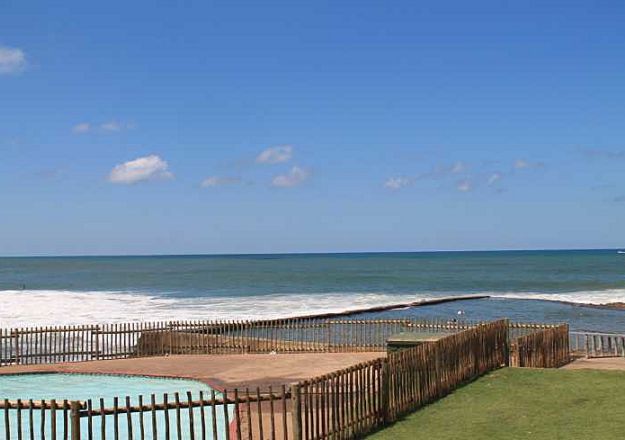
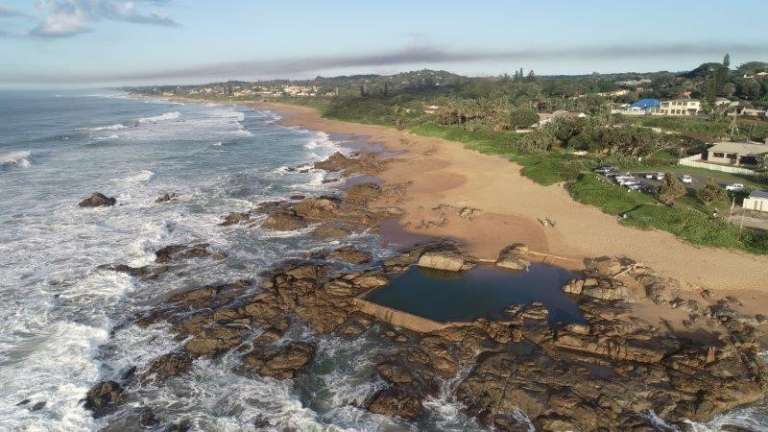
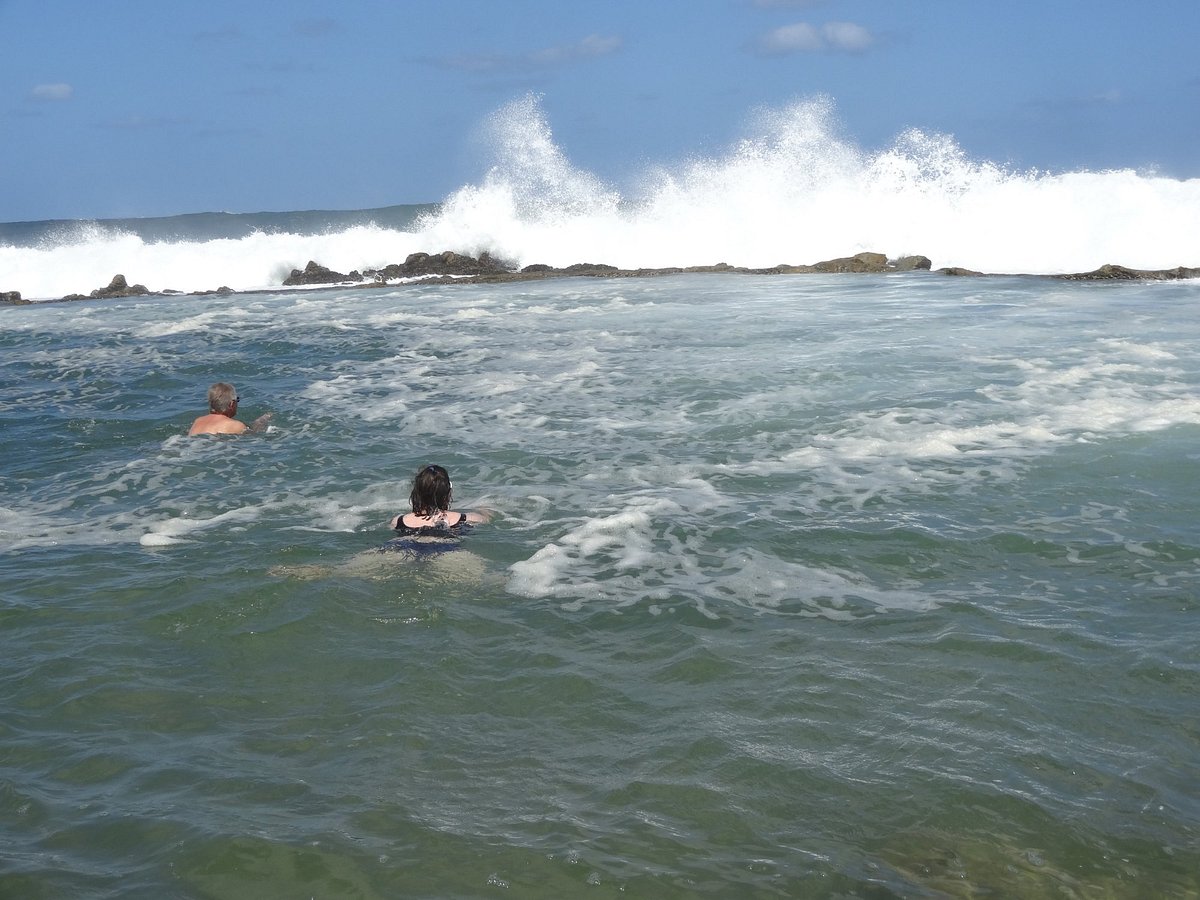
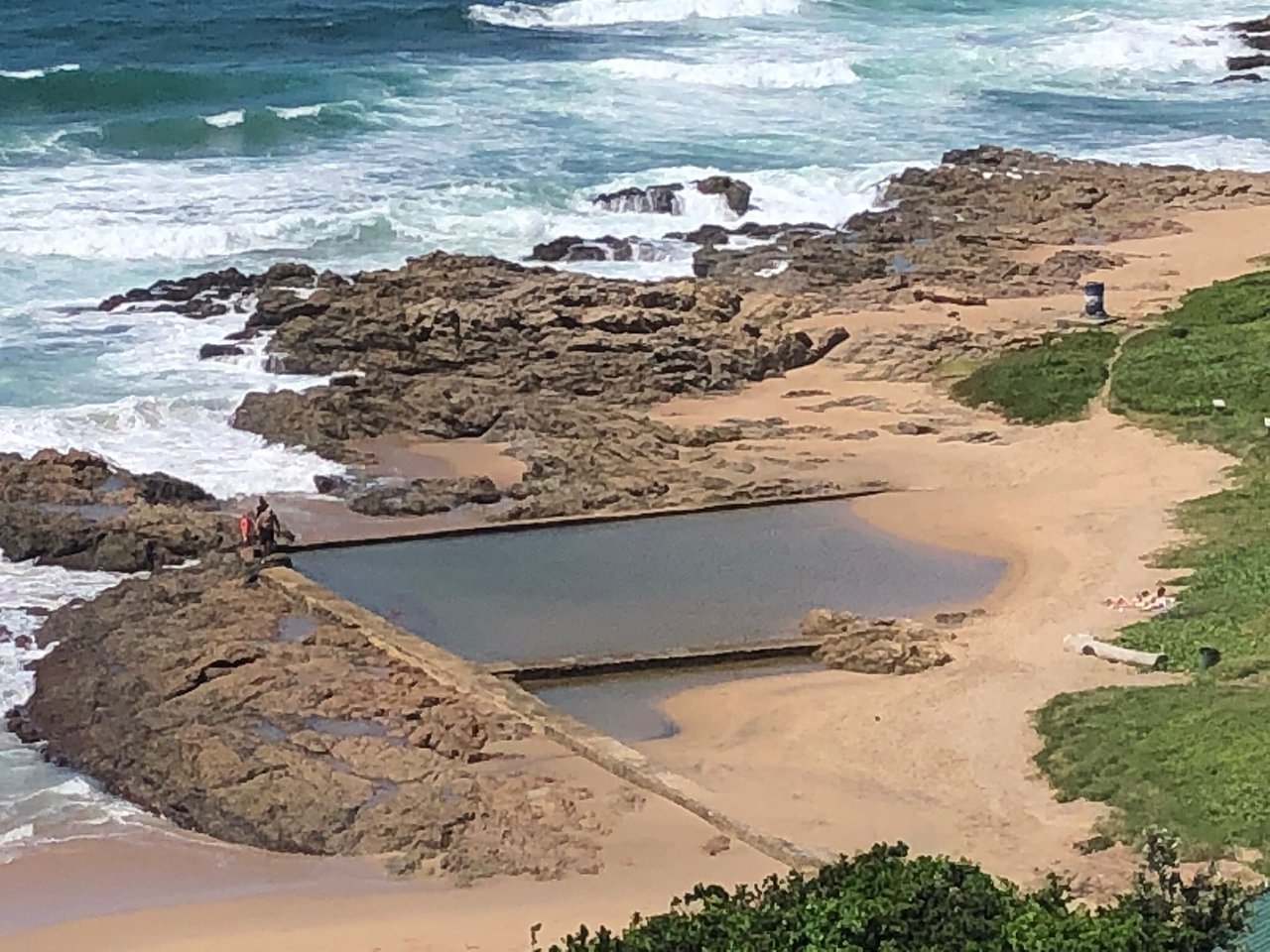
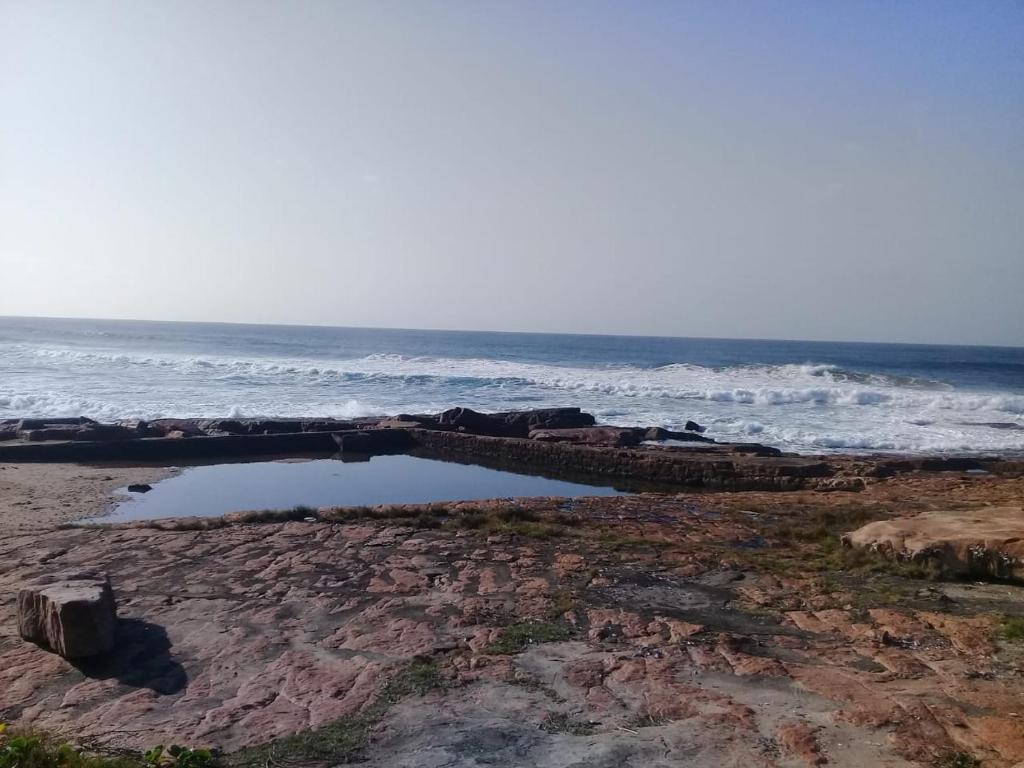
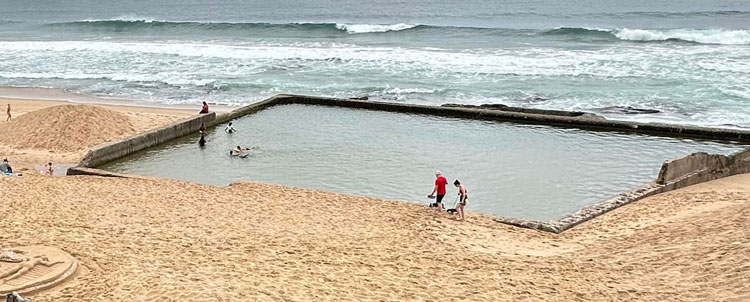
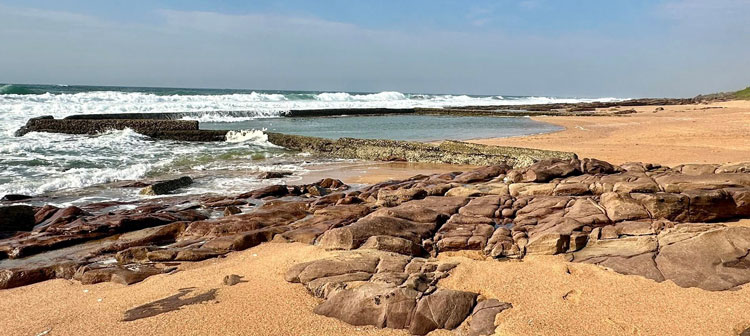
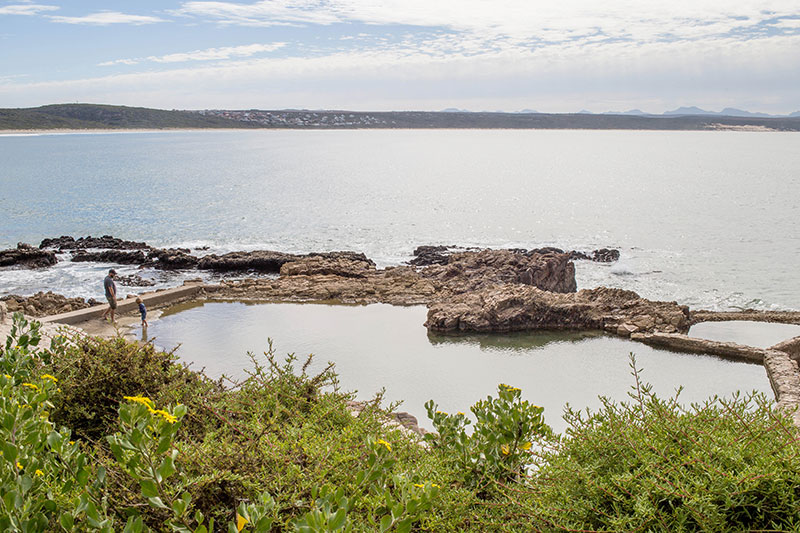
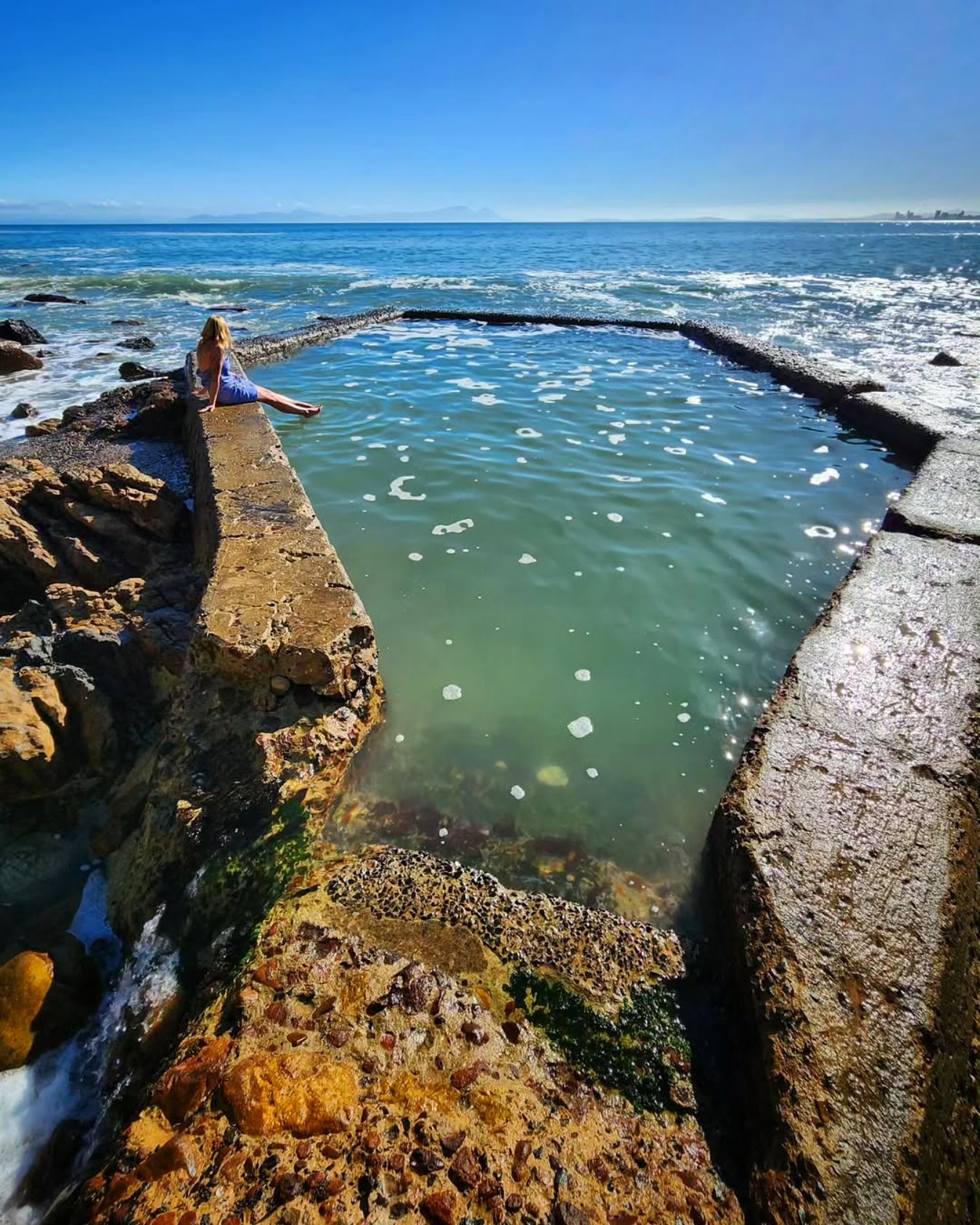
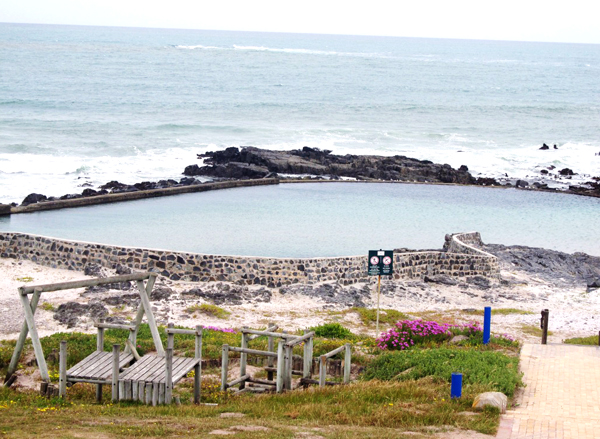
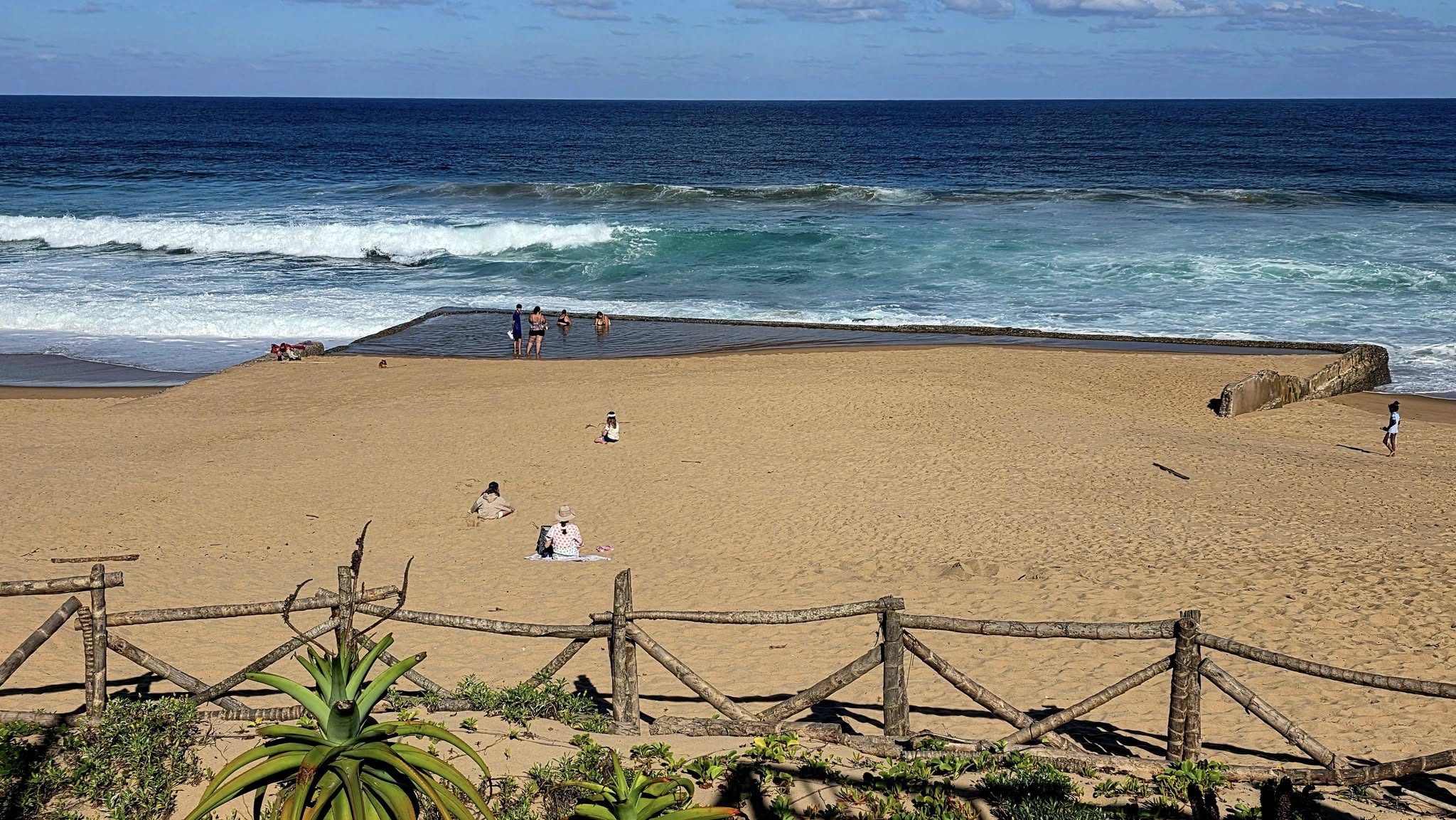
Located just north of Port Edward, Palm Beach is known for its wide sandy stretches, tidal pools, and rocky outcrops. The tidal pool is a large, natural swimming spot, ideal for safe swimming and snorkelling. 
80. Trafalgar Beach Tidal Pool

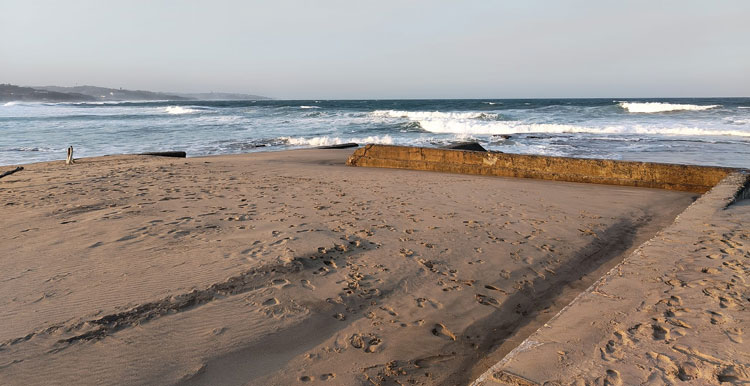
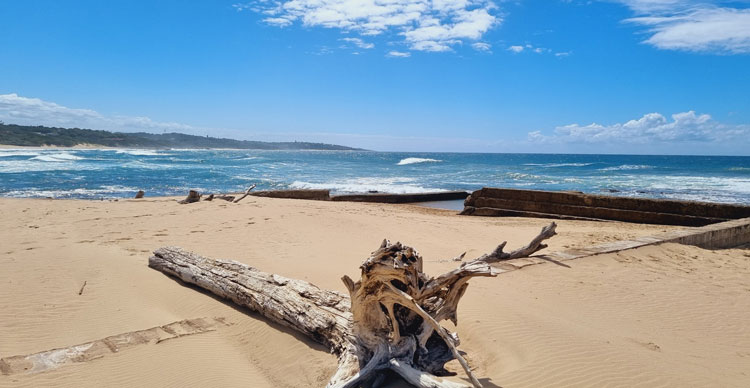
Unfortunately, the tidal pool is silted up. But the beach promises a lot! There is no more perfect beach than Trafalgar's Blue Flag Beach to get away from the massive crowds.

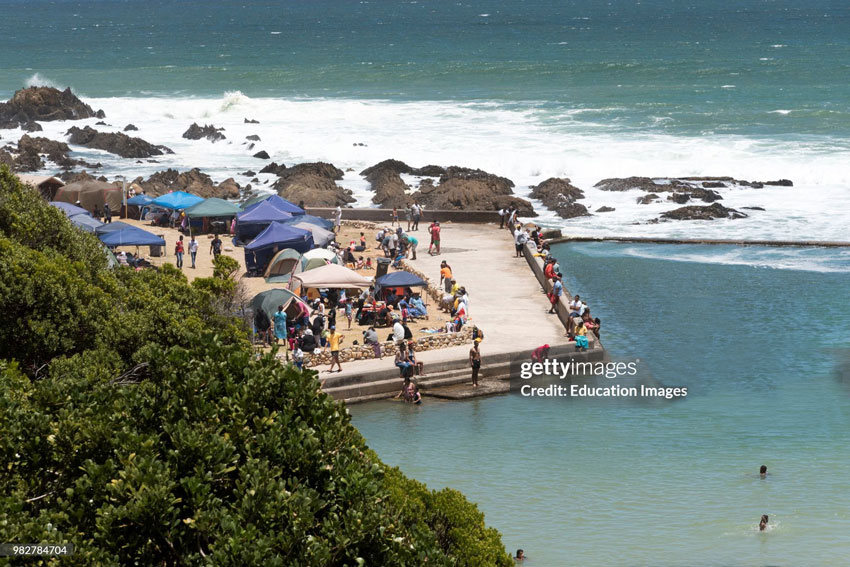
Trafalgar Beach has unbelievably warm waters and makes for the perfect swim if you aren't a fan of those cold ones! You'll practically be swimming in a warm, oversized hot tub! Lifeguards are on duty at this blue flag beach throughout the year. Although other facilities are limited, the beach is super wide and sandy!
81. Marina Beach Tidal Pool

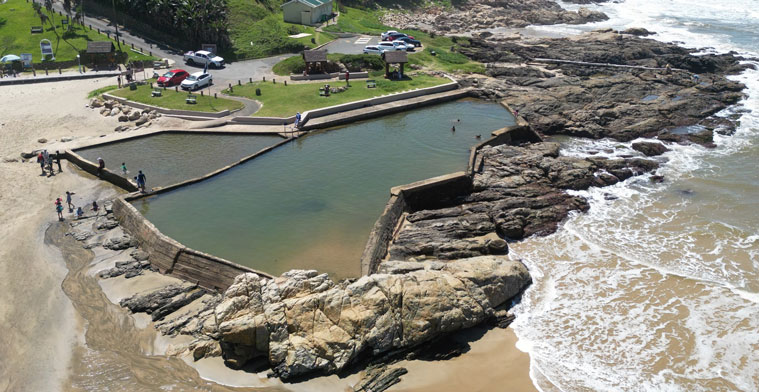
Marina Beach in San Lameer is a Blue Flag beach that is perfect for families.

Known for its cleanliness and safety, you can expect warm swimming waters year-round, along with a tidal pool and lifeguards on duty.
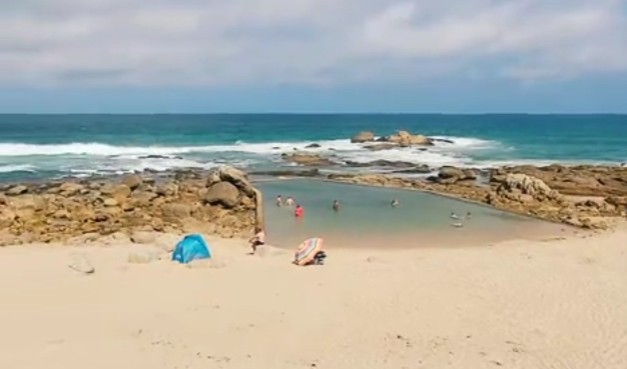
82.  Granny Tidal Pool, Southbroom

The name "Southbroom" was first mentioned in 1908 when the Swedish Zulu Mission took over the mission from the Eyles family. The Eyles family renamed their home "Soutbroom" as a reminder of one of their family homes in England. Frank and Gilbert Eyles, Alfred's two youngest sons proclaimed the village in 1933.

It is a historic tidal pool built in 1937 specifically for the guests of the Southbroom Hotel. While often associated with the hotel, local historical accounts credit Jack Jones (the grandson-in-law of Southbroom pioneer Alfred Eyles) with building the tidal pools at both Southbroom and Marina Beach. The pool is located near the site of the Fascadale shipwreck, a steel barque that ran aground on the rocks seaward of the pool in 1895. The Southbroom Hotel was a landmark until 1984, when it was demolished amidst significant controversy.

Now known as Granny’s Pools because of how safe the pools are for children. There are rocks surrounding the pools that children love to climb and explore. At high tide, the waves come right in!
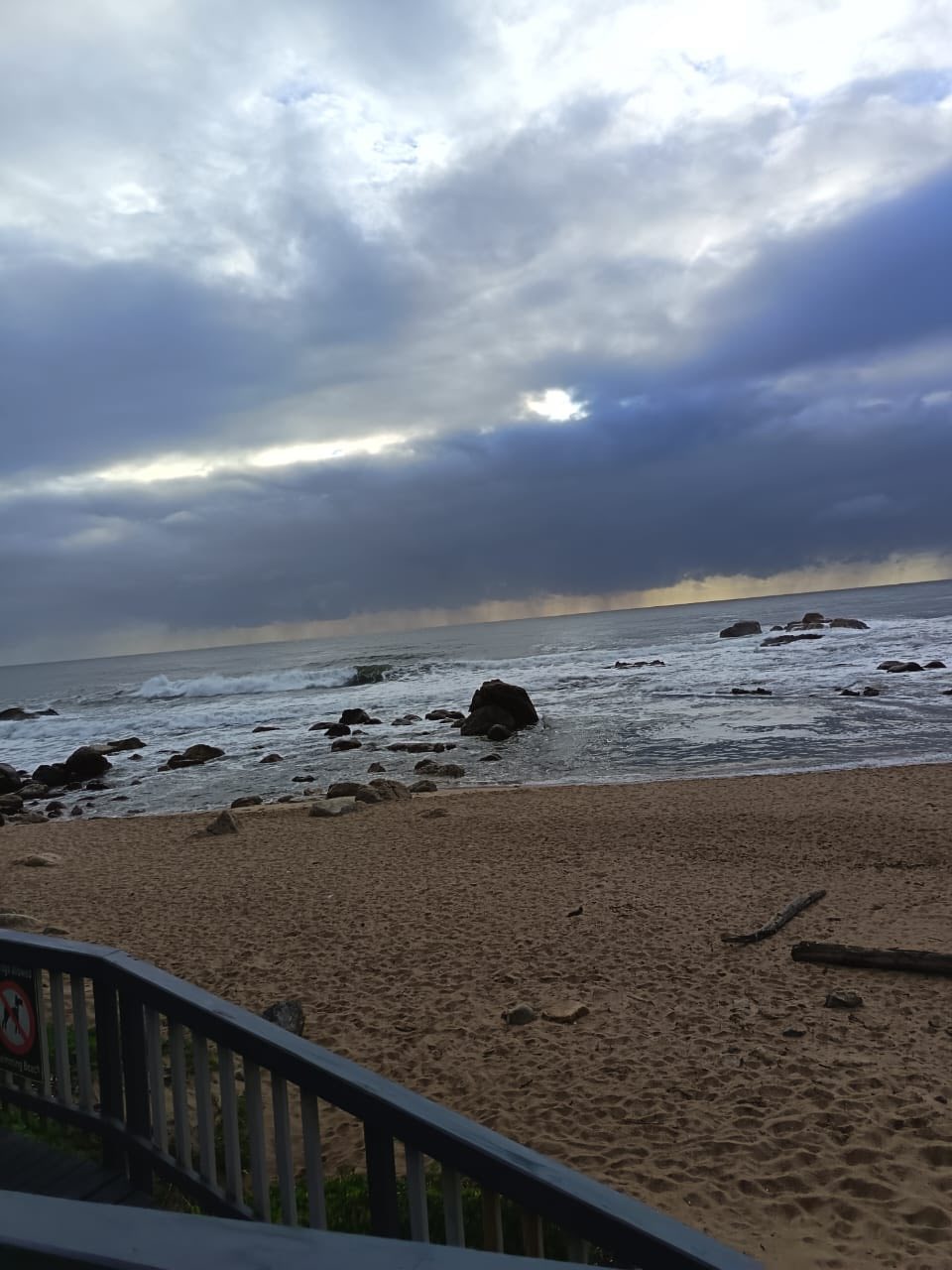
83. Southbroom Main Beach Tidal Pool

The tidal pool on Southbroom beach was given a facelift in 2014. See the video below. 
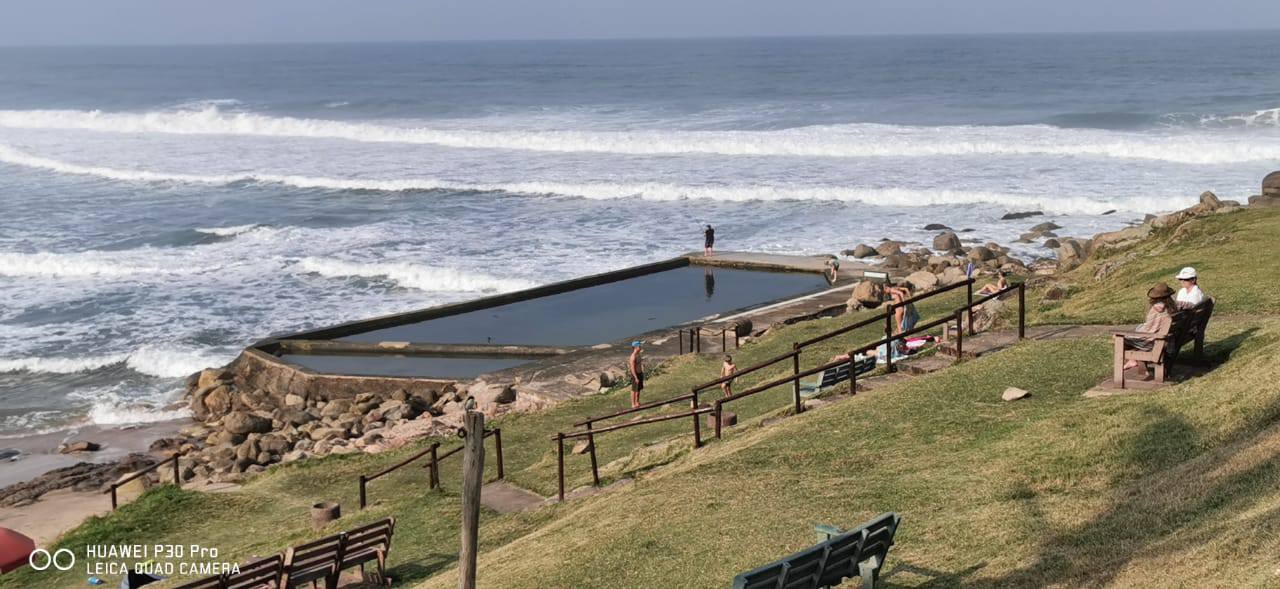
84. Noel Tidal Pool, Ramsgate

The pool was built in 1973 by local resident Noel Quarry. She was a pioneer in the town and the owner of the famous Crayfish Inn hotel, restaurant, and pub. Built on the rocky inter-tidal shore, the pool was designed to provide a safe, calm swimming environment. It is naturally refreshed by the changing tides, often bringing in small fish for swimmers to see. It is positioned on the right-hand side of Ramsgate's main beach, near the parking area for the whale watching deck.
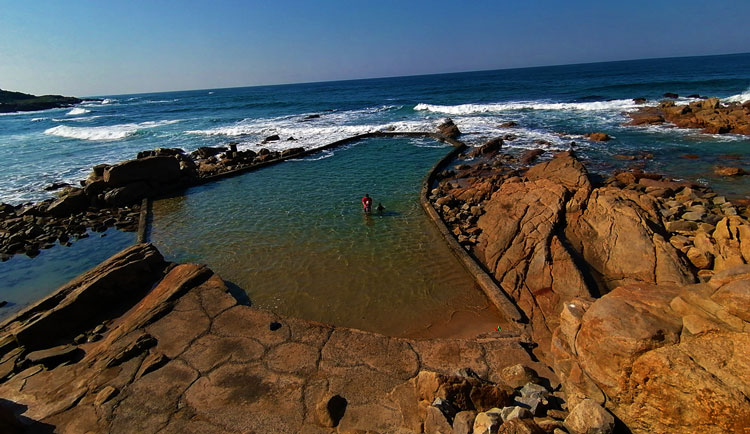
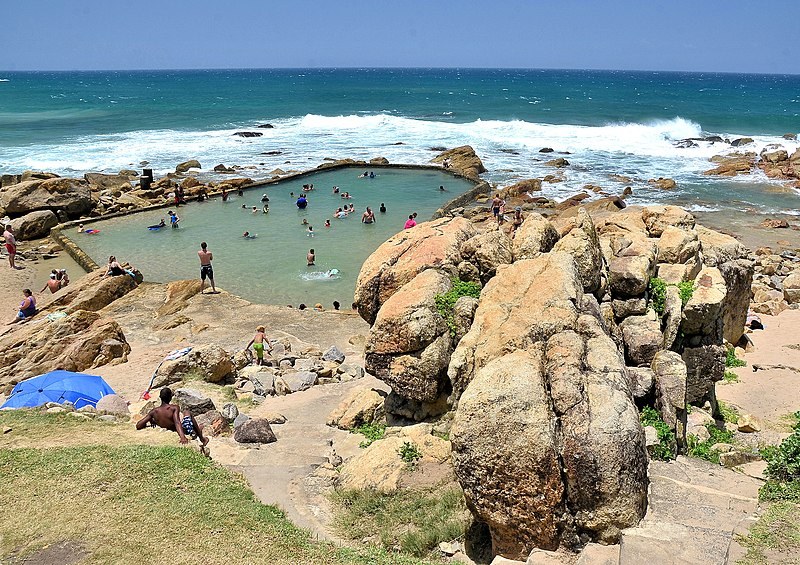
85. Margate Tidal Pool

The town of Margate was laid out in 1908 and later developed as a recreational area in the 1920s. The construction of swimming facilities, including tidal pools along the Natal South Coast, occurred to provide safe bathing areas free from sharks and strong rip currents, which are common in the Indian Ocean. 

The tidal pool was used for school swimming and school activities. Residents have described it as a "school pool" during the late 1960s, with memories of it being used for school-related activities.

Swam many kilometers in that pool Had Galas there before Margate Primary had a pool
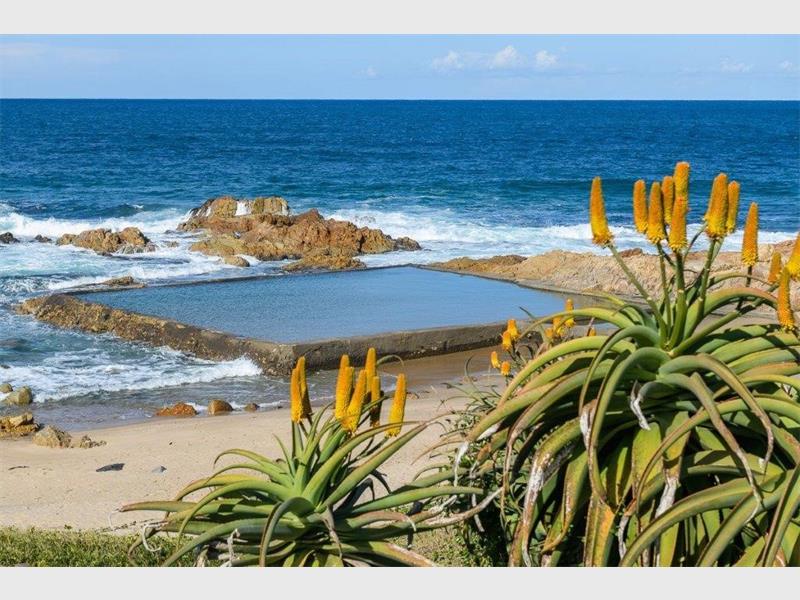
2026 - For two decades, the once popular tidal pool in Margate on the KwaZulu-Natal South Coast was non-functional but, thanks to the Margate Urban Renewal Project, it has now been restored to its former glory.
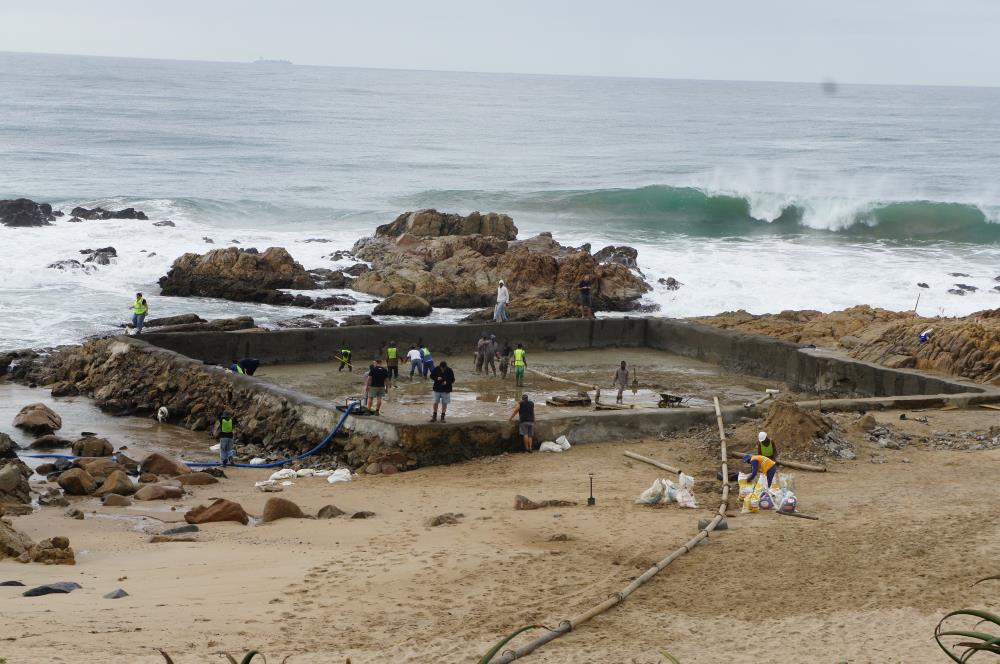
86. Margate Olympic Pool

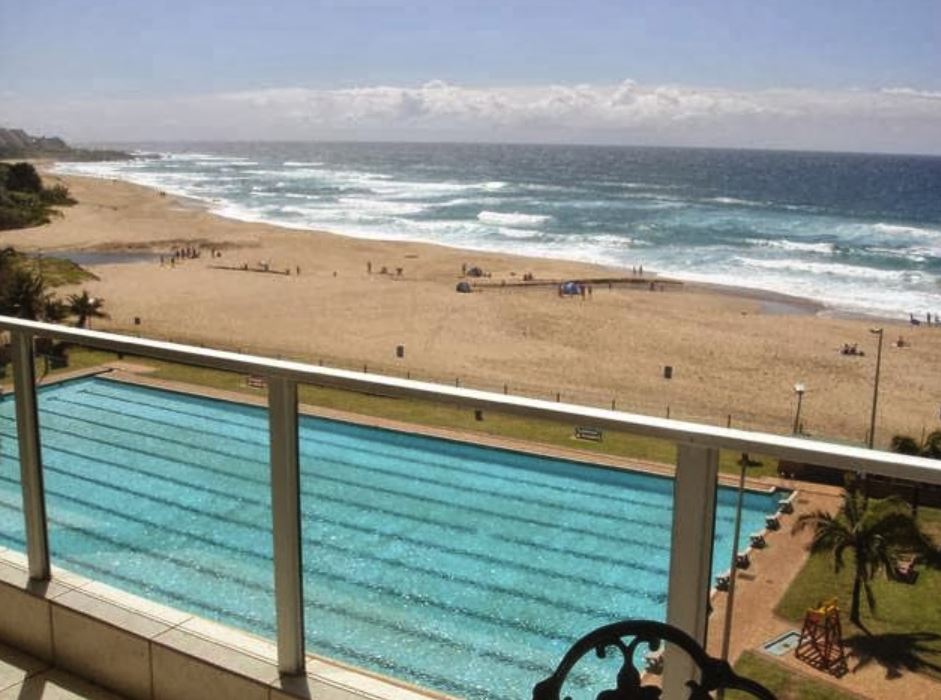
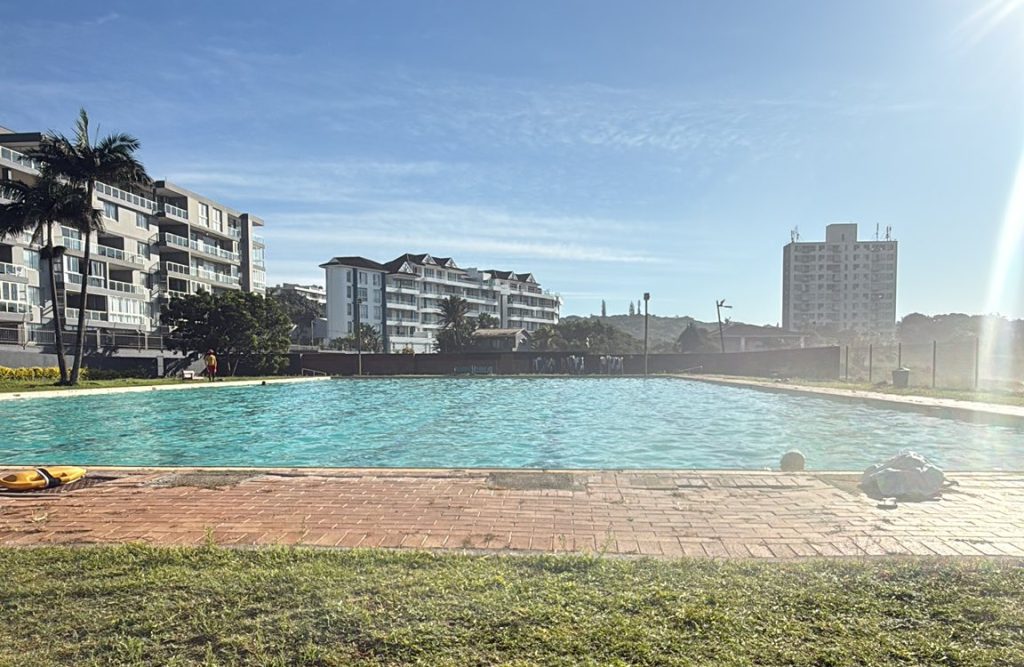
The facility is a 50m x 25m, 10-lane outdoor pool that attracts swimmers year-round. It is the only Olympic-sized swimming pool South of Durban. Historically, the pool was filled with seawater, similar to other coastal pools in South Africa built during that era. These include Orient in East London, Camps Bay, Beach Bath in Durban, and Macarthurs Bath in PE. At some point in its history, the pool was converted to freshwater/chlorinated water. 

It is generally believed to have been constructed in the late 1970s, following the addition of a kiddies' pool in the late 1950s. A major upgrade occurred on the beachfront, including the construction of the new Margate Lifesaving Club and lifeguard house adjacent to the pool.
87. Lucien Tidal Pool, Margate

Founded around 1919, the town is situated roughly 127 km south-west of Durban, and it serves as the vibrant "holiday capital" of the South Coast. 

Lucien Beach, which was named after the Lucien Hotel. The hotel was built by the Van Dongen family, specifically the grandfather of the current descendants, in the Manaba area. It was named in memory of his great aunt, who tragically died in a bombing in Europe during World War
88. Uvongo Tidal Pool

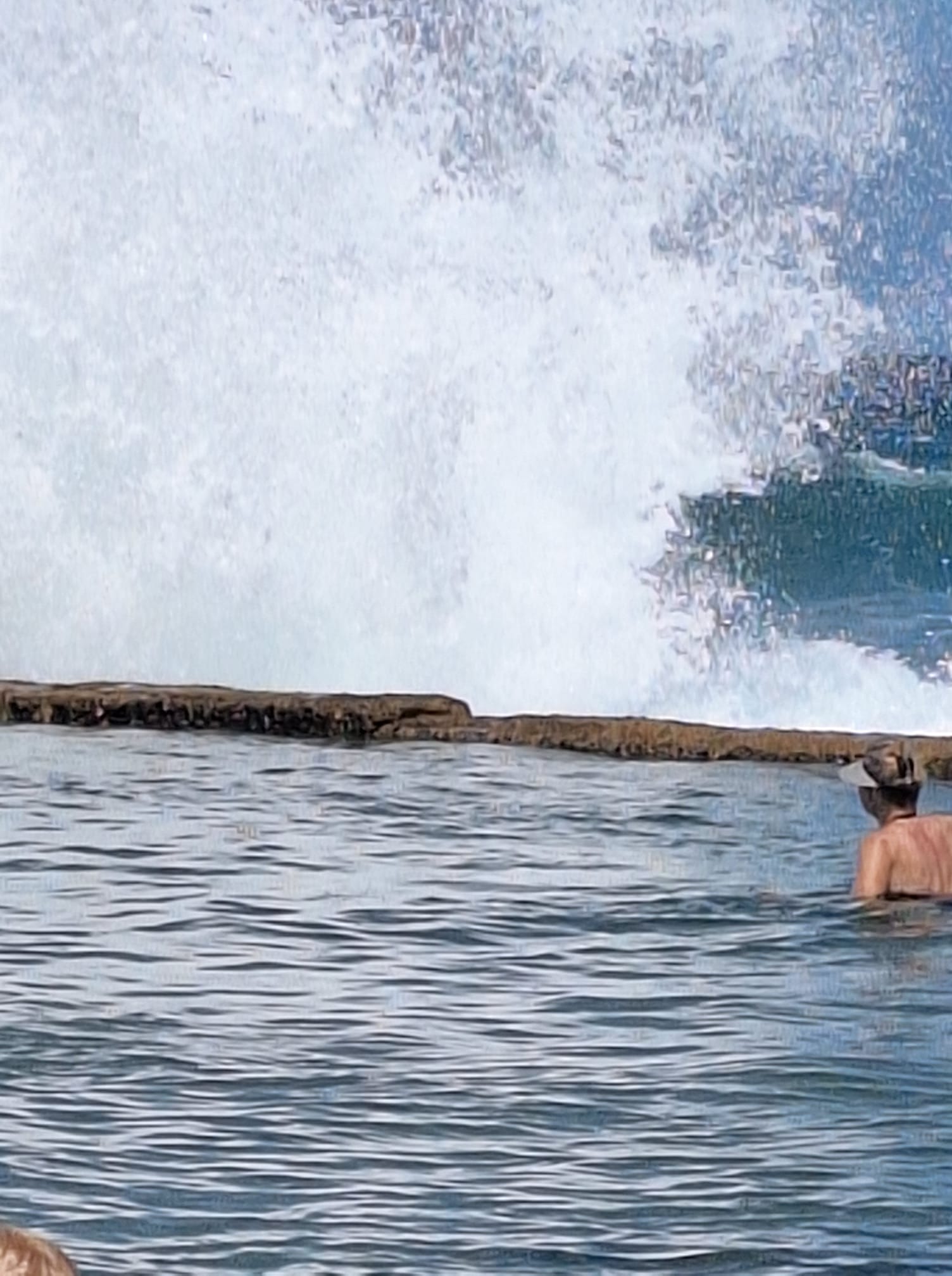
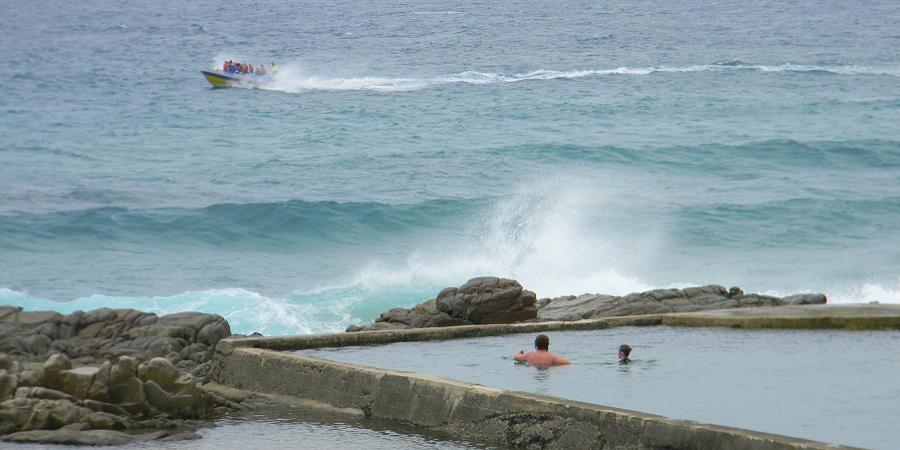
Uvongo has developed from a seaside destination into the largest upmarket residential area on the Lower South Coast of KwaZulu-Natal.

Most tidal pools along the Natal South Coast were constructed in the early 1950s. This was driven by a surge in shark attacks during that era, which led authorities to build protected enclosures for safe sea bathing. The town of Uvongo itself was laid out as a "garden village" by surveyor T.C. Lilliecrona. 

The design of these pools is rooted in British coastal culture, which introduced the concept of "taming" the ocean for leisure and health benefits during the interwar and post-war periods.
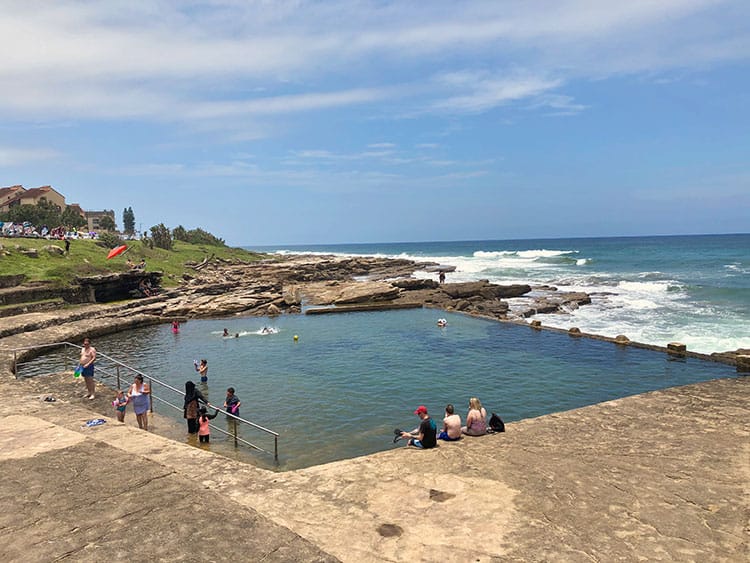
89. St Michael's-on-Sea Tidal Pool

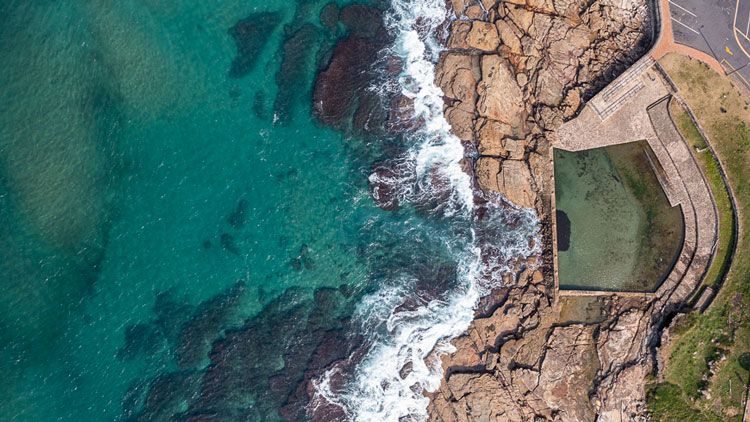
The town was established as a quiet holiday resort destination, famous for surfing, fishing, and a 9-hole golf course. It is widely recognised for its Blue Flag status, highlighting the beach's pristine nature. 
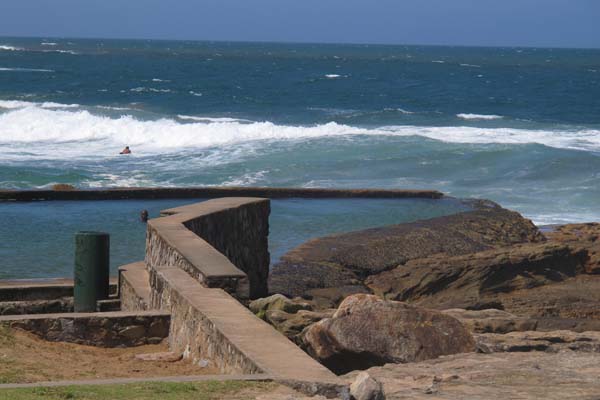
90. Shelly Beach Tidal Pool

There are two tidal pools on Shelly Beach. The largest is the Metropole Beach pool, which is the historical name for what is today known as the Shelly Beach Tidal Pool. In decades past, the beach was often called "Metropole" after the Metropole Hotel that once overlooked the shore before being demolished in the late 1960s

Safe swimming (with shark nets), beachcombing (shell collecting), and lifeguards on duty make this beach ideal for families.

The second pool is further east, at the other end of the beach. 
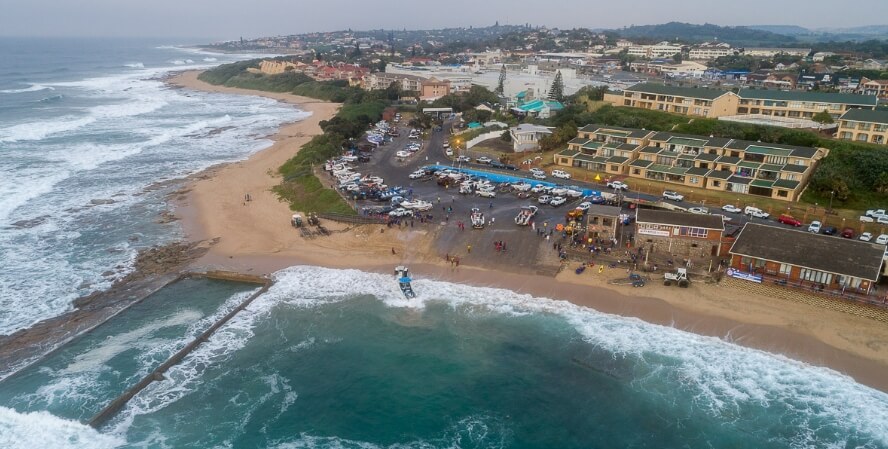

91. Shelley Beach
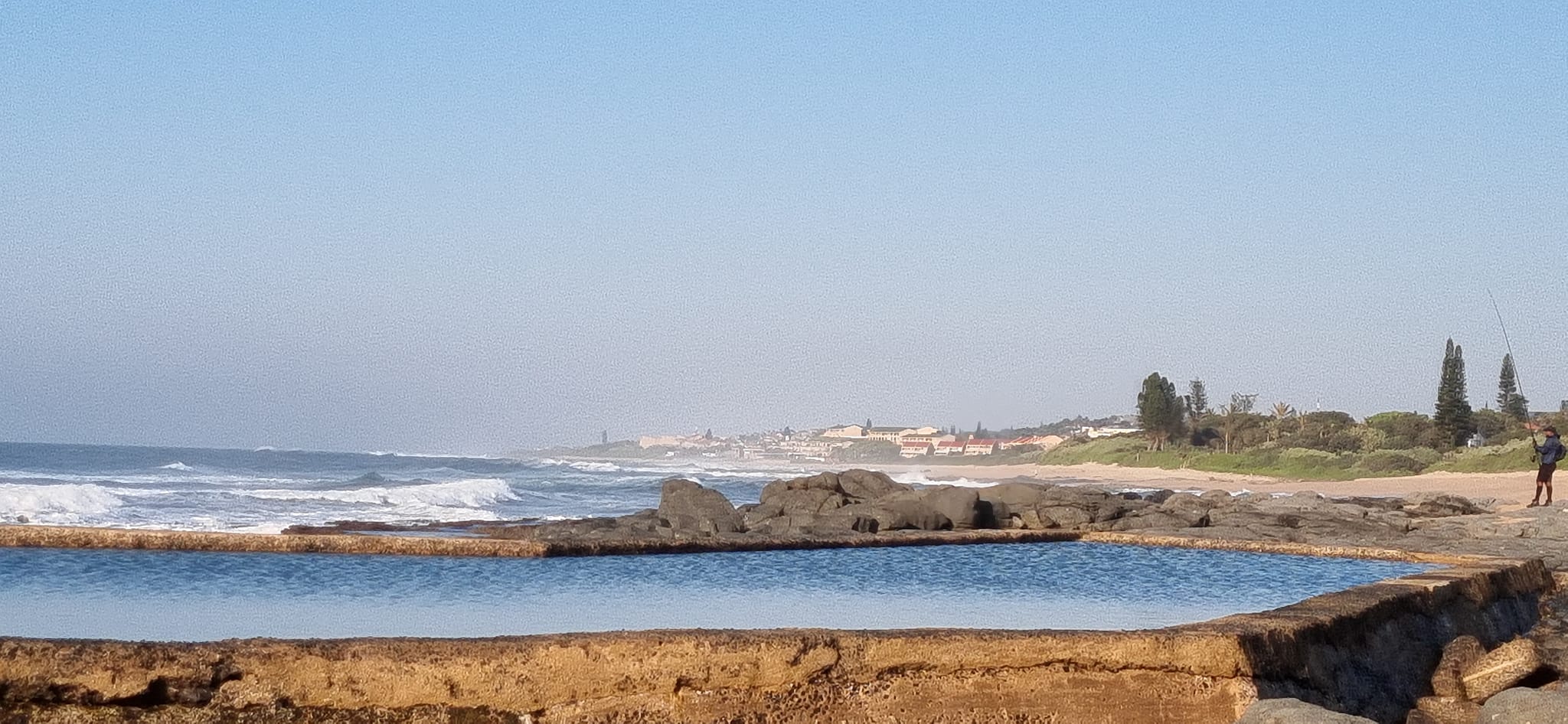
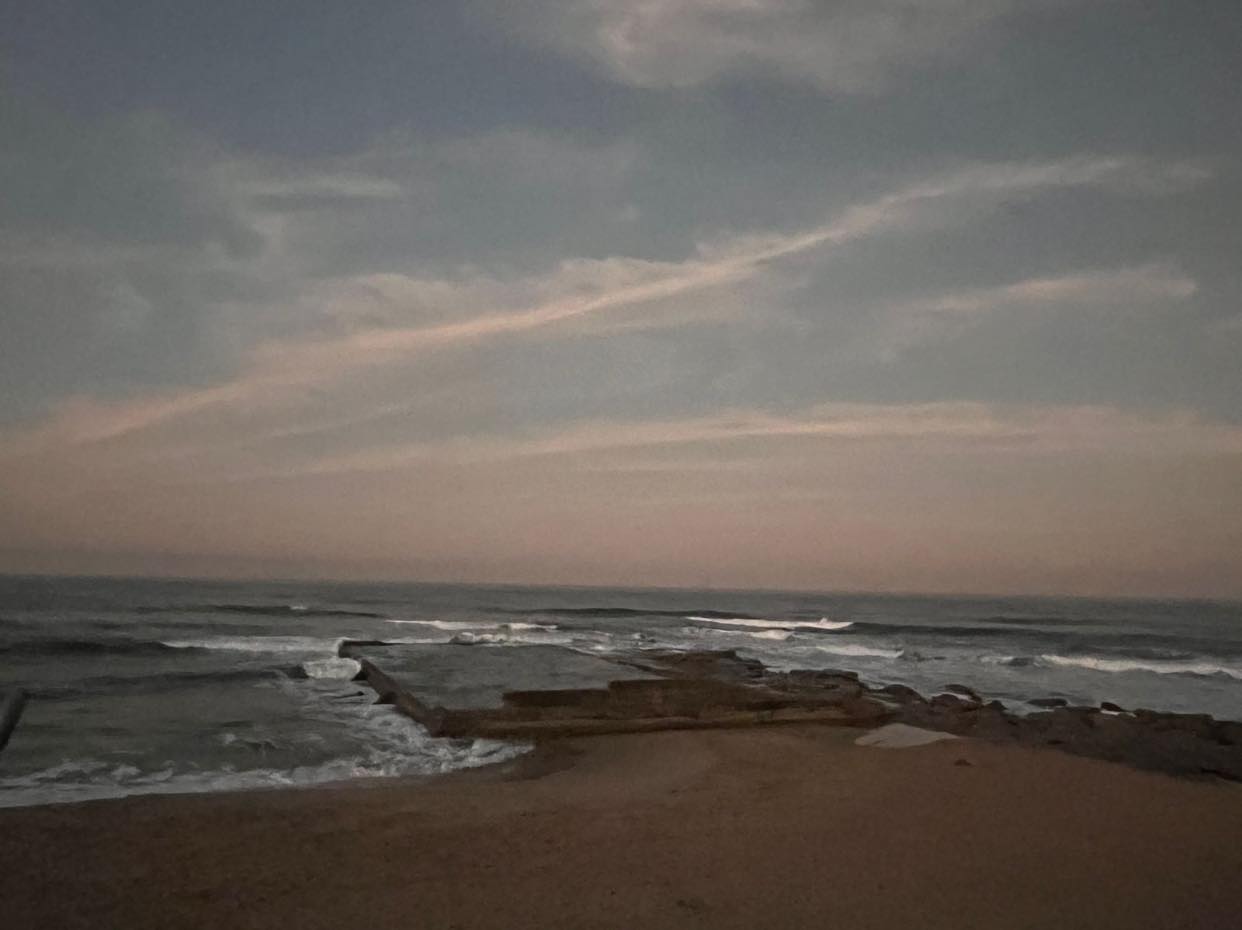
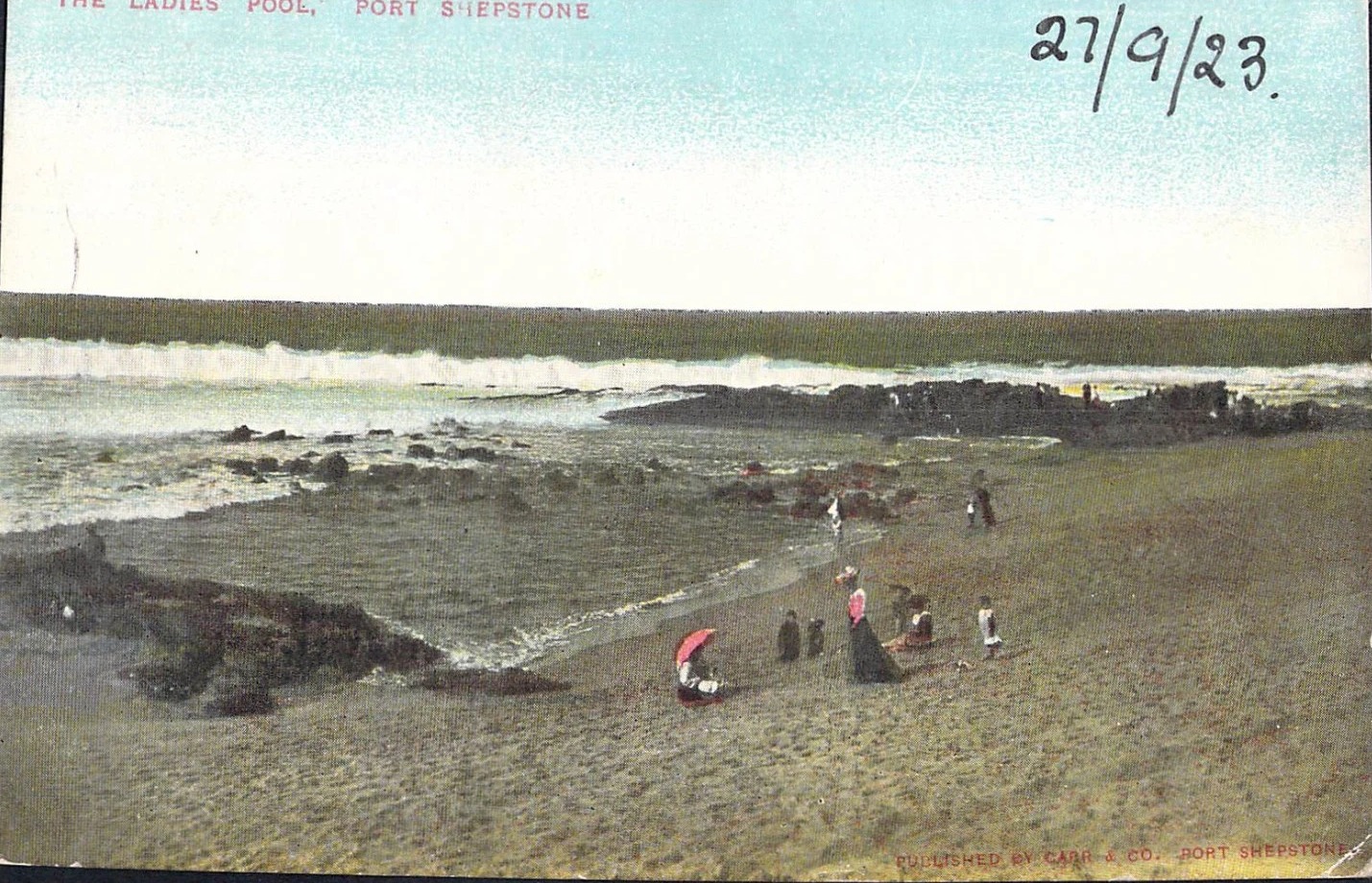
92. Port Shepstone Tidal Pool

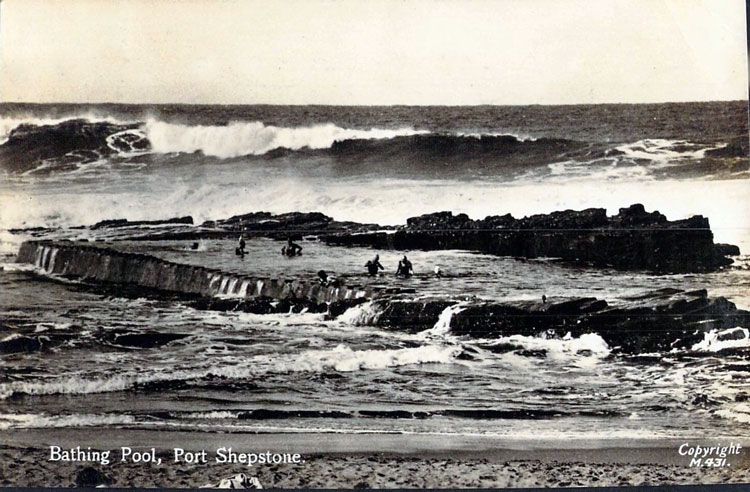
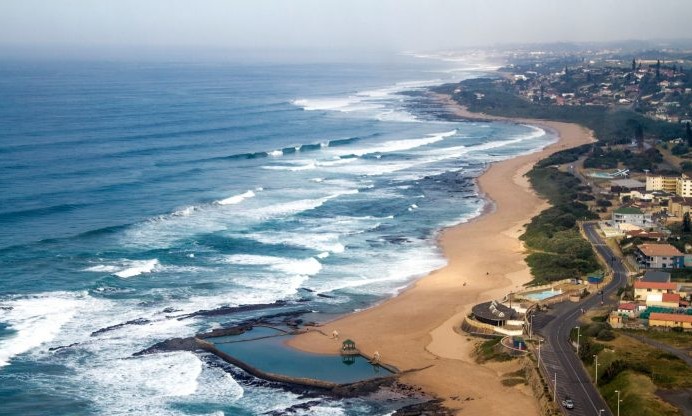
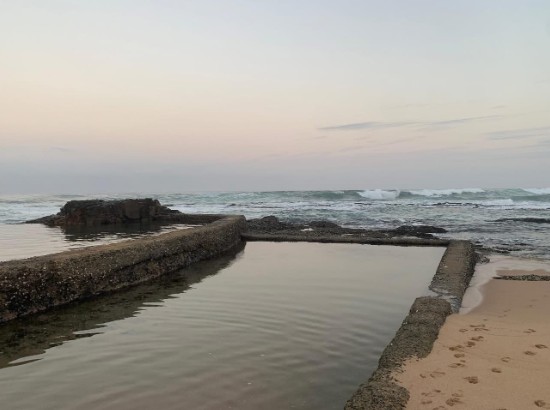
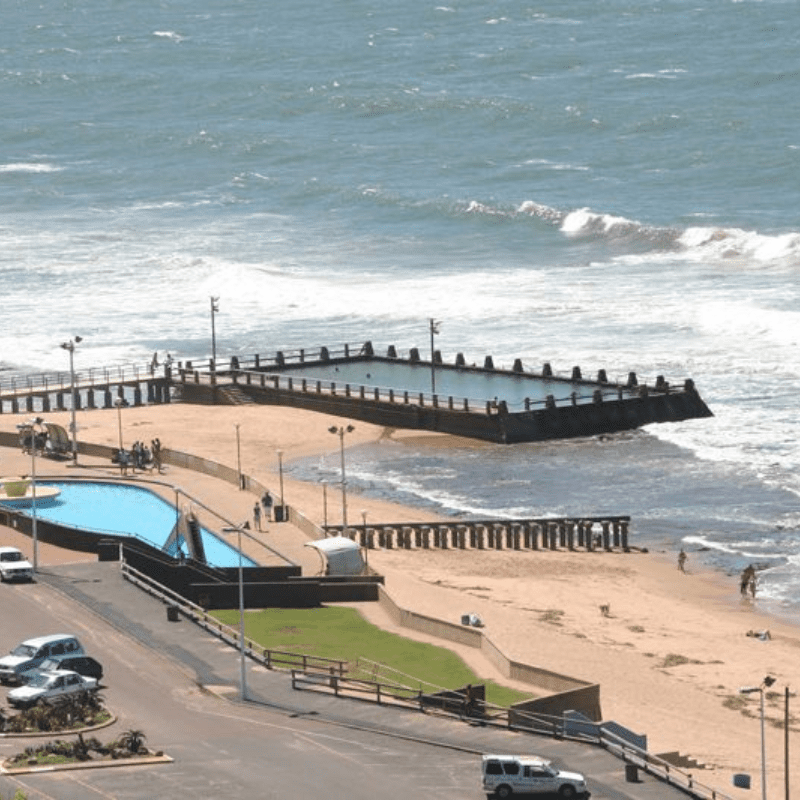
The tidal pool is simply put, huge!  Have a look at the right hand corner of the pool where the life guard is paddling to get a better understanding of how big it really is.  The pool is divided into three sections; the big pool with two smaller pools at the end of it.

The Port Shepstone Tidal Pool is one of the oldest and largest man-made tidal pools in South Africa, with its origins dating back more than a century. The pool is divided into three distinct areas: a large main section for distance swimming and two smaller, shallower sections specifically designed for children.

  • Early Construction: Records indicate that a tidal rock pool existed at Port Shepstone as early as 1923. The pool was part of a broader movement in South Africa to create "tame" swimming spots for holidaymakers.
  • Expansion & Safety: Many South Coast tidal pools were significantly upgraded or built in the early 1950s following a series of shark attacks along the Natal coast, which heightened the demand for protected bathing areas.
  • Town Growth: The development of the pool mirrored Port Shepstone's rise as a premier holiday destination, often compared to Blackpool in England. Its popularity grew alongside the town's maritime history, including the arrival of Norwegian settlers in 1882 and the construction of the iconic black-and-white checkered lighthouse in 1906. 
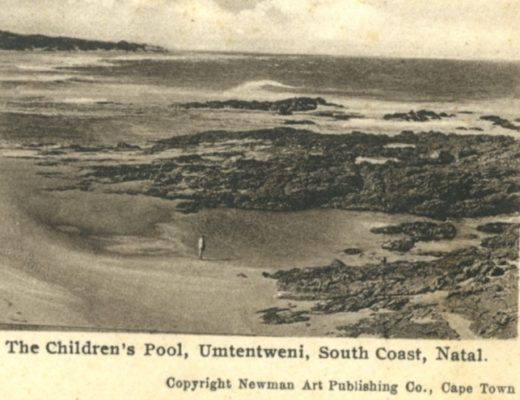
93. Umtentwini Tidal Pool

Known locally as the Granny Pool (a common name for South African tidal pools!), it has served generations of families.
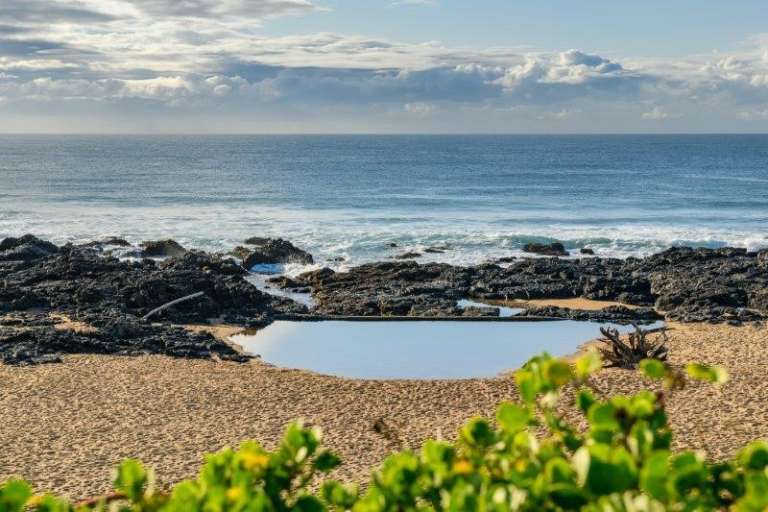
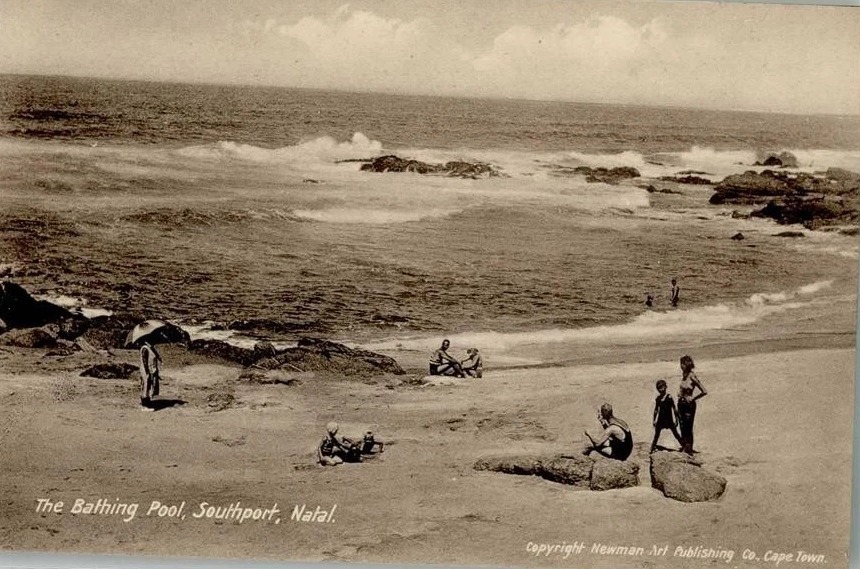
94. Southport Tidal Pool

The Southport Tidal Pool at high tide. 
95. Anerley Tidal Pool

The pool was constructed in the early 1950s as part of a regional beach-improvement initiative, providing a safe, sheltered swimming spot, often used by local scouts for badge testing
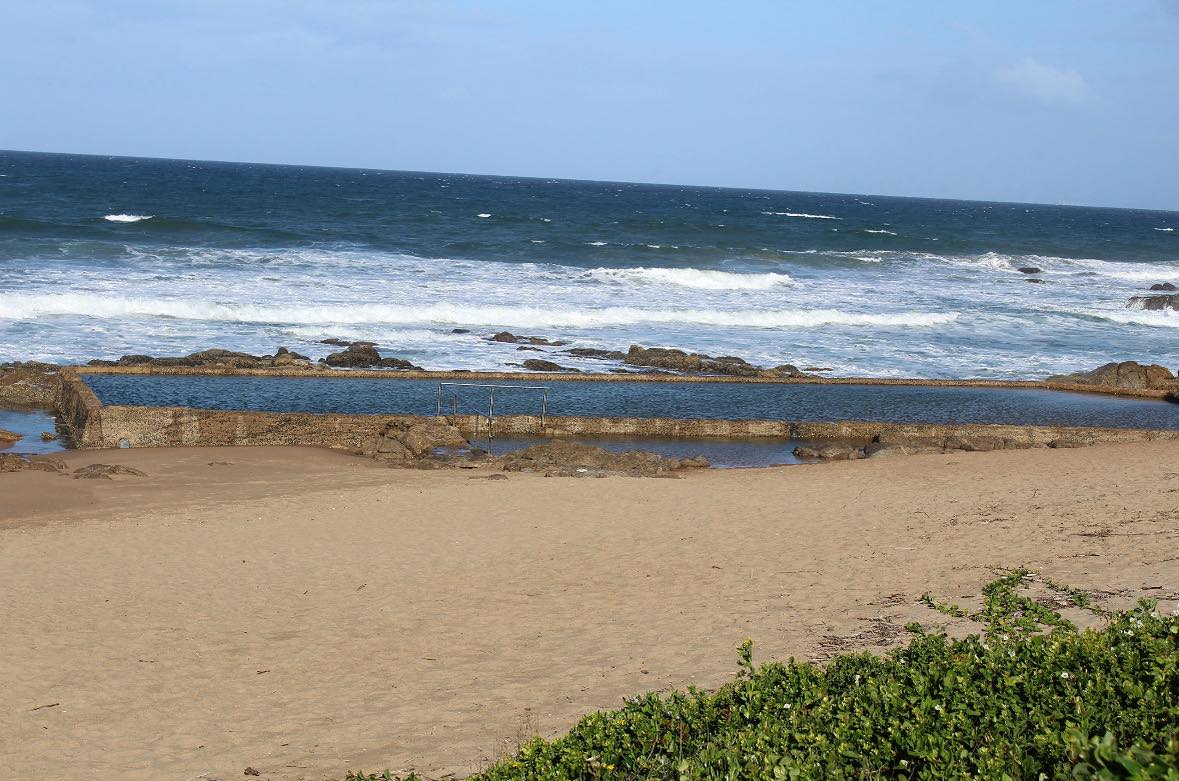
96. Sunwich Port Tidal Pool

The tidal pool was filled to the edge with sand after a very energetic spring tide, turning it into a shallow pool that is ideal for smaller children.  Over time, some of the sand was washed away as the tides came and went and it is around hip height at the deeper side now.
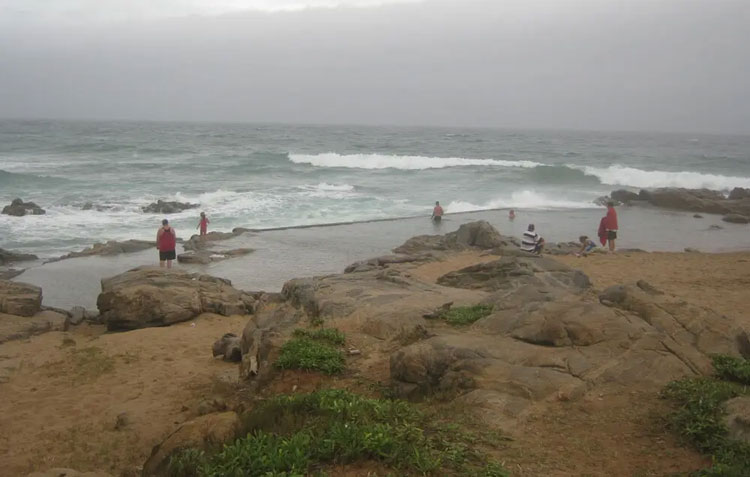
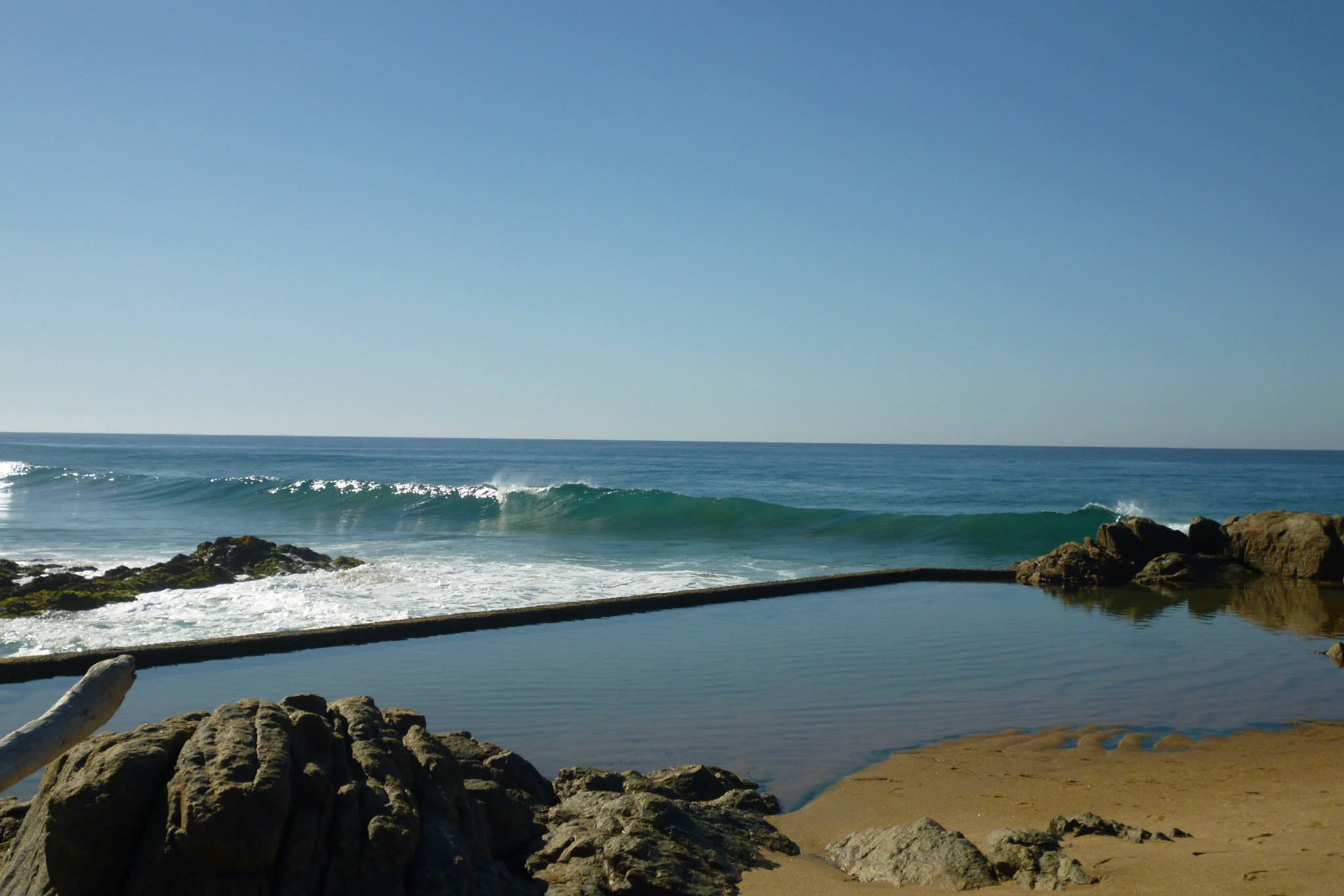
97. Banana Beach Tidal Pool
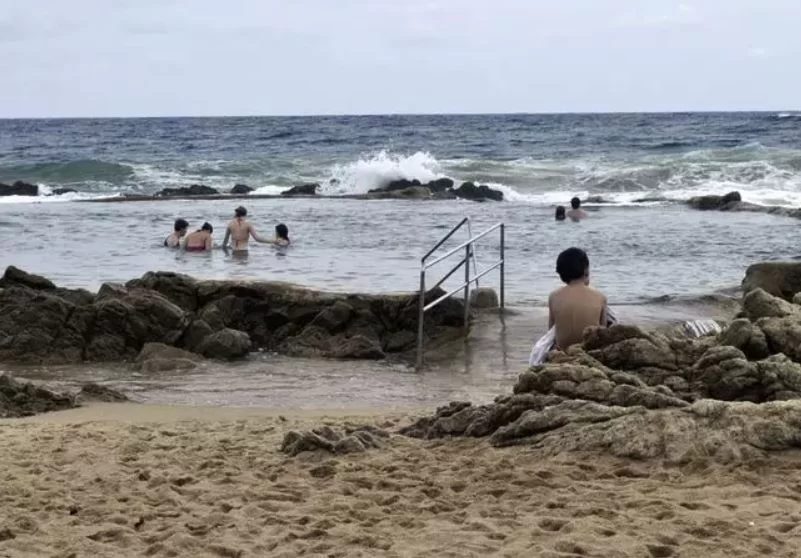
98. Pumela Beach Tidal Pool

The tidal pool seems to have been abandoned.
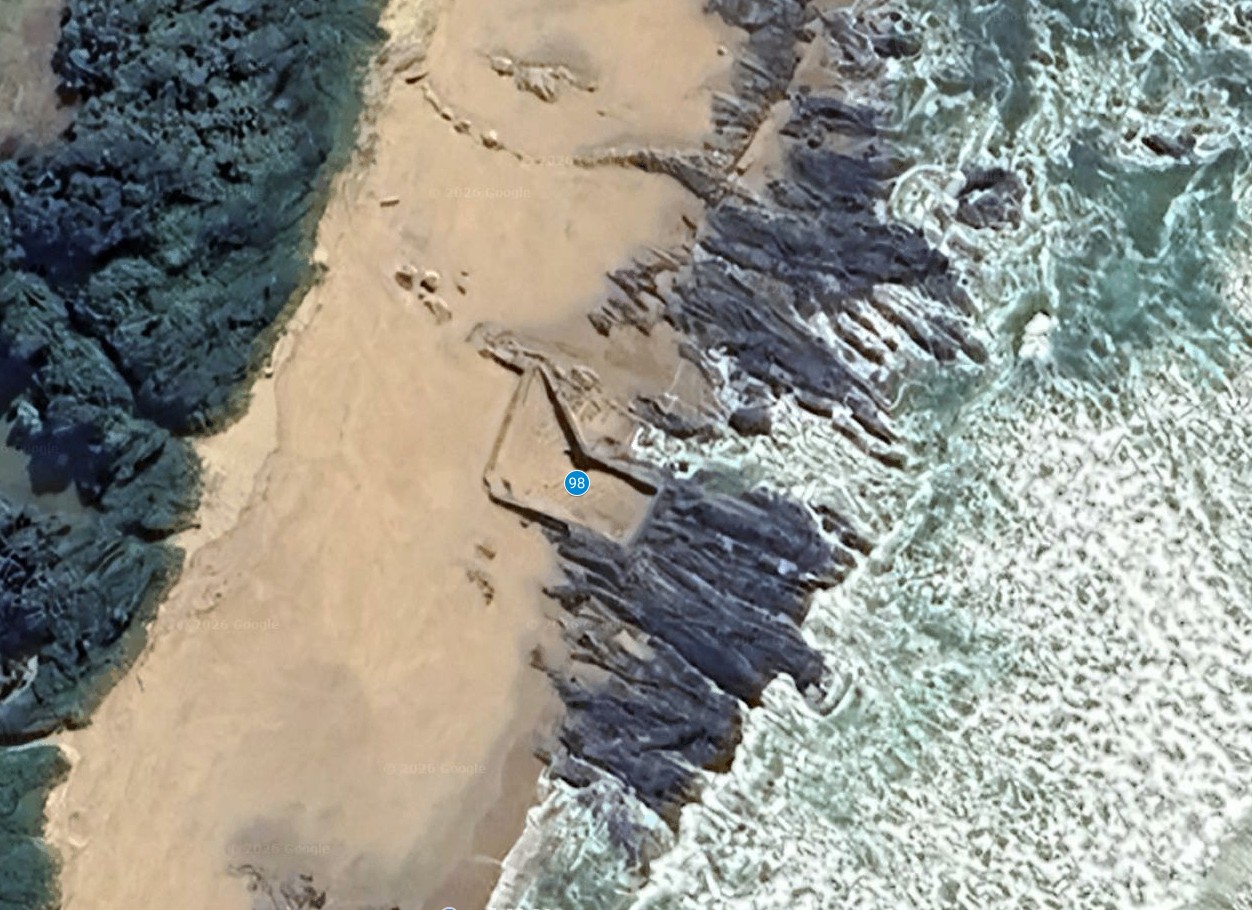
99. Umzumbe Tidal Pool

The tidal pool has served as a centre for family holidays for generations at the Pumula Hotel. It is situated on what was once part of the "Ararat" farm, owned by Lady Charlotte St Claire Moor in the 1920s. 
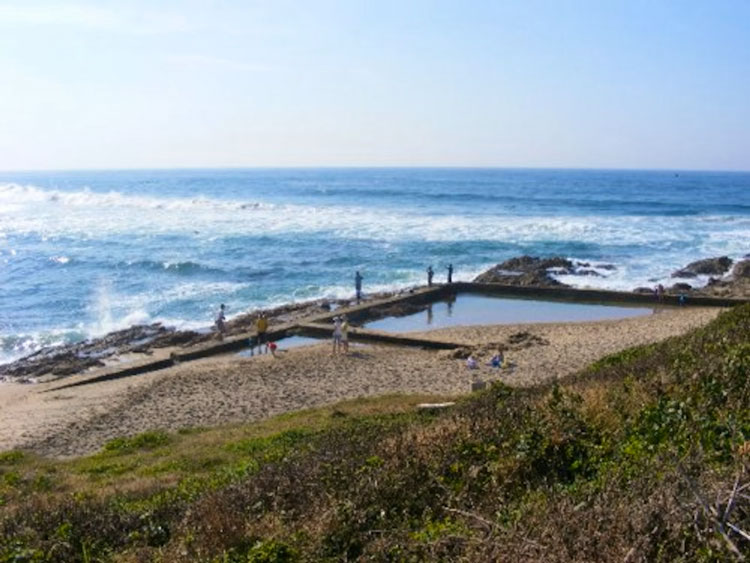
100. Hibberdene Beach Tidal Pool

The tidal pool is at the Mercury Hibberdene Children's Holiday Home, which provides free holidays and life-skills programmes for underprivileged and destitute children. Established in 1930 by The Mercury newspaper during the Great Depression, it was designed to bring joy to children from impoverished families across KwaZulu-Natal
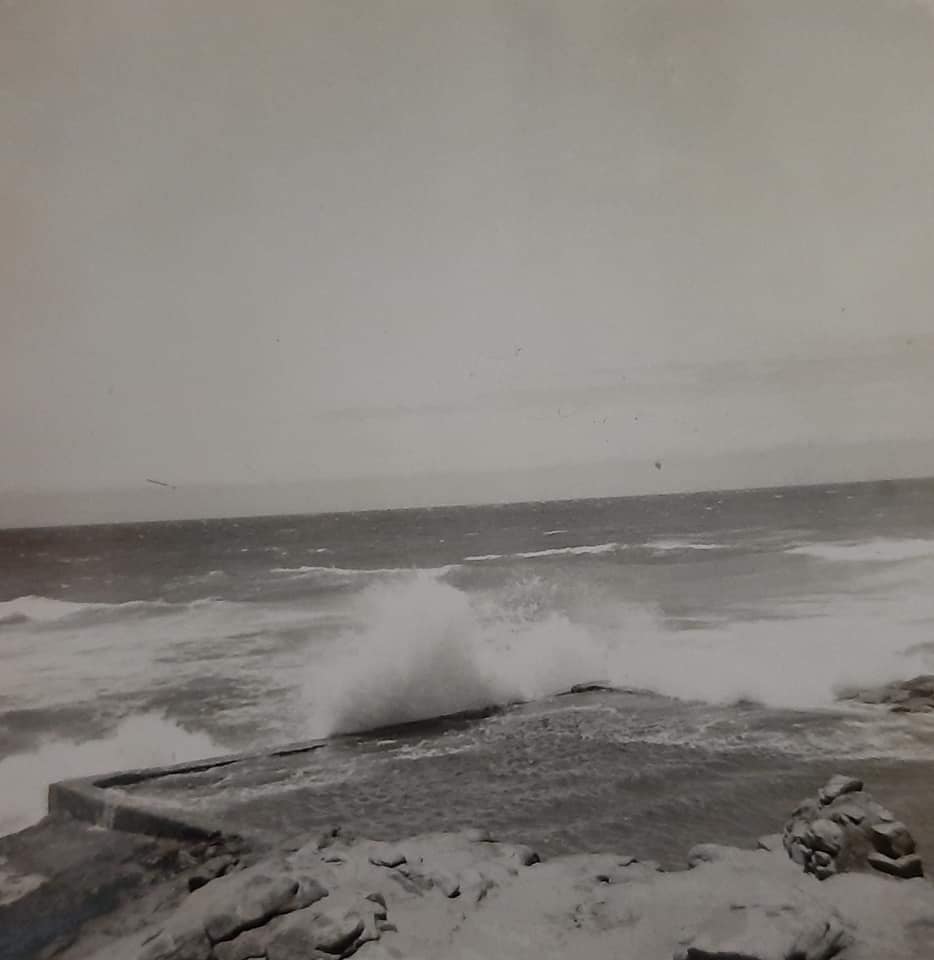
101. Mtwlune Tidal Pool

Mtwalume itself evokes an era of "simpler coastal retreats". The village was once a stop on the "Banana Express," a narrow-gauge steam train that historically transported local produce and holidaymakers along the South Coast.
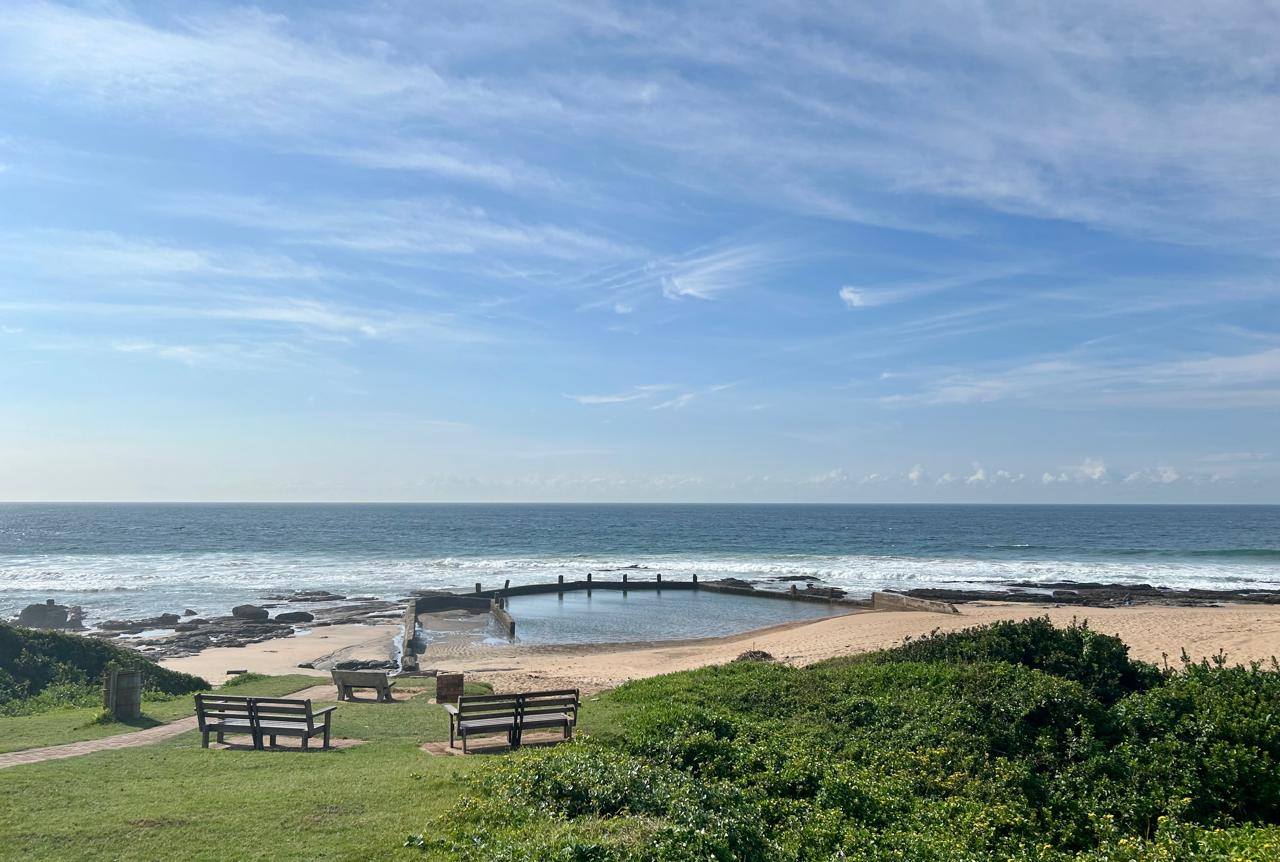
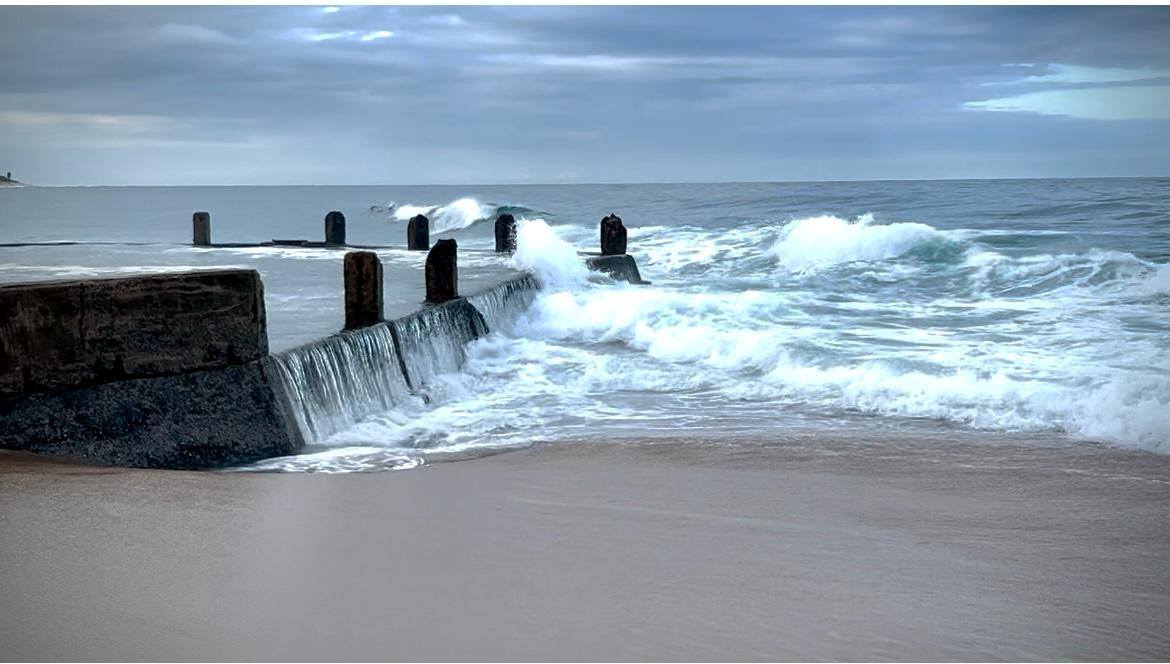
102. Ifafa Beach Tidal Pool

Modern development began in the mid-1800s with the Goldstone family. Samuel Goldstone, a stonemason and Byrne settler from England, established himself in the area in 1851 after an unsuccessful farming venture near Richmond.
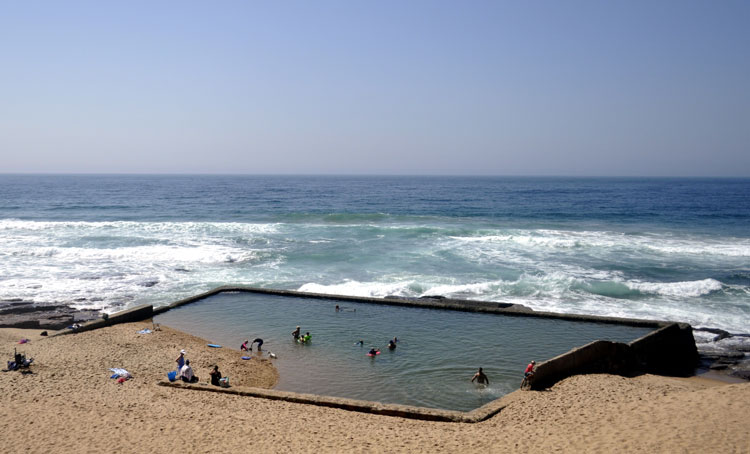
103. Botha House Tidal Pool
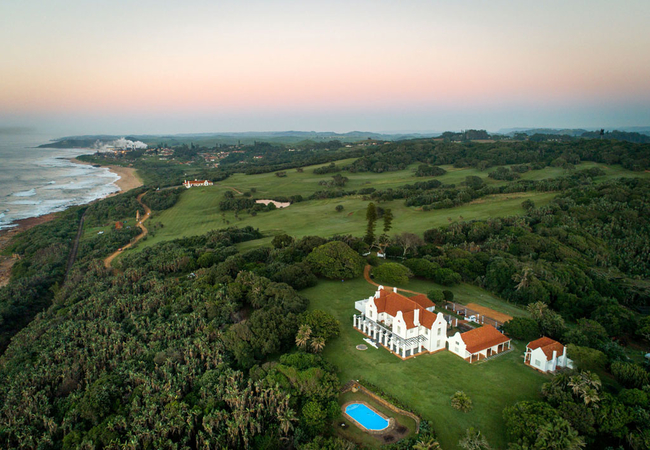
Botha House Overview

Botha House, located in Pennington, Natal, was built in 1920 by Sir Frank Reynolds as a "beach cottage" for South Africa's first Prime Minister, General Louis Botha, and his wife Annie. It included a nearby tidal pool created by blasting rocks in 1920.

The entries dated June 1918, November 1918 and January 1920 are extracts from Sir Frank Reynolds' diary: 
June 1918 “Before June ended, a surveyor named Hall was at work on the new project (Umdoni Park), and helped Sir Frank select a good place in the rocks at the sea’s edge for a swimming pool. Carl Hall was a civil engineer and surveyor of great ability. He was son-in-law to Bishop Bousfield, first Bishop of Pretoria.”
November 1918 - “Hall came again in November to lay out the swimming pool.”
January 1920: “Down at the swimming pool the ladies’ dressing room had been in hand for some two weeks, and the last rocks blasted away to allow high tide to fill the pool.”
9 January 1937 - An extract from a letter written by Annie Frances Bland (Emmett) Botha about the tidal pool: - "I hear you have had nice rain - & here we are almost crying for rain - only the sea is happy, it makes such a noise! The pool has been cleaned out & now it has become quite deep – but the crabs & fishes & all kinds of goggas have disappeared - so when Louis comes again, he will have to fish in the sea - but you can both bathe in the pool."
And so the Umdoni Point tidal pool came about long before the Royal proposed visit in 1952!
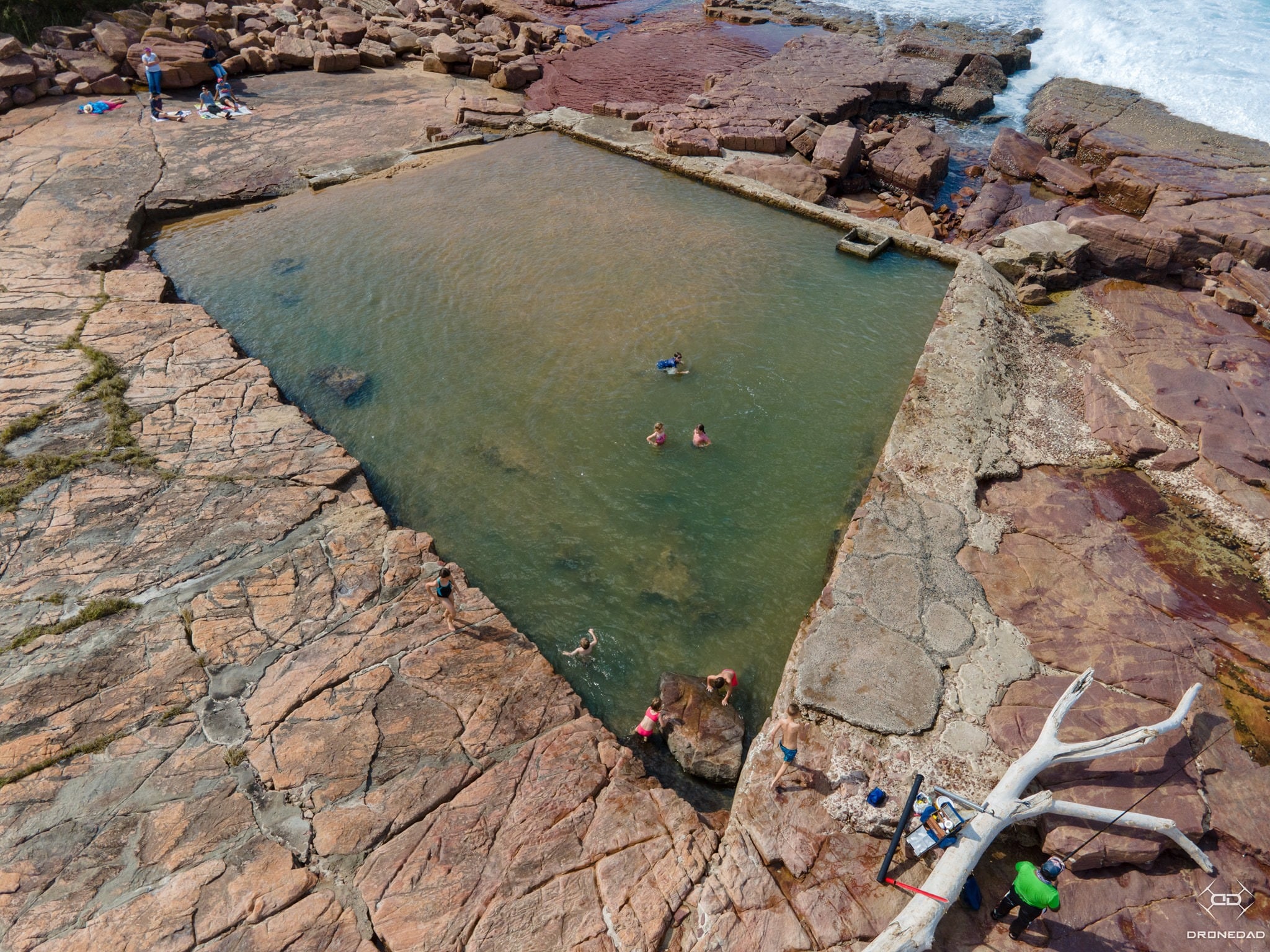
104. Pennington Tidal Pool

Small Town Spotlight: Pennington
The town boasts a rich history dating back to the late 1800s when the Pennington family pioneered farming in the area. Later, Sir Frank Reynolds, a prominent sugar magnate, transformed part of the land into Umdoni Park, named after native water myrtle trees. This park gained fame for hosting South African prime ministers in a seaside mansion, originally intended for a visit by British King George VI in 1952.

105-107. Park Rynie Tidal Pools

There are three tidal pools on the beach at Park Rynie, which was established in 1857. The town was named by John Phillip Hoffman, a partner in the firm Nosworthy & Co., which purchased the original farm in 1858. He named it after his wife, Catherine Renatta Hoets, whose nickname was "Rynie".

During World War I, Park Rynie became a significant maritime hub with the establishment of a whaling station at Rocky Bay, operated by Park Rynie Whales Ltd. Remnants of this era, such as a stone pier and breakwater used by whaling and fishing craft, are still visible today.

During the apartheid era, specific tidal pools at Park Rynie Beach were indeed reserved for different racial groups, with some designated specifically for Indian South Africans. Under the Reservation of Separate Amenities Act of 1953 (and its 1960 amendment extending to the "sea and seashore"), South African beaches and their facilities were legally partitioned by race. In Park Rynie, this resulted in a geographic divide of its tidal pools: 

  • 105 - Park Rynie Main Beach Pool: A third pool existed on the main beach between the northern and southern locations.
  • 106 - Southern Pool: Located near the area historically known as Preston (a traditionally white neighbourhood), this pool was reserved for white bathers.
  • 107 - Northern Pool: This was located in the traditionally Indian part of Park Rynie and was the primary tidal pool for that community.
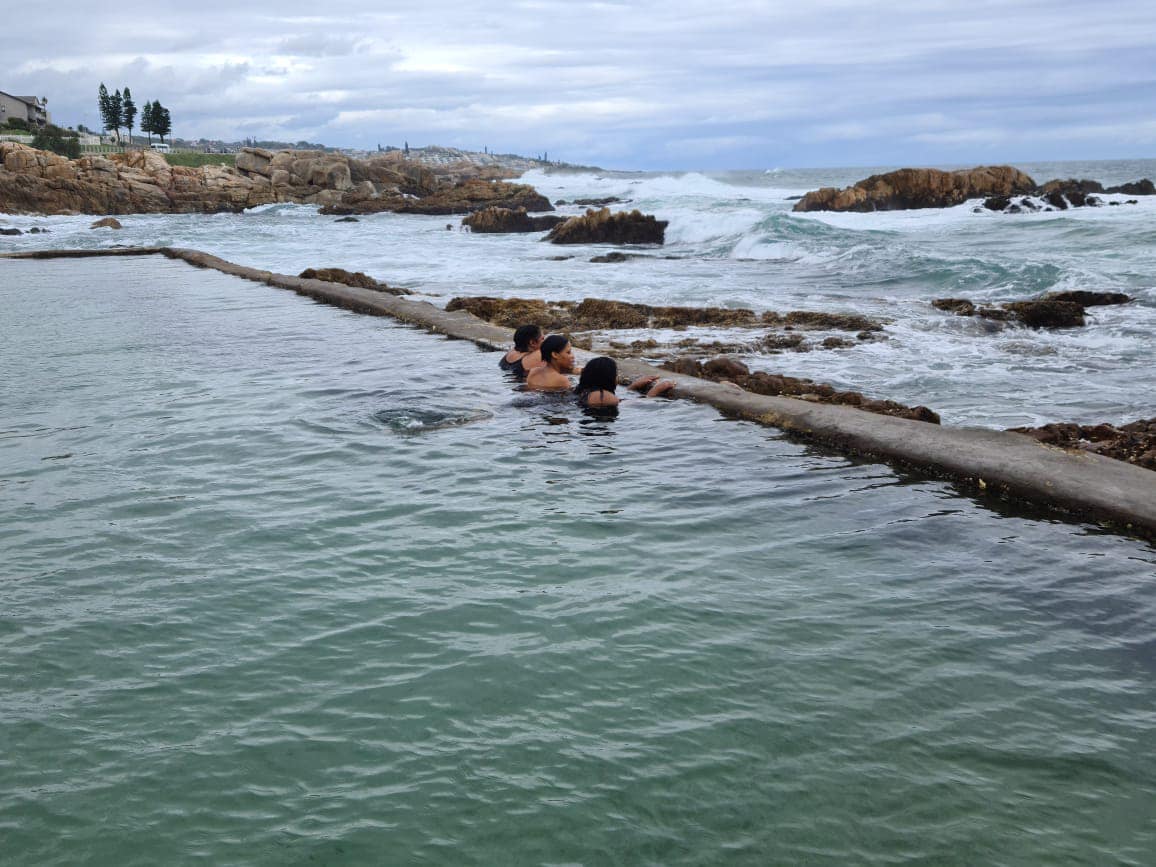
Park Ryne 1


106. Park Rynie South Tidal Pool

Park Ryne 2


107 - Park Rynie Northern Tidal Pool
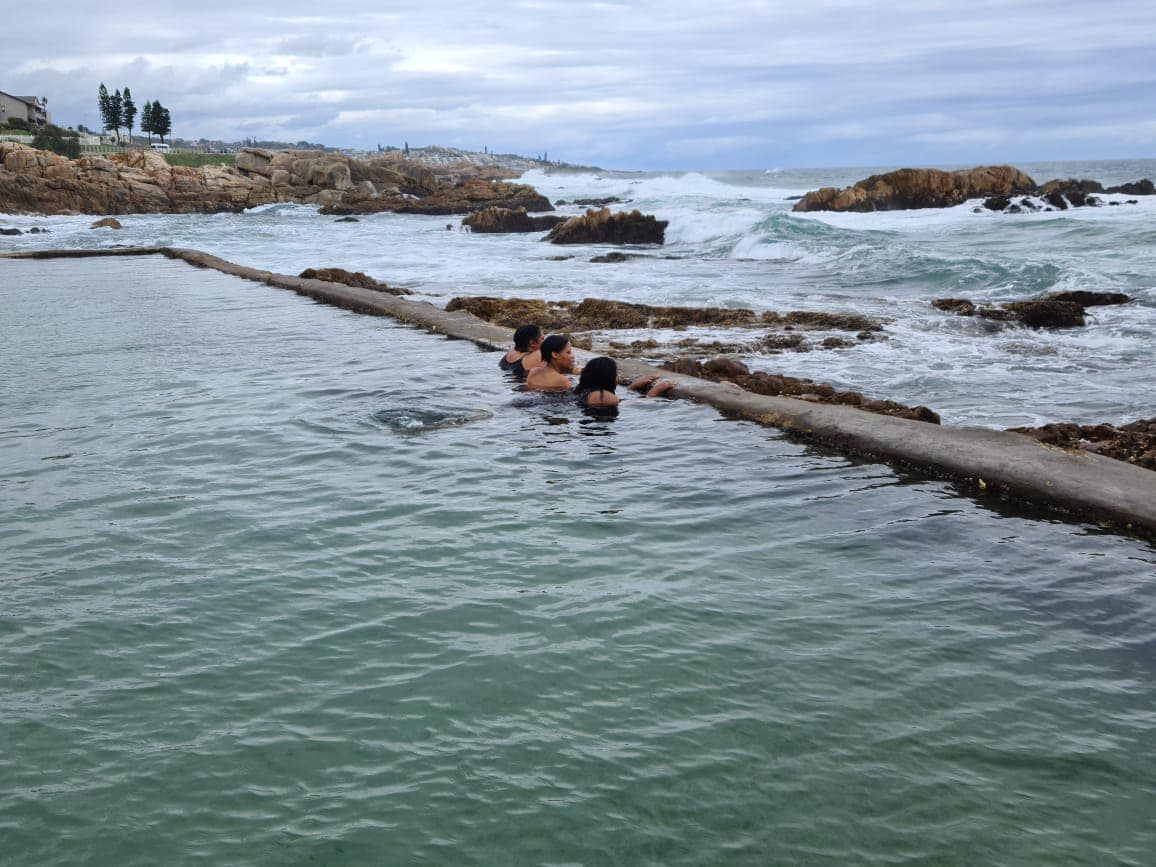
Park Ryne 3

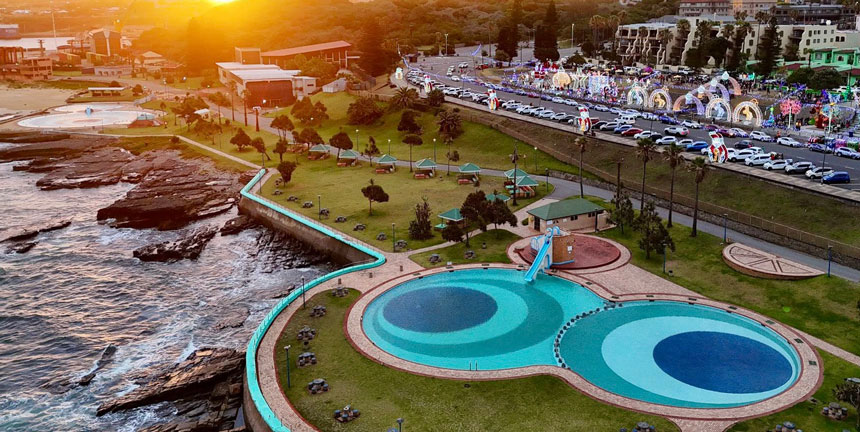
108. Scottburgh Tidal Pool

In 1860, Scottburgh became the first substantial township laid out south of Durban and named after Sir John Scott, the then Lieutenant-Governor of Natal. It initially served as a port for sugar exports and a base for fishing fleets near the Aliwal Shoal.
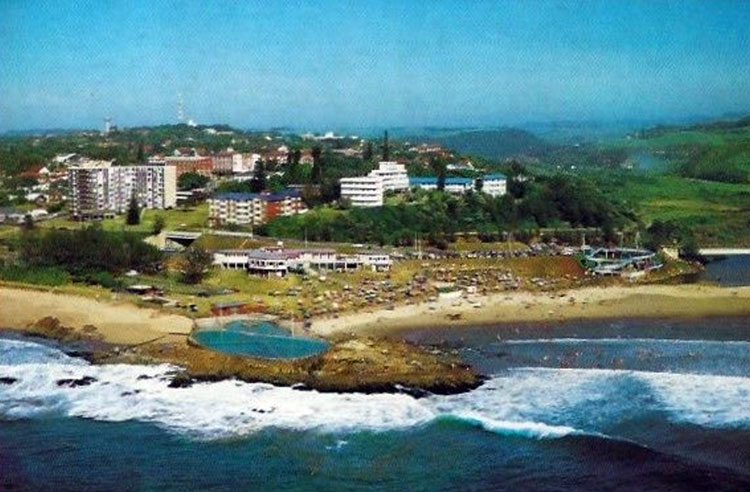
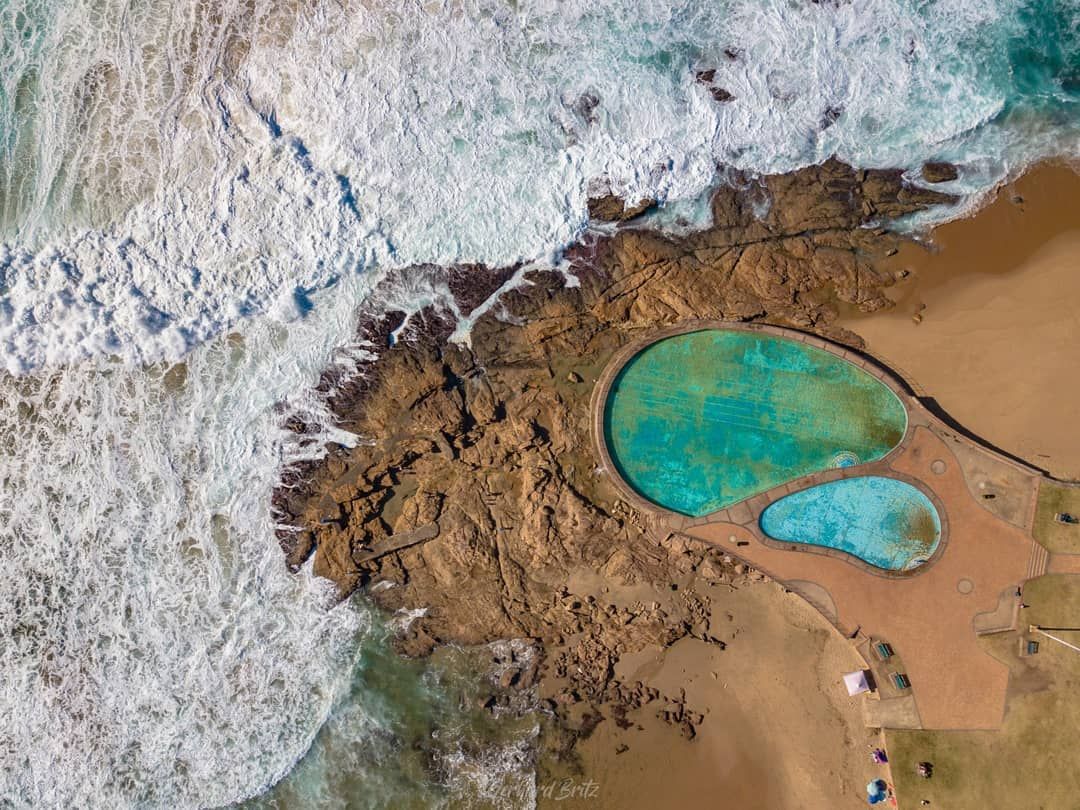
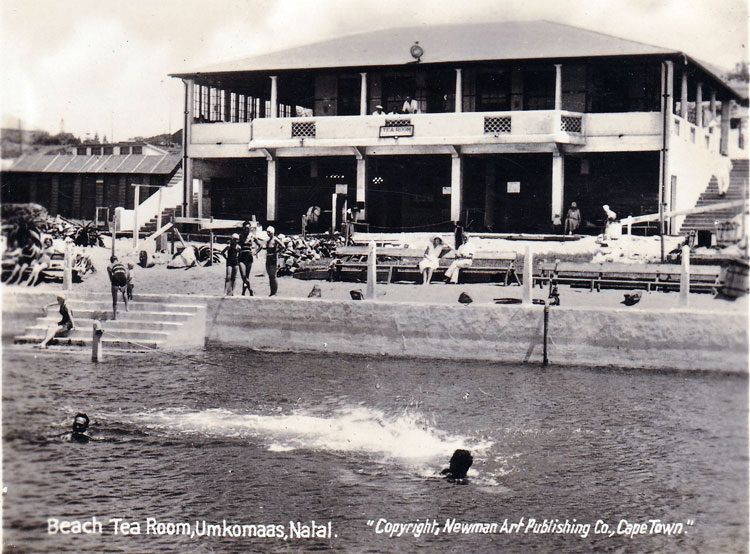
109. Umkomaas Tidal Pool

As early as 1905, Umkomaas was described as the "gem of the South Coast". It was then, given ideal conditions, a drive of about two hours from Durban on the old main road, crossing the river at the punt at the Drift. 

The tidal pool at the former Umkomaas Hotel, which is now known as the Lodge.
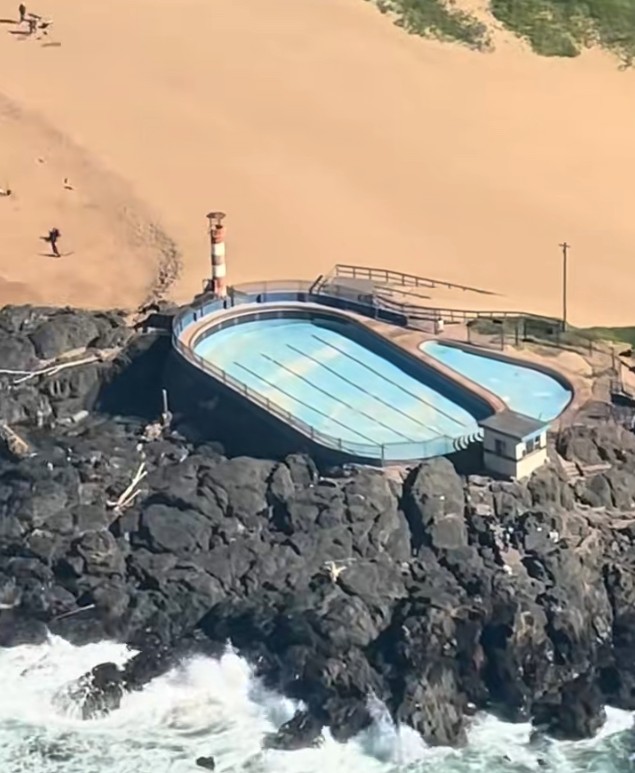
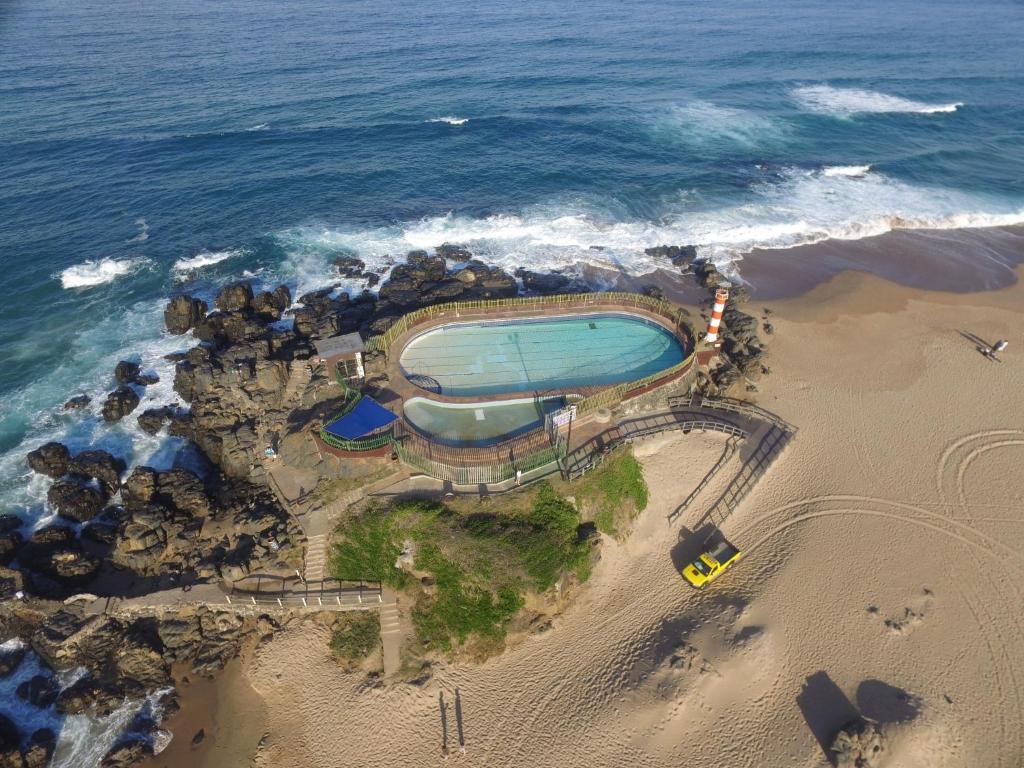
110. Winkelspruit Tidal Pool

On 10 May 1875, the schooner Tonga was wrecked off the coast while carrying goods to Durban. To avoid losing the cargo, sailors set up a makeshift shop on the riverbank to sell the water-damaged wares. In Afrikaans, "winkel" means shop and "spruit" means stream, leading to the name Winklespruit.

As of May 2026, the Winklespruit Tidal Pool is currently closed due to long-standing infrastructure damage.
111. Baggies Beach Tidal Pool

Formally located at Warner Beach, it is primarily a natural tidal rock pool. Unlike many of South Africa's man-made concrete tidal pools built for safety in the 1930s or 1950s, this pool is naturally formed. It is a popular site for exploring marine life, including sea urchins and inquisitive fish.

Warner Beach has a deep-rooted surfing culture, having produced world-class surfers and serving as the host site for the Baggies Surf Pro. Historically, the beach and its tidal pool area have been major viewing spots for the annual Sardine Run in June and July, attracting thousands of visitors to the shoreline.
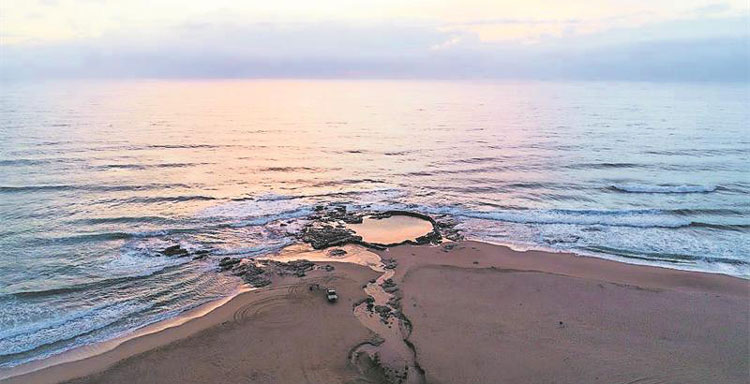
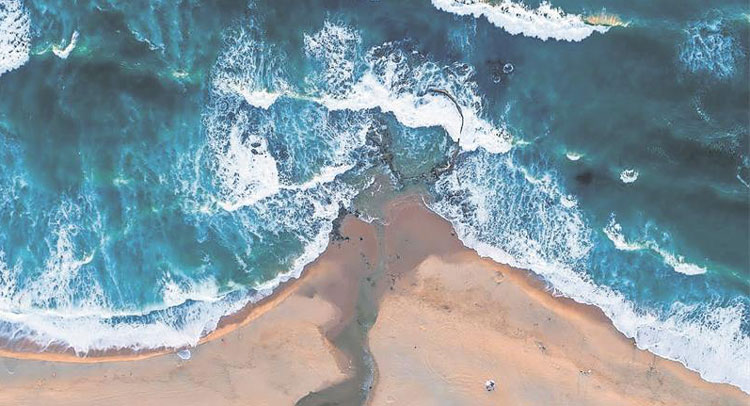
112. Chain Rocks, Amanzimtoti

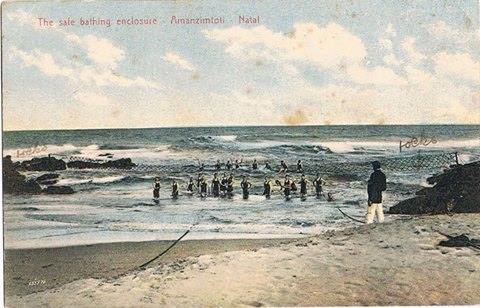
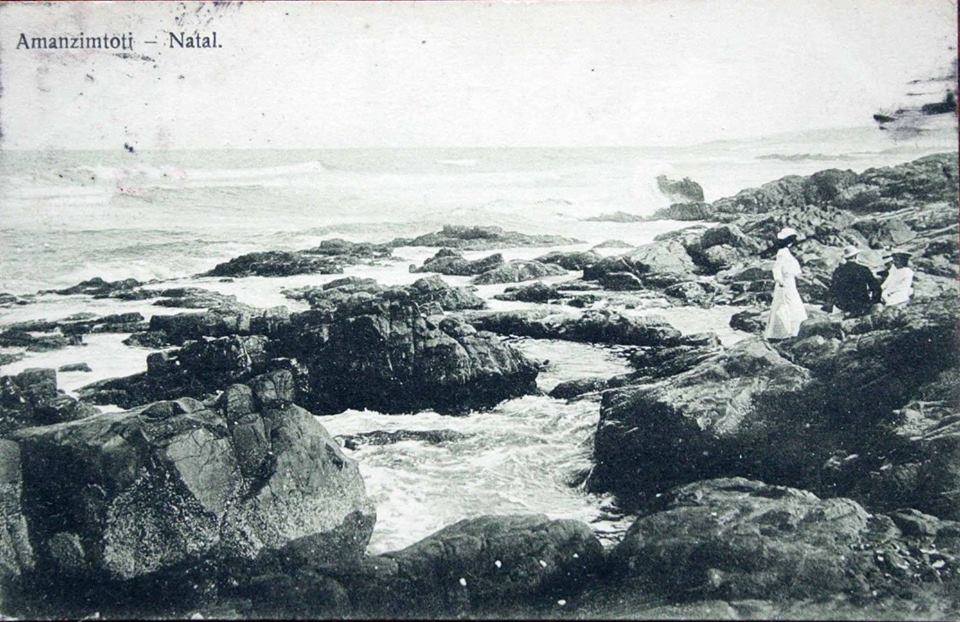
The name comes from a heavy chain that was once stretched across a gully between two rocks to provide a safety handhold for bathers in the early 20th century. Posts made from old railway lines were concreted into holes drilled into the rocks to anchor these chains.

This particular spot became a favoured local bathing area, with the rocks providing a suitable gully sheltered on either side. With the increase in beachgoers, the need for a safety mechanism to prevent drowning arose.

The anchoring of the chains in the water posed a rather tricky task. Corrugated water tanks were cut in half and floated out to the desired position, then filled with concrete and the chains were set in these. The aim of the chain was to prevent bathers from being washed out to sea, as it could be held onto.

However, the chains did not stop local residents from being called upon to rescue holidaymakers.

The two Reinbach brothers and a Mr Grainger were often called upon to rescue the stragglers. No one knows the exact date when the chains were fixed into the rocks. The Reinbachs were involved in the project, as well as several other locals. The chains, however, were there when Noel Wright arrived in Amanzimtoti in 1926.
https://www.citizen.co.za/south-coast-sun/news-headlines/2019/08/11/how-amanzimtotis-chain-rocks-beach-came-by-its-name/ 

113. Inyoni Rocks Tidal Pool

The Goodwill Hotel on the Amanzimtoti beach was particularly active from the 1930s through the early 1970s, before it was demolished, like many other similar establishments along the coast. 

It had a swimming pool on the Inyoni Rocks.
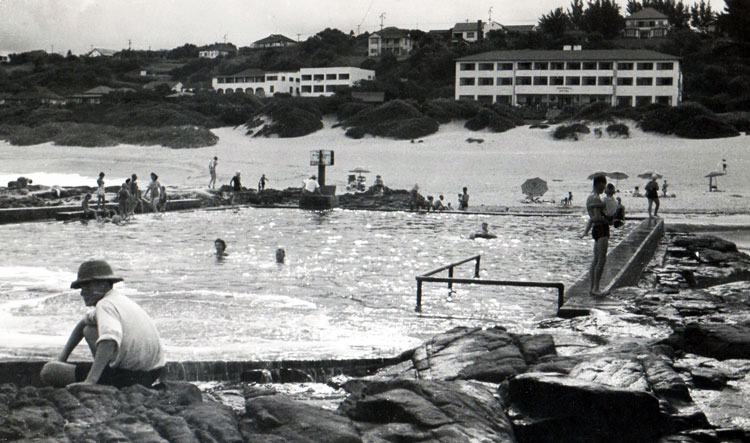
amanzimtoti 1941 Goodwill Hotel

That tidal pool was upgraded to the current facility, as shown in a hotel marketing brochure.
amanzimtoti 1941 Goodwill Hotel 2

The most recent upgrade, before its demise.
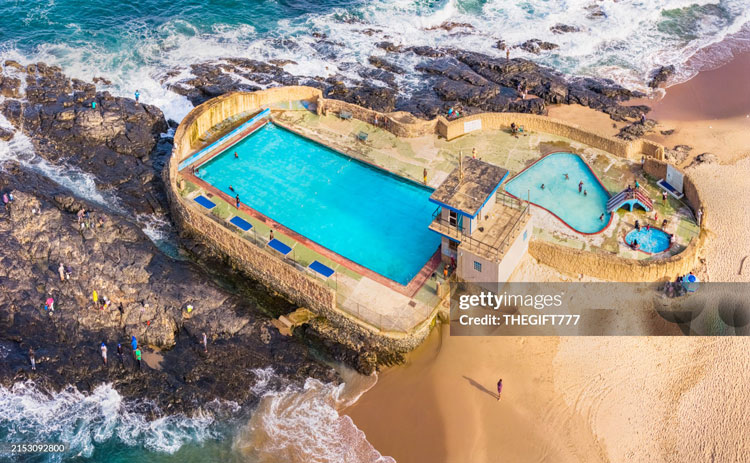
amanzimtoti 2

Unfortunately, the tidal pool is now derelict. 
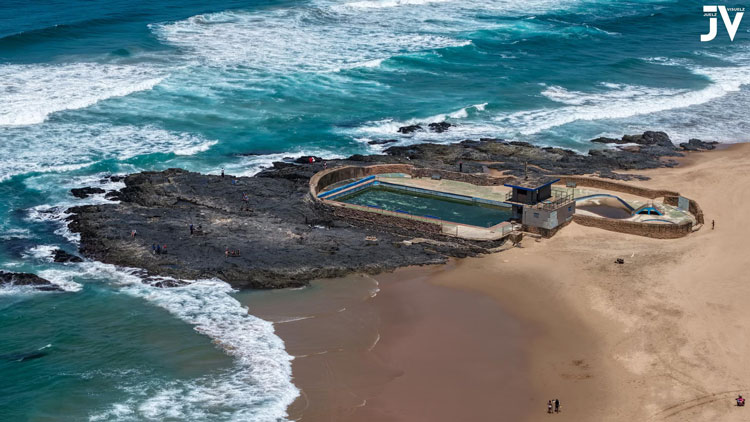
amanzimtoti 1

amanzimtoti 4


114. Isipingo Swimming Pool

The historic town of Isipingo, home of the renowned Natal soldier named Dick King, who died there in 1871, was a small British village with a church, a mission school, two inns and two shops. The Isipingo Beach Golf Club opened in March, 1916. There was a 25m swimming pool on the beachfront, as well as a tidal pool known as the Tiger Rock pool.  Local legend suggests the beach and its rocks were named after a shipwreck off the coast; rumour has it the ship was carrying exotic animals, and a tiger managed to swim ashore. 

The Dakota Beach swimming pool is a historic landmark that dates back to the early 1920s. Originally built as a recreational facility for the small British seaside settlement, it has evolved through decades of significant social and structural changes. In 1973, a Boeing DC-3 Dakota aircraft crashlanded on the beach, giving it the name. 
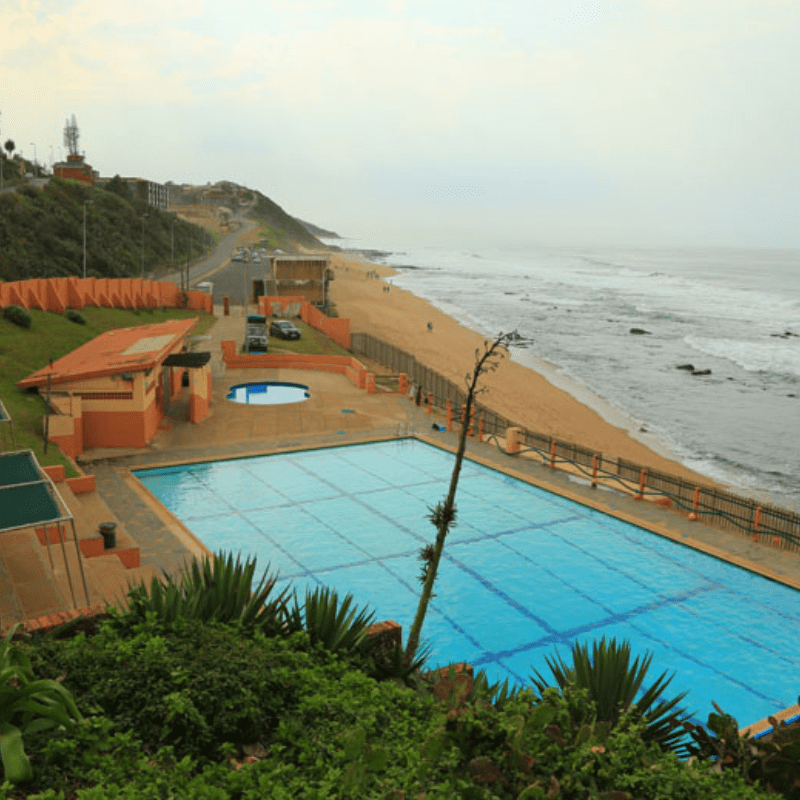
115. Tiger Rocks Tidal Pool

: Built in the 1920s, the pool was originally shallow. In an attempt to deepen it, a visitor from Johannesburg used dynamite at the bottom. This cracked the structure, causing it to leak and making it difficult to hold water afterwards.
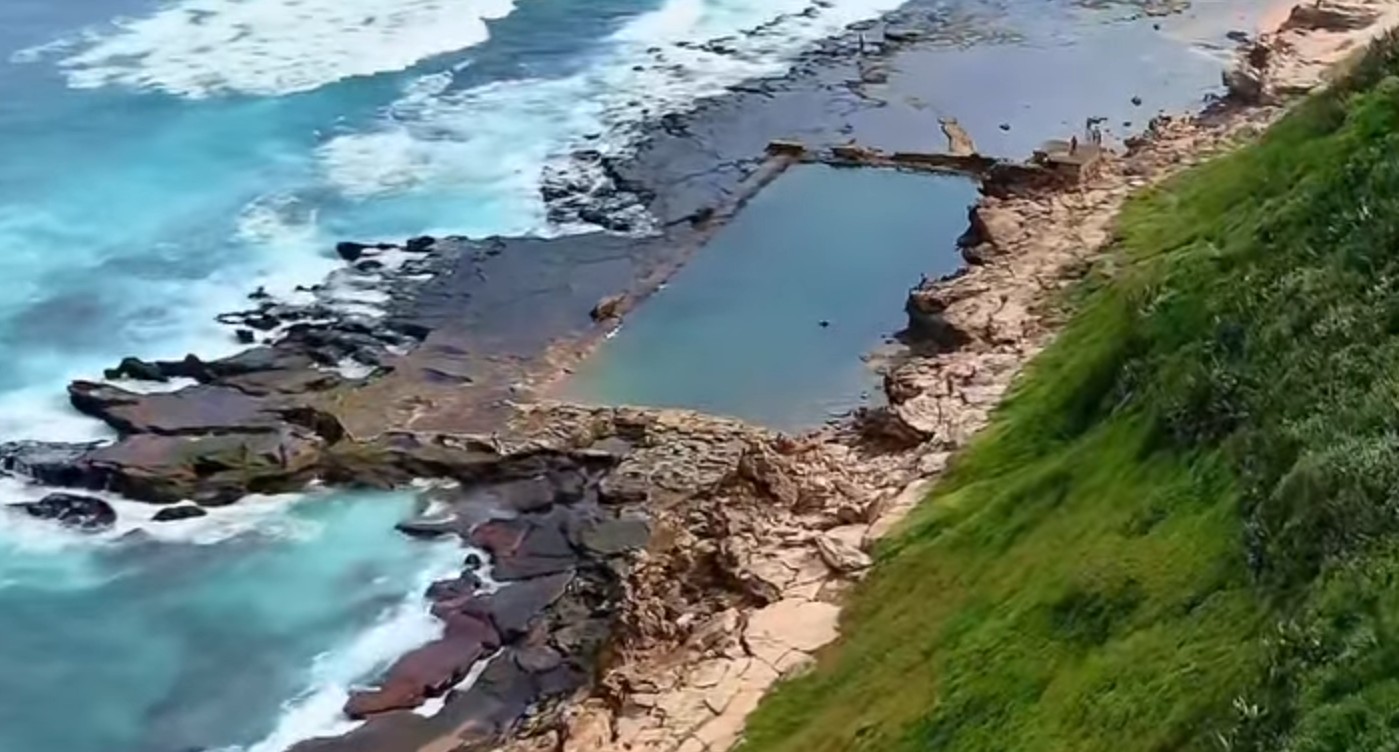
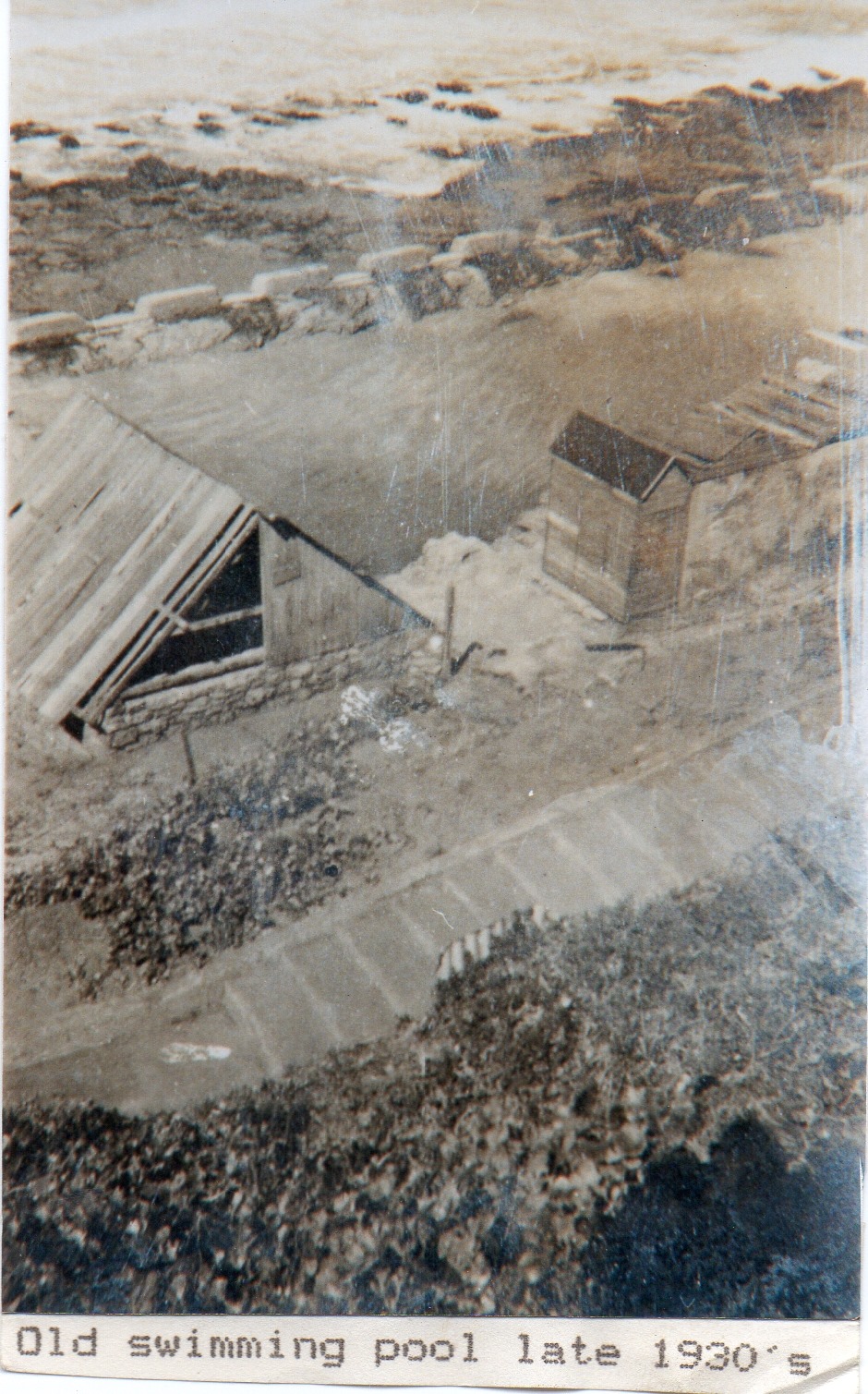
116. Brighton Beach Tidal Pool

The Brighton Beach Tidal Pool is the last south of Durban. It was completed and officially opened in 1938. The pool was commissioned by the Durban City Council as part of a development to enhance the local area for recreation. At the time of its opening, it was considered a grand project and was notably floodlit to allow for evening use. 
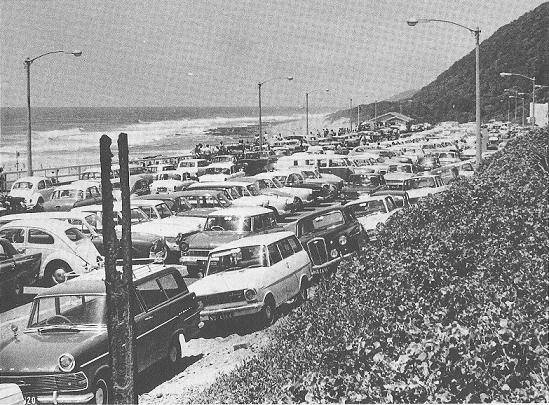
Bluff brighton beach

  • Hits: 2576
East London

East London Tidal Pools

John Bailie, one of the 1820 Settlers, surveyed the Buffalo River mouth and founded the town in 1836. The city formed around the only river port in South Africa. The existing port, in the mouth of the Buffalo River, began operating in 1870.

Note: The FAST southward-flowing Agulhas Current, when combined with the prevailing strong south-westerly winds, creates rogue waves in the deep sea near East London. In 1909, the SS Waratah disappeared here, with 211 people on board, leaving no trace. 

East London is the largest town in the Border Province, although it is home to two world champion swimmers. In 1956, Joan Harrison won a gold medal at the Olympic Games, and in 1976 Jonty Skinner set a world record for the 100m freestyle. Both swimmers would have spent hours in the Orient Bath Tidal Pool. 
70. Kidd's Beach Tidal Pool

Kidd’s Beach, a small coastal resort town (about 28km west of East London), originated in the 1860s as a small coastal holiday retreat for farming families from the interior, named after Charles Kidd, a former mayor of King William’s Town.  

By 1870, the area was under the control of the Forestry Department. Farmers were granted permission to congregate there at Christmas, living in tents and "skerms".

In 1960, Escom arrived, and street lights were installed, and many houses were lit by it. A watch scheme was considered, but it was too expensive. Under the jurisdiction of the Divisional Council, each year has seen some notable improvements.

In 1963, a fine tidal pool was opened by Mr Edgar Glass, Chairman of the Council, within a stone’s throw of the car park and in full view of the Tearoom. This pool greatly enhances the appeal as a holiday resort. Read more about the history of Kidd's Bewach here →

71. Leach Bay Tidal Pool

Leach Bay is likely named after a member of the Leach family, who were prominent early settlers and landowners in the East London area. The tidal pool is close to the Grand Prix race track, where the South African event was held between 1934 and 1939, and the F1 Grand Prix from 1962 to 1965. These events made East London and Leach Bay an international stage. No doubt the tidal pool provided safe swimming for the many spectators to the motor racing events held there. 

Alas, today it is an abandoned facility. 

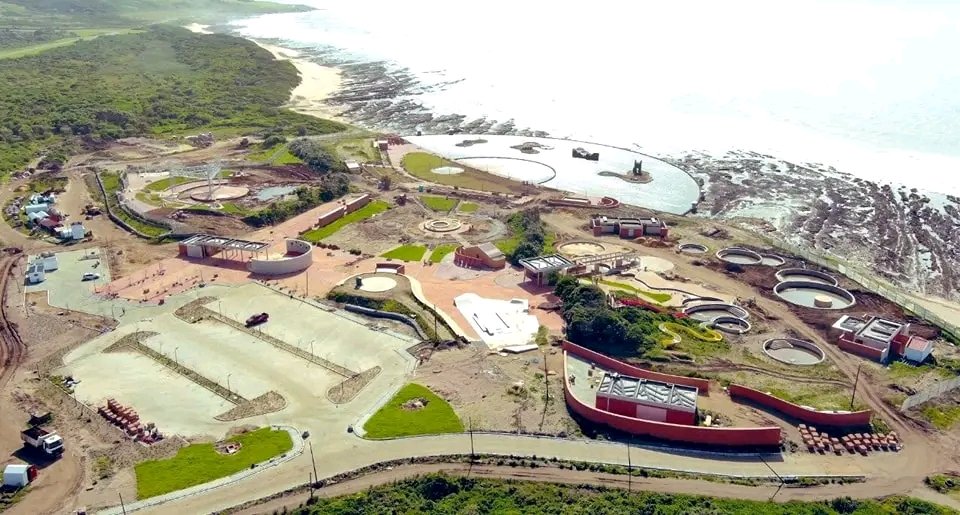
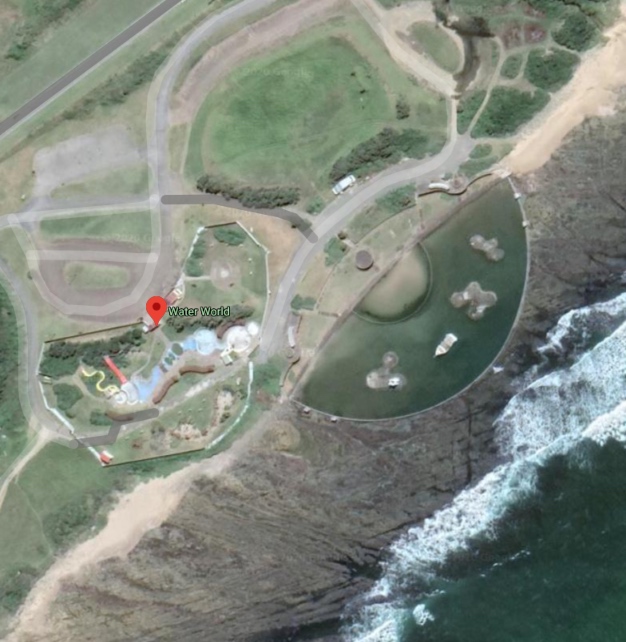
72. Water World Tidal Pool

The Water World facility was a municipal project that failed. 

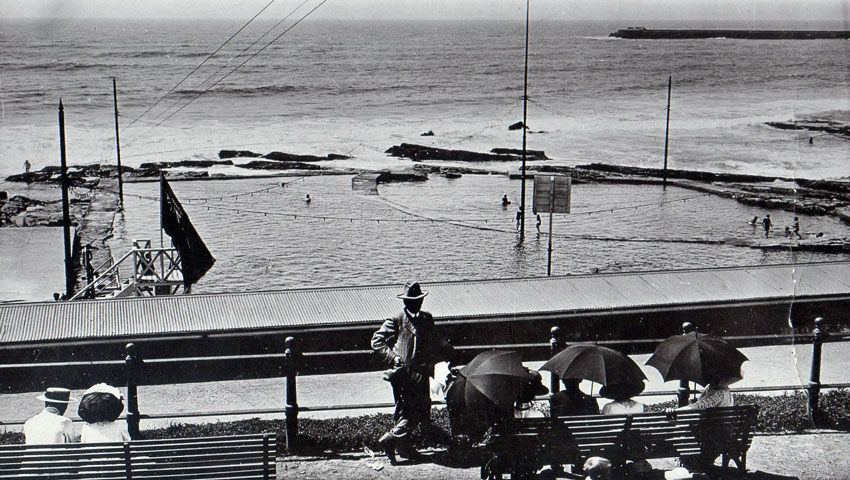
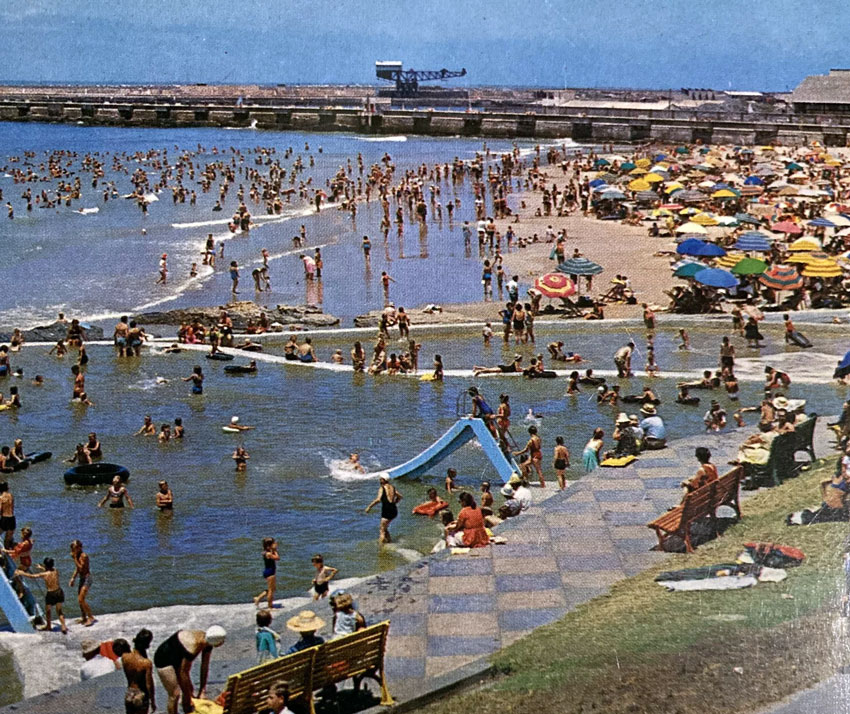
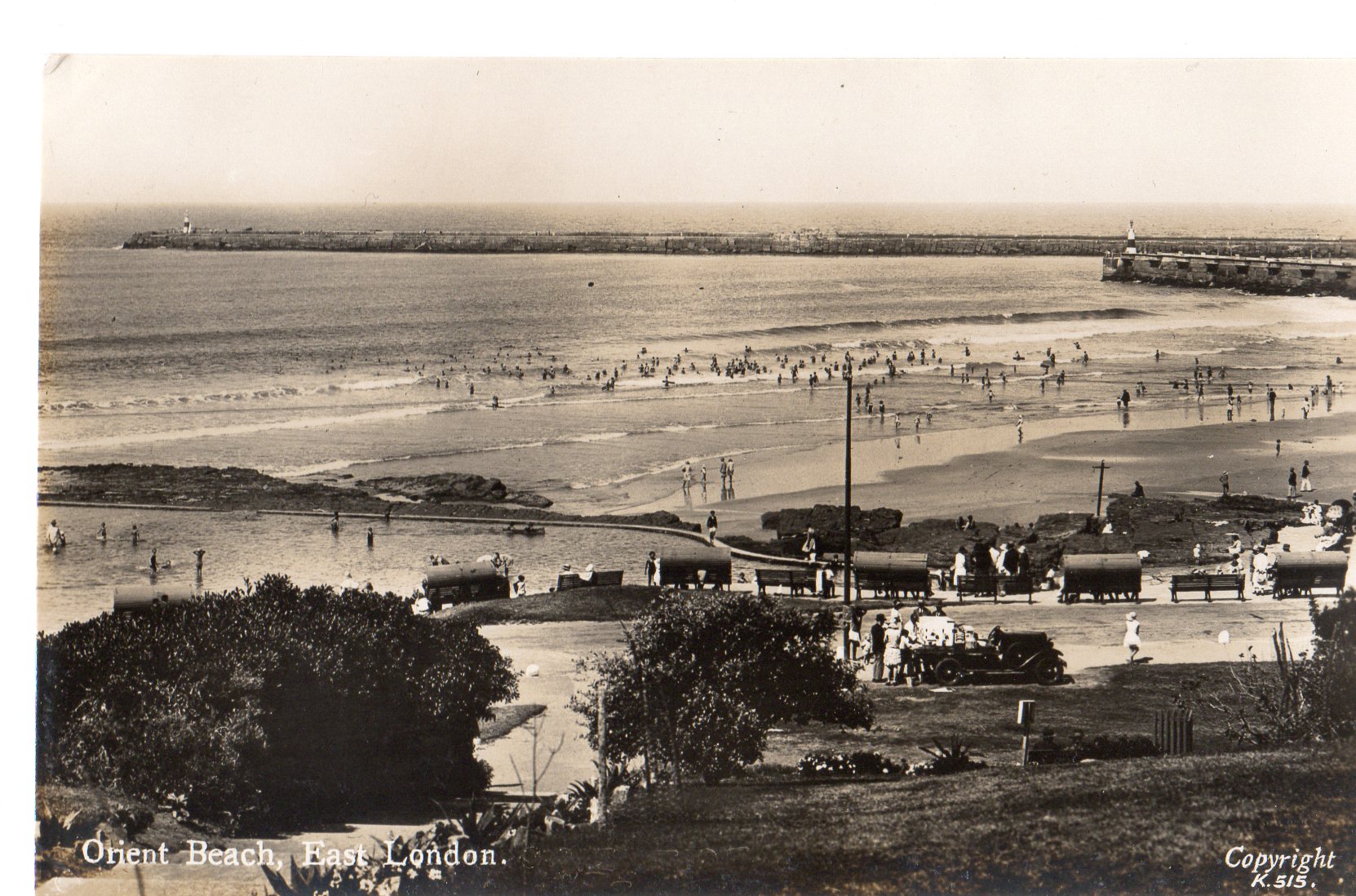
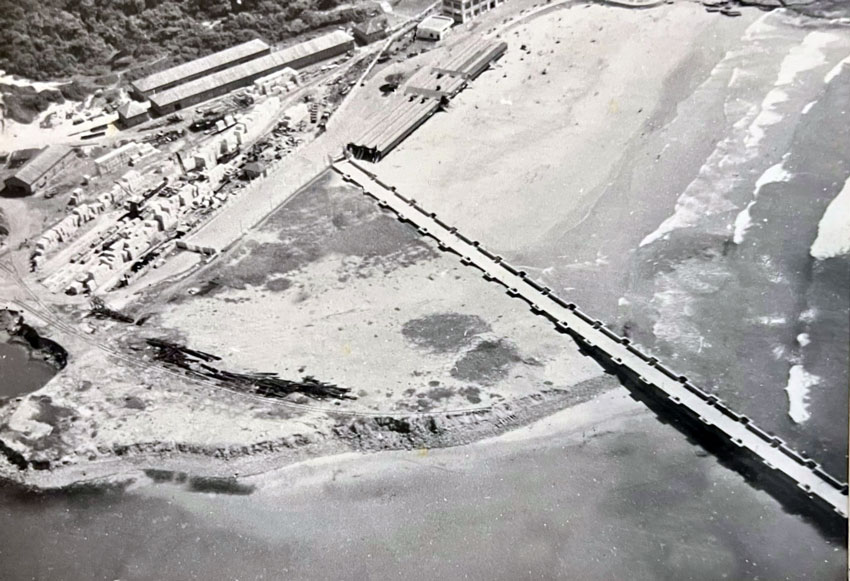
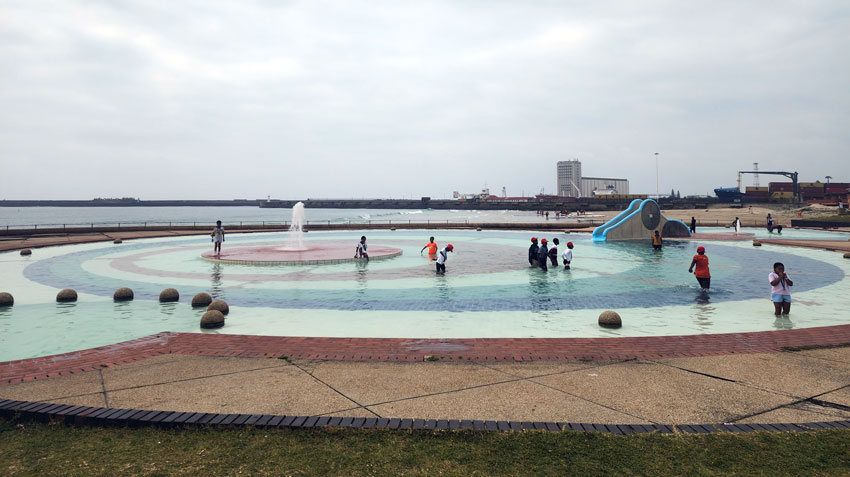
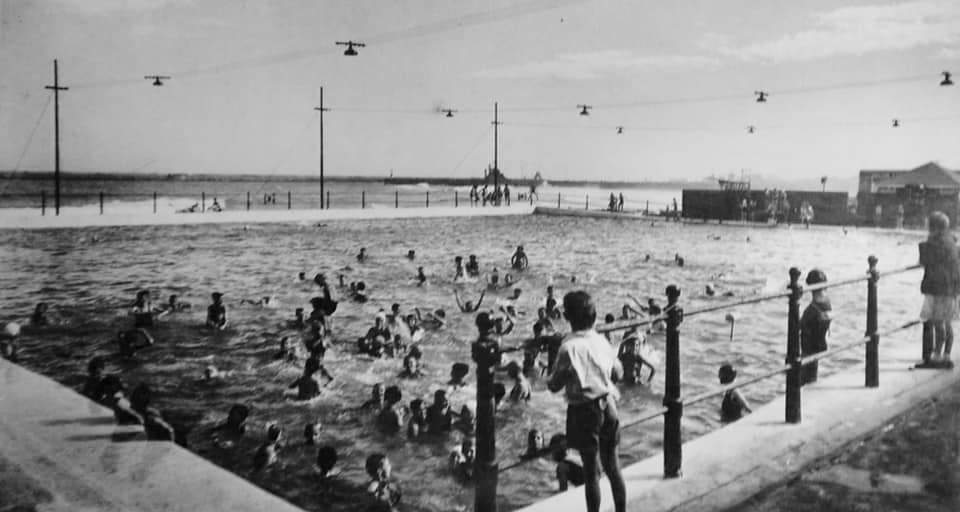
73. Orient Bach Tidal Pools

The municipal pools were built on the rocks next to Orient Beach. The bottom image is today. 

This beach boasts two exceptional pools with thrilling slides – the Quanza pool, a little further east, is perfect for older kids as it is deeper, while the Orient Beach pool provides equal enjoyment in a safer environment.

74. Orient Beach Bath

In 1904, the municipality constructed a pair of bathing pools on the rocks at the spot where the MV Quanza had run aground in 1872. The pools would be known as the Quanza Pools. They were constructed as a result of an initial accident. The Town Engineer was experimenting with explosives and had blasted a great hole in the rocks at that point. Water immediately rushed in, and the resulting pool became a popular place for women and children. 

The pool was twice used to host the South African swimming Championships.

Read more →

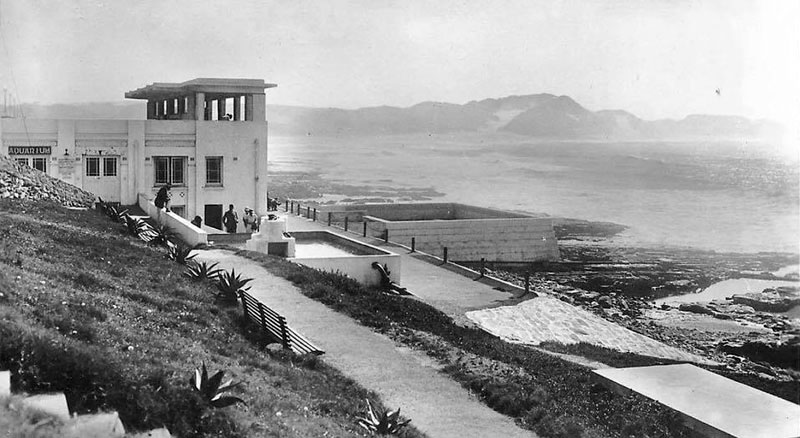
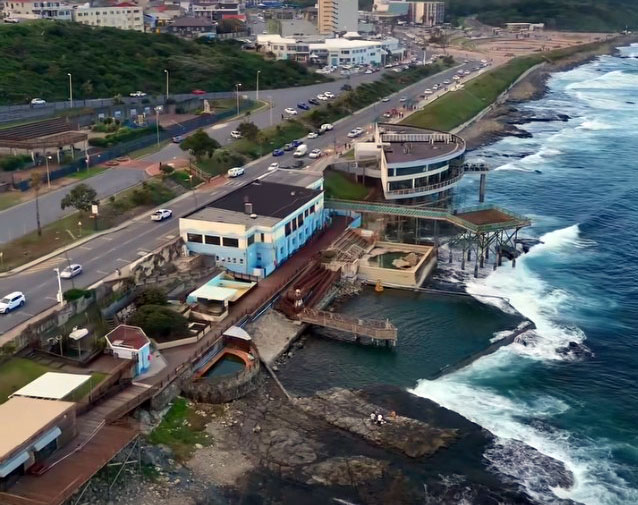
75. Beach Hotel - Aquarium

The Beach Hotel was the first to open along East London's Esplanade in 1894, including its own Beach Pool. The Beach was replaced by the Kennaway Hotel in 1964, and today the East London aquarium uses the former beach pool.

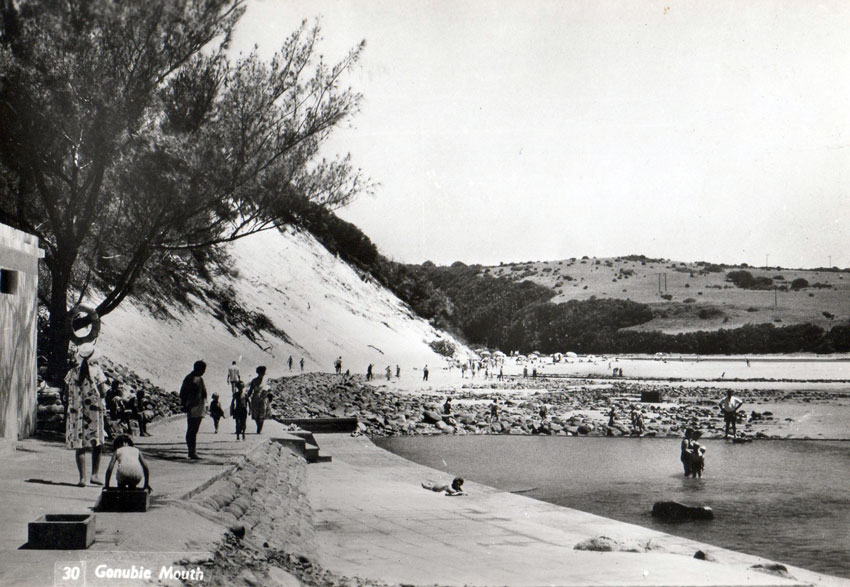
76. Gonubie Tidal Pool

There is also the lavish riverside area, which is a popular tourist destination. Gonubie main beach is a beautiful sandy beach with an international-standard boardwalk. In 2010/11 Gonubie Beach was awarded the prestigious Blue Flag beach award. The river is a great spot for activities like canoeing and kayaking.

77. Chintsa West Beach Tidal Pool

Another small coastal resort town. 

78. Haga Haga Tidal Pool

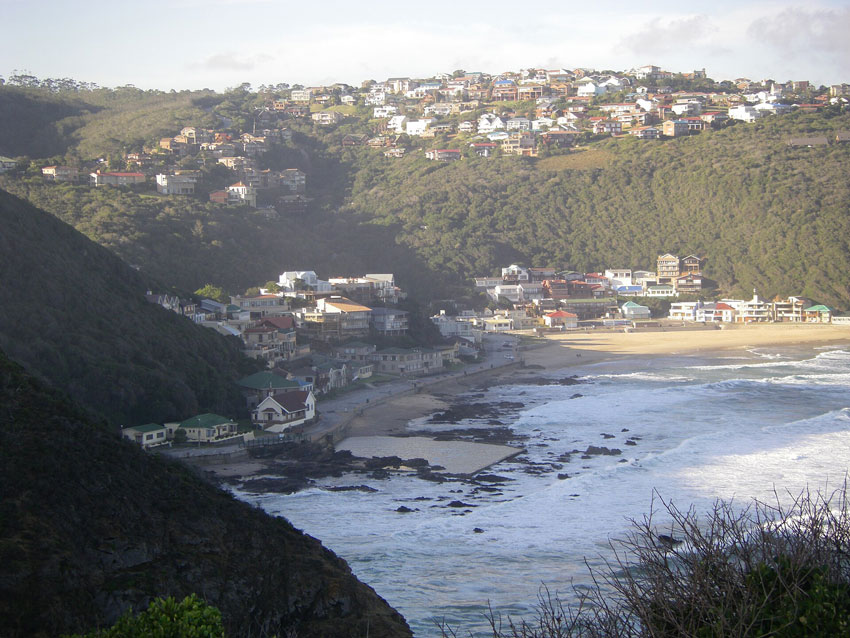
This is the last tidal pool before the start of the Transkei coast and Port Edward. 

Haga Haga’s history dates back to the early 20th century. In the early 1920s farmers from inland areas like Stutterheim would trek their livestock to the coast for winter grazing, often staying in ox wagons or tents. 

Read more about the Haga Haga Hotel and also here →

  • Hits: 1396
Southern Cape

Tidal Pools of the Southen Cape

The coastline eastwards from Cape Agulhas is a mixture of steep rocky sections between long sandy beaches. The area is largely either privately owned farms or nature reserves, accessible by a few roads leading down to the coast from the N2 national road. From Mossel Bay, the famous Garden Route follows the coast to Port Elizabeth. 

Despite the lack of tidal pools built along the coastline, just about every small settlement boasts a slipway for the launching of sports fishing boats. 

Along this stretch of coast, there are numerous rock fish traps, which are considered by some to be the work of pre-colonial inhabitants, although there is no evidence to support this belief. 

There are also several significant archaeological sites, such as Blombos Cave (Stilbaai), which is famous for yielding the "world’s oldest known drawing"—a cross-hatched design in ochre dating back 73,000 years. The caves at Pinnacle Point at Mosselbaai were occupied 164,000 years ago, and the Robberg Caves at Plettenbergbaai.

45. Witsand Tidal Pool

After Agulhas, the next road from the N2 to the coast ends at the resort town of Witsand, at the mouth of the Breederivier.

Witsand’s history dates back to 1831, when the British colonial government granted the land to Captain Benjamin Moodie. The town, named after its white sandy beach, has been known as Witsand since at least 1867. Initially a fishing haven, it officially became a town in 1951 as more people built cottages.

On the opposite bank, in a small settlement named Infanta, where English is the dominant language, it is popular with Cape Townians. Witsand (Afrikaans for White Sands) is a predominantly Afrikaans town, drawn from the local farming community. 

Known as "South Africa's whale nursery," the area is famous for land-based sightings of southern right whales between June and November.

46. Jongensfontein swemgat

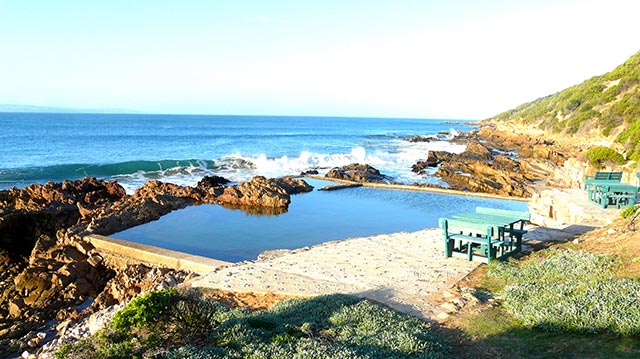
A natural tidal pool that provides a swimming space, as the beach is prone to strong currents and rip tides. 

Jongensfontein swemgat 1

Jongensfontein swemgat 2

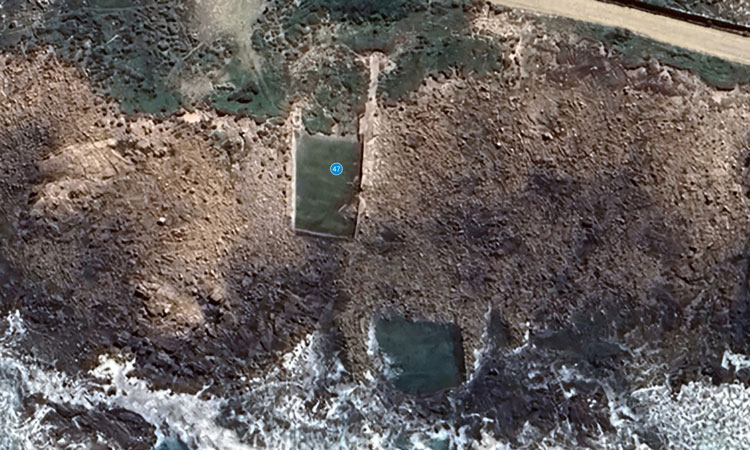
47. Jongensfontein Tidal Pool

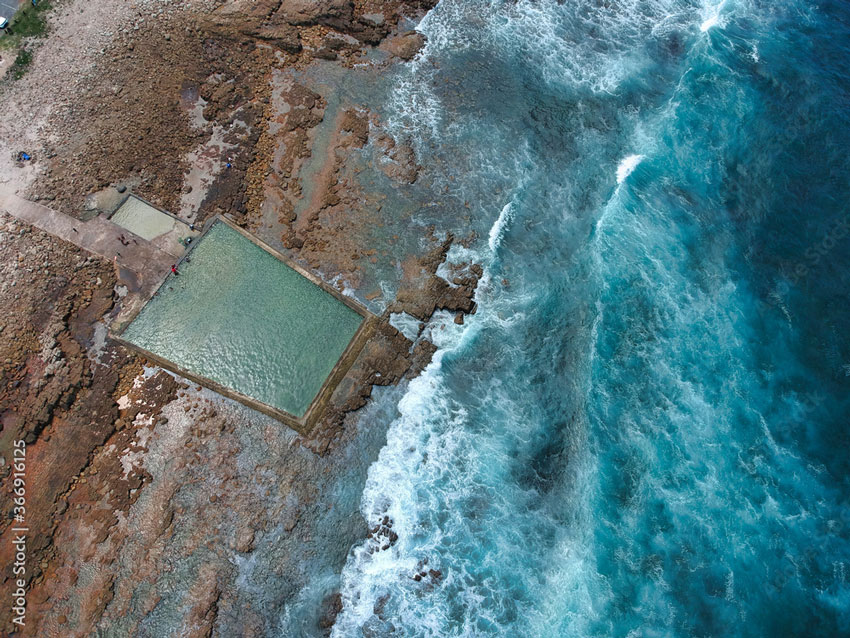
Located at the end of the road from Stilbaai, the town of Jongensfontein dates from at least 1762, when it first appeared in official records of the Cape Colony. The early growth of Jongensfontein pre-1960 was haphazard and unplanned, although growth happened slowly and thoughtfully, with homes spaced out to protect the open landscape and uninterrupted ocean views.

1916: The farm was subdivided, granting property rights to 31 individuals.
1920s: Construction of mud and reed holiday homes began, marking Jongensfontein’s transformation into a holiday destination.

In 1960, the Cape Provincial Administration became aware of the arbitrary manner in which the town had grown when 38 owners of ground and houses attempted to have their ownership registered. The Township of Jongensfotein was proclaimed in 1970. 

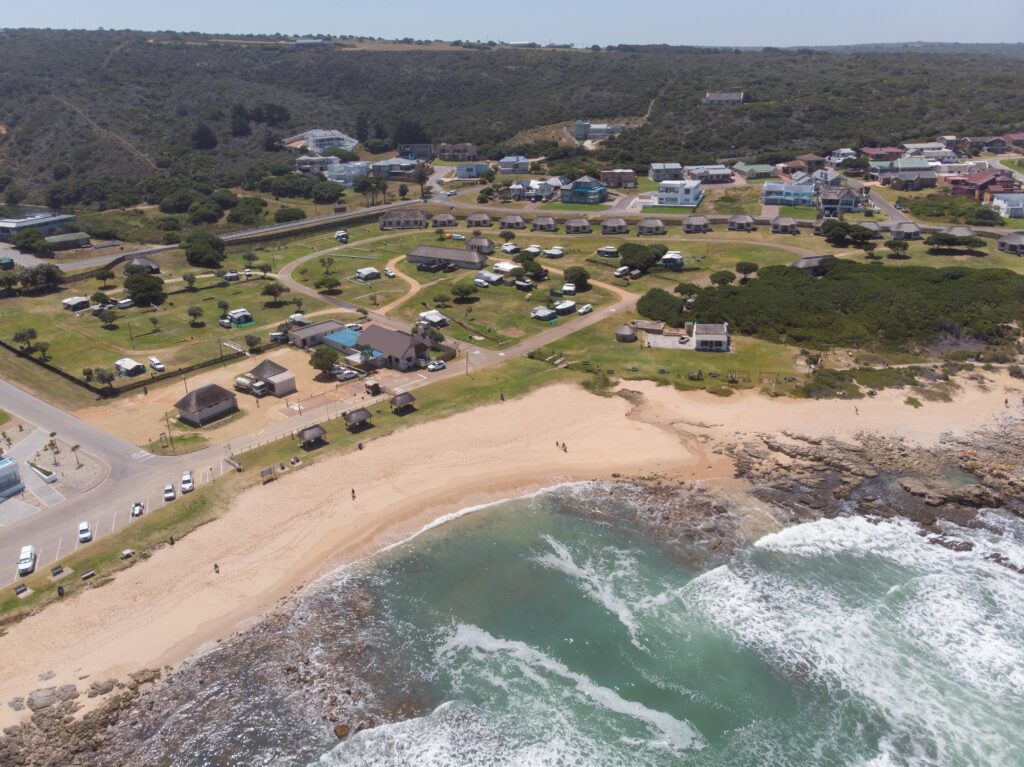
The tidal pool is opposite the municipal caravan park. 

48. Neliesgif

The name translates to Nelie's Gift, referring to the fact that the farm was given as a gift - gif in Dutch. The farm produces 230 000 bushels of thatch annually. The owner had the pool built for his wife. 

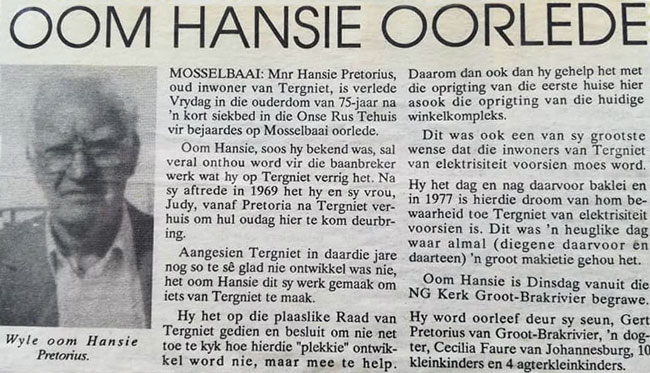
Oom Tienie Botha, hieronder links was die eienaar van die Neliesgif.  Dit was sy strandhuis. Hy het in die Paarl gewoon, in Sinagoge straat. Al die huise in die straat en twee koshuise het aan hom behoort. Sy eerste vrou was n Engelse lady en dis Vir haar wat Hy die swembad laat bou het, Om haar voete te baai.

https://www.facebook.com/groups/411118035737550/user/100001183341005/ 

Neliesgif

49. Gouritsmond Tidal Pool

The modern settlement began as a fishing outpost in the 1700s, and the town was officially established in 1915. The river remains famous for fishing, with the second-largest Cob population in the country.

Like many small coastal holiday "towns", for decades, the town remained nearly hidden. It benefited from restricted access only via a route involving 25 manual gates. The first tar road was only constructed in 1983, finally opening it up to more visitors. It is also somewhat famous as being near the South African Government nuclear testing site, which was decommissioned. 

In 2025, Gouritsmond has quietly become one of South Africa’s most unusual semigration hotspots. Despite this growing interest, about 80% of the town’s 411 houses stand empty for most of the year. Gouritsmond’s safety is one of its biggest attractions. With only around 800 permanent residents, the town remains far removed from the security concerns seen elsewhere in the Garden Route. 

“It’s very safe here. Most of the Garden Route has seen lots of people moving down, and crime is moving with them. But not here. We don’t have crime.” 

https://businesstech.co.za/news/property/846142/new-semigration-hotspot-in-south-africa-where-80-of-houses-stand-empty/

50. Vleesbaai

Vleesbaai is a private beach village situated on the Garden Route, approximately 35 km west of Mossel Bay. The modern history of Vleesbaai can be traced back as far as 1601, when stormy weather forced the Dutch mariner and explorer Paulus van Caerden to seek refuge in the protected bay now known as Vleesbaai.  He was so pleased with the well-fed livestock which he was able to trade from the local inhabitants that he named it “Vleys Baeye”, the Old Dutch word for Vleesbaai, directly translated into English as “Bay of meat”. By the late ninteenth century holiday-makers from as far as Calitzdorp began to visit Vleesbaai for their holidays. They camped near the freshwater fountain at the Tarka ravine and came with donkey-carts and ox-wagons, often accompanied by chickens, sheep and even milch-cows to supplement their food supply. These visitors can be considered as the first proverbial “Vleesbaaiers”.

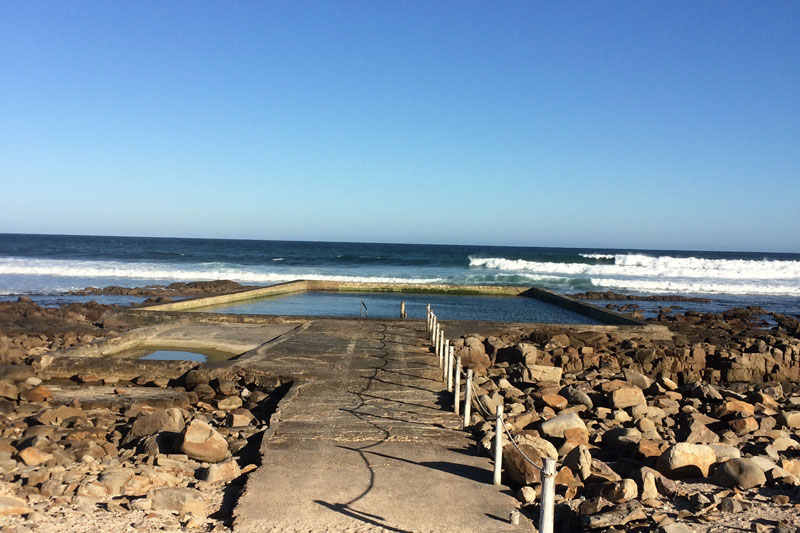
Vleesbaai Tidal pool

Vleesbaai Tidal pool 2

https://en.wikipedia.org/wiki/Vleesbaai 

51. Die Poort, Mosselbaai

The town of Mosselbaai (or Mossel Bay - mossel meaning mussel in Afrikaans) is today best known as the place at which the first Europeans landed on South African soil (Bartolomeu Dias and his crew arrived on 3 February 1488).

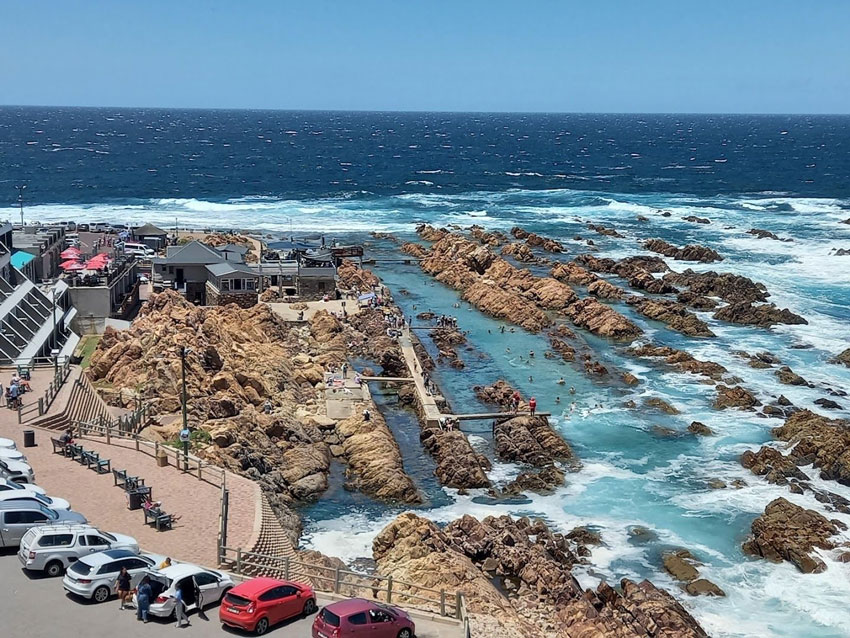
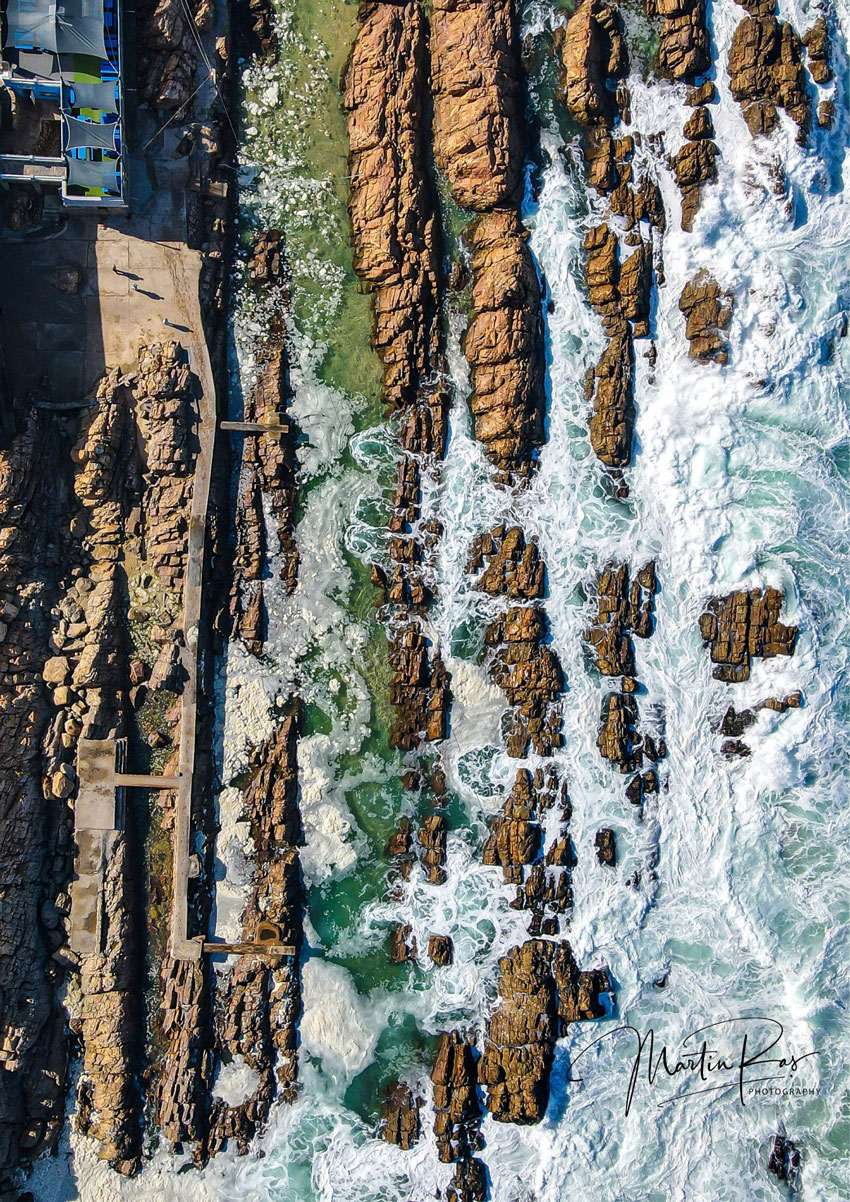
Die Poort is a natural gully found below the cliffs under the Cape St Blaze lighthouse. 

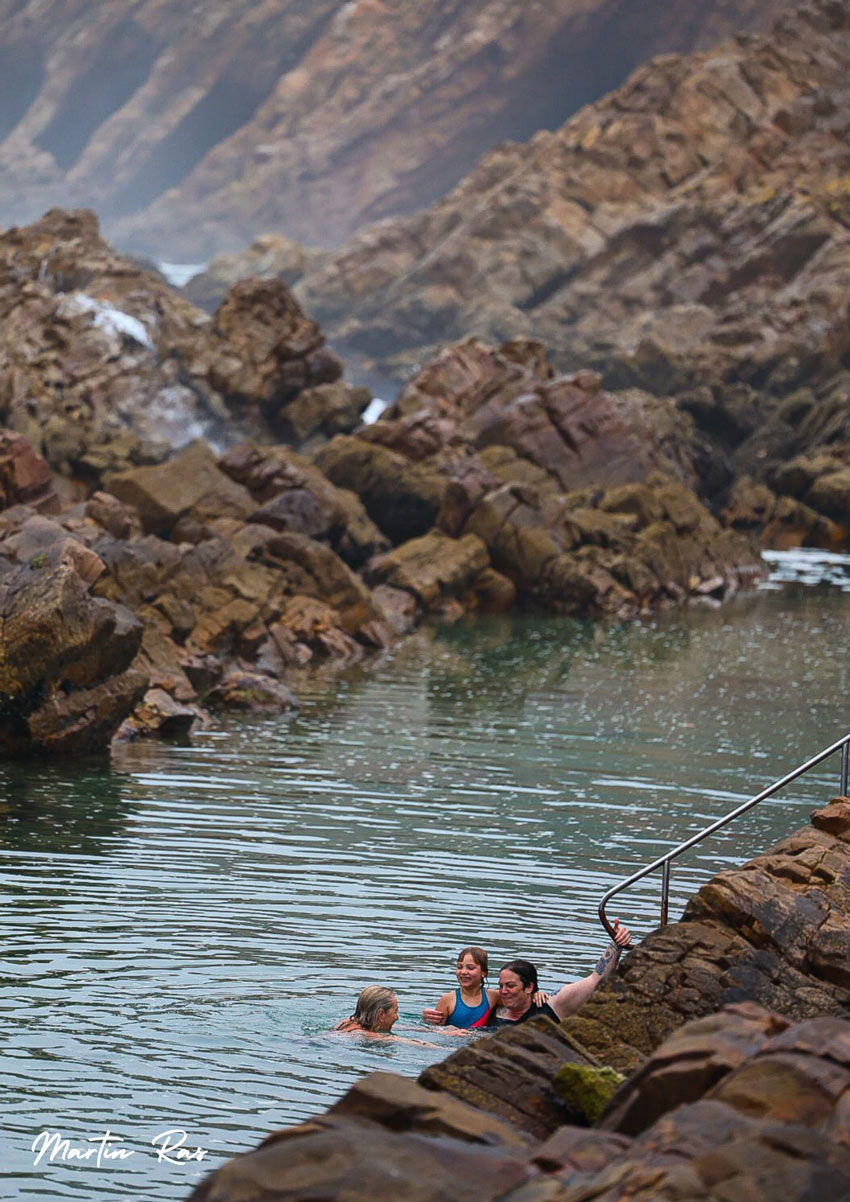
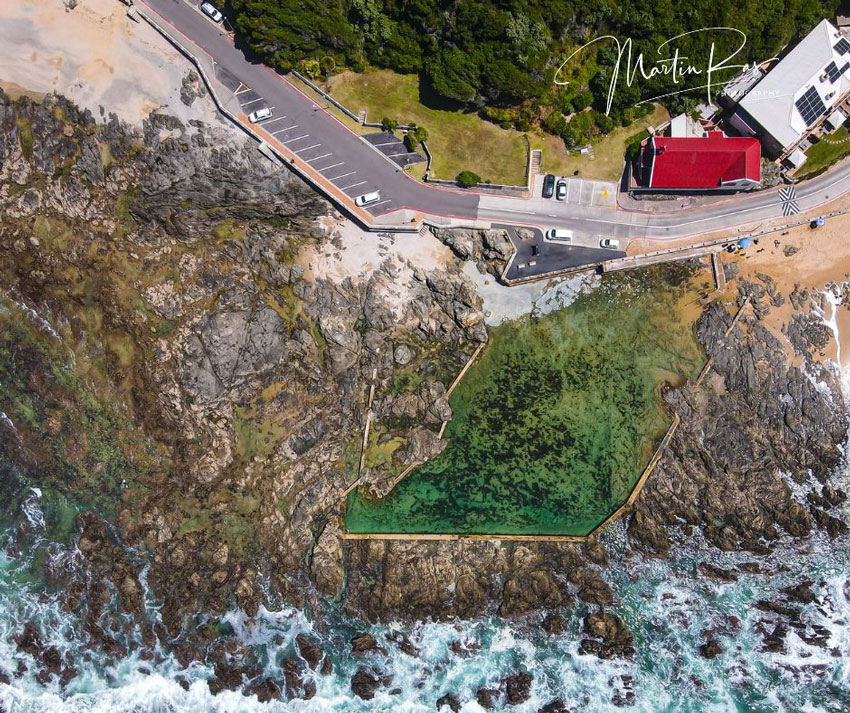
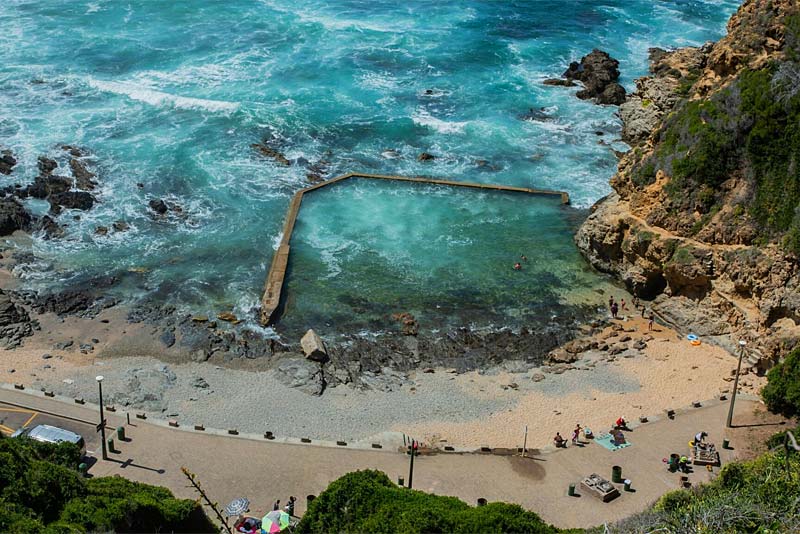
For generations, the town’s children have learned to swim in this tidal pool where chains and ropes have been secured to assist swimmers when the surging high tides cause strong currents to wash down the alley The pool has a smooth sandy bottom and the water of the Indian Ocean is mild, perfect for almost year-round bathing. It is deep enough for diving except at low tide. Swimming in the Poort’s live water, protected from the open ocean by the walls of rock with breakers thundering a stones’ throw away and showers of spray leaping in the air within sight is a rare sensation only to be experienced on a holiday in Mossel Bay. Martin Ras photography

For generations, the town's children have learned to swim in this pool where chains and ropes have been secured across the pool to assist swimmers when the surging tides cause strong currents to wash down the pool. Blougat (Blue Hole) lies at the upper end of the tidal pool and is a much deeper pool than the first, this giving it its deep blue colour and thus its name. It is here in this pool that the local children have learnt to dive to this day.

52. Mossel Bay Paddling Pool

Conveniently located near vibrant restaurants and entertainment options. A great spot for families, where parents can keep an eye on little ones while enjoying the lively atmosphere.

mossel bay pool

53 +54. Reebok  and Tergniet Tidal Pools

There are two tidal pools built on Reebok Strand, named after the two dorpies of Reebok and Tergniet.  Located between the Klein Brak Rivier and the Groot Brak Rivier, Tergniet (together with the adjacent village of Reebok) likely developed from the ‘Old Klein Brak’ village, the settlement in the middle of the Klein Brak River floodplain, which would have been a historic crossing point.

Reebok and Terniet lie between Klein Brakrivier and Groot Brakrivier, two of a handful of beachside holiday hamlets of Mossel Bay. These towns tend to run into one another, functioning more as suburbs of Mossel Bay. Historically, Mossel Bay has functioned as a holiday town for inland farmers, and the tradition continues in places like Tergniet and Reebok, although if car number plates are anything to go by, visitors are from across the country.


Tergniet (do not tease)

55. Skulpieshoek, Heroldsbaai

There are two tidal pools at Herols Bay. This one is the smaller, located at the end of Beach Road, approximately 150m from the main tidal pool. It has a dedicated braai area allocated for public use.

56. Heroldsbaai

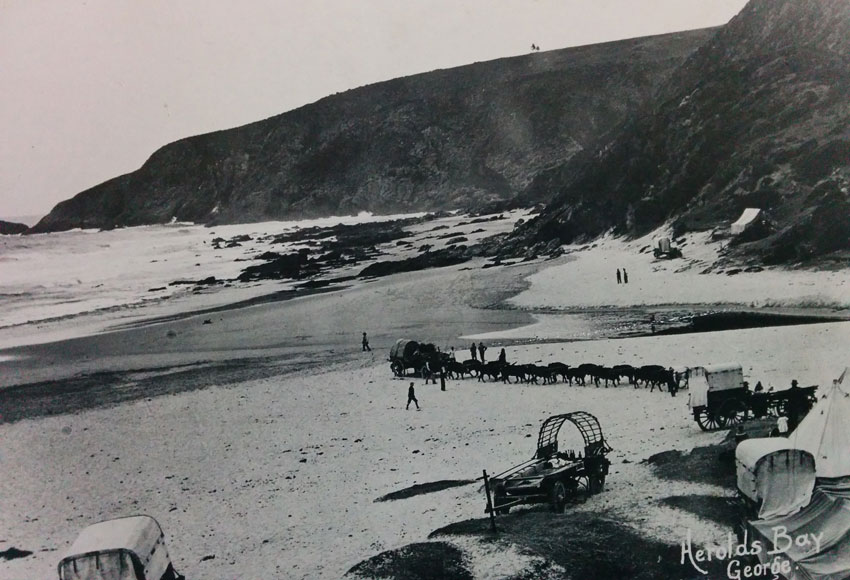
The first house in Heroldsbaai was built in 1895 for Matilda Howitson of Blanco, which was originally an 18th-century timber outpost for the Dutch East India Company. Although it was first known as Sandstrand, in 1823 it was named after the first vicar of George, Tobias Johannes Herold, a keen angler. At first, it was mainly George and people from the immediate vicinity who camped here. The waves are a popular playground on hot days.

Across from the Stella Maris Chapel, John Urban and the George Divisional Council had a large tidal pool built for swimmers in 1935. The first photo shows summer holiday campers, before the houses were built. 

57. Victoria Bay

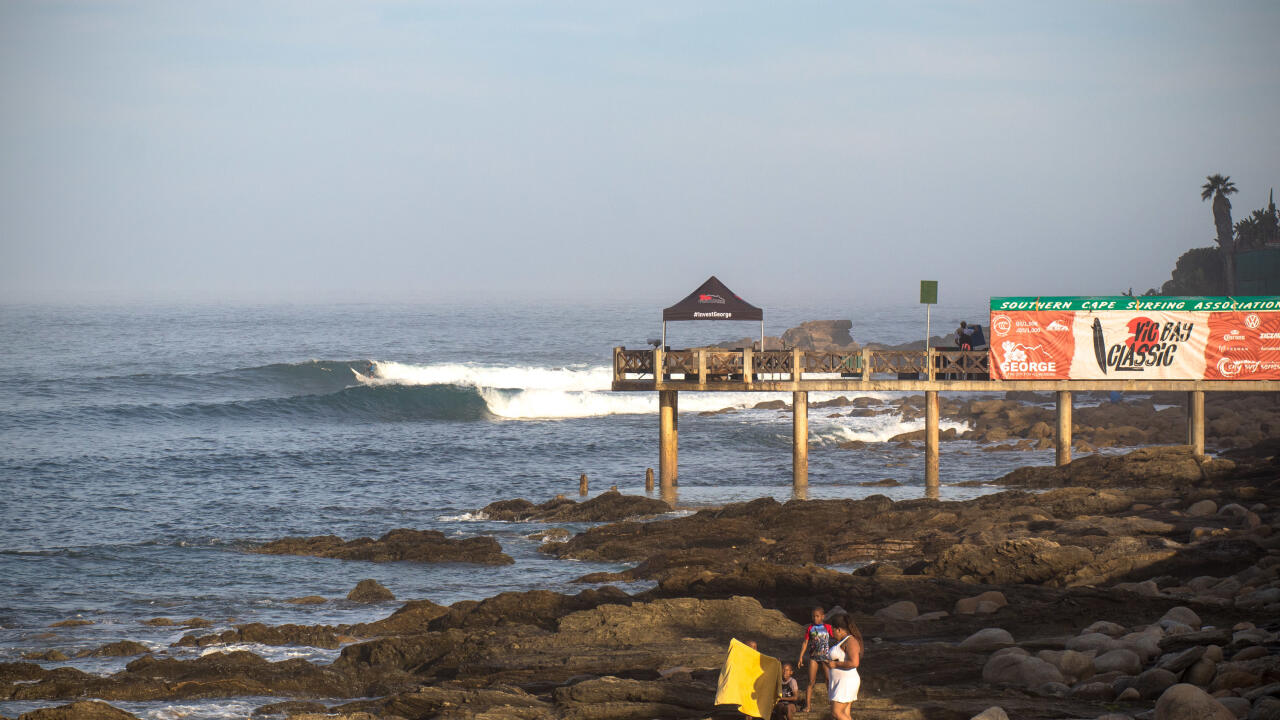
Victoria Bay is a small cove in the Western Cape, South Africa, situated on the Garden Route between George and Wilderness. It is a popular beach for surfers, consisting of a right-hand reef-like wave which rolls over small boulder-like rocks for about 200m. A 2019 article described Vic Bay (as it is locally known) as being "well known as the best right hand point break in the Southern Cape". District and National surf competitions are often held at Vic Bay, and despite its small size, Vic Bay is a well-known and much-visited spot.

World-class surfing to be seen at Vic Bay

Monday, 17 June 2019

GARDEN ROUTE NEWS - Local surf break Victoria Bay will host a high-profile professional surfing competition this month. Top international athletes will face off against our best local talent in the Vic Bay Classic from 20 to 22 June. 

It will be the first time in 25 years that Victoria Bay has featured on the South African World Surf League Qualifying Series.

George Municipality stepped in to support the City Surf Series event after the cancellation of the Zigzag Durban Surf Pro in May. "This is an excellent opportunity to showcase our local surf break," says tourism manager Joan Shaw. "Victoria Bay is clean and safe and well known as the best right-hand point break in the Southern Cape. The event will be streamed online, and viewers from all over the world will see our world-class surf break. We are proud to support the event and trust it will provide a welcome boost for surfing tourism in George."

Over 100 competitors will face off in men's, women's and pro junior divisions in the inaugural event. Local pro surfer Bianca Buitendag is a confirmed entrant and hopes to use the event as a stepping stone to the WSL Championship Tour. 

Other competitors expected include local surfing icons Sean Holmes and David Pfaff, as well as internationally rated J-Bay athletes Dylan Lightfoot and Matthew McGillivray.

The surfing competition has been warmly welcomed by the local surfing association, Eden Surf Riders.

"The Vic Bay Classic is a great opportunity to host a professional tournament and to have world-class surfers in our bay," says Eden Surf Riders chairman Robert Pollock. "Events such as this help young South African surfers to raise their standard and earn points towards the Championship Tour. We are proud to have been offered nine wild card entries and we can't wait to see how our local chargers fare against international competition.".

Ocean safety and education
In addition to world-class surfing action, spectators can expect a menu of ocean safety and educational events. City Surf Series and Surfing South Africa will host a community beach clean-up as well as a waste reduction workshop. 

The NSRI is set to host an ocean awareness campaign.

Over 500 guests are expected at Victoria Bay over the three-day tournament, including international surfing competitors, coaches, family members and local spectators. "We are confident that this world-class event will have significant economic benefits for George," says Economic Development manager Pedro Oliphant. 

The Vic Bay Classic is officially supported by George Municipality's economic development division and is backed by George Tourism. "We are delighted to showcase George as a city for a sustainable future," Oliphant says. 

"The event is a welcome addition to the calendar, falling over the winter season, which is usually is a quiet period for tourism. We trust our visitors will savour George's quality lifestyle, scenic beaches and spectacular coastline."

https://www.knysnaplettherald.com/Sport/Article/Water-Sport/world-class-surfing-to-be-seen-at-vic-bay-201906130900

  • Hits: 2146

False Bay to Cape Hangklip

Tidal pools in False Bay

Click here to see the whole map

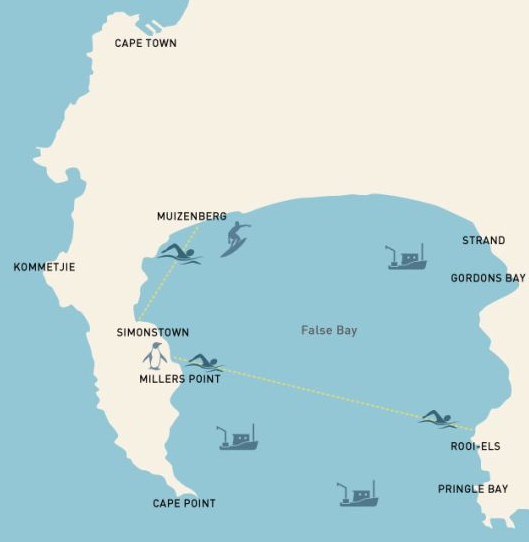
False Bay lies between Cape Point and Cape Hangklip, from Simonstown to Pringle Bay. Swimmers typically cross False Bay between Rooi Els on the eastern shore and Miller's Point (near Simon's Town) on the western shore, which is a distance of approximately 33–34 kilometres. 

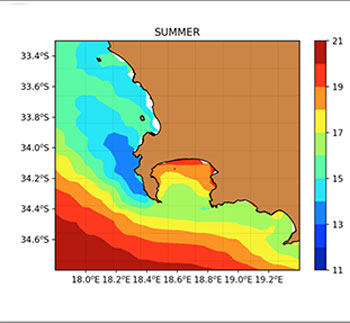
temps

The Agulhas Current, which flows south-westerly along the Cape Coastline, brings warm tropical waters into False Bay - while the cold Benguela current pushes ant-Arctic water northwards along the Atlantic Coast.

The eastern and western shores of the bay are very rocky and even mountainous; in places, large cliffs plunge into the water. The northern coastline becomes relatively low and sandy.

False Bay is known for the powerful South Easterly winds that blow across the Bay during the summer months, driving swimmers to brave the cold but sheltered waters of the Atlantic Coast beaches and tidal pools.

The seal colonies in the bay attract Great White Sharks and Orcas, who sometimes attack swimmers and surfers. 


There are 11 tidal pools along the shores of False Bay, from Cape Point to Koeëlbaai.  In 1939, the Cape of Good Hope Nature Reserve was formally established to protect the land from commercial resort development.

The biggest town in False Bay is Muizenberg, which was originally established by the Dutch East India Company as a cattle post and signal station in 1743.

The railway from Cape Town was extended to Muizenberg in 1882. It turned a settlement of "shacks and farmhouses" into an accessible seaside destination for Cape Town residents. It also became a place for holiday homes for the rich after the discovery of gold in the Witwatersrand in 1886,  when wealthy mining magnates began building palatial holiday homes in Muizenberg. Cecil John Rhodes bought a cottage here in 1899 for his health, famously dying there in 1902. Other famous residents were  Sammy Marks, Sir Abe Bailey, the Oppenheimers, and Sir Herbert Baker, who all had holiday cottages there. Famous figures like Rudyard Kipling and Agatha Christie (who learned to surf there in 1922) were notable visitors.

18. Buffels Bay Tidal Pool

By the early 1800s, the largest tract of land in the area was the Buffelsfontein farm, which covered the southernmost part of the promontory.  The Buffelsbaai (or Buffels Bay) tidal pool within the Cape Point section of Table Mountain National Park was built in the 1960s. The pool was part of a larger southward expansion of tidal pools along the Cape Peninsula that began in the late 19th century.

19. Bordjesdrift Tidal Pool

The Bordjiesrif Tidal Pool was built in the 1960s.  Like many man-made tidal pools along the South African coast, it was constructed to provide a safe, protected swimming environment for children and the elderly, shielding them from strong surf, currents, and sharks.

20. Miller's Point Tidal Pool

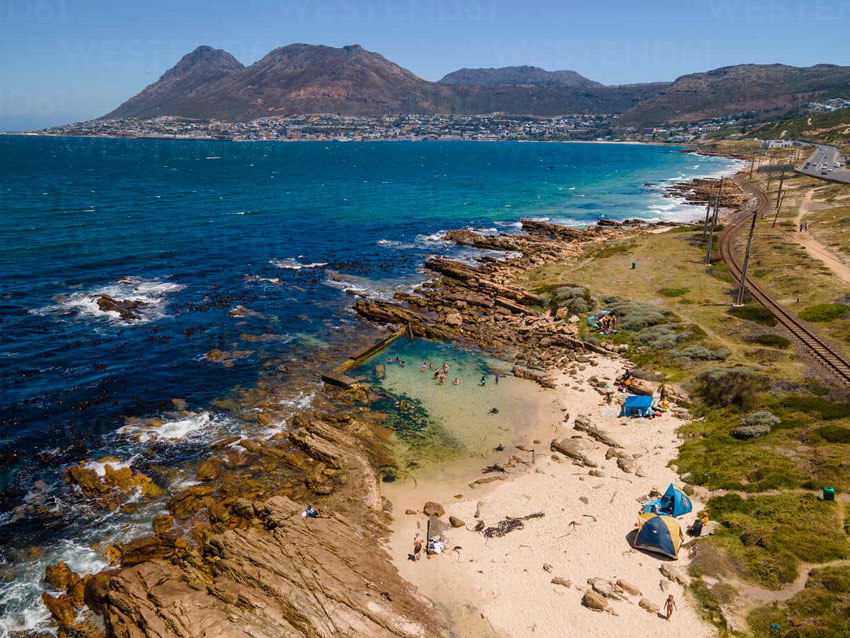
Miller's Point got its name when the land was sold to Edmund Miller in 1825, who developed it as a whaling station. After it was used as a holiday home by the Molterno family, it was donated to the government and became a part of the national park. The tidal pool was built in the 1960's. 

Miller's Point is also known as a landing point for swimmers who cross False Bay from Rooi Els, which is a distance of about 33km. 

21. Shelley Point Tidal Pool

Many early pools in the area started as private, sometimes "illegal" ventures by residents who used rocks and cement to engineer safe swimming holes protected from the open ocean's currents and the Cape's notorious "South Easter" winds.

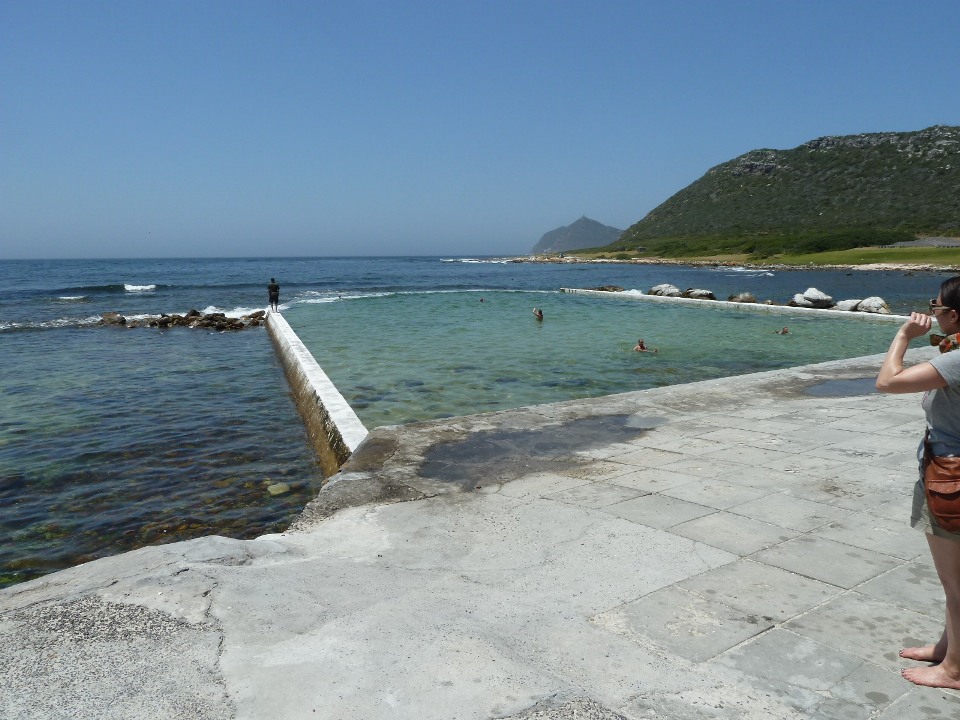
Best of all on this stretch of coast is the almost-forgotten, which is accessed by walking the dirt road for about 200m beyond the parking lot behind Glencairn station. In truth, the Shelley Point pool is badly dilapidated nowadays, with several sections of its main wall having collapsed. Whenever I swim there, I feel as though I am swimming in a ruin. It’s best to swim the short distance to the main wall and turn your back on it, looking back at the beach from which you’ve just come. There’s a ledge of rock and pebbles at the base of the wall and, sooner or later, you’ll be bombed by a breaker. It’s cold, exhilarating fun to squint through the spray in the bright, precious light.  https://www.wantedonline.co.za/travel/south-africa/2019-11-21-still-waters-run-deep-dive-into-the-cool-world-of-wild-swimming/ 

shelley point tidal pool

22. Glen Cairn Tidal Pool

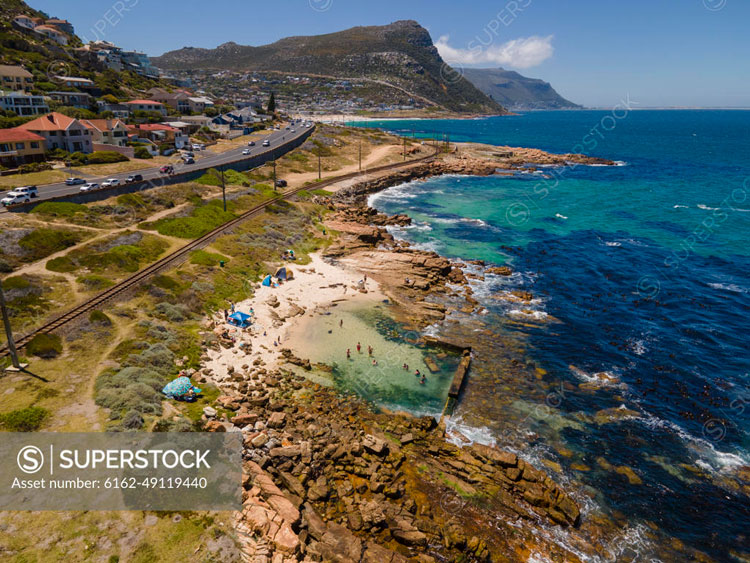
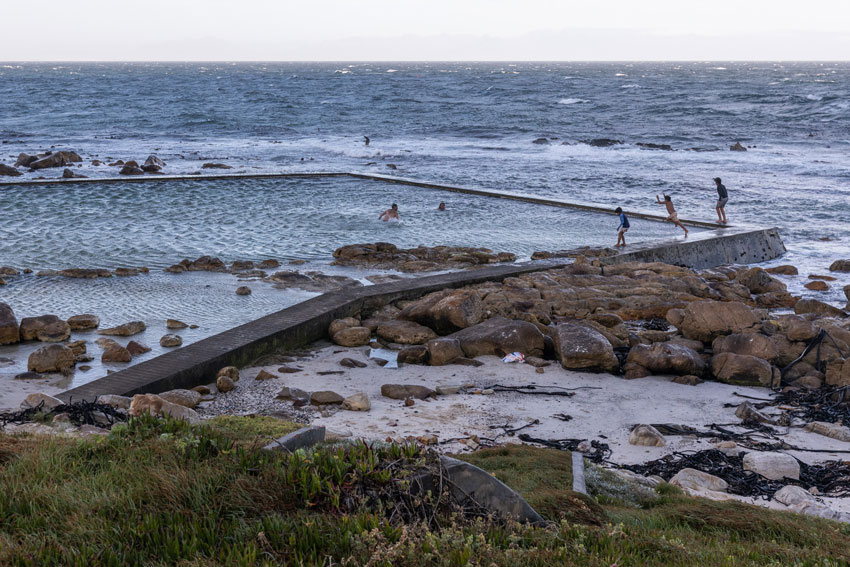
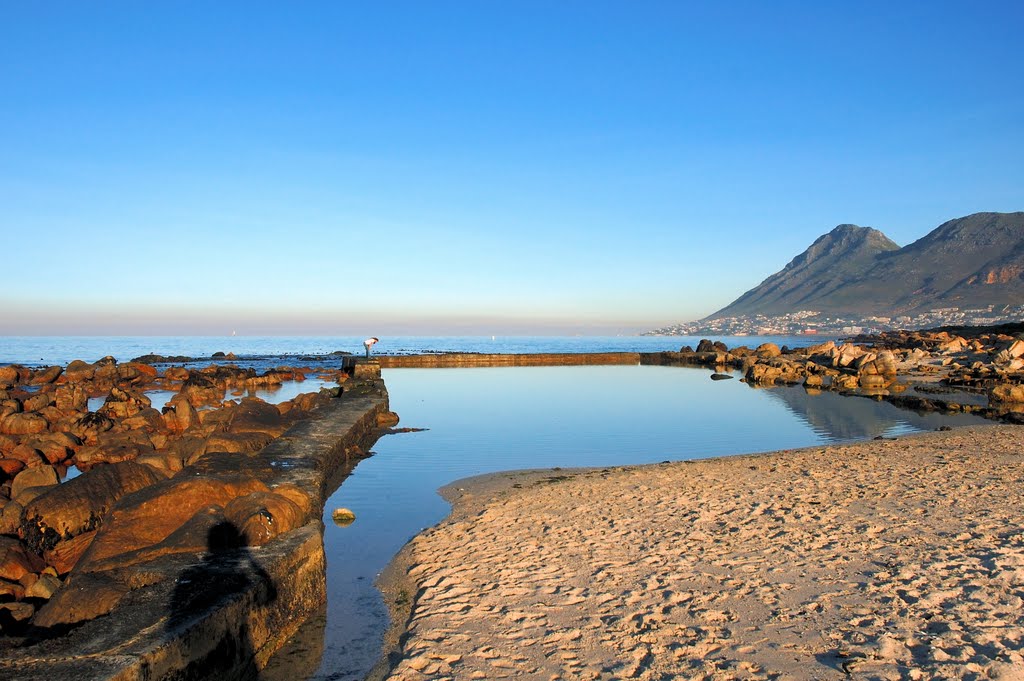
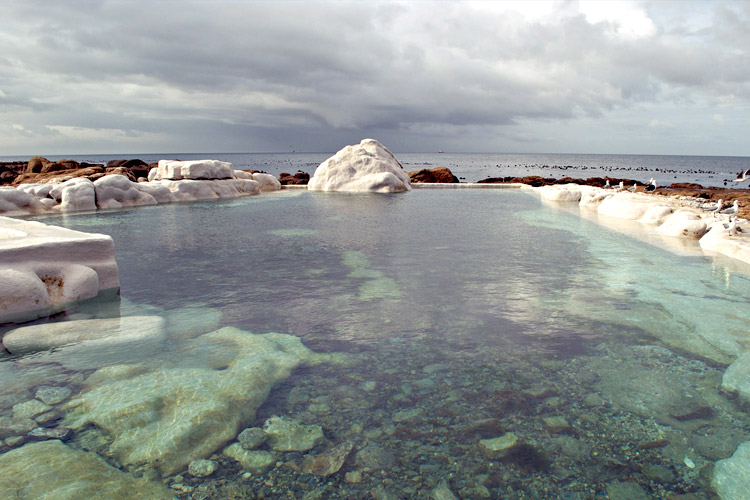
The Glencairn Tidal Pool in Cape Town was built in the early 1900s. The pool has been refurbished and restored over the years to maintain it as a family-friendly swimming spot.

23. Skellies Pool

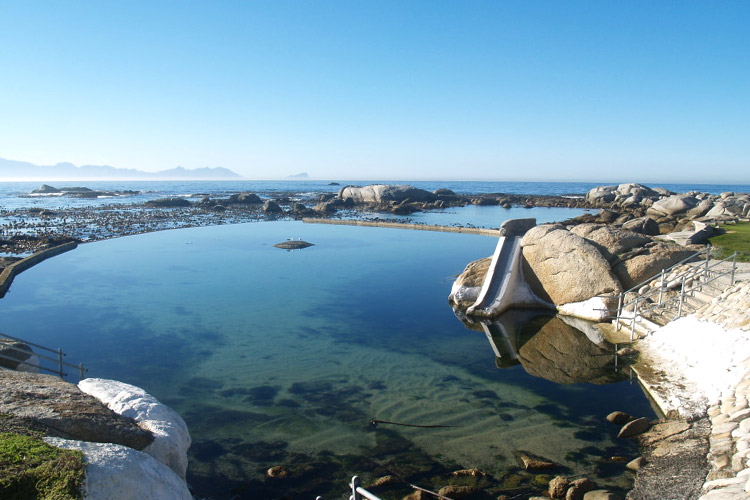
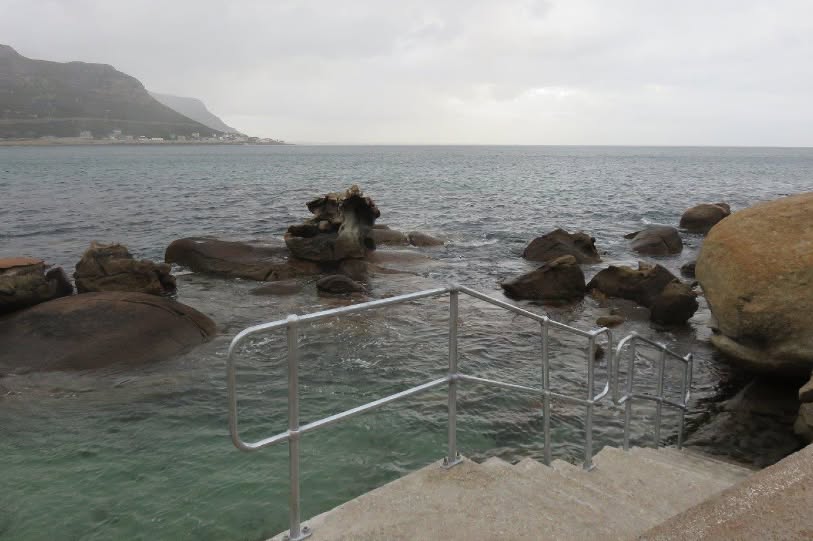
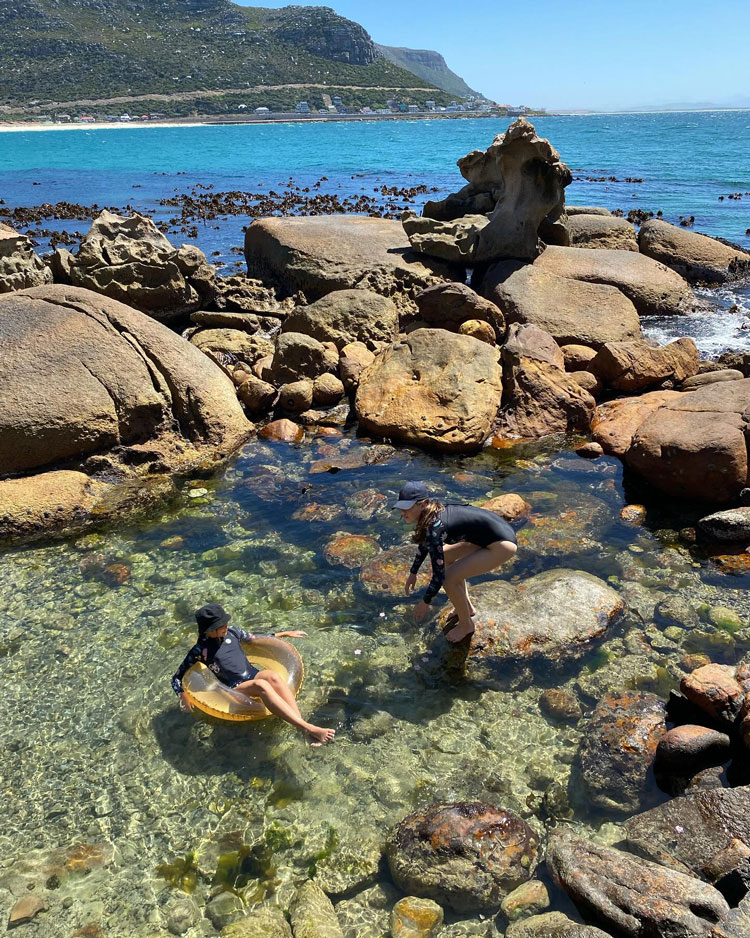
‘Skellies’ is a natural tidal pool, formed by the granite boulders that frame the southern edge of Fish Hoek beach. To reach Skellies, walk along the seaside Jager’s Walk from the main beach, or across the railway bridge at the Sunny Cove station. Skellies is about halfway between the two. It’s a tiny pool this, but perfect for a lazy dip or for kids to entertain themselves. It’s best on a falling tide, when the pool is full, but the waves won’t bother you. Named after the starfish found in the pool, this is a natural rock pool favoured by children and adults alike. The municipality has erected stairs and rails to help with safe access to the pool.

24. Woolley's Tidal Pool

Woolley's Tidal Pool in Kalk Bay was named after William Woolley, who passed away in 1913. "My wife's great-grandfather was William Woolley. He lived in a house called 'Wayside' and also owned one called Step-aside. Both are just near Woolley's pool. There was a natural rock pool opposite their house. It was turned into a seawater swimming pool by the erection of a cement wall across the rocks at one end. It was done by the city council at Woolley's suggestion and so they named it after him." https://www.facebook.com/FishHoekBeach/posts/history-of-woolleys-pool-the-tidal-pool-between-clovelly-and-kalk-bay-my-wifes-g/1233620716721267/ 

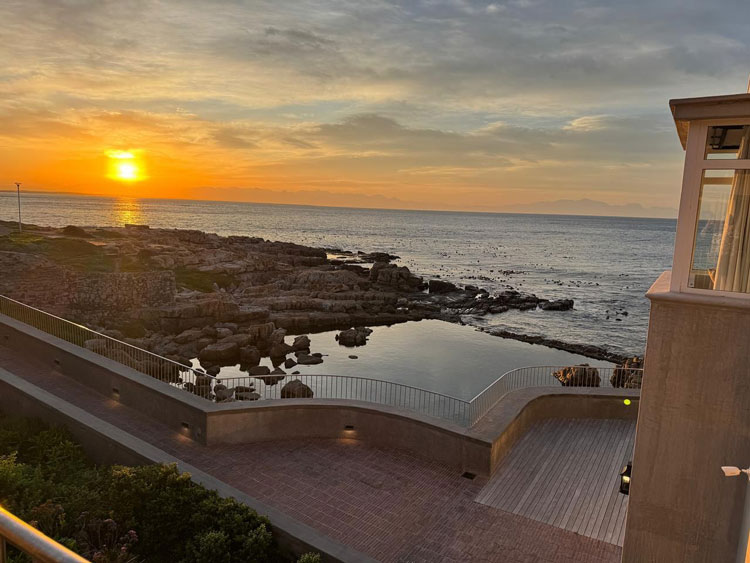
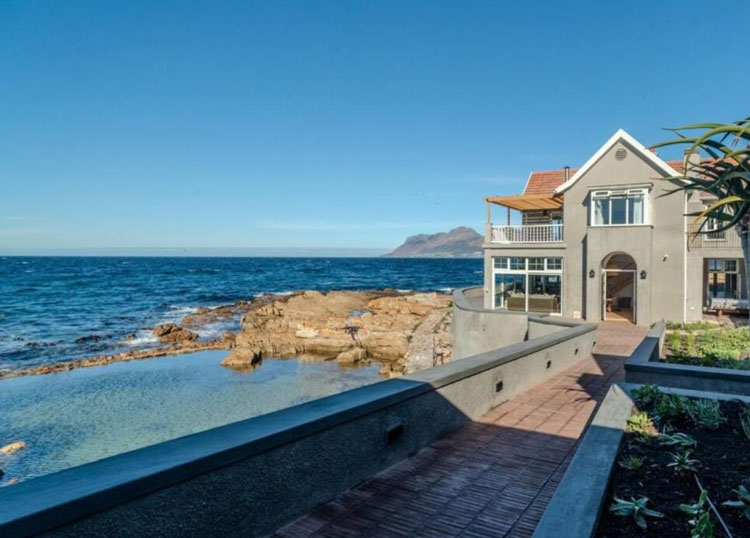
25. By The Sea Villa

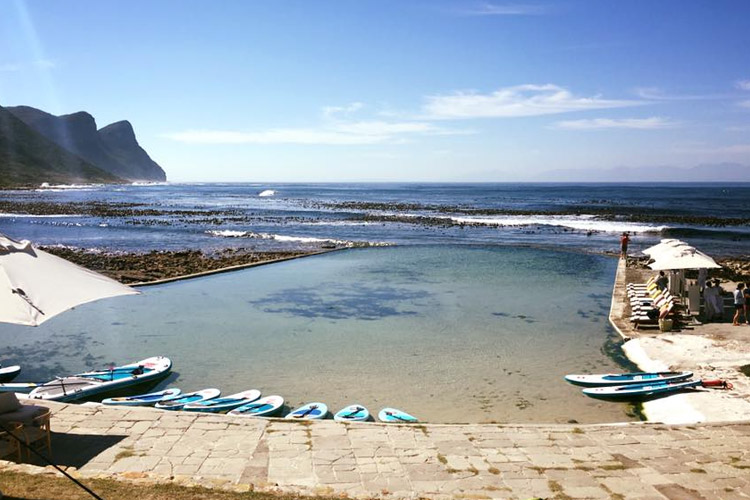
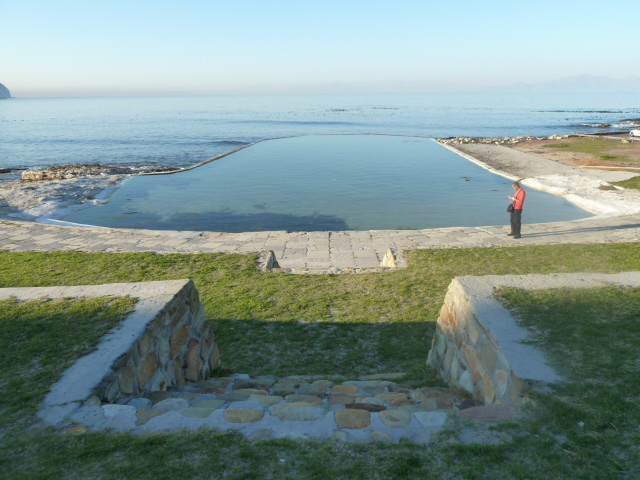
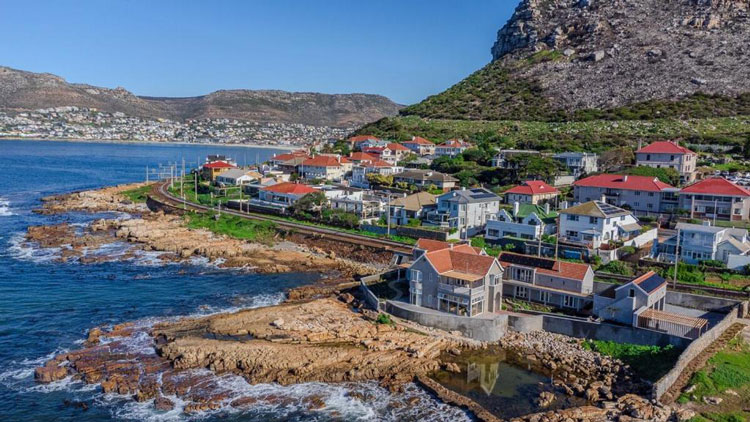
The tidal pool seems to belong to the house, although the public has access to the seashore up to the high-water mark. It seems likely that the house owner built the pool, reflecting a tendency for tidal pools to be unofficial structures. 

by the sea 2

by the sea 1

by the sea 3

26. Kalk Bay Tidal Pools 

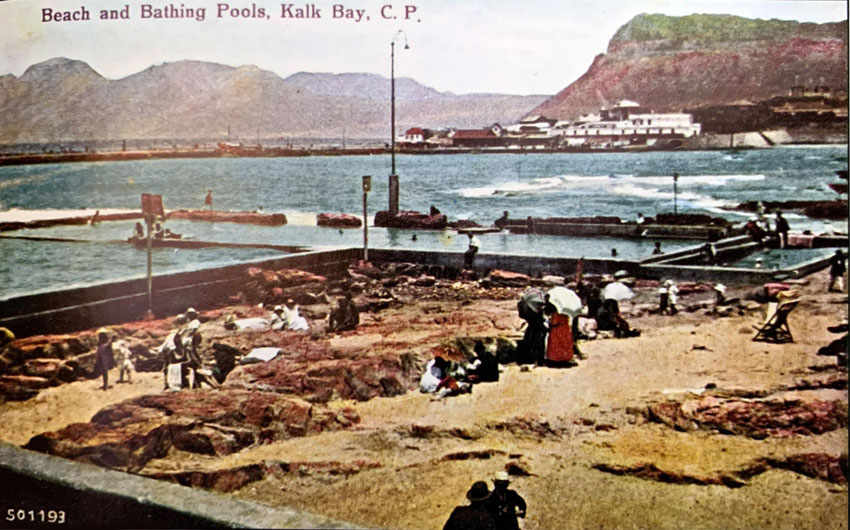
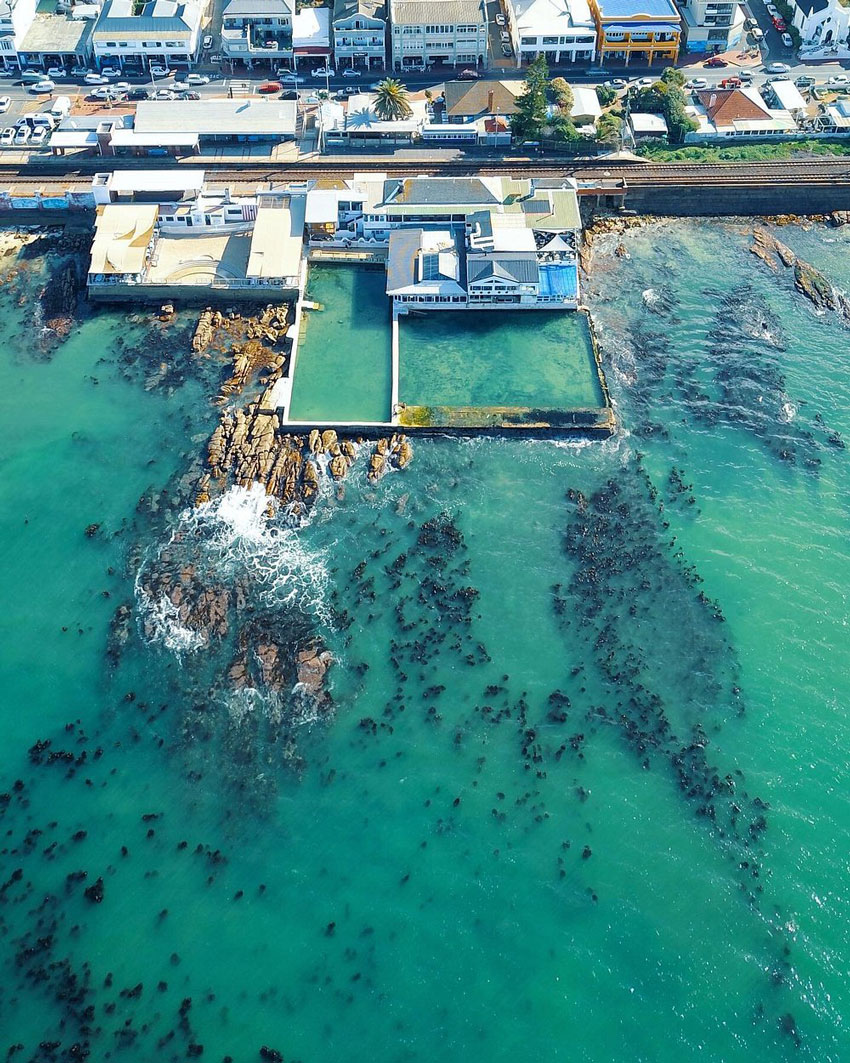
A series of pools were built near the station, including Bishop’s Pool and the square Kalk Bay Pool (1922). The Pavilion was built in the 1950s, when the building was used as a bathing pavilion, and once hosted swimming lessons and galas for local schools. The building now houses the Brass Bell Restaurant. 

Read more about the story here →

27. Dalebrook Tidal Pool

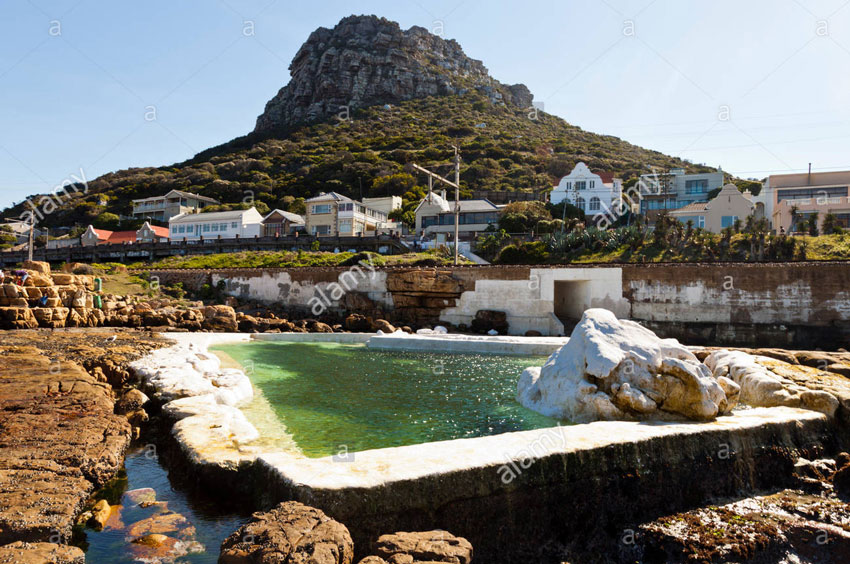
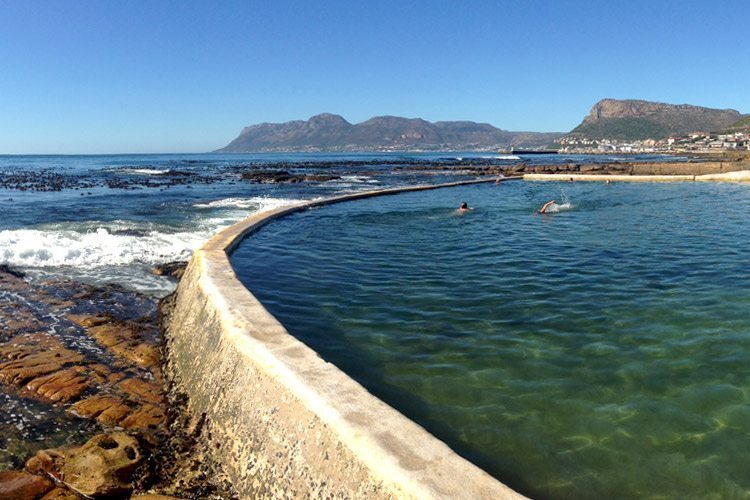
First formal wall built in 1903; pool augmented in 1907 and 1914. The first formal wall was reportedly built as a private undertaking by Mr F.B. Steer of Douglas Cottage.  In 1907, the pool was officially commissioned by the Kalk Bay Municipality and has remained largely unchanged in its layout since then. Initially quite narrow, the pool underwent a significant extension during the 1960s to reach its current size. The pool is unique for having large natural boulders in the middle that serve as resting points for swimmers. It is accessed via a subway tunnel under the railway line.

Ebrahim says that he first came to swim at Dalebrook with his father when he was a child. Now 42 and a father of four, he brings his own children.

“They basically learnt to swim in this pool,” he says. “The waves are not so harsh. This is more relaxing”.

Sometimes Ebrahim snorkels at the pool. He says he has seen octopus and crab, and found coins and rings. He says that he feels connected to the pool – ”joined at the hip”.

28. St James Tidal Pool

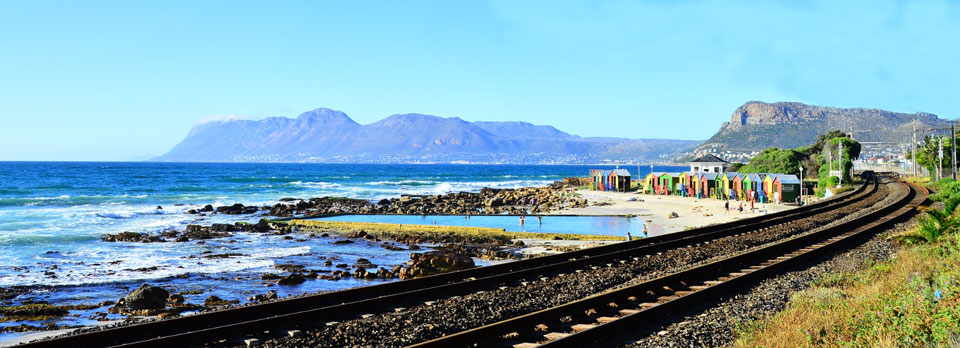
In the village of St James, the homes date back to the days when the Cape was still a colony of the British Empire, built from limestone, plaster and stone, with traditional thatched roofs. St James Beach is well known for its colourful Victorian-style bathing boxes, which first appeared at St James in the 1890s. The concrete tidal bathing pool was commissioned in 1911, during an era which saw a boom in coastal development following the arrival of the railway line in 1883, transforming St James into an affluent seaside resort.  Its name derives from the early St James Catholic Church, built circa 1880.

29. Strandfontein

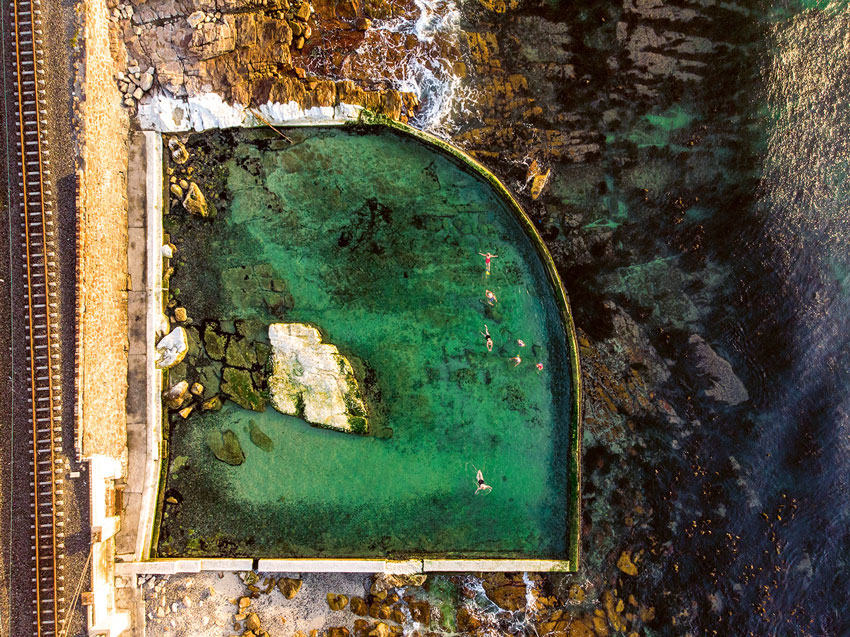
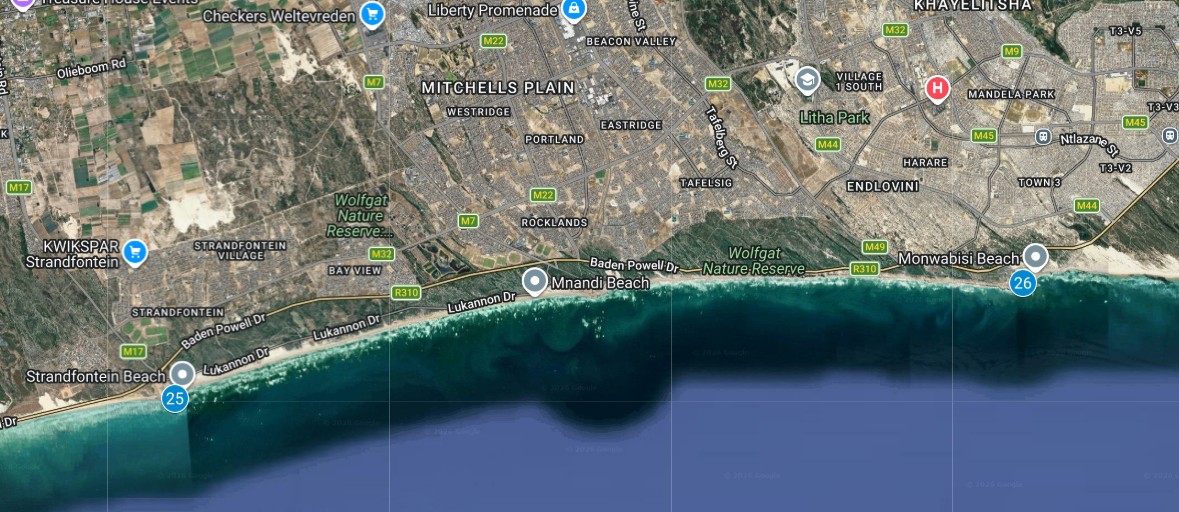
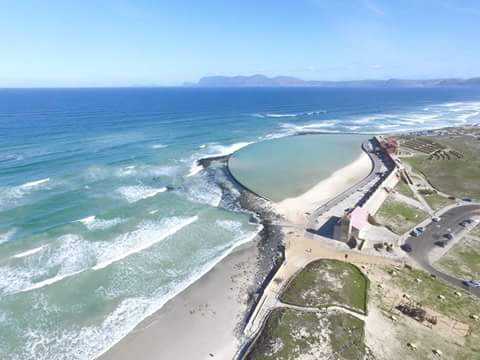
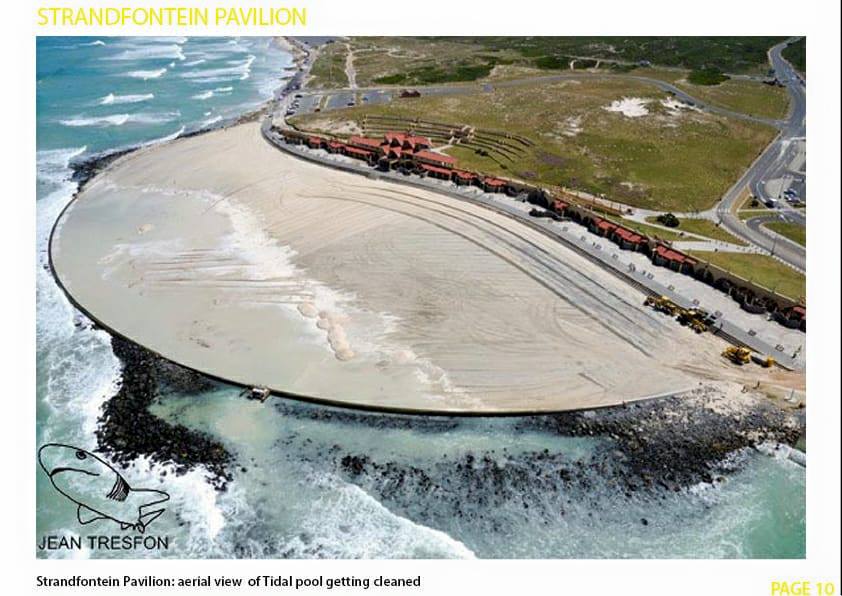
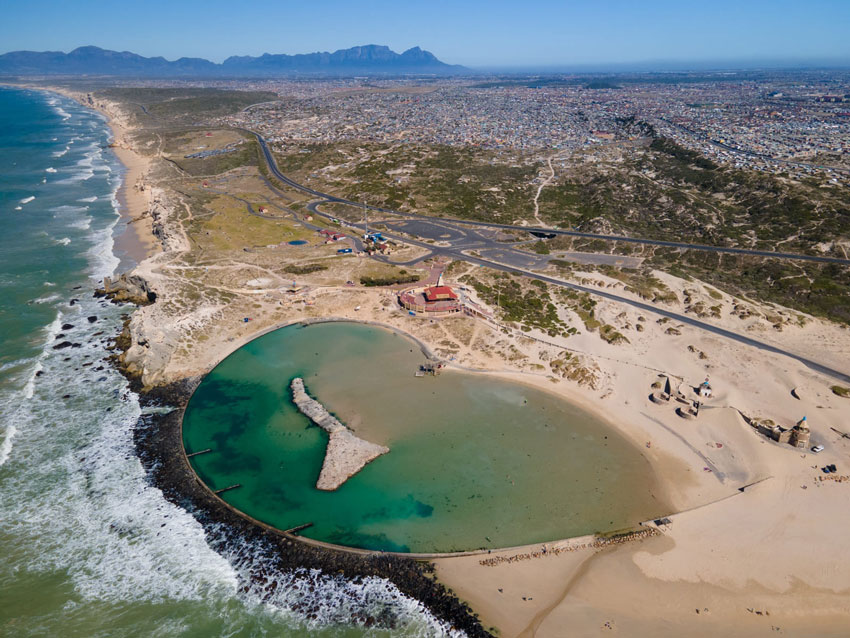
The Strandfontein Tidal Pool is renowned as the largest tidal swimming pool in the Southern Hemisphere. Located on the False Bay coastline in Cape Town, it is a key feature of the Blue Flag-awarded Strandfontein Beach.

The Strandfontein Pavilion Refurbishment project is underway, with the first phase of construction expected to start in February 2026. 

There is an active local surf-lifesaving club.

30. Monwabisi Tidal Pool

The Monwabisi Beach resort was built in 1986 as a recreational facility for African and coloured residents of Khayelitsha and Mitchells Plain.

The tidal pool, pavilion and public amenities provided a space for safe swimming and picnicking, while the beach itself remained dangerous for ocean bathing. The Monwabisi Lifesaving Club was established in 1987 to provide beach safety for bathers. In the early 1990s, in an attempt to reduce the tidal pool’s exposure to wave action and backwash, a rock breakwater was built. While seemingly creating a safer beach, the opposite occurred, resulting in rip currents generated by the longitudinal drift that have led to numerous drownings.

The first thing one sees at Monwabisi beach are the dilapidated buildings that used to entertain patrons and the sand that has covered the concrete tables and chairs where people used to feast.

Walking around the promenade it is covered by sand and the plank stairway to the water is broken, even a sign meant to warn swimmers of rip currents is broken.

2022

31. Die Strand

The shallow-shelving coastline here is caused by the 130 km/h strong south-easterly wind that can blow continuously for two weeks during the summer months. The shallow tidal pool is located along the 5km sandy beach known as Melkbaai.

Read more about the Strand beach →

32. Harmony Park Tidal Pool

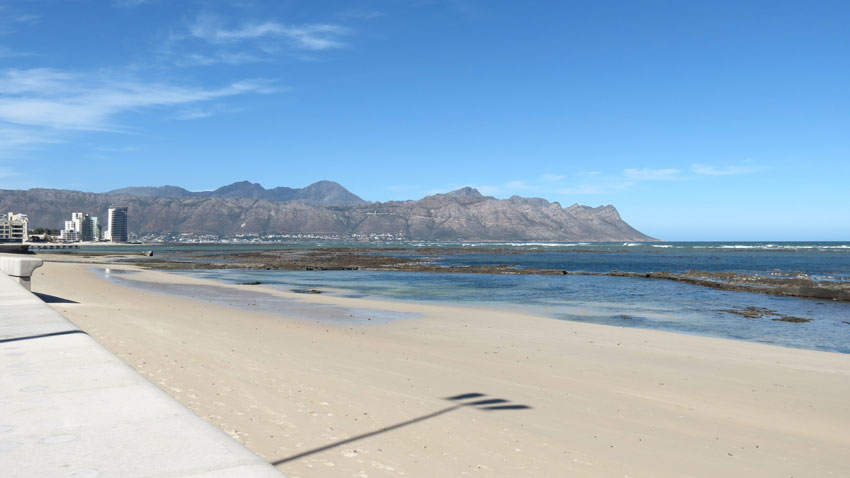
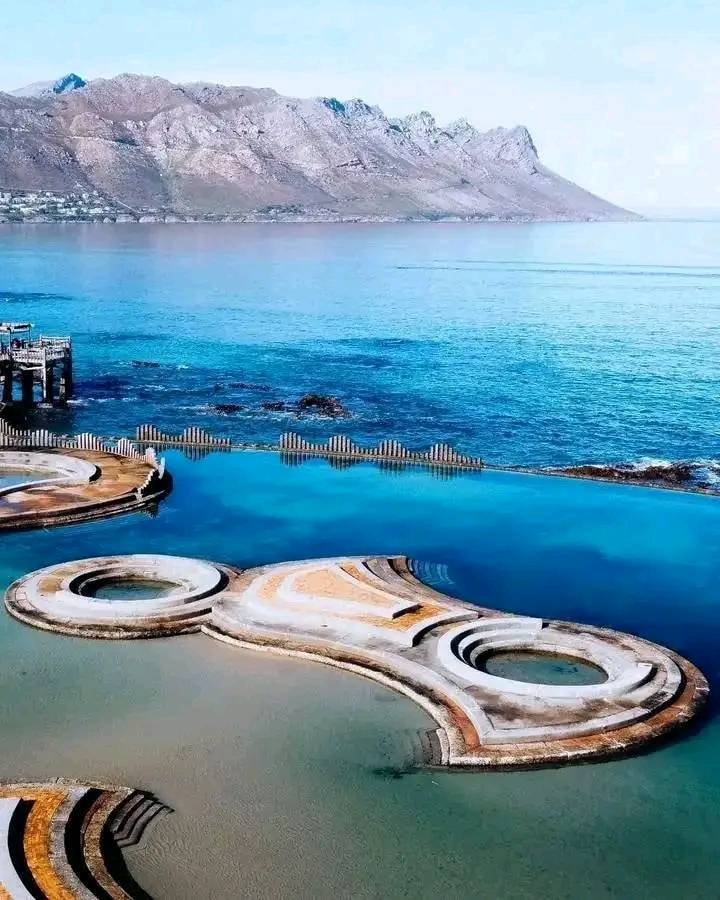
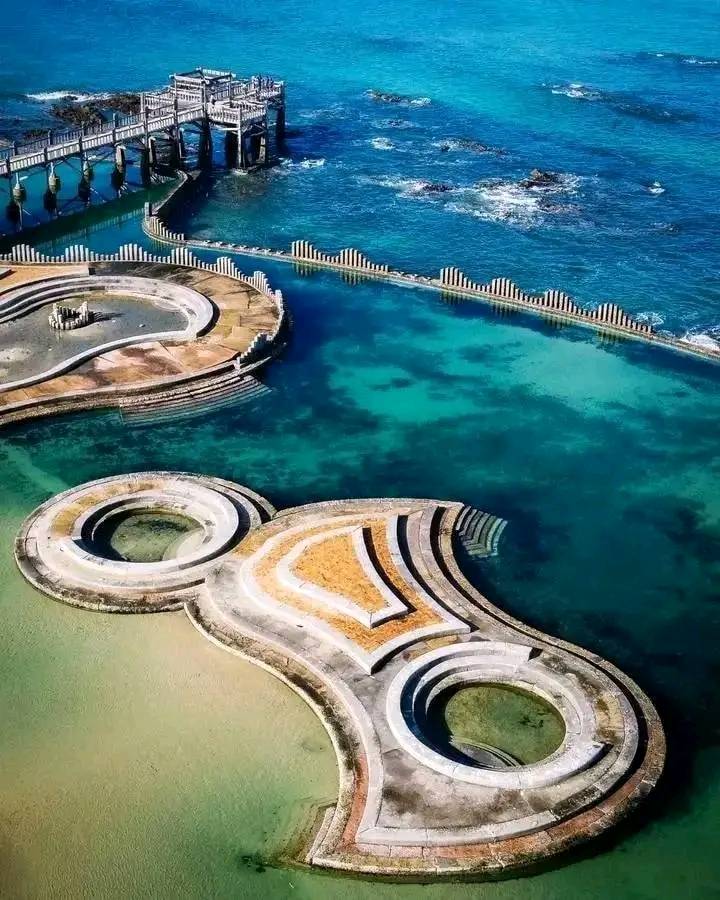
The Harmony Park Resort and its tidal pool, built in 1991, are owned and maintained by the local municipality. The pool is one of the largest in Cape Town and features a one-of-a-kind design with islands, seawater fountains, and wave splitters along the sea wall. It was designed by The Planning Partnership and Interplan Architects, and built between 1989 and 1992.

Historically, the resort was specifically designed for "Coloured" recreation during the desegregation of South African beaches in 1989. It was strategically positioned to act as a "buffer" between the white-only beaches of Strand. While it is a multi-cultural space today, its legacy as a primary recreational site for the Coloured community continues to be reflected in its high weekend attendance and long-standing family traditions.

33. Gordons Bay Tidal Pool

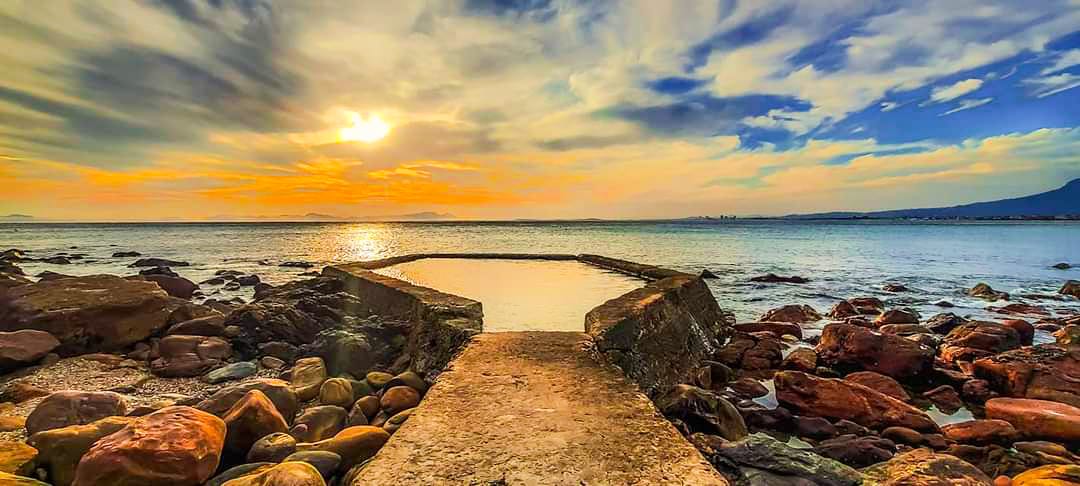
Known as Nun's Pool, it is a secluded tidal pool located near Bikini Beach in Gordon's Bay, South Africa. Historically, it was associated with the "End House," a residence owned by the church, providing a private swimming spot for Roman Catholic nuns, which led to its name.
Today, Nun's Pool is accessible to the public and offers a serene spot for swimming and relaxation, with picturesque views across False Bay to Table Mountain.

34. Kogelbaai Tidal Pool

The Kogel Bay (or Koeëlbaai in Afrikaans) Beach and the tidal pool are (or were) a popular spot for students from nearby Stellenbosch University. It remains a staple of the university's "beach culture" due to its proximity (roughly a 40-minute drive) and its reputation as a premier surfing and social spot. 

Students and visitors should be aware that the City of Cape Town has identified Kogel Bay as a "hotspot for water emergencies" due to strong riptides. It is highly recommended to only swim when lifeguards are on duty. On April 19, 2012, 20-year-old bodyboarder David Lilienfeld was killed by a Great White Shark at Kogel Bay (specifically near Dappat se Gat) in the Western Cape, South Africa. The 4–5 meter shark attacked him twice, severing his leg. Following the attack, up to six sharks were spotted in the area.

  • Hits: 2562

Atlantic coastline

Tidal pools along the Atlantic coastline

The coastline north of Cape Town has only four tidal pools.

The first one is in Langstrand near Walvis Bay in Namibia,

1500 km South lies the second and third pools, in two holiday resorts near Cape Town.

The fourth pool is a derelict 19th-century structure on Robben Island known as the Bath of Bethseda.

Click here to see the whole map

1. Langstrand

Walvisbaai, as it was known in the Afrikaans community, was a part of South Africa from 1911 until 1993, serving as an important military base for the SADF.

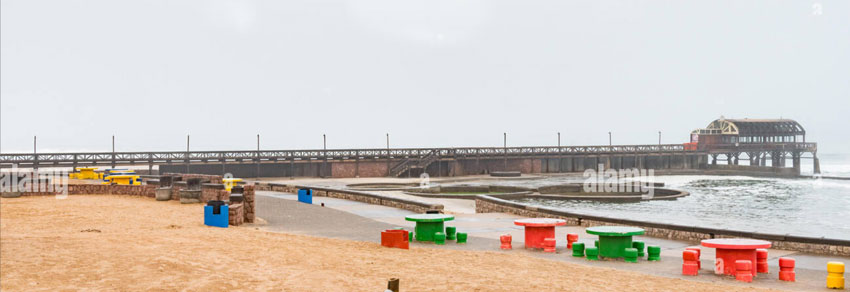
The tidal pools at Langstrand, halfway between Walvis Bay and the resort town of Swakopmund,  provide a safe location for swimming. There is an active local swimming community, which hosts the annual Pupkewitz Jetty Mile ocean swimming race in Swakopmund.

Walvis Bay has a municipal pool, while Swakopmund had an Olympic-sized indoor pool that has been demolished.  

Picnic places, a tidal pool, and a jetty were designed by Johan van Papendorp in 1987 and built in the 1980s by Wim van der Plas of Premier Construction from Swakopmund, with funds from the provincial government in Cape Town, as a project to boost tourism in the Wasvisbaai area. 

Water temperature in Swakopmund 26th March 2026 was 16.6°C. Based on our historical data over a period of ten years, the warmest water on this day in the Atlantic Ocean near Swakopmund was recorded in 2007 at 18.5°C, and the coldest was recorded in 2023 at 13.9°C. Sea water temperature in Swakopmund is expected to drop to 16.5°C in the next 10 days. The average water temperature in Swakopmund is 17.5°C, the minimum temperature is 13.5°C, and the maximum is 21.3°C.

Throughout the year, the water temperature in Swakopmund does not rise above 20°C and therefore is not suitable for comfortable swimming. But on some days of January, February, March, December, the water temperature warms up to 20°C and above. The average water temperature in Swakopmund in winter reaches 17.6°C, in spring 16.2°C, in summer the average temperature rises to 13.7°C, and in autumn it is 13.6°C.

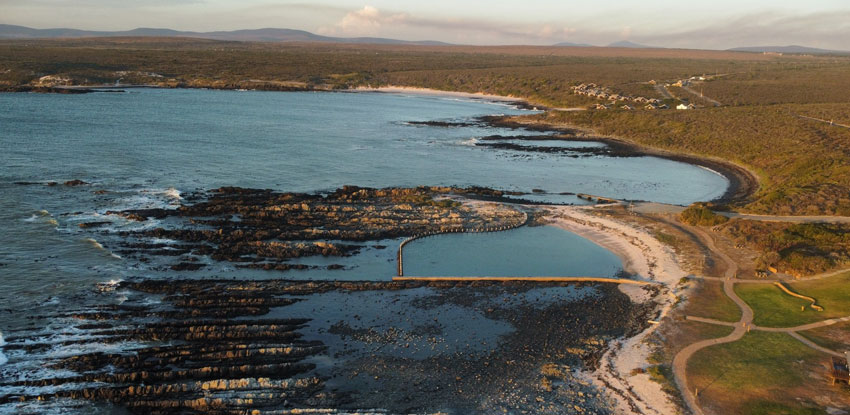
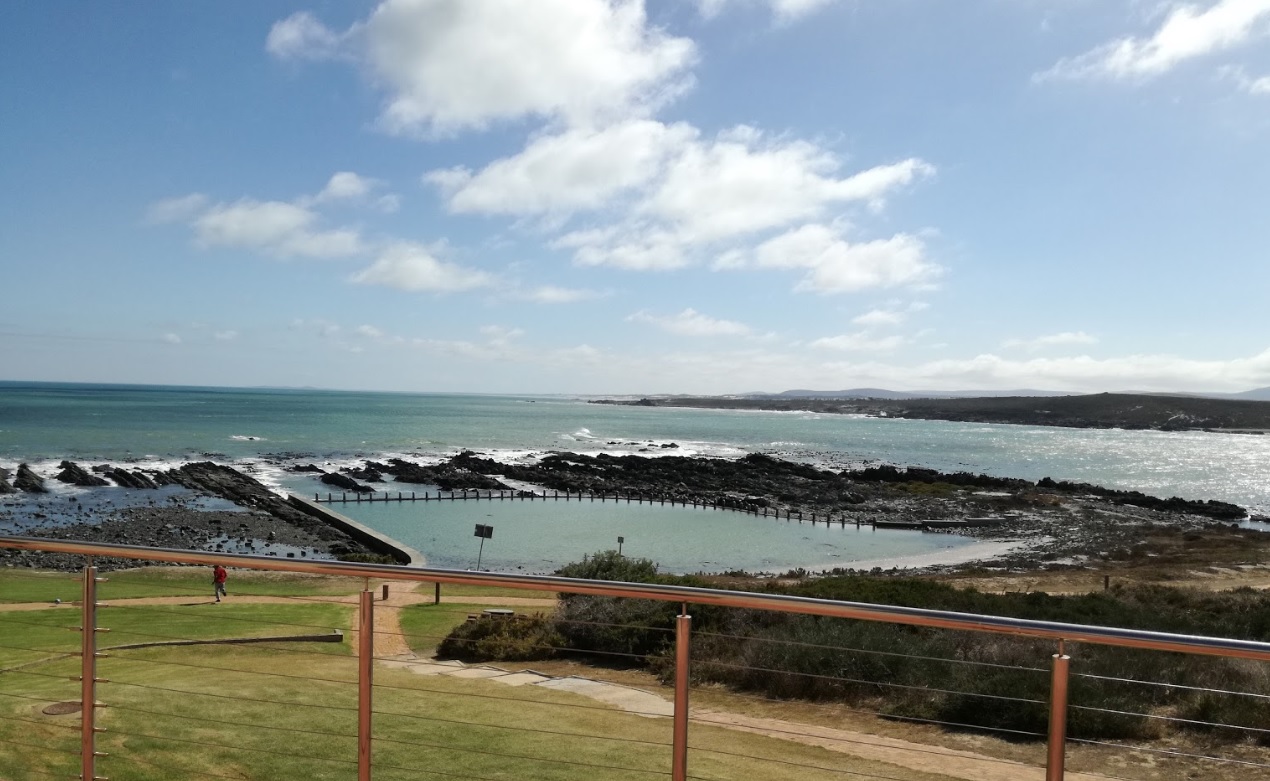
2. Ganzekraal

The Ganzekraal Vakansieoord is a municipal facility 50 km north of Cape Town. The original Ganzekraal farm dates back to the early 1700s.

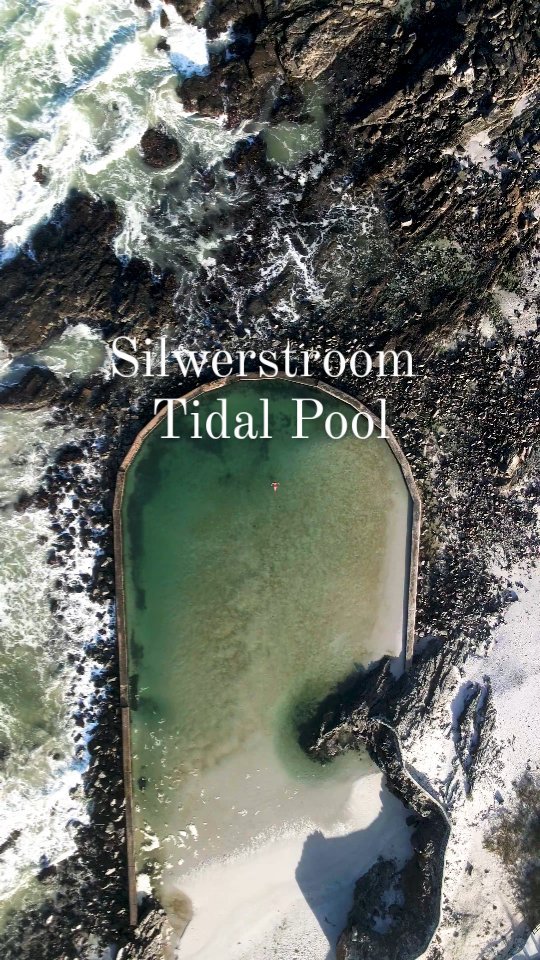
3. Silverstroom

A few kilometres south of Ganzekraal is another municipal resort with a tidal pool.

https://www.instagram.com/jaycabozlandscapes/

4. Bath of Bethesda

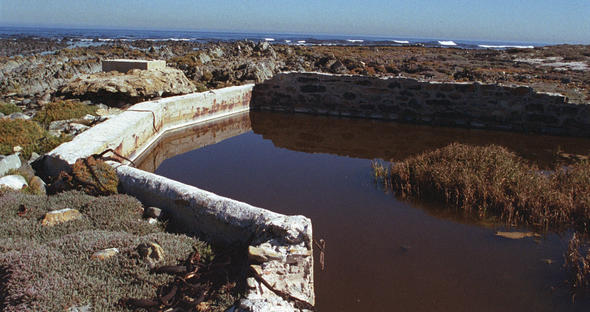
The tidal pool was built on Robben Island after it became a leper colony in 1845, as swimming was considered to be therapeutic for leprosy victims.  It was specifically used by the leper colony that occupied the island between 1846 and 1931.

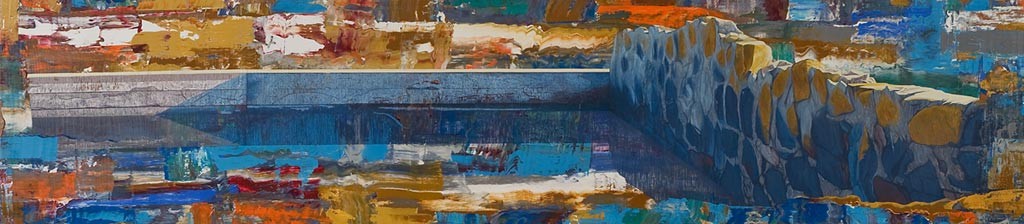
The remains of this pool can still be seen today, and the image of the Bethesda pool is from a painting by Paul Stopforth.

The pool is named after a famous pool in Jerusalem where Jesus performed the famous miracle of healing of the paralytic

Bath of Bethesda in Robben Island


bethseda1

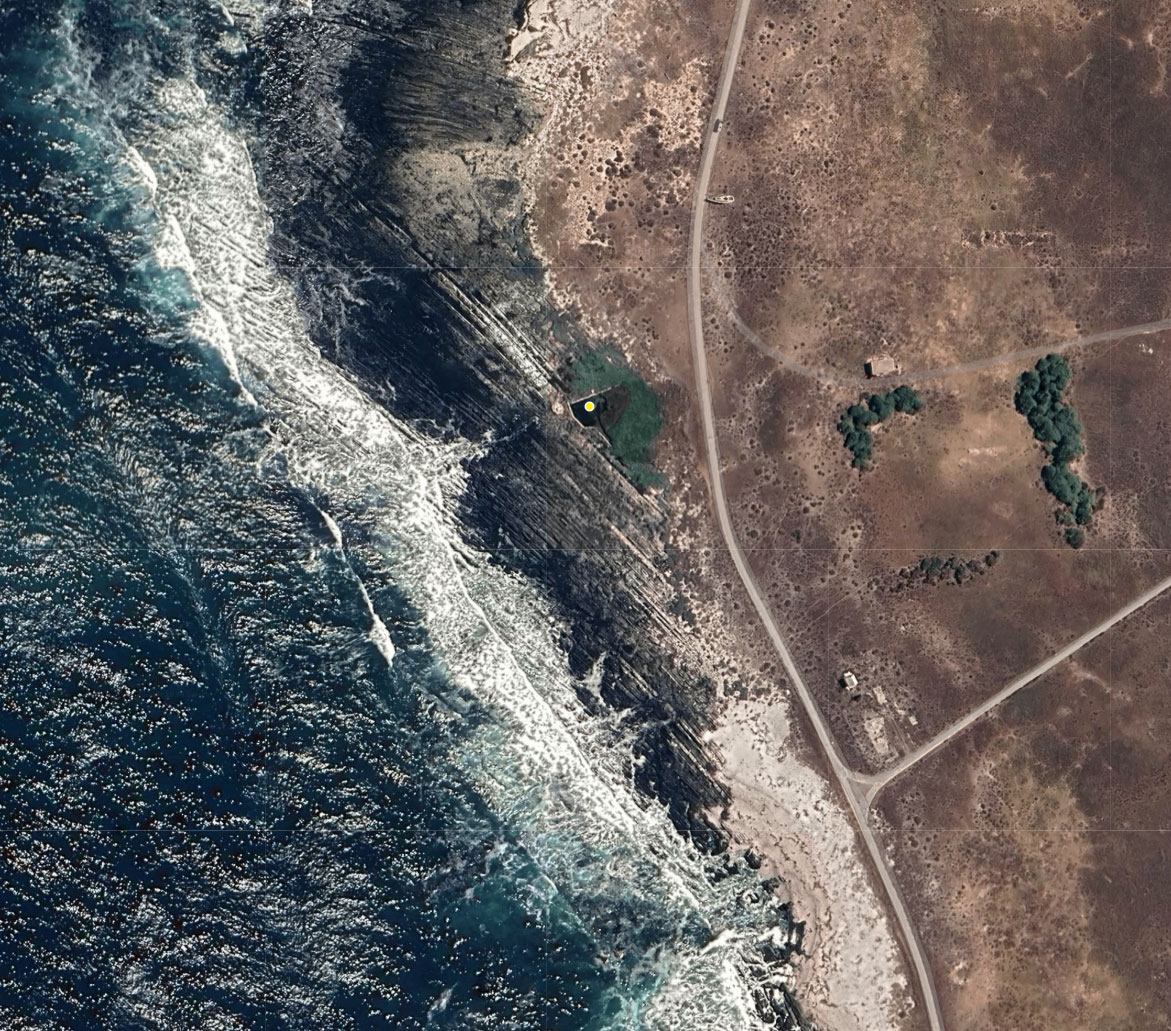
Bethseda map

  • Hits: 1193