Polana Hotel
Polana Hotel, Lorenzo Marques
The Polana Hotel, an iconic "Palace style" landmark built in 1922 in Lourenço Marques, was once famously associated with a shark net enclosure located at the adjacent Polana Beach
- Hits: 47
The Polana Hotel, an iconic "Palace style" landmark built in 1922 in Lourenço Marques, was once famously associated with a shark net enclosure located at the adjacent Polana Beach
Here are several articles dedicated to Humewood.
1. Port Elizabeth of Yore: Life at Humewood in the 1920s, 30s & 40s
2. Port Elizabeth of Yore: The Changing Face of Happy Valley and Humewood Beach
3. Port Elizabeth of Yore: The Tin Hat on the Humewood Promenade
4. Port Elizabeth of Yore: The Railway Line to Humewood and the Driftsands →
5. Port Elizabeth of Yore: Alfred Brookes-Humewood’s Benefactor
6. Port Elizabeth of Yore: When Beach Holidays meant Camping even at Humewood
7. Lost Artefacts of Port Elizabeth: The Bathing House at Humewood
8. https://thecasualobserver.co.za/lost-artefacts-port-elizabeth-bathing-house-humewood-beach/
9. Port Elizabeth of Yore: The McArthur Baths
10. Port Elizabeth of Yore: Swimming Practices and Locations
11. Port Elizabeth of Yore: Swimming at the Breakwater
Another local blog, with a focus on surfing, is Miller's Local .
The home of Port Elizabeth surfing. Keep up to date with all the surf news from the Eastern Cape. Local is lekker, being a Bay surfer is better!
1. The History of Humewood Pillars
1. Then and Now: The Humewood Slipway
Please visit these sites for much more information about Humewood history.
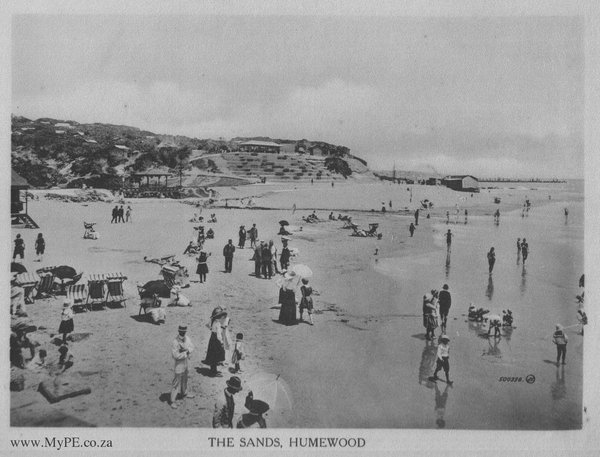
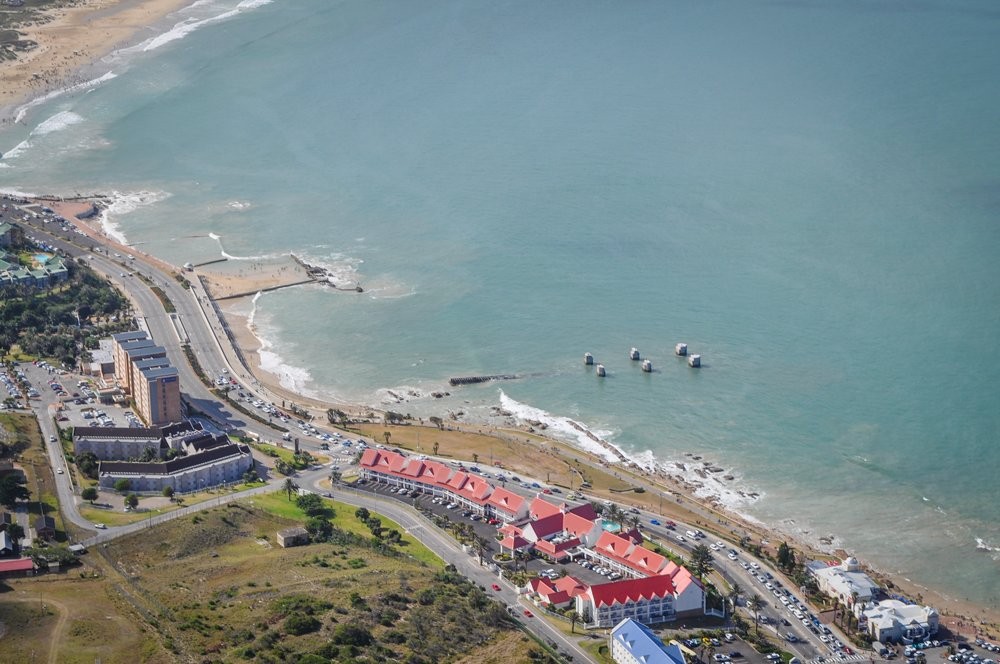
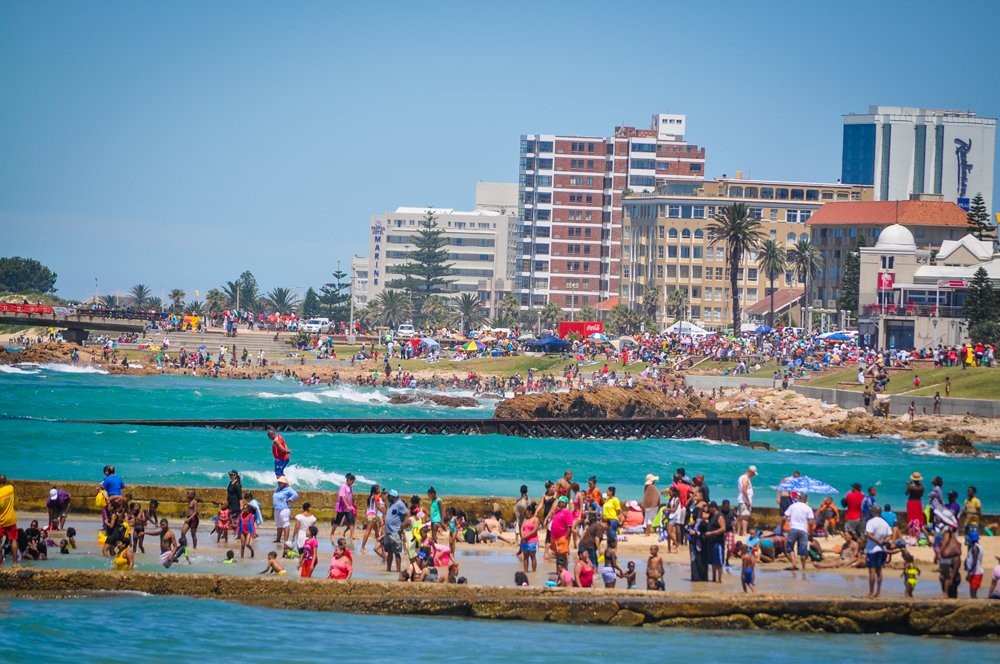
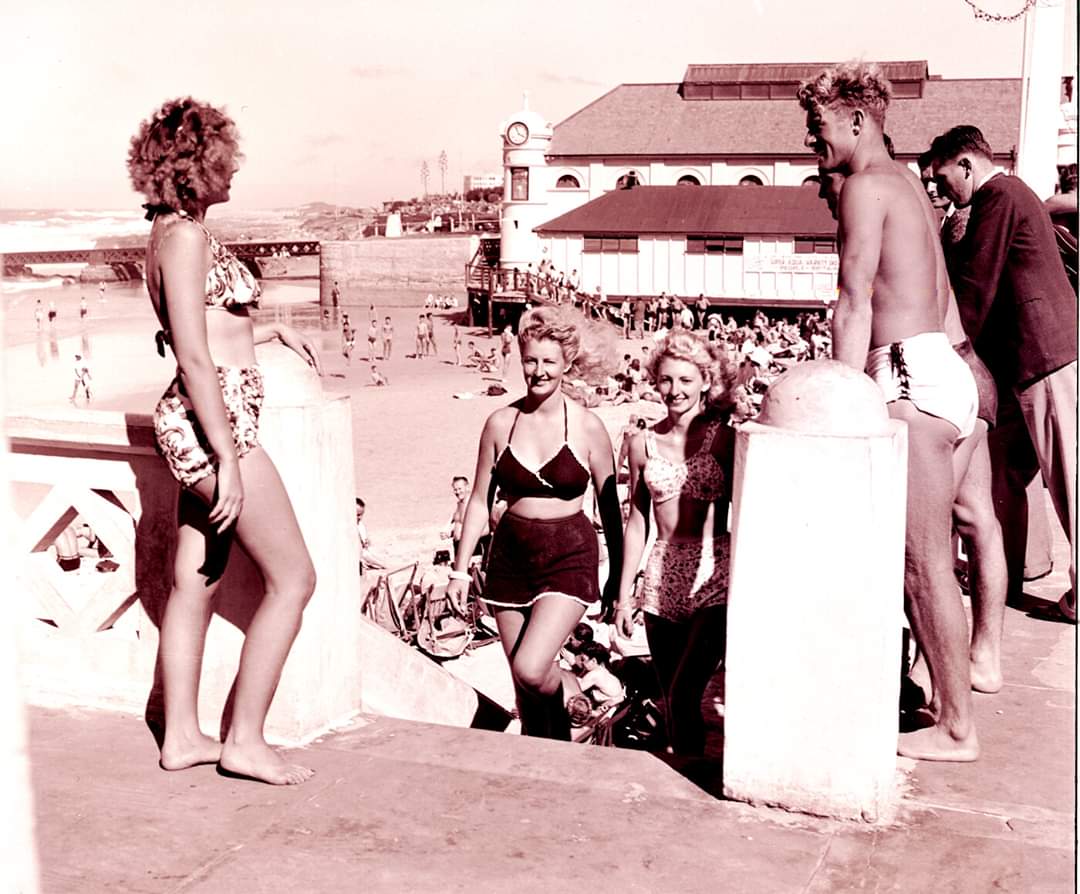
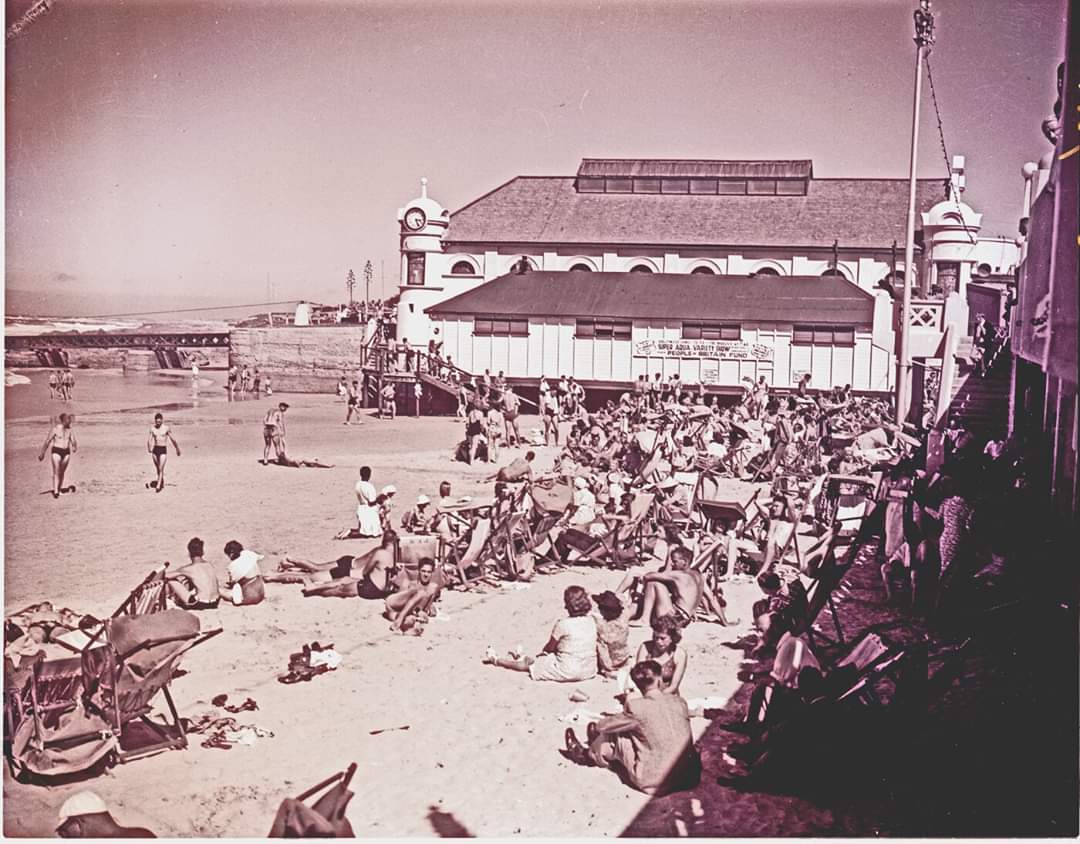
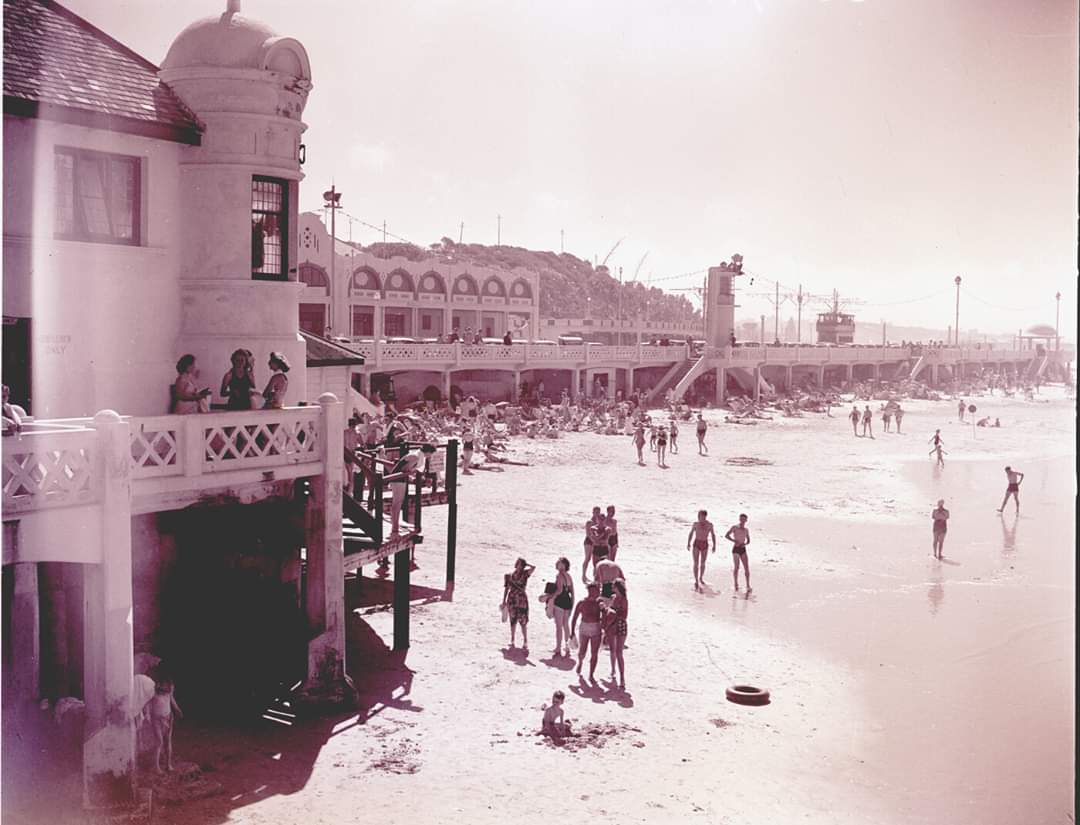
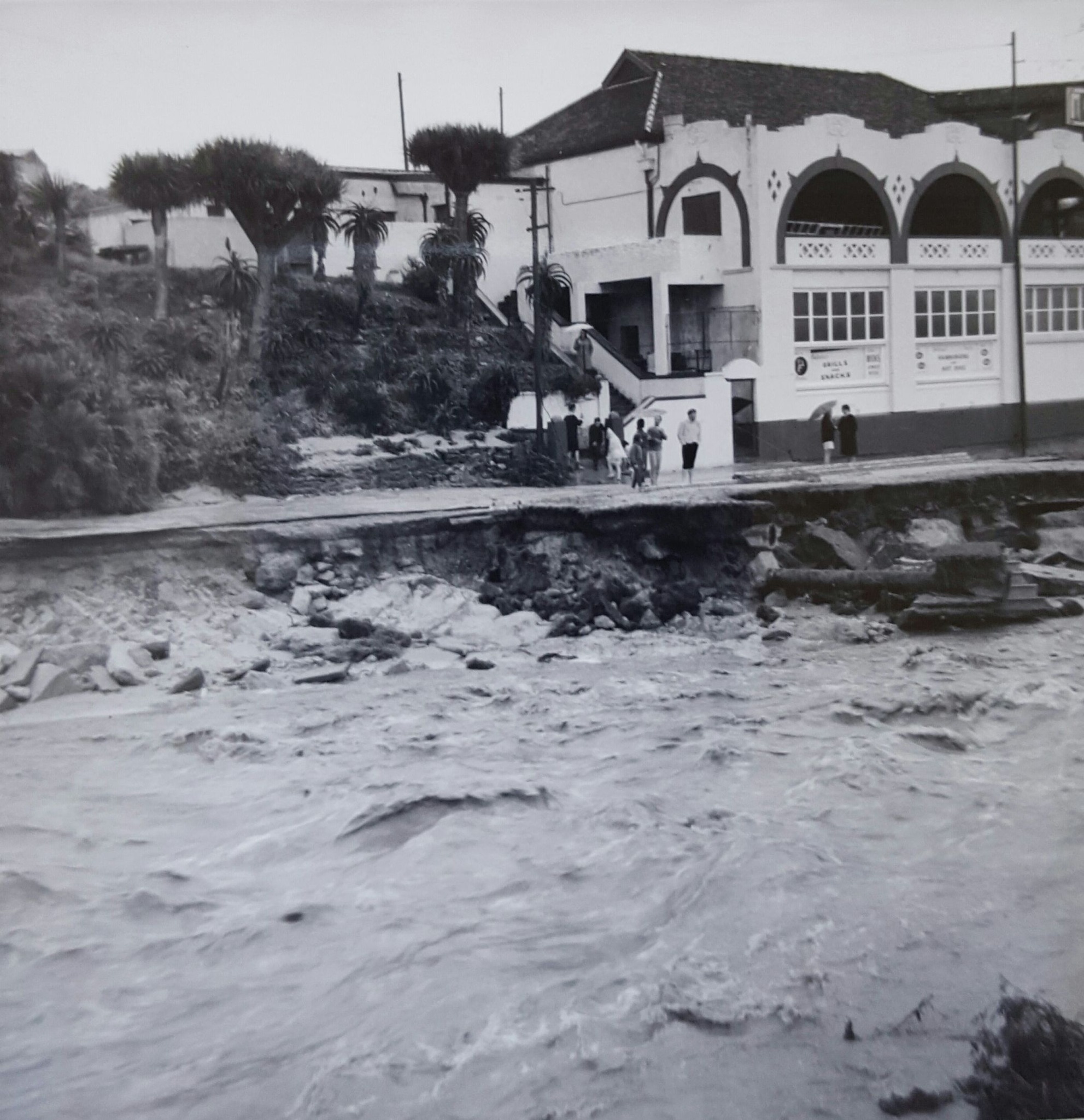
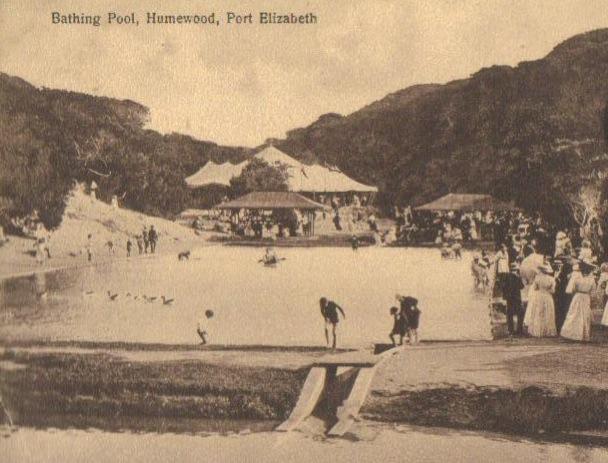
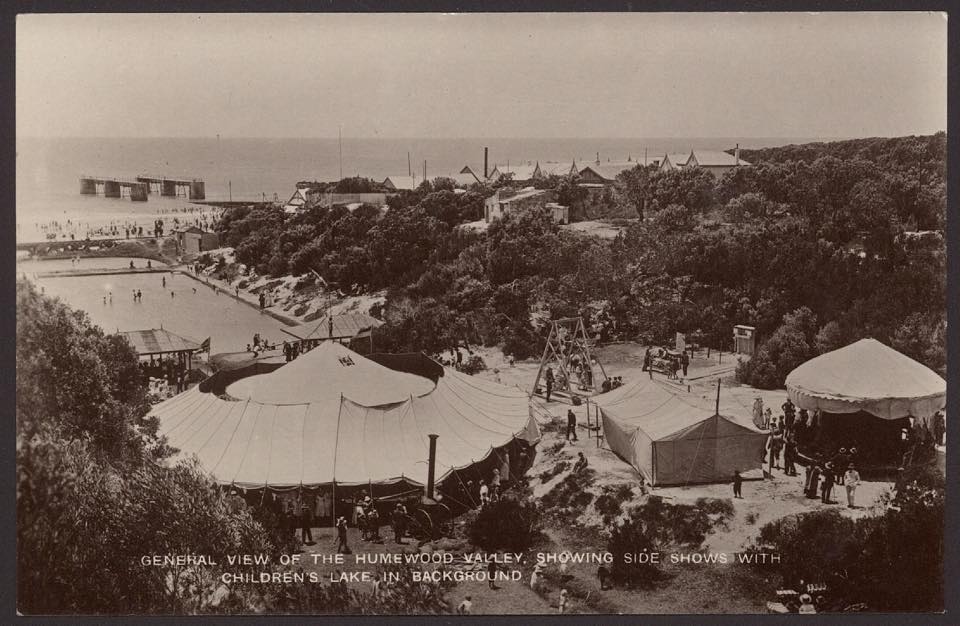
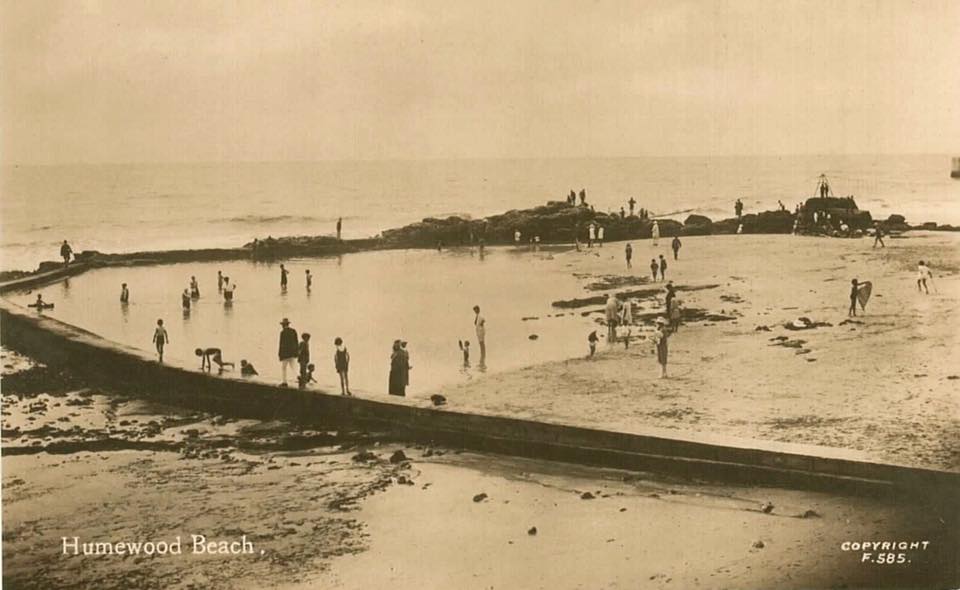
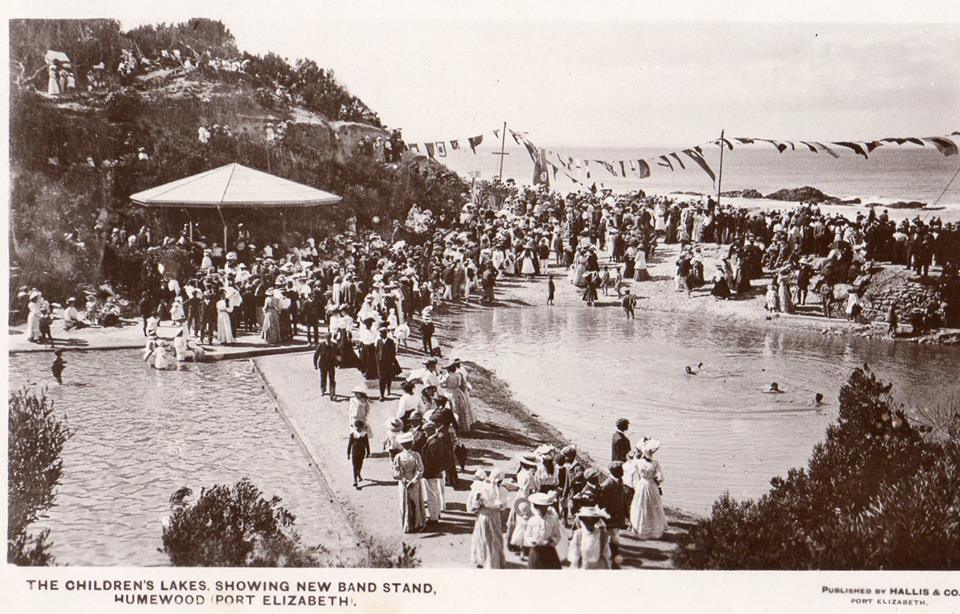
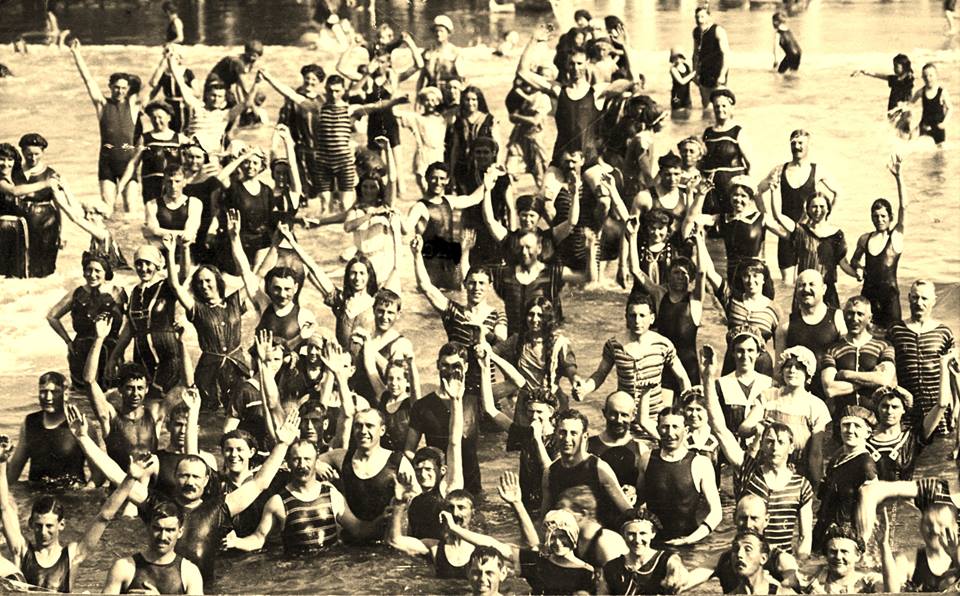
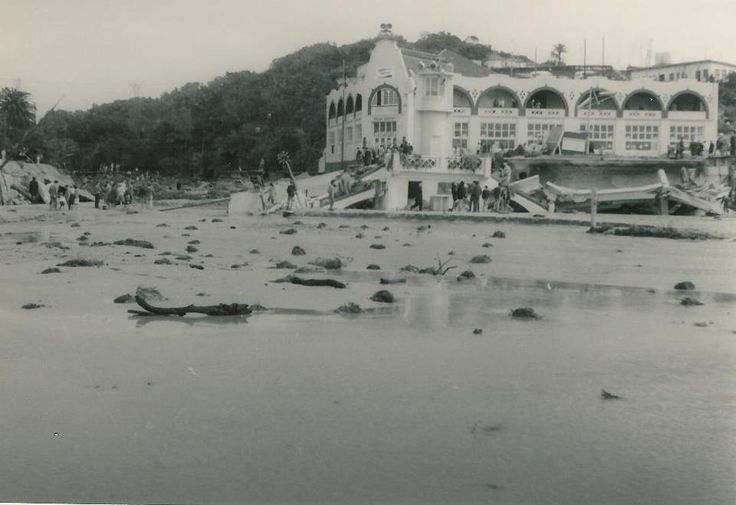
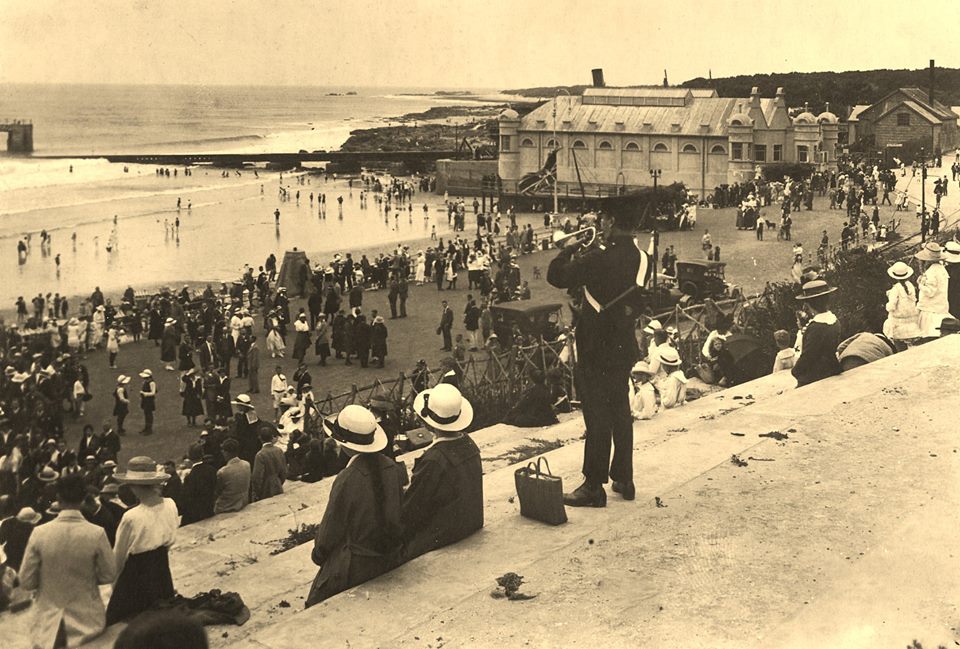
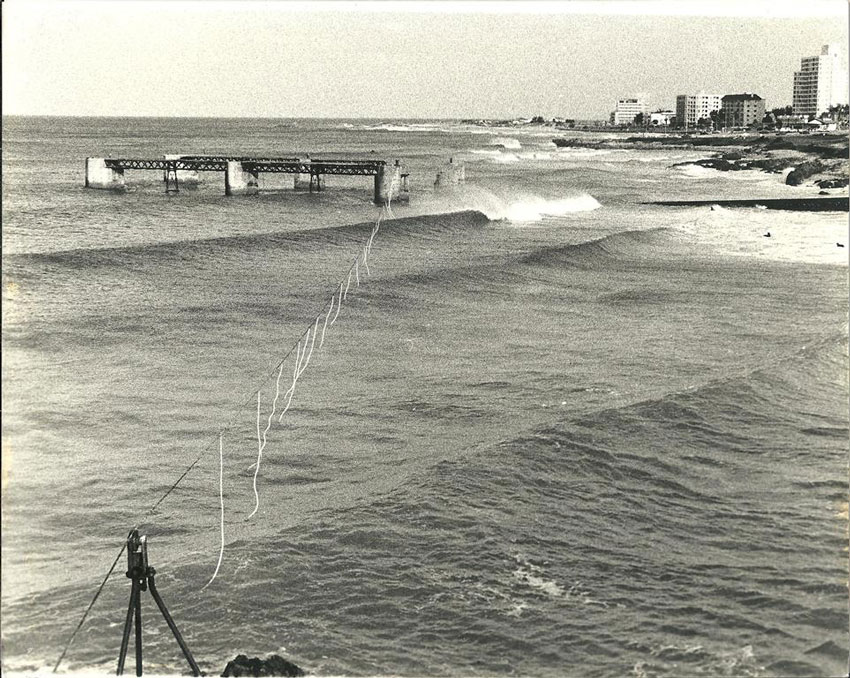
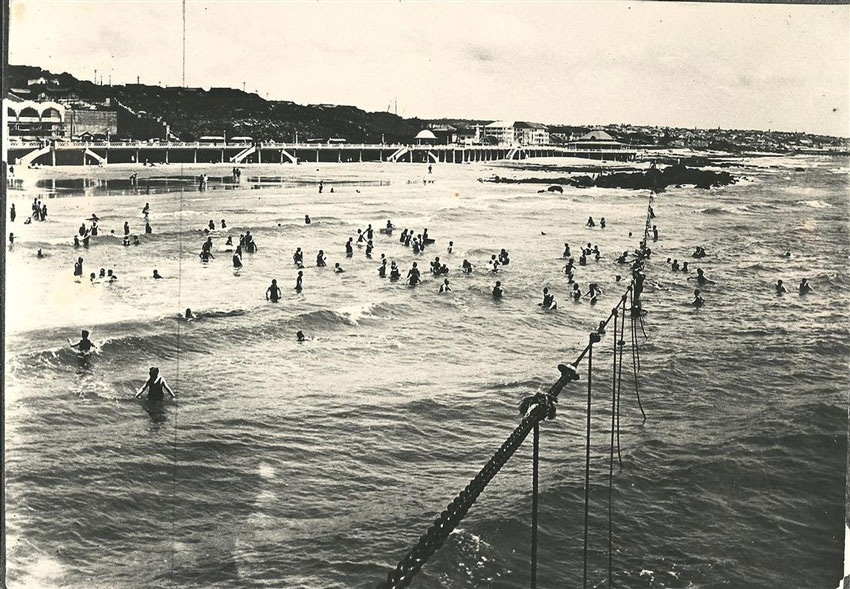
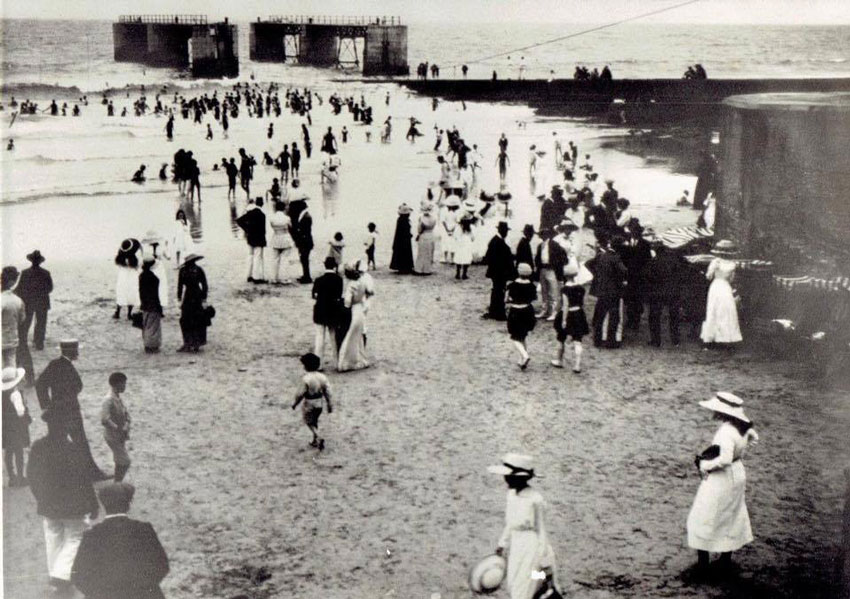
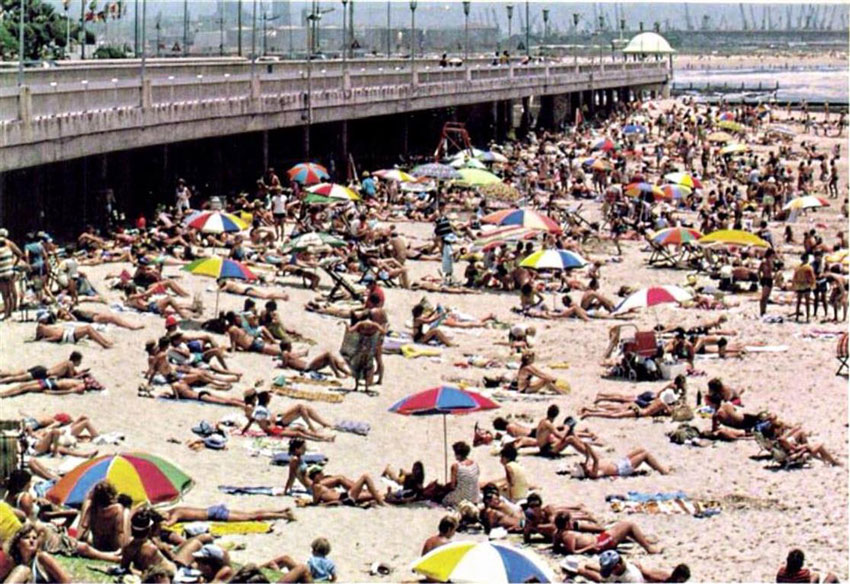
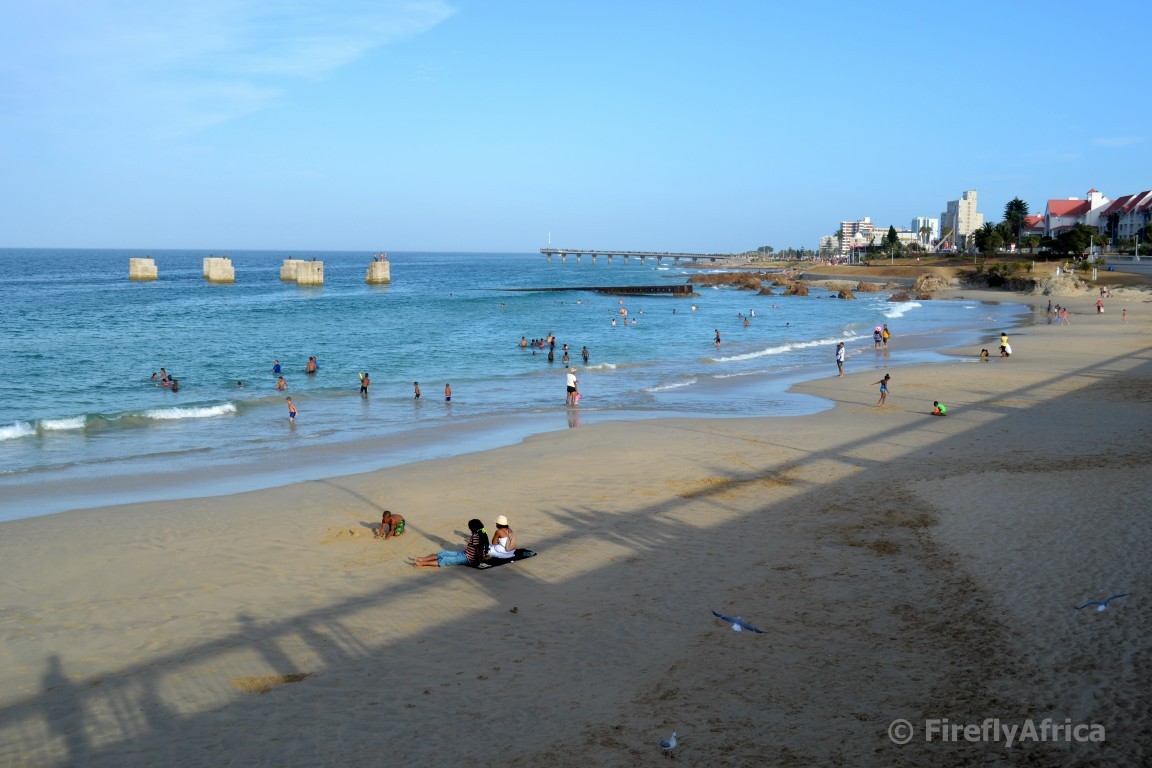
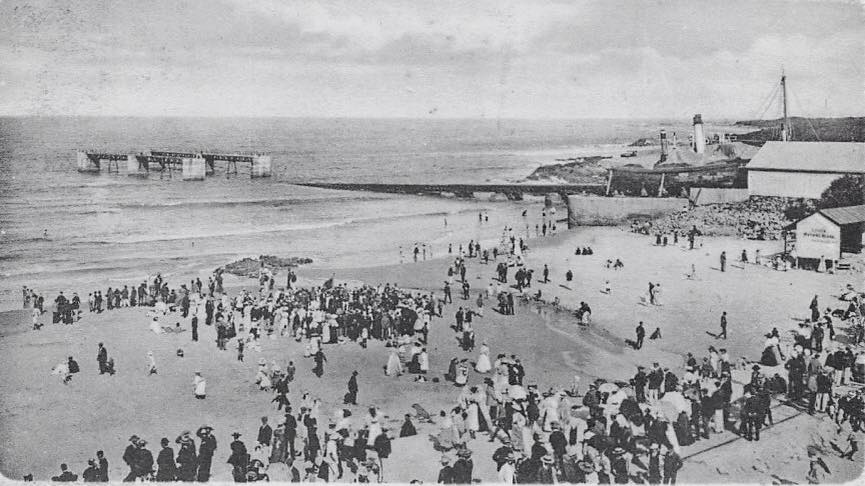
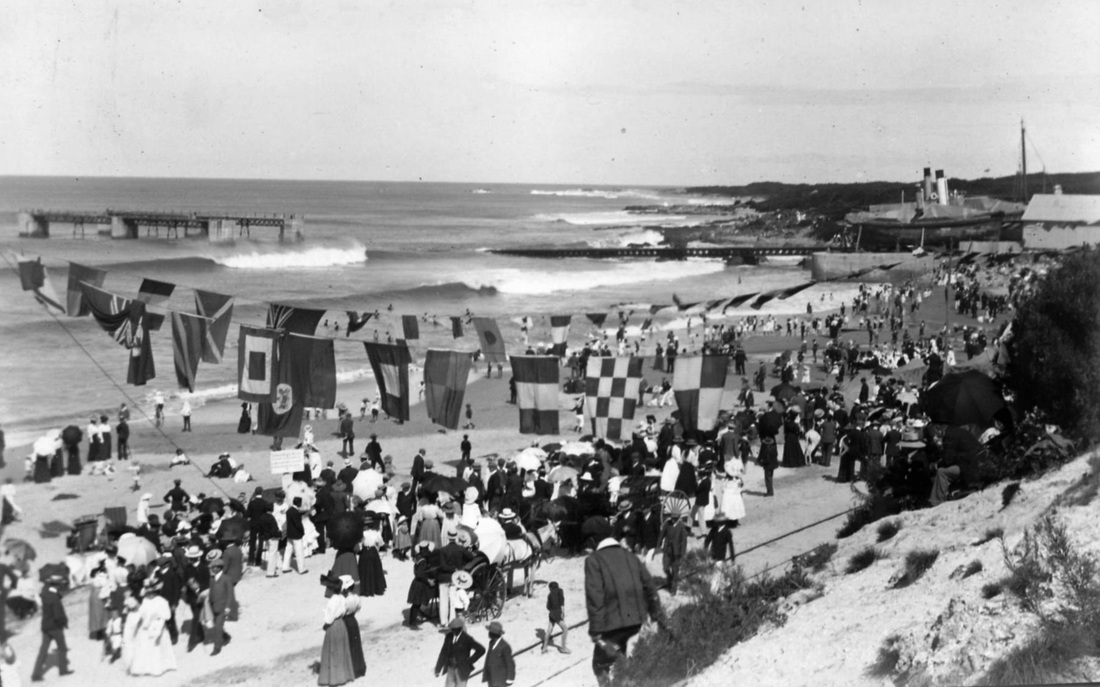
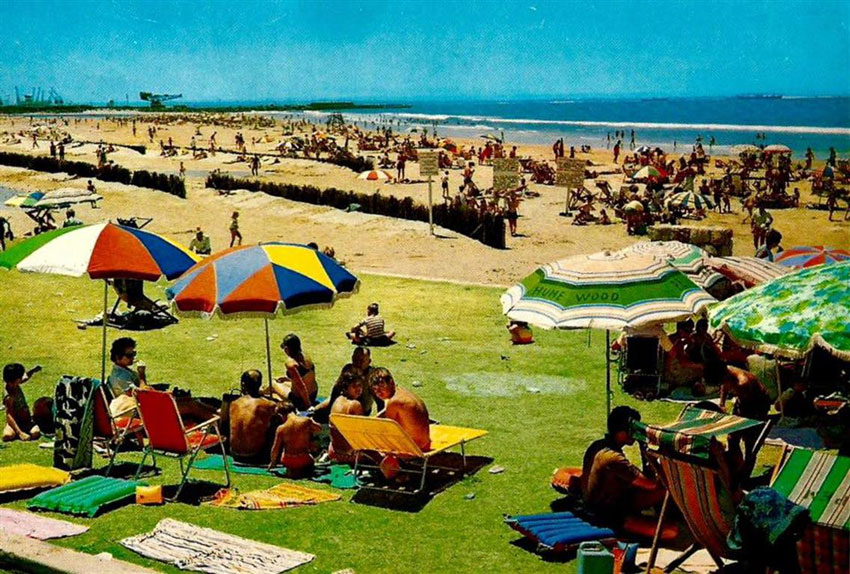
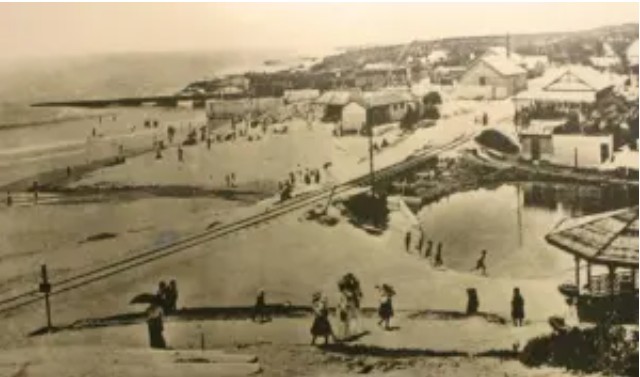
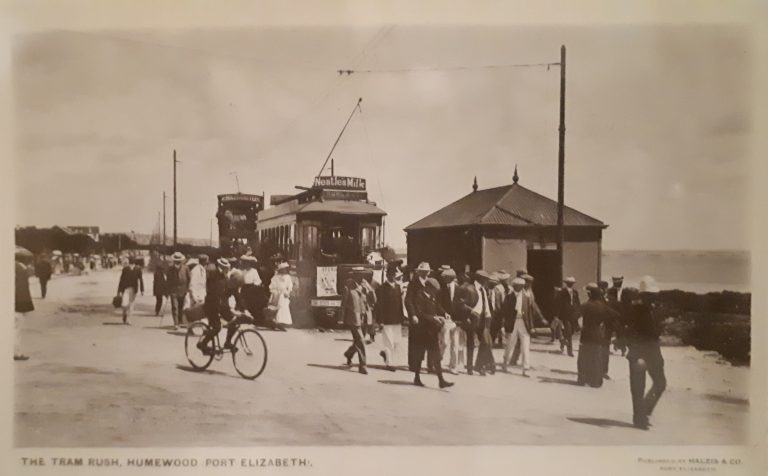
The Seaview Tidal Pool was an art deco marvel. It was built by for a local businessman Lewis Richardson, who also established a hotel on the site.
The Richardson family played a pivotal role in the founding and commercial development of Seaview. The family was led by Sir Lewis Richardson (1873–1934), a prominent businessman and baronet who founded L. Richardson & Co. In the 1920s, the family began developing the "Clarendon Marine Township" at Seaview.
The Seaview Hotel outside Port Elizabeth was a prominent landmark built in 1938 that served as a holiday resort and a military base before being demolished in early 2014. The sad story of is well documented here and hereand also here. During World War II, the Seaview Hotel in Port Elizabeth served as a critical naval training base known as HMS Good Hope. It holds the distinction of being the first Royal Navy officer training establishment located outside of Britain.
In 1931 local architects Jones and McWillams designed an art deco style tidal swimming pool to be built on the rocks below the Seaview Hotel. Constructed in 1931, the pool was part of a larger resort development by the Richardson family. It was built by Gilbert Curtis Billson, who also later served as the builder for the hotel itself when construction began in 1937. Key details regarding the pool and hotel include: Art Deco Design: The tidal pool was noted for its unique Art Deco structure at one end. The Hotel: While the pool was built first, the hotel was designed in the streamlined International Style by local architect Maurice Berman and opened in June 1938.
The pool is still a popular attraction, but it remains dangerous for swimmers, as drowning coninue to occur ther.
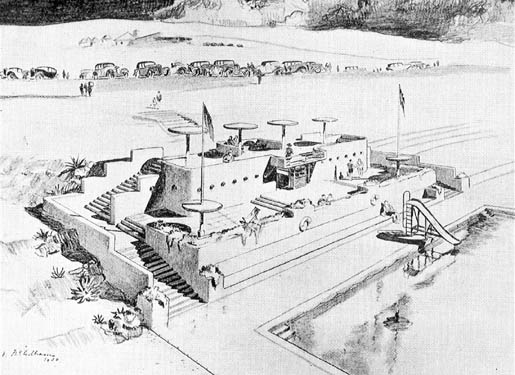
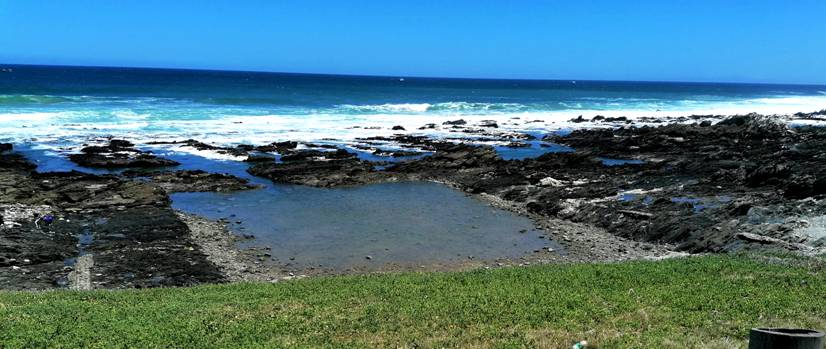
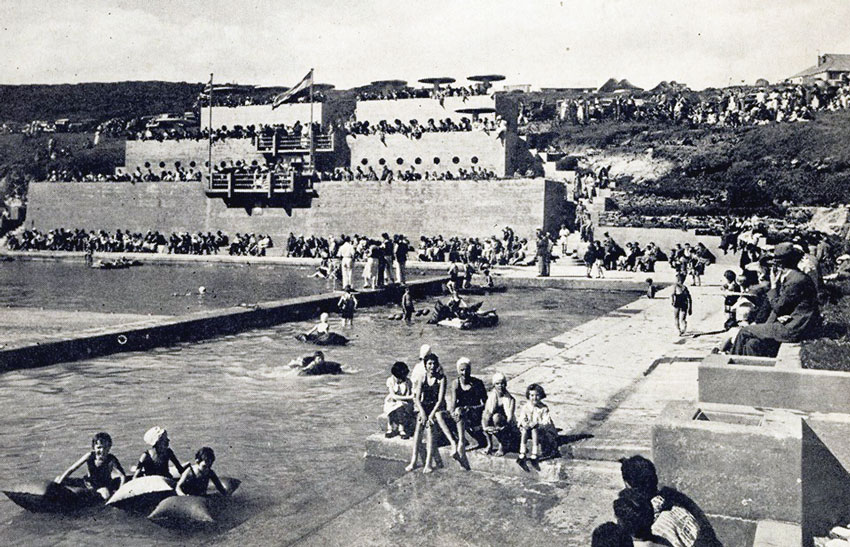
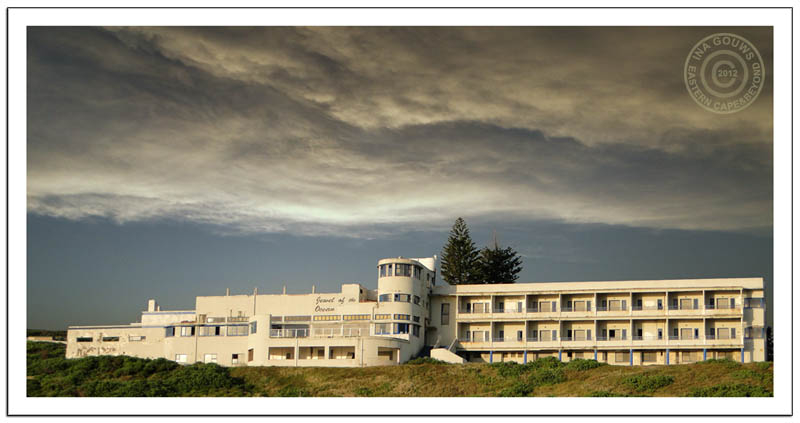
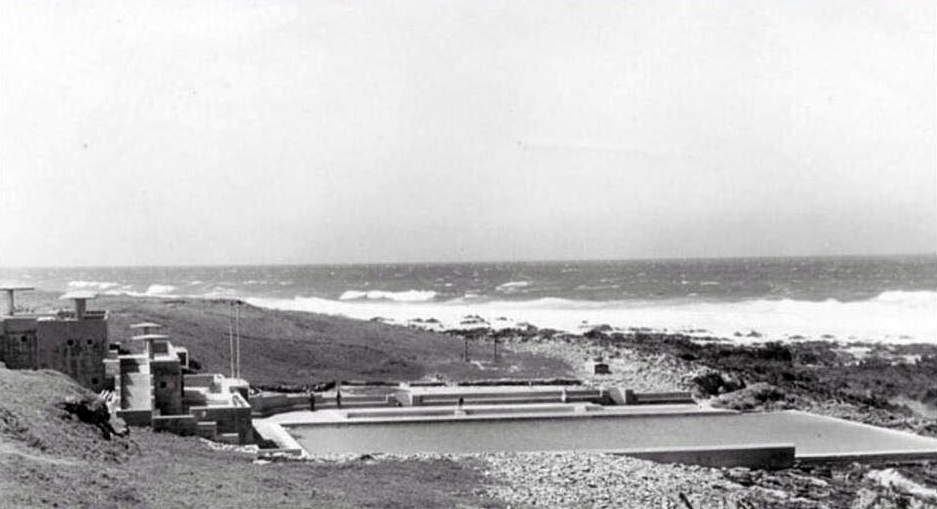
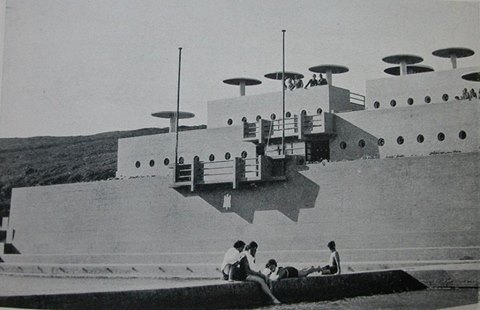
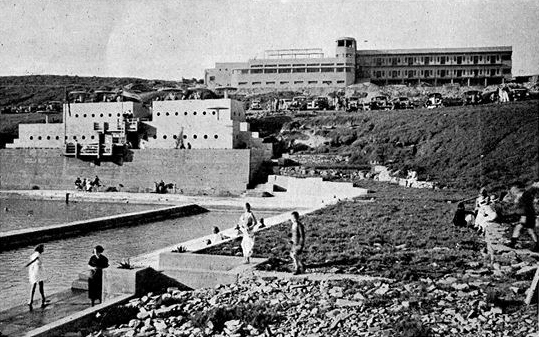
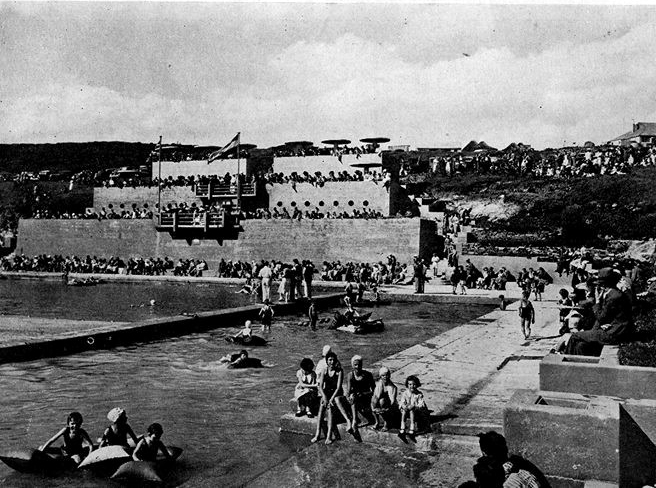
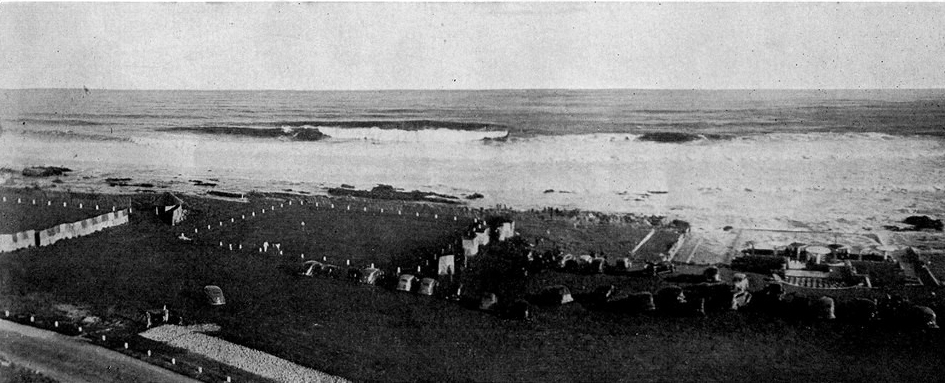
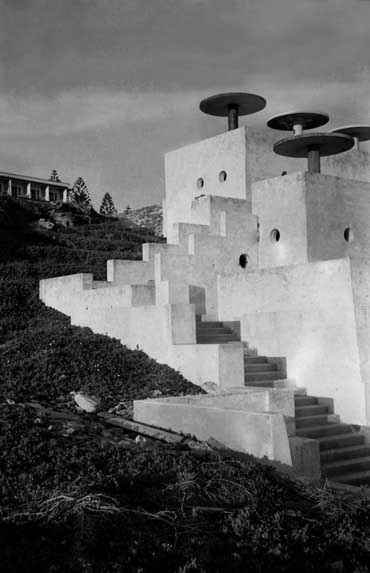
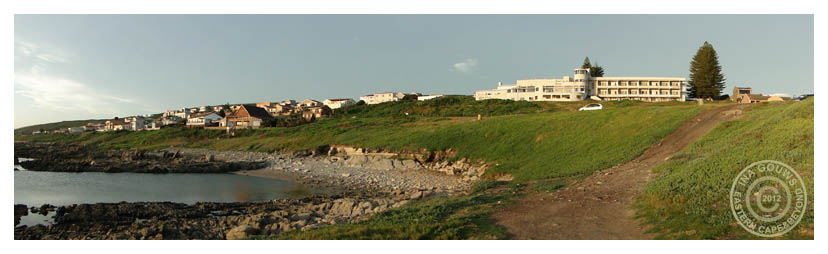
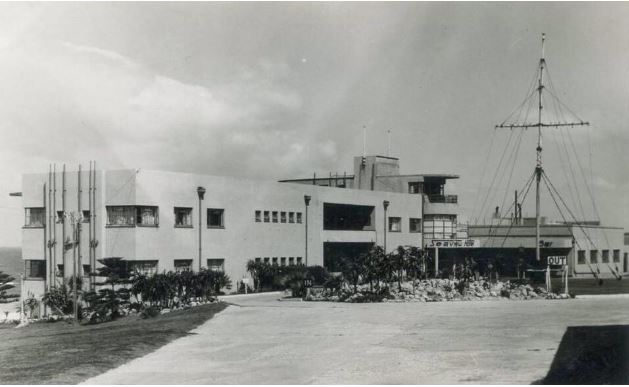
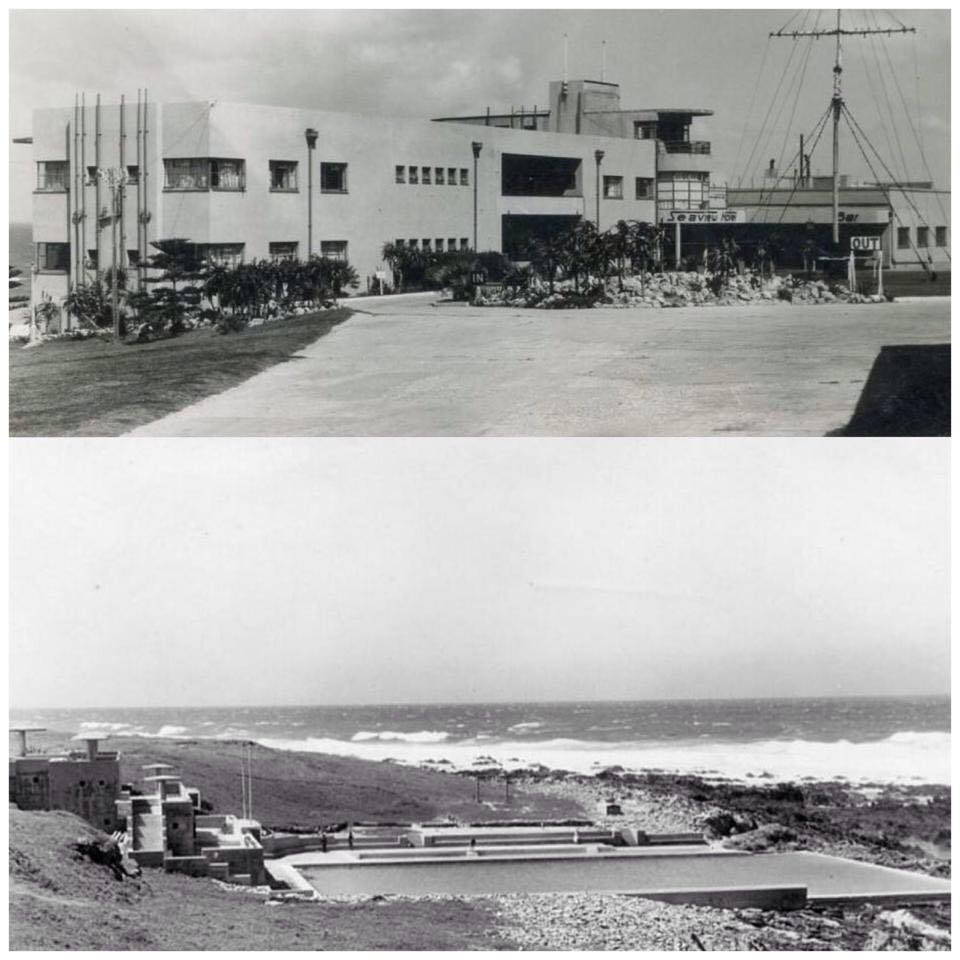
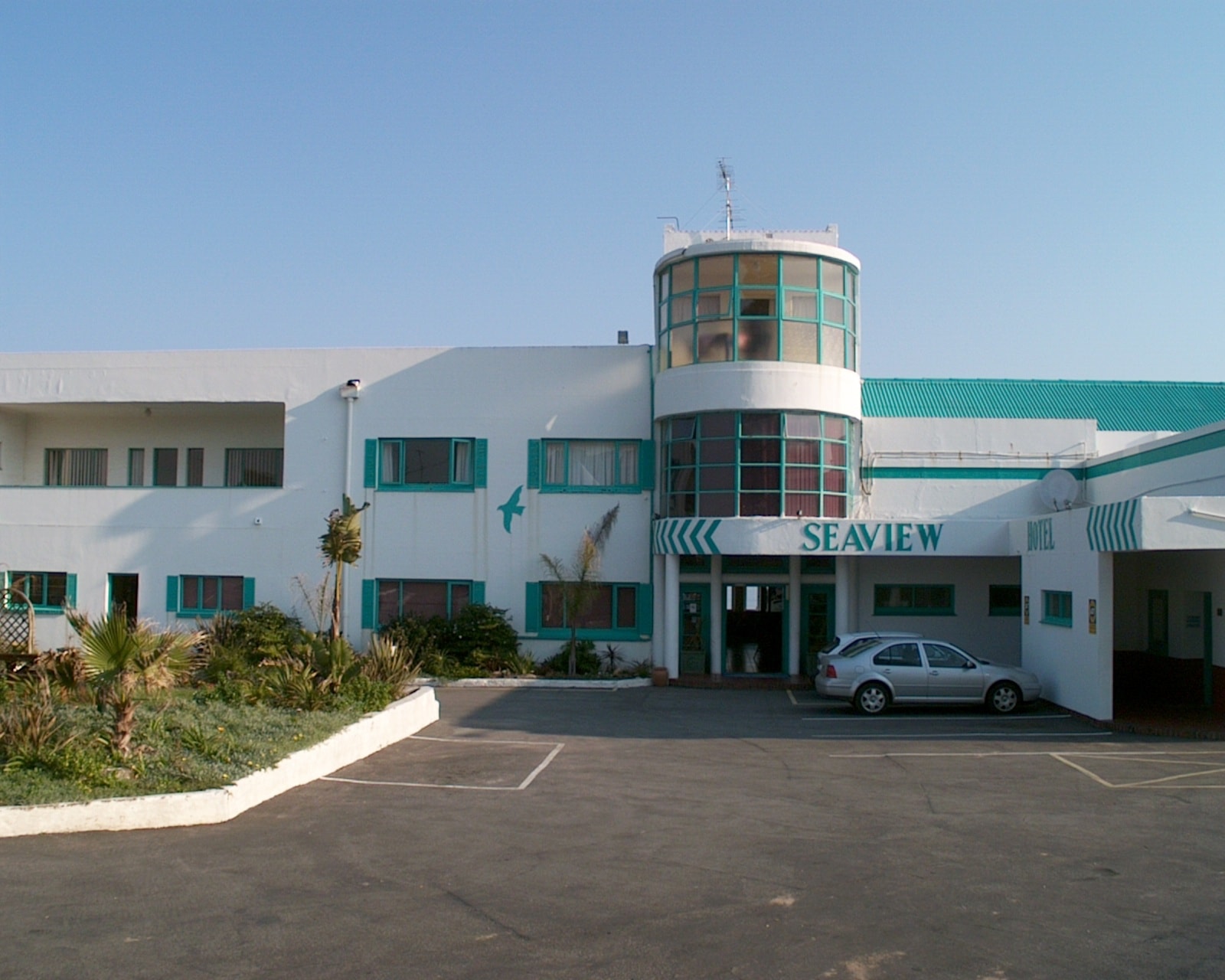
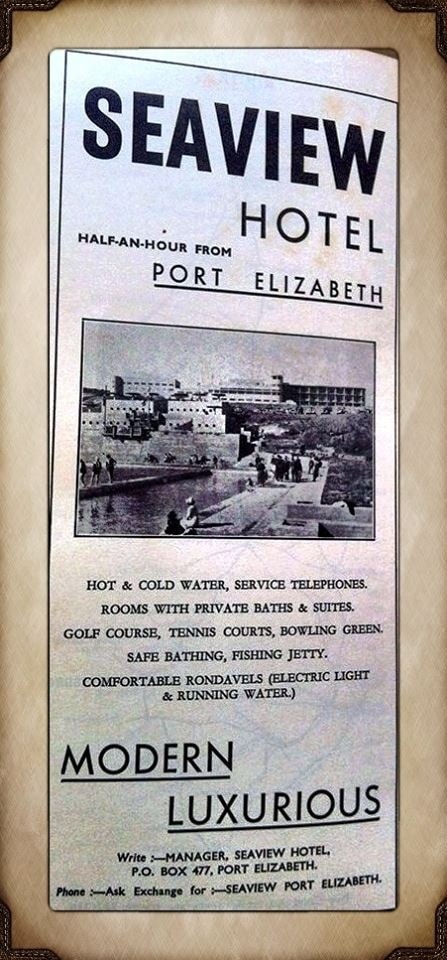
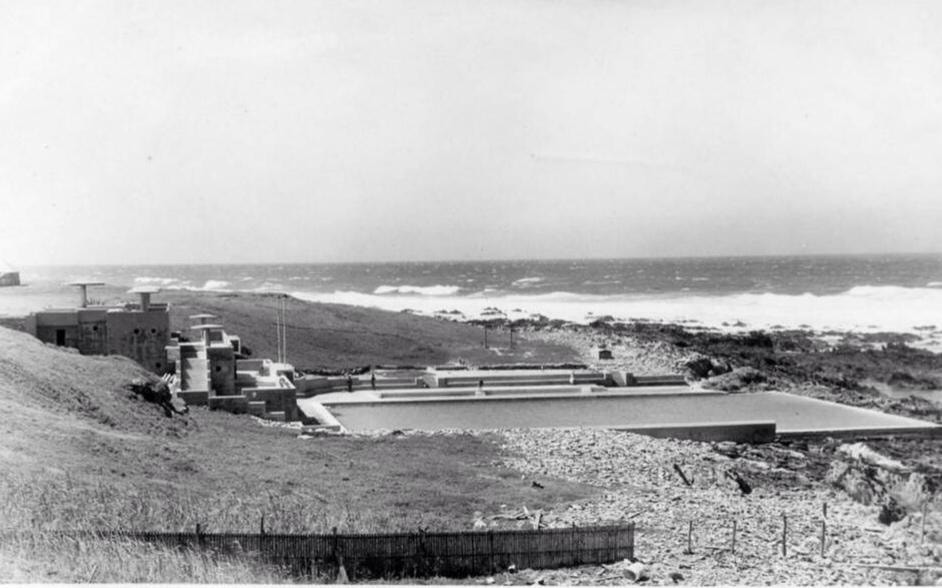
A famous tidal pool once graced the shoreline outside of Port Elizabeth. Built in 1931, it the largest tidal pool in the country.
Unfortunately, the Seaview hotel was demolished in April 2014. A blog about the ruined hotel before being demolished can be found here.
(Note: Artefacts website states the pool was constructed in 1936 but originally designed 1934)
 The South African Architect website (Artefacts) had the following article:
The bath itself is the largest tidal bath in this country, being even greater in size than the Sea Point one. The pavilion shown in the sketch is probably the first stage only of what will eventually be a series of similar terraces containing dressing-boxes, etc. The unit shown has accommodation for 160 persons of both sexes, with lavatories, stores and attendants' rooms.
The whole structure is of reinforced concrete left rough from the shuttering and bagged; with a final coat of light tan distemper.
The woodwork — such as doors, etc. — is to be painted in bright clean colours, while the undersides of the concrete umbrella-shelters are to be tiled with coloured glazed tiles.
The retaining wall is about 3 ft. (915 mm) thick at the base, as, during high tides, the waves break against it. The top is hollow — allowing plants to be grown along the parapet.
Future extension will consist of another "deck" of undressing boxes, forming yet another terrace behind the existing building.
The paving of the terraces and surround to the bath is in alternate blue and cream concrete slabs; the whole area of the bottom of the bath also being similarly treated.
The wall forming the sea end of the bath is arranged with funnel-shaped apertures facing the waves, and inclined tubes leading up through the wall, making a series of blowholes. Each wave that breaks against the wall sends a jet of water twenty feet into the air over the bath!


The Jubilee Pool - Cornwall’s art deco lido
For some context to the Sea View pool, the Penzance saltwater pool in Cornwall was built around the same time, also with an Art Deco theme.
Part of just a handful of saltwater tidal pools left in Europe, the Jubilee Pool was originally built in 1935 to commemorate King George V's silver jubilee. Once package holidays came into play in the 1970s, the pool's popularity declined and became neglected and disrepair. After a £3 million-pound investment from the Coastal Communities Fund, the pool was restored to its former glory and reopened by Prince Charles in 2016.


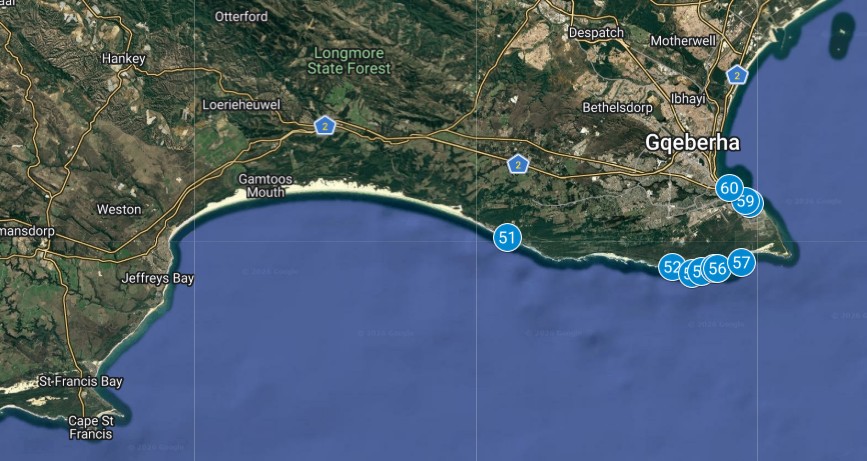
The coastline from George to Port Elizabeth is backed by the Cape Fold Mountains, which create deep ravines and steep shorelines. It is still largely inaccessible by road. The land is, or was, covered by the Afromontane Knysna Forest, while
Before the N2 national road was built through the forest miles from the coast, the old Garden Route followed the contours down into the ravines, like Bloukrans Pass.
Eastwards from Port Elizabeth, the shoreline begins to flatten as the Cape Fold Belt ends at Port Alfred. Almost the entire 280 kms from PE to East London is a sandy beach. Read more about the geology of Port Elizabeth here →
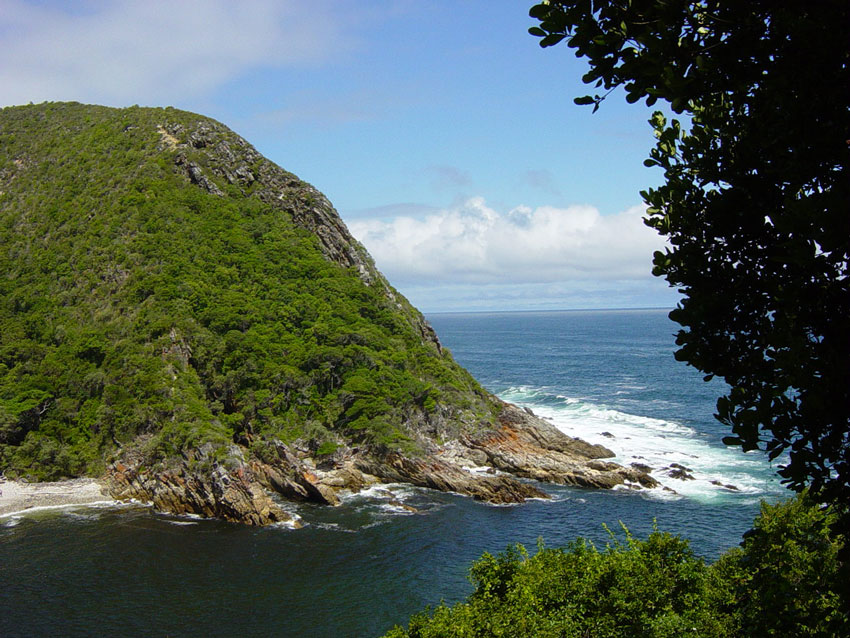
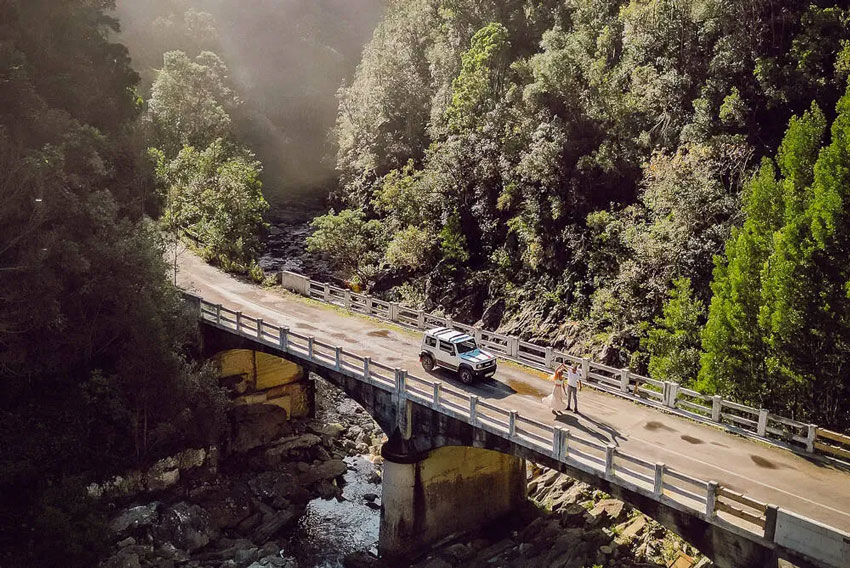
East of Victoria Bay lie the holiday towns of Plettenberg Bay, Jefferys Bay and Cape St Farncis. There are also a number of tourist attractions, like the Otter Hiking Trail, Bloukrans bungee jump (the world’s highest bridge bungee jump) and Super Tubes surfing at Plettenberg Bay.
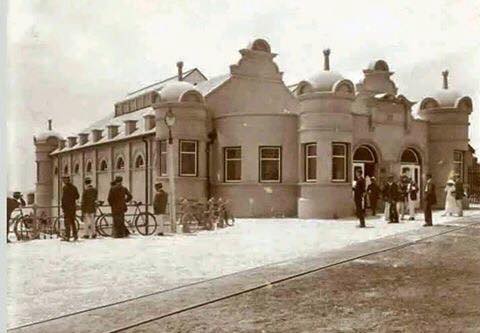
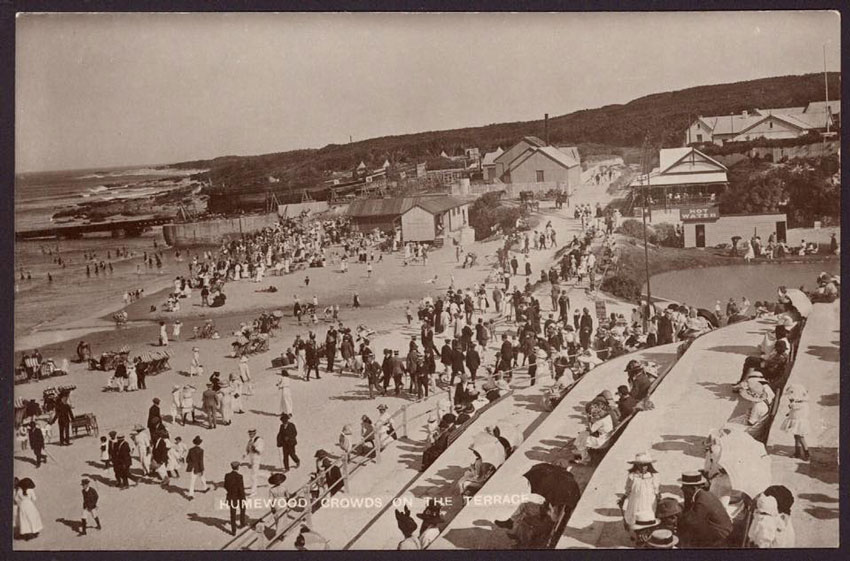
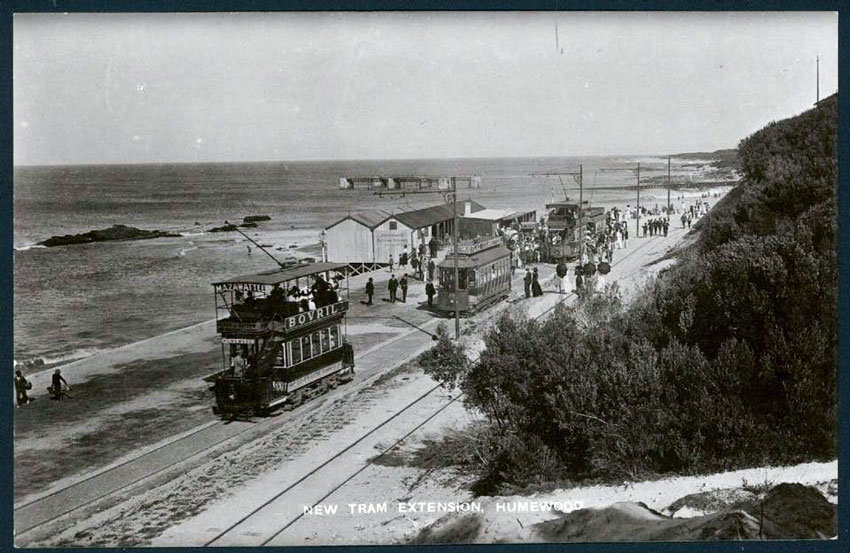
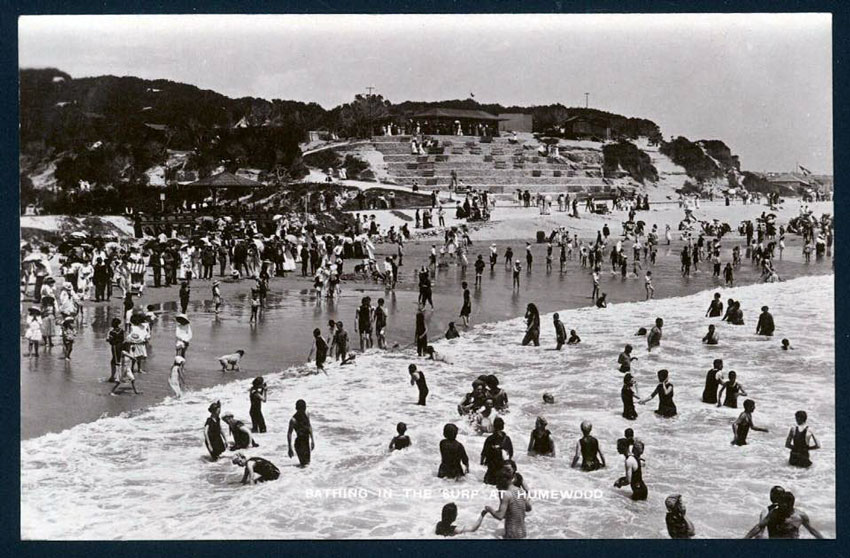
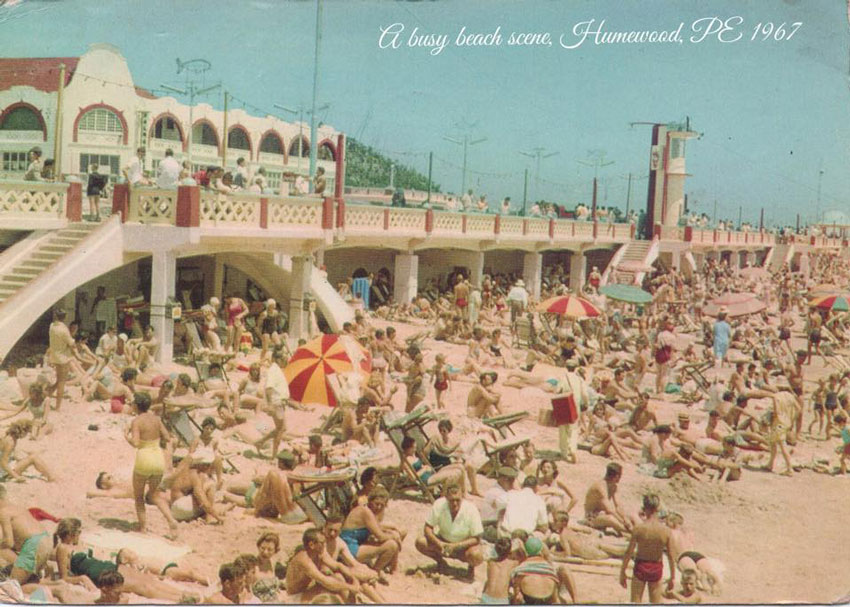
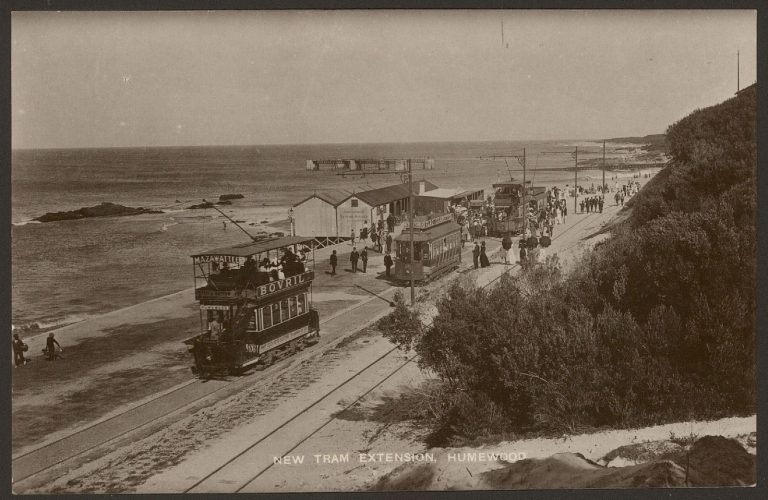
The town of Port Elizabeth grew to be the commercial centre of the Cape Colony from the arrival of the 1820 British Settlers, who brought their love of watersports to the Bay. Humewood was their favourite beach, and from 1893, the Humewood area was opened for swimming or for housing. Humewood railway station was built in 1899.
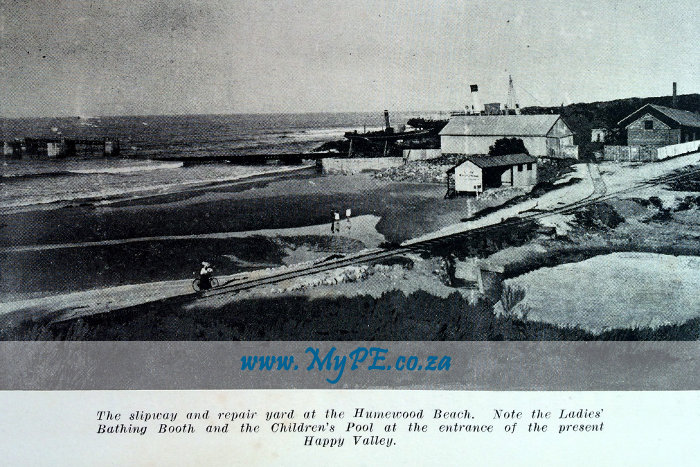
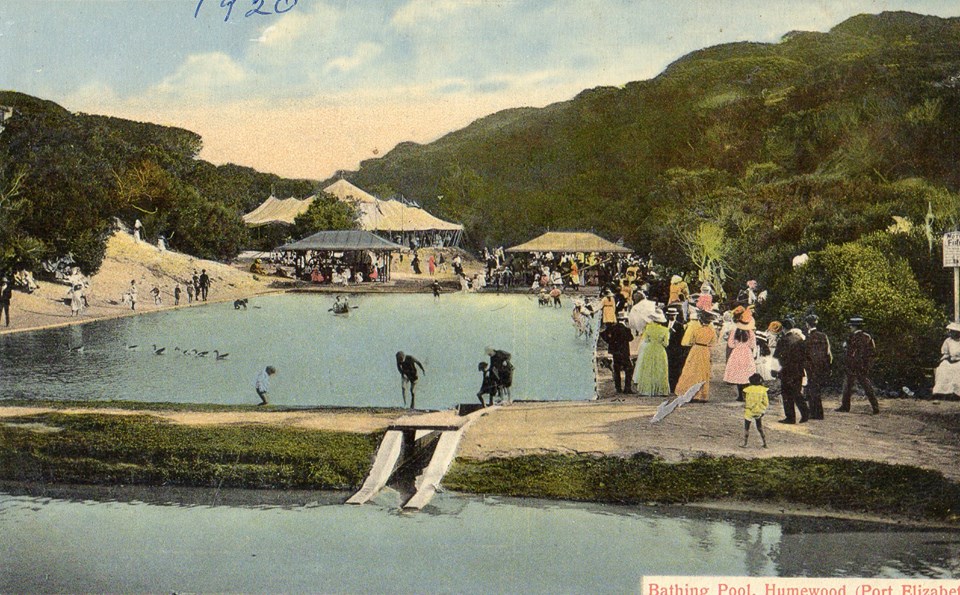
Port Elizabeth became a popular holiday destination for Karoo residents in the 20th century, who knew it as "Die Baai" (the Bay). The municipality provided several caravan and camping sites at the van Stadens River Mouth, Willows Resort and Brookes Hill at Humewood. In 1899, the local narrow gauge railway was extended to Humewood, where various pools and other attractions for visitors were created, including a child's paddling pool and an indoor saltwater-filled swimming pool. The pool lasted until it was damaged during the 1968 floods. The construction of groynes designed to trap sand created a tidal pool at Humewood beach.
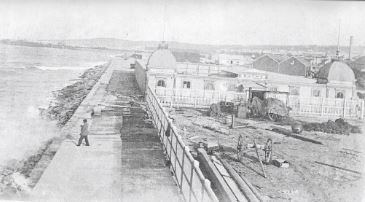
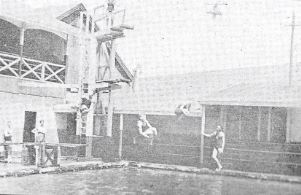
The South African Amateur Swimming Union (SAASU) was founded in Port Elizabeth in 1899, and it held the first inter-provincial water polo and swimming Championships at a saltwater pool in the harbour at Fleming Street (below).
The first tidal pool built along the coast is at Beachview, which was a popular municipal resort.
The Beachview Resort, once a vibrant coastal getaway, now lies in ruins after nearly two decades of neglect and municipal failure. With its infrastructure crumbling and rampant vandalism a constant headache, a decision has finally been approved for the resort’s demolition.
The tidal pool, like many such facilities, can be a dangerous place to swim. The waves, murky water and rocky bottoms have led to frequent drownings, although alcohol is often a contributing factor. Since the demise of the Resort, there are no municipal lifegaurds on duty at Beachview.
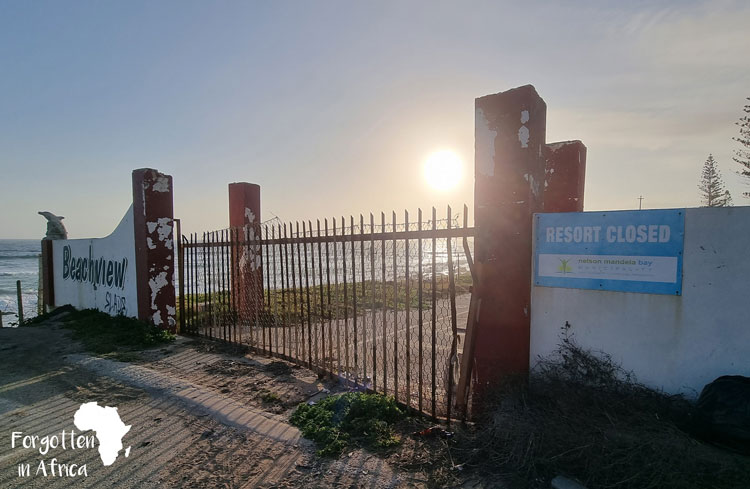
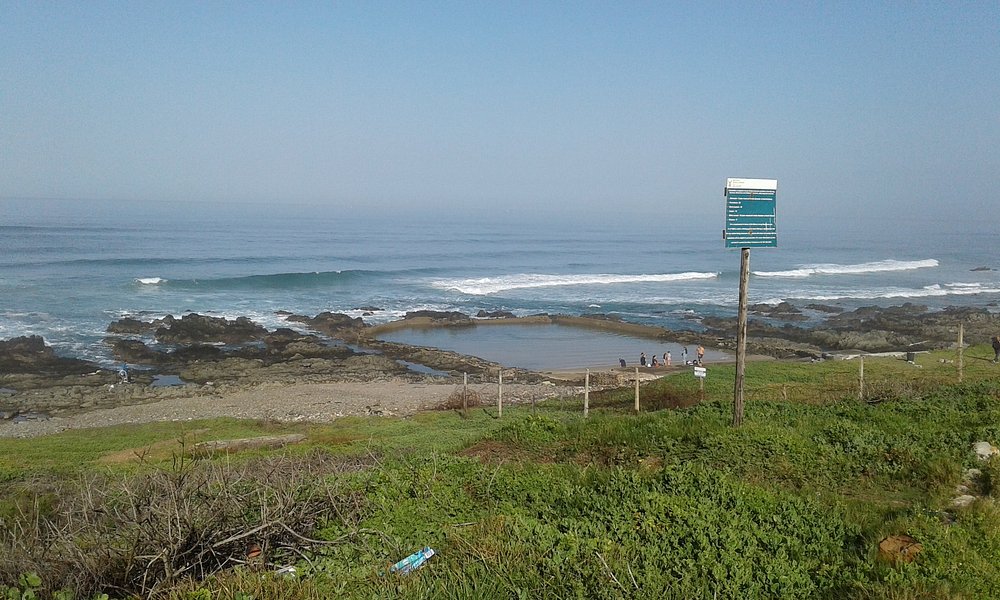
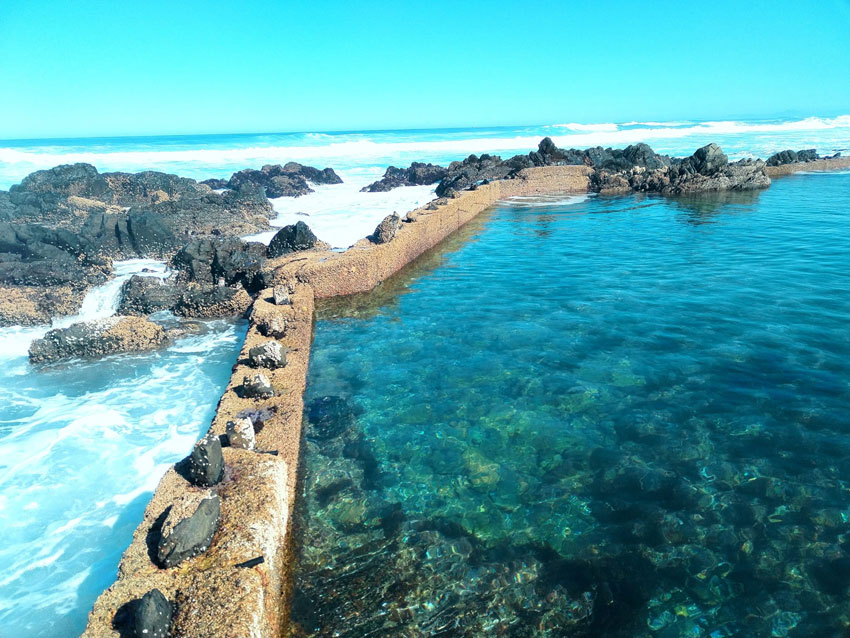
Like its neighbour in Beachview, the Seaview Resort, which inclkuded a hoterl and a 1930's art deco tidal pool, have been demolished.
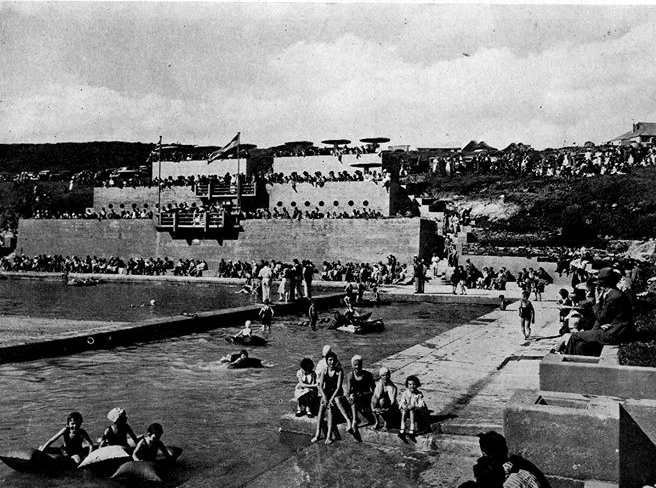
Originally a natural rocky inlet, it was developed into a safer swimming area and eventually a popular caravan park and resort.
Like many tidal pools along the South African coast, Mangolds Pool reflects the early 20th-century trend of "taming" the wild Southern Ocean to create safe swimming spots for holidaymakers. These pools were often created by building concrete walls across natural rocky gullies to retain water during low tide. Maritime History: The rugged coastline near Mangolds Pool is known for its shipwrecks, including the wreck of the Klaas. During World War II, nearby locations like the Hotel Minhetti also featured tidal pools that were used by stationed soldiers.
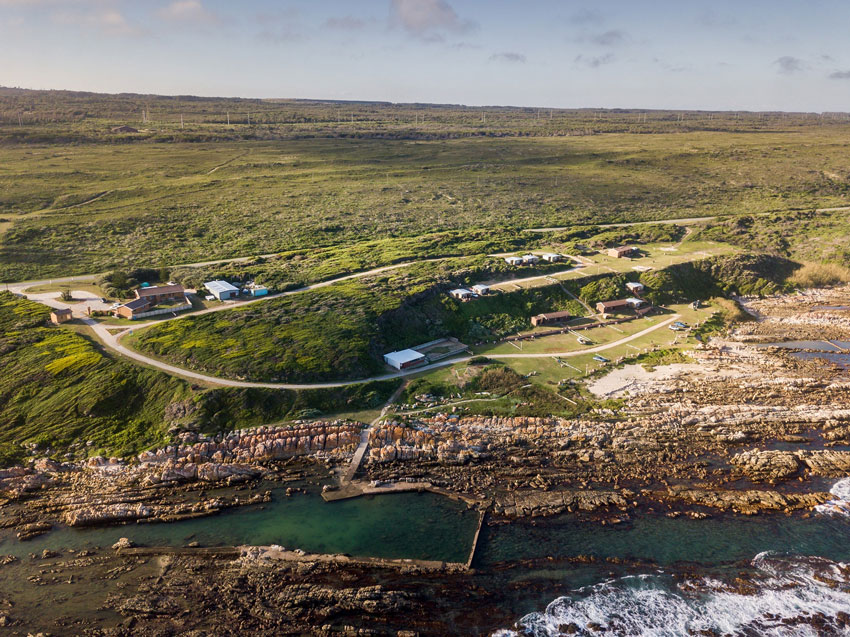
The name "Malay Camp" is rooted in the history of the Malay community from the former South End suburb of Port Elizabeth. During the apartheid era, it became a traditional holiday spot where families—primarily from Malay, Chinese, and Indian backgrounds—would gather to camp during the December and January holidays. This tradition continues today, often featuring annual family camping weekends and community events.
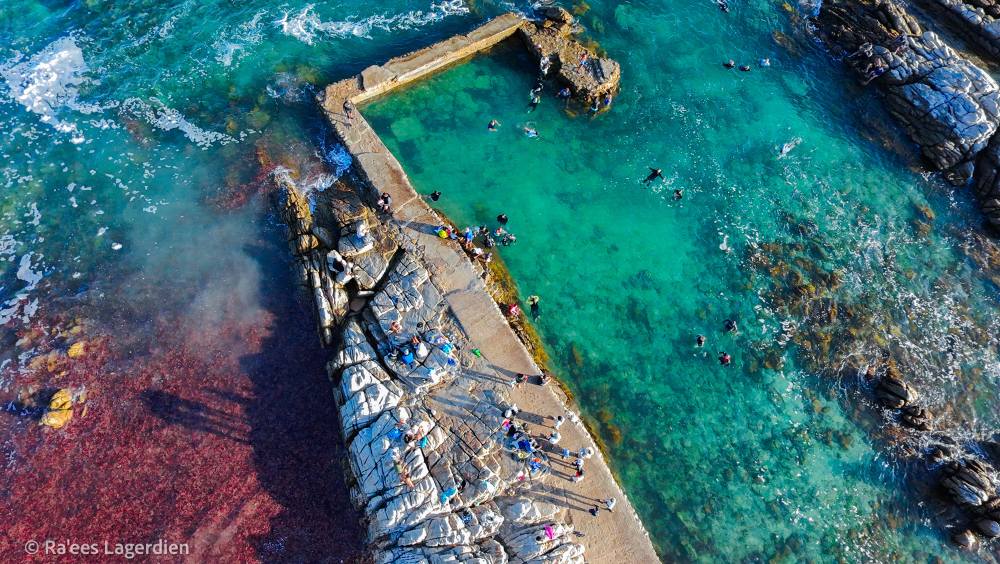
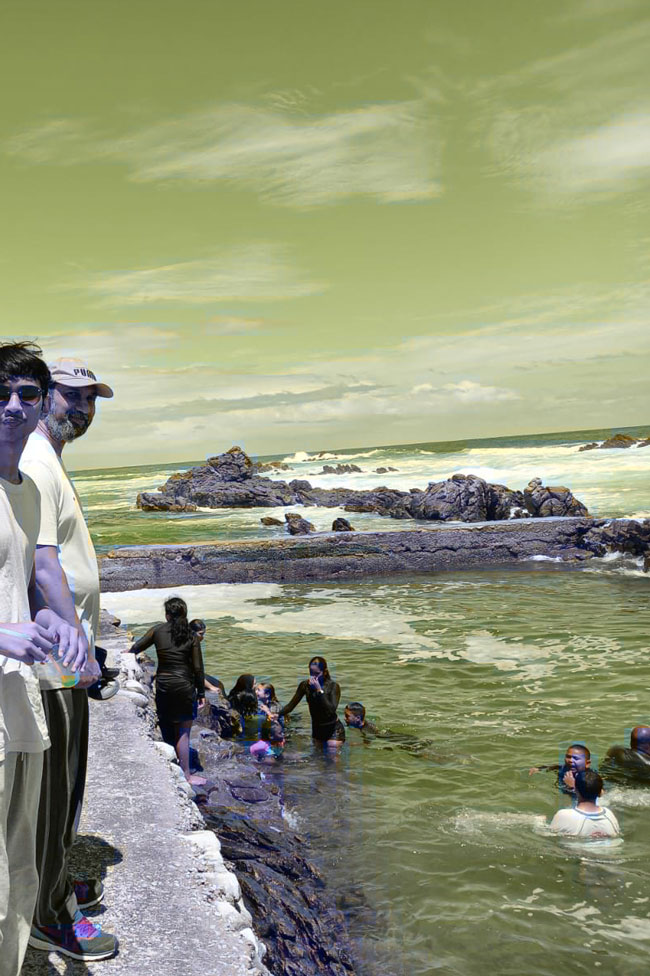
There are four tidal pools at the Willows Resort.
62. The first is called Willow Park Gate 5, which is primarily a caravan park and a daily visiting site. The large tidal pool is shallow and rocky.
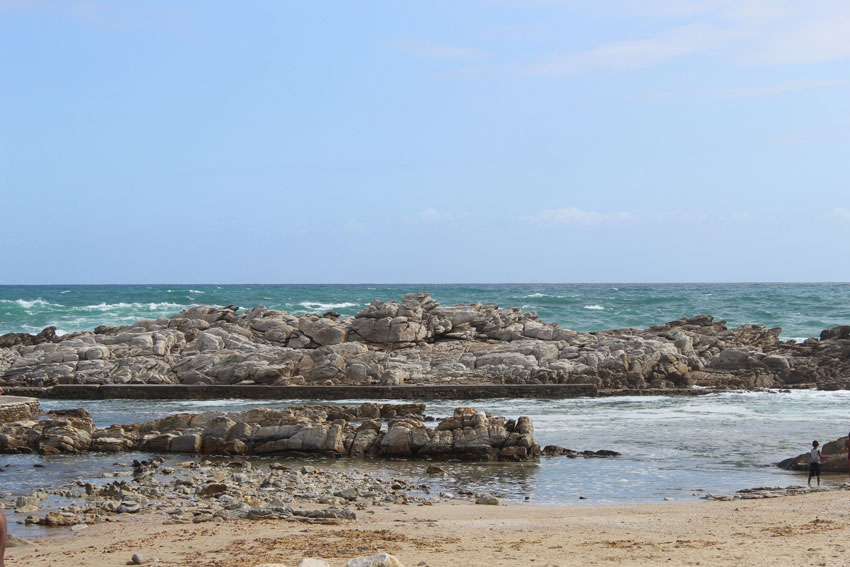
63. Willow Grove is located 1,6km west of the Willows main camp.
With Algoa Bay being the Bottlenose Dolphin Capital of the World, our guests can occasionally enjoy seeing dolphins jump, play, spin and surf the waves while passing by.
64. The Willows Resort Tidal Pool - click here to read the story of the Willows.
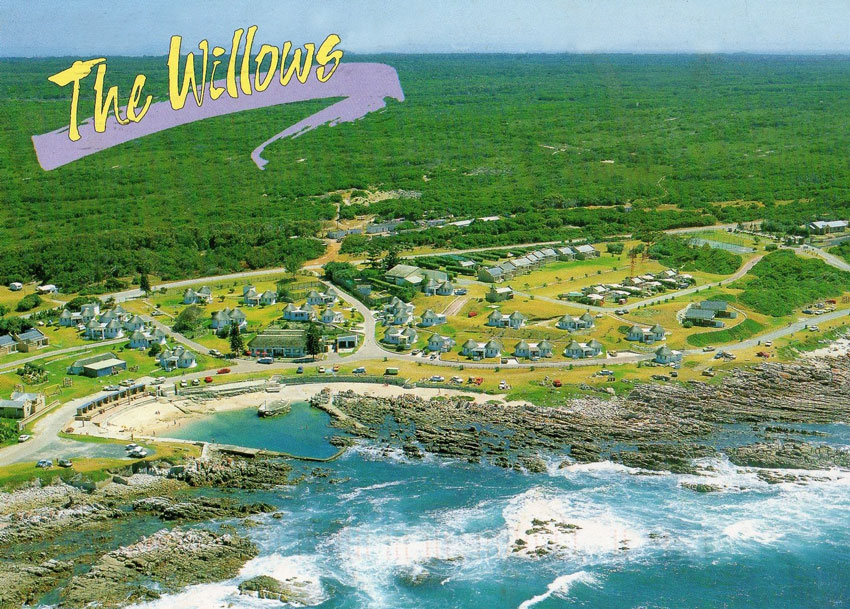
65. The Willow Resort and Conference Centre Tidal Pool
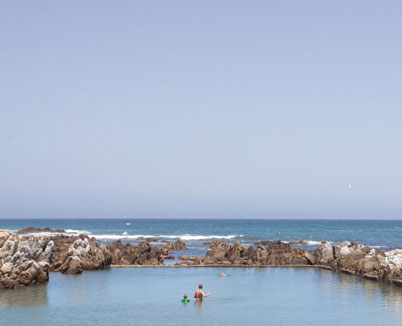
The area's formal recreational history is closely linked to the Noordhoek Ski Boat Club, which was established in 1974. Unlike modern luxury resorts, Noordhoek has historically maintained a rustic, electricity-free camping experience. This was intentional to preserve the natural coastal atmosphere of the Eastern Cape coastline.
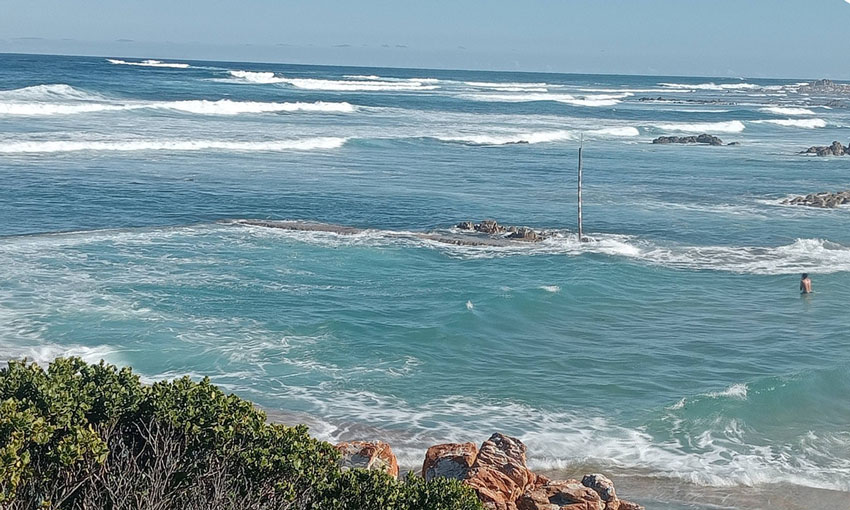
Below is the tidal pool filling up with the tide.
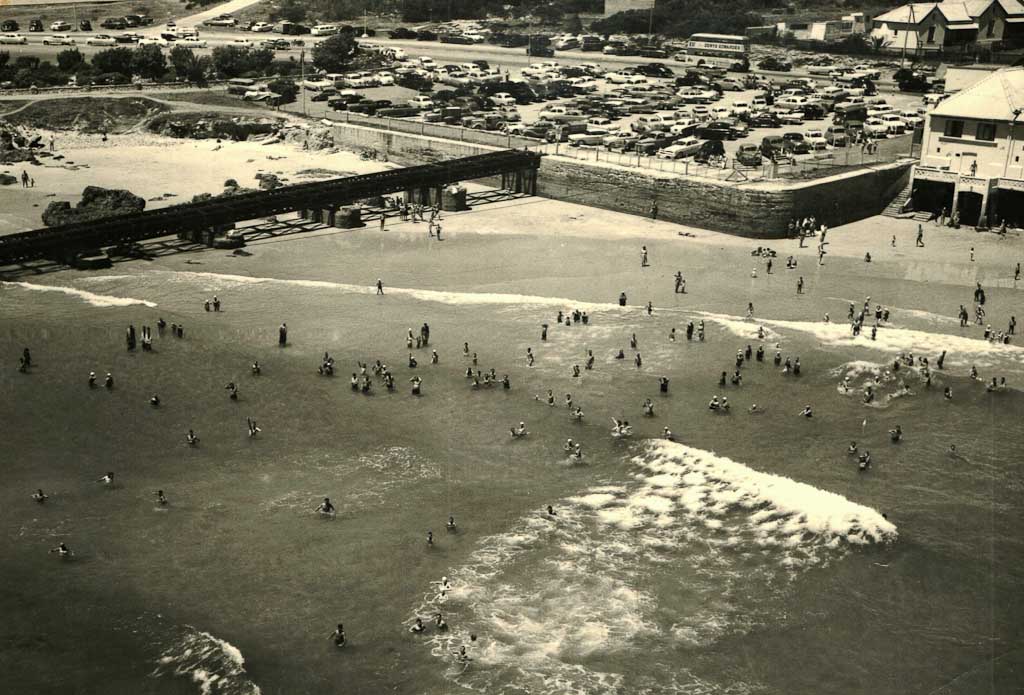
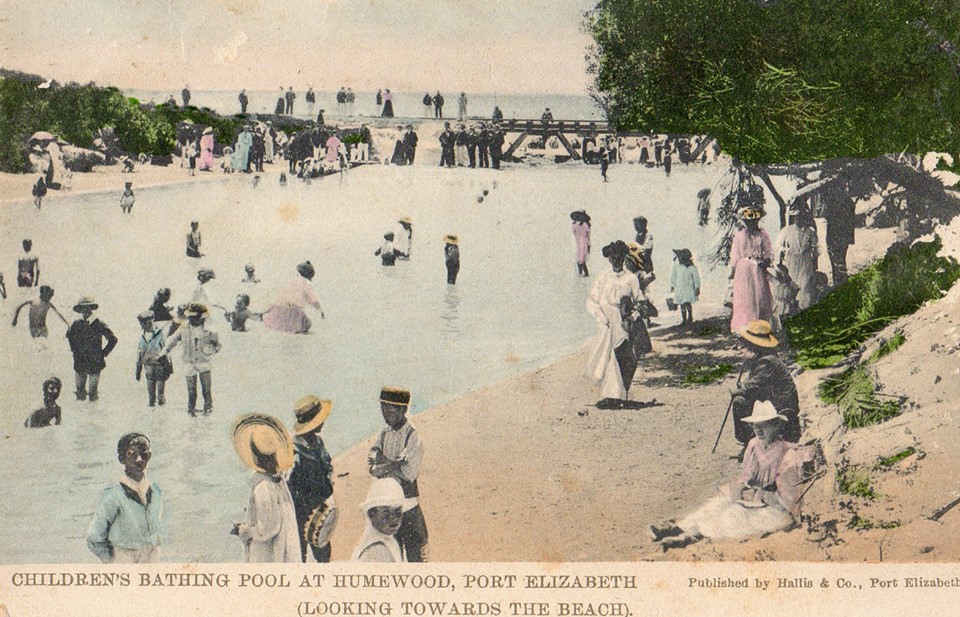
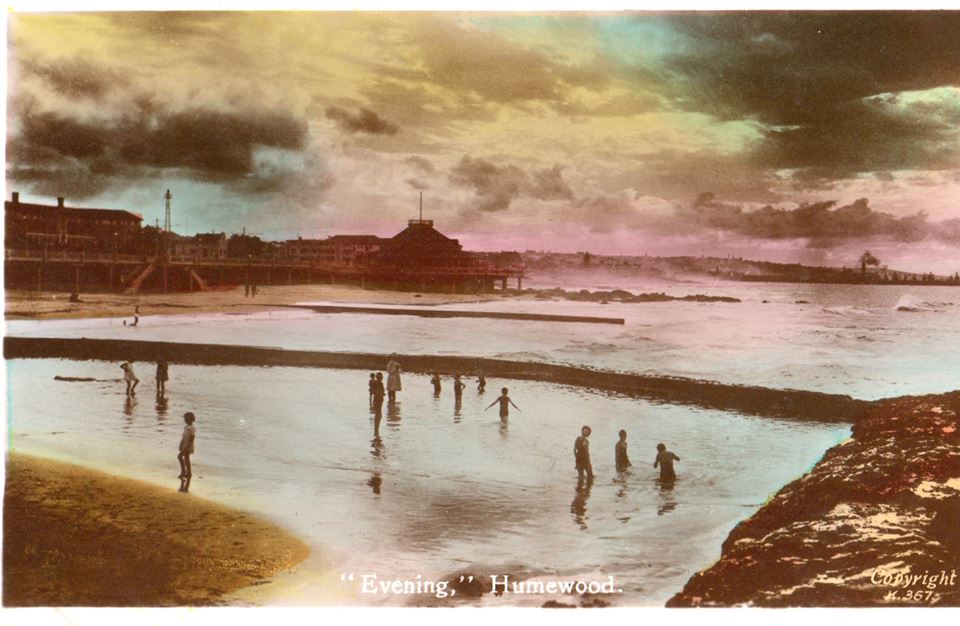
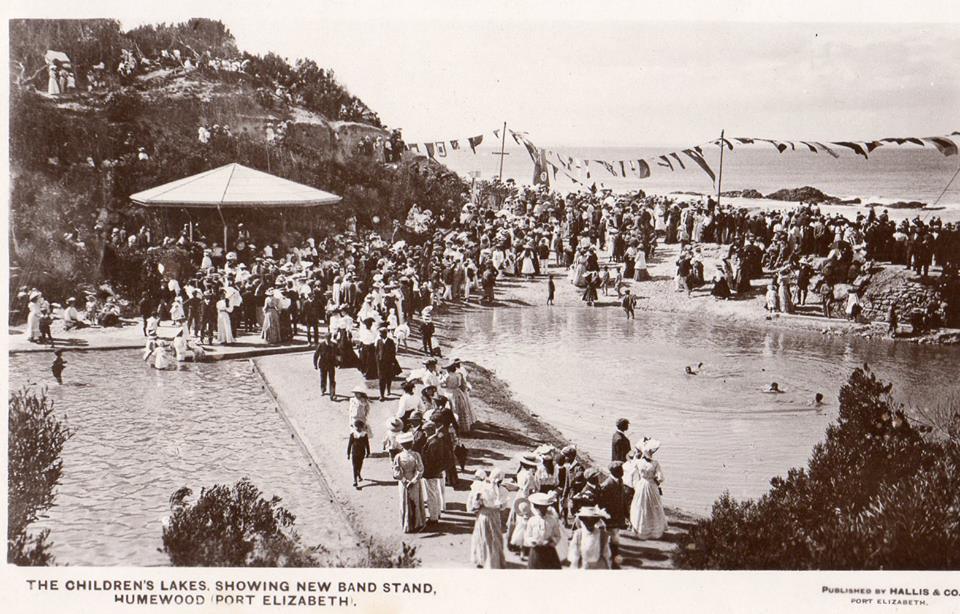
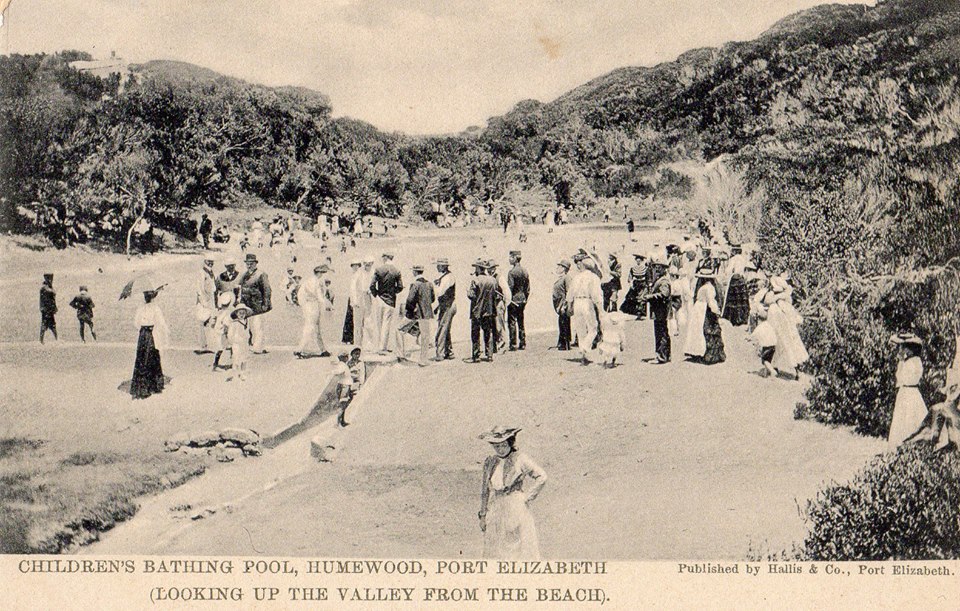
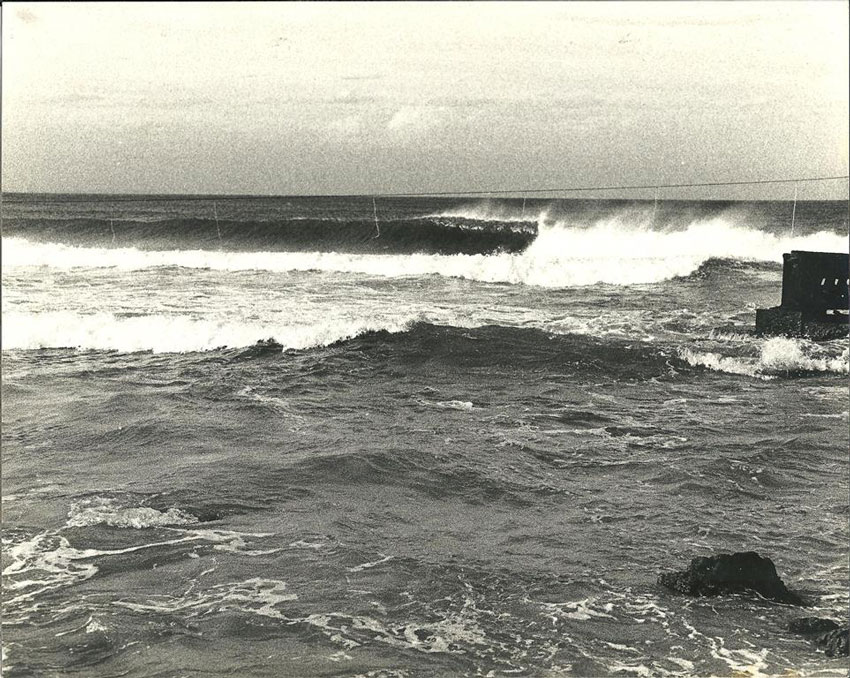
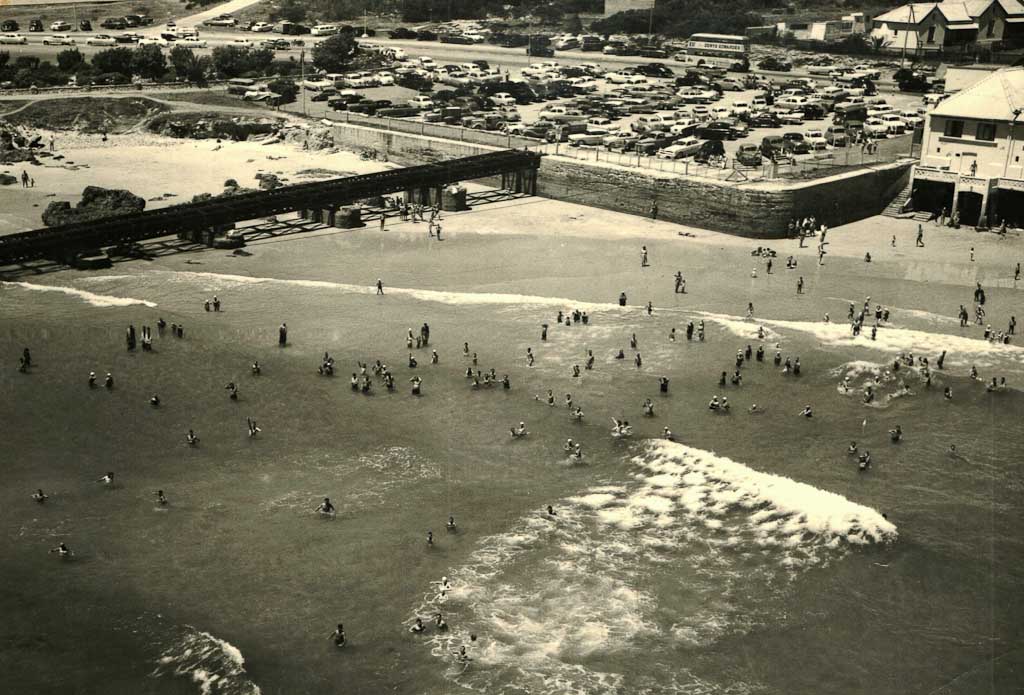
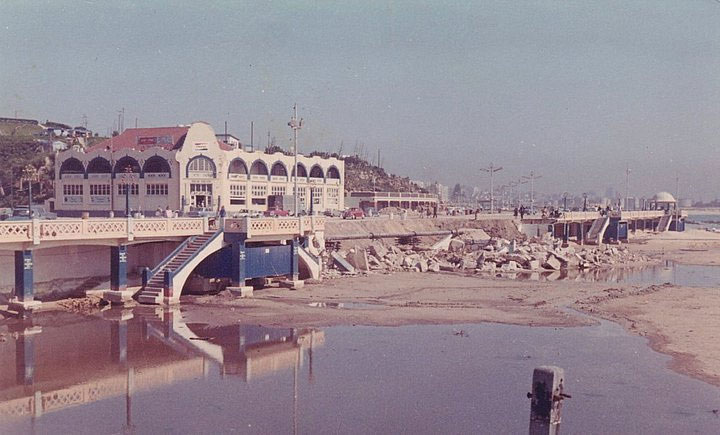
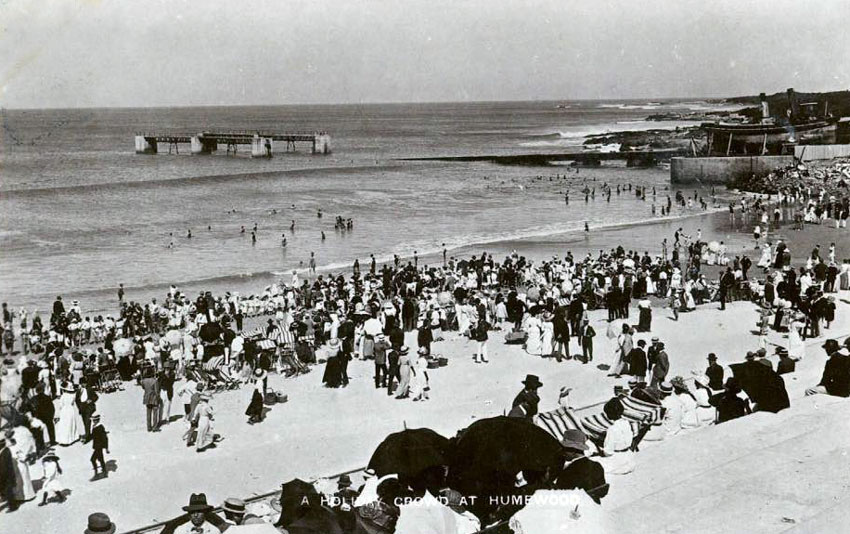
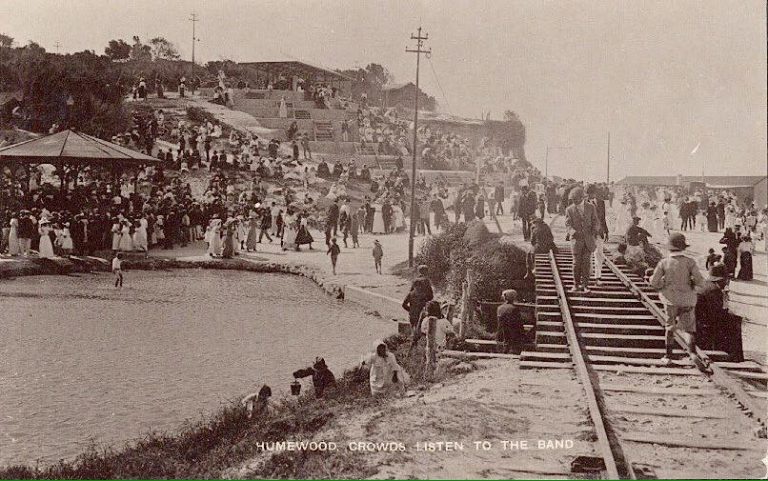
The area around Humewood has changed quite a lot over the years, since Humewood Beach was the most popular destination for swimmers in Port Elizabeth. In the late 19th century, the municipality created various attractions, including a railway station, various kiosks, an indoor swimming pool, a paddling pool for children.
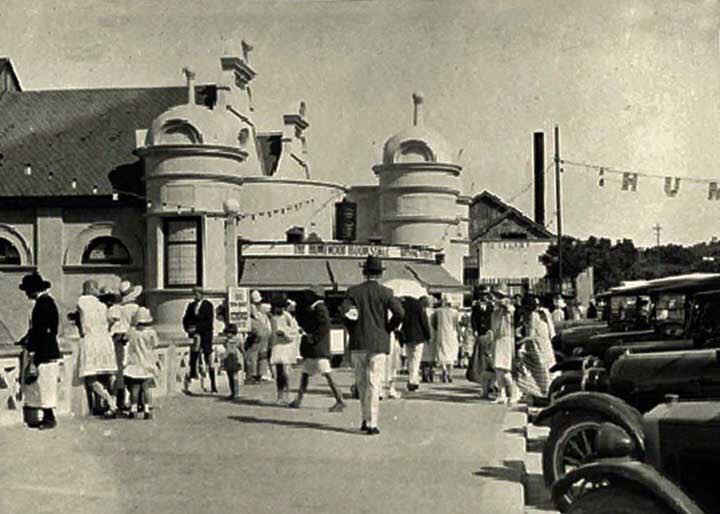
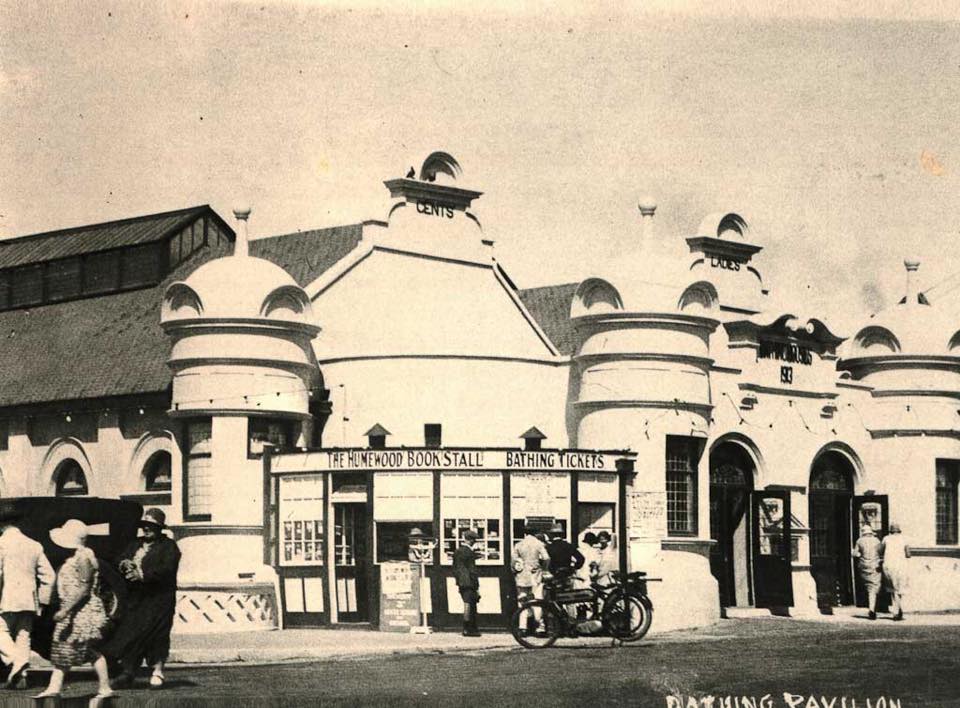
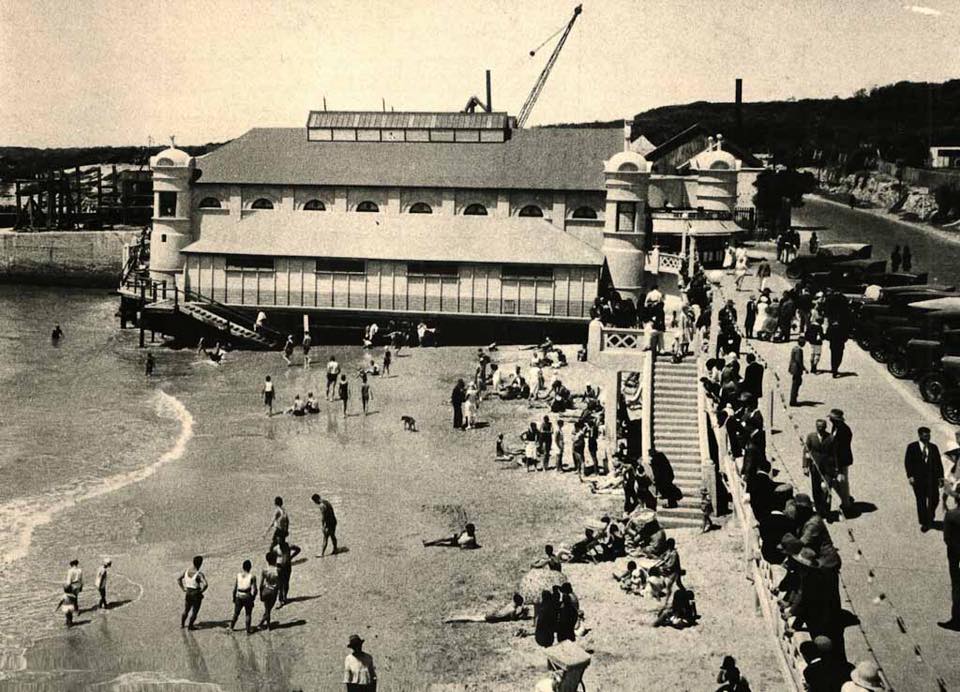
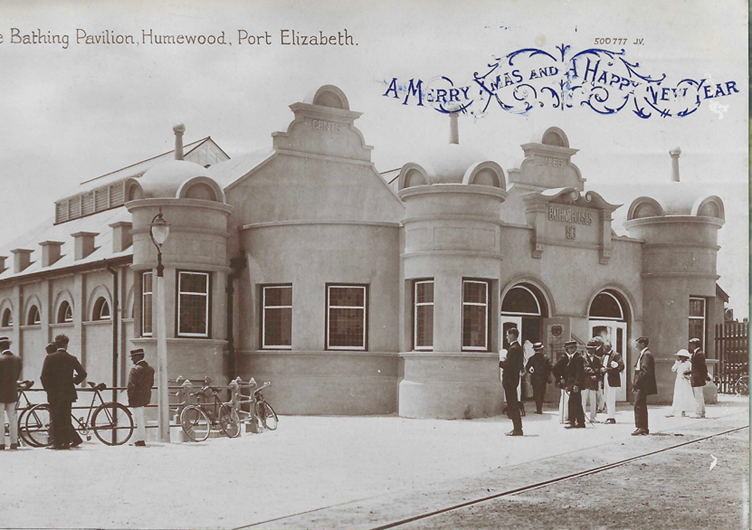
The Humewood Bathing House opened in 1913.
The building was built right on the beach with a foundation of reinforced concrete on rock and the waves washed up against the building at high tide. Bathers would pay to go inside and change into their costumes in their own private cubicles. The old ladies bathing house was removed when this building was built. The Bathing House was demolished after the 1968 flood.
The Municipality recognised the need for a safe swimming space in Humewood. It created a large tidal pool, which has evolved over the years to become two separate swimming pools - one freshwater and one still tidal salt water-filled.
Note the added local attraction of the former Port Elizabeth Aquarium, which is now derelict.
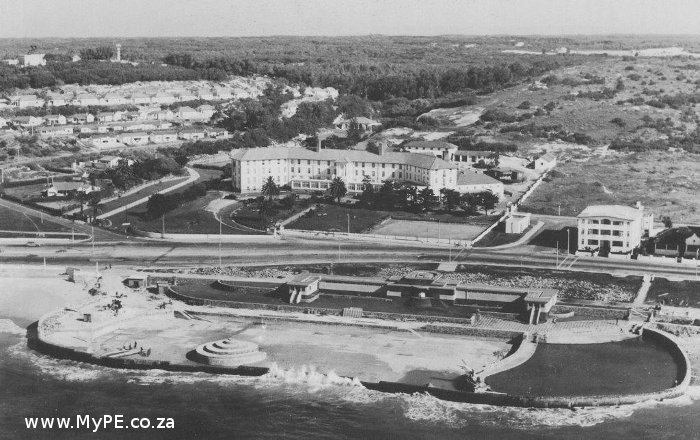
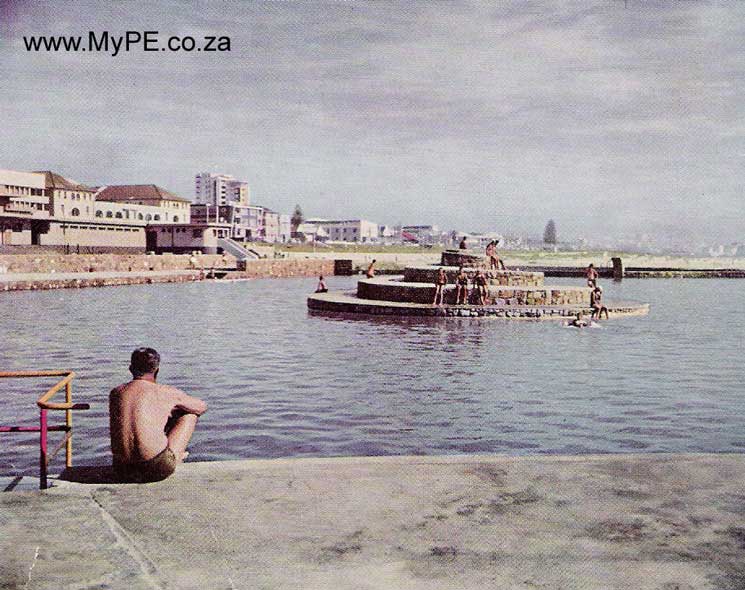
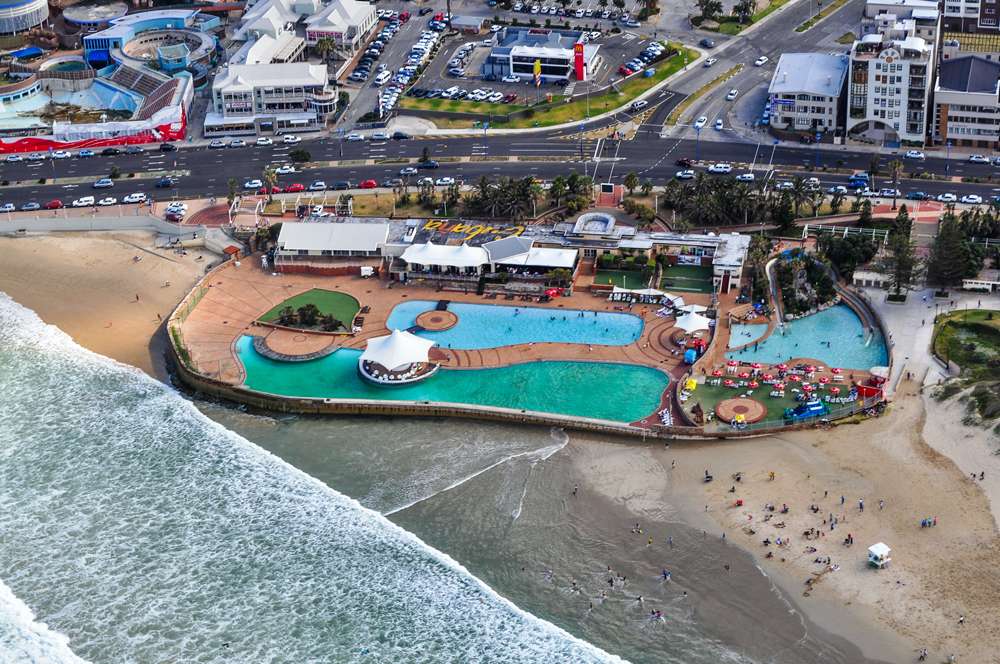
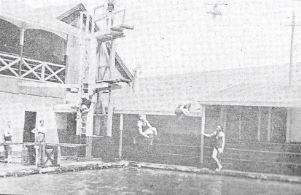
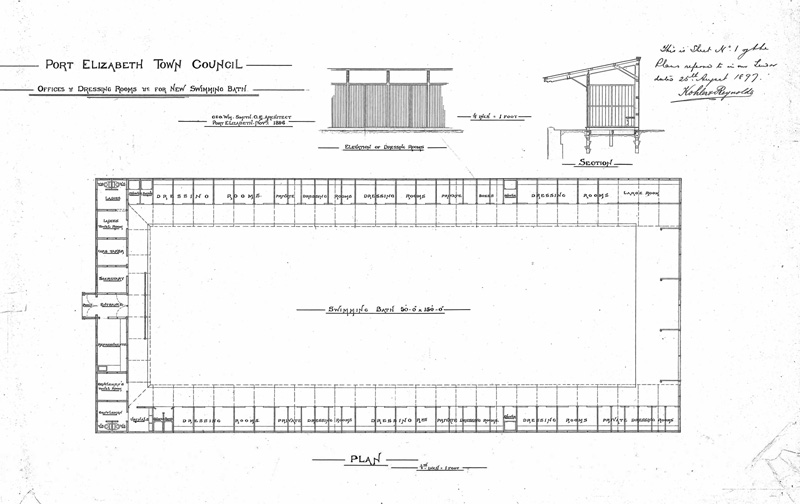
In 1898, the Municipality created a swimming pool near the harbour. Australian world champion swimmer Ernest Cavill attended the opening, and the first inter-provincial water polo and swimming Championships were held there in February 1900.
On the 2nd July 1898, the Mayor, Alexander Fettes, opened the new sea water swimming bath on the reclaimed land south of the Customs House. This opening was commemorated by holding an “Aquatic Carnival”. The land was donated by the Harbour Board while the Council spent £4000 on its construction. Read more →
The pool was demolished in 1930.
1898 also witnessed the establishment of the oldest existing swimming club in South Africa - the Port Elizabeth Amateur Swimming Club (PEA). In 1899, the South African Amateur Swimming Union was established at the Phoenix Hotel in Port Elizabeth.
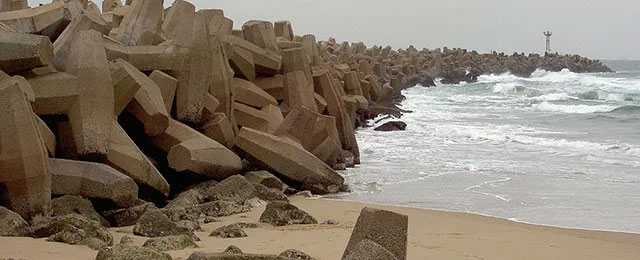
Note the waterline near the pool. Today, the shoreline along this stretch of coast is covered in dolosse. Read more about these concrete marvels here →
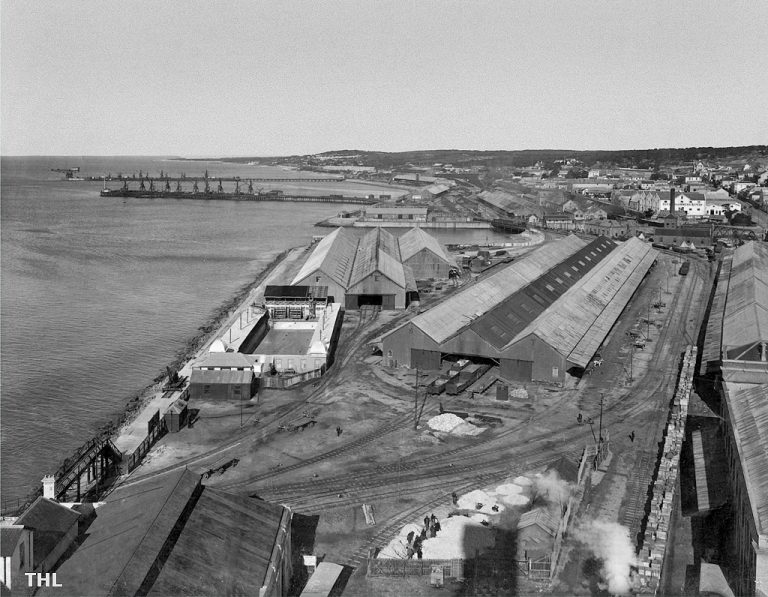
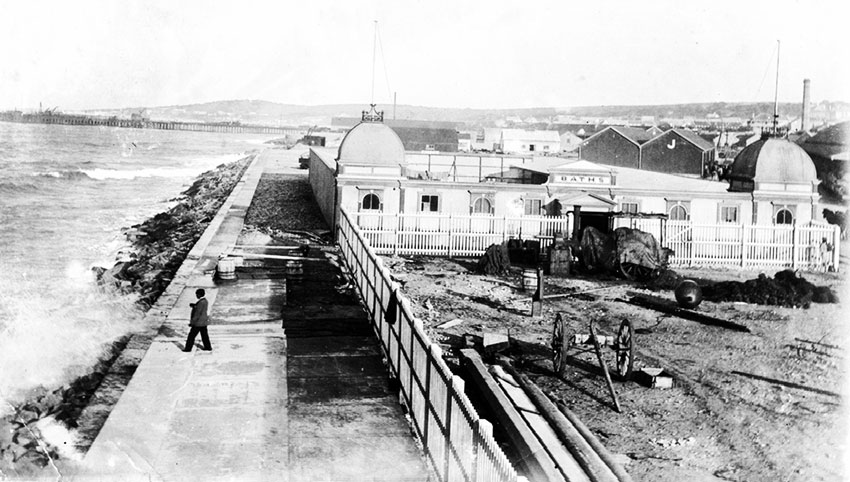
The coastline here was relatively inaccessible due to the mountains and the few roads from the interior. There are also only a few towns which have traditionally served as holiday destinations, benefiting from the warmer waters washed down east coast by the Agulhas Current. Much of the coast is part of declared nature reserves, which further limits the establishment of towns. Whale watching has made the area an international tourist attraction.

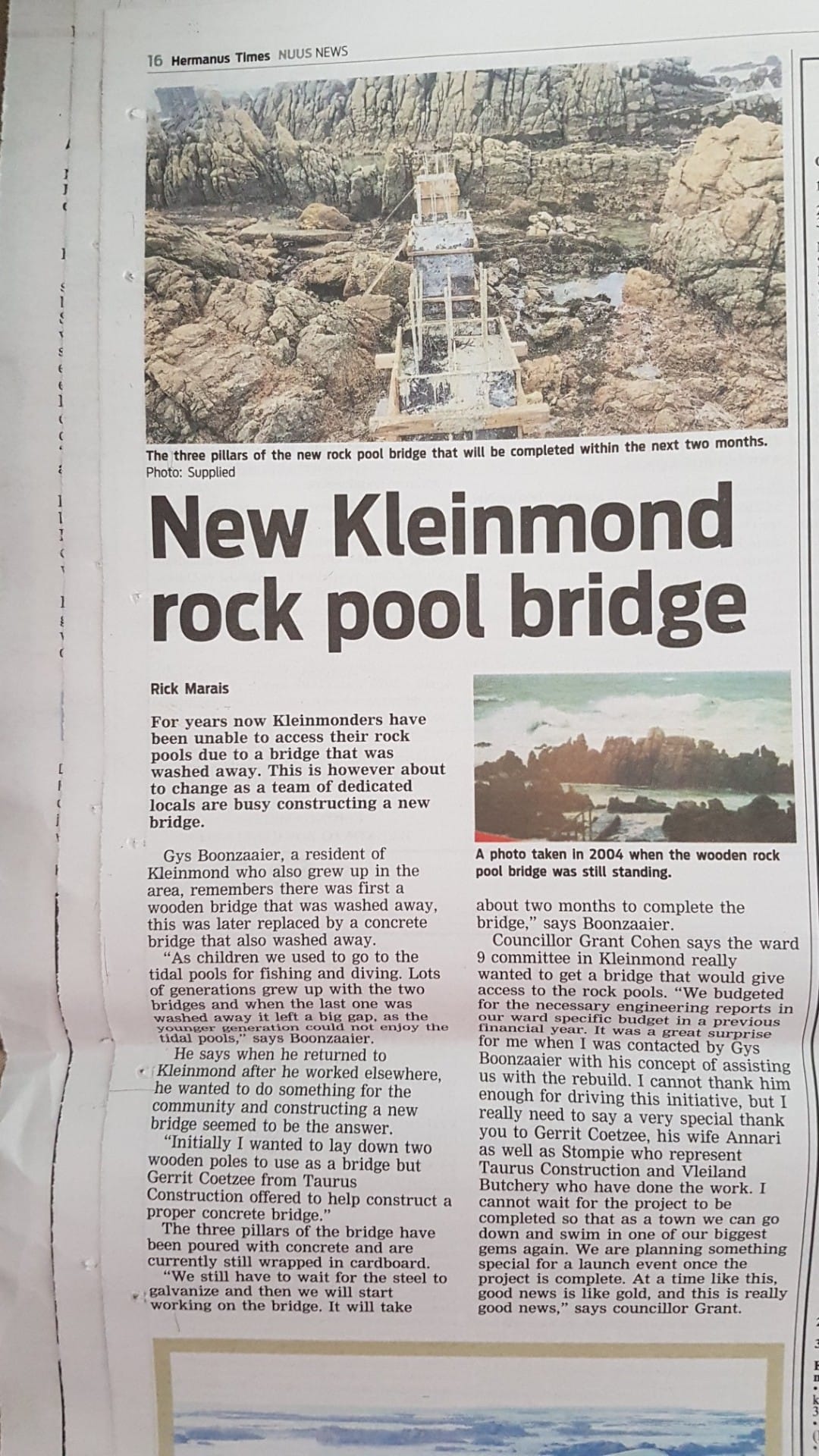
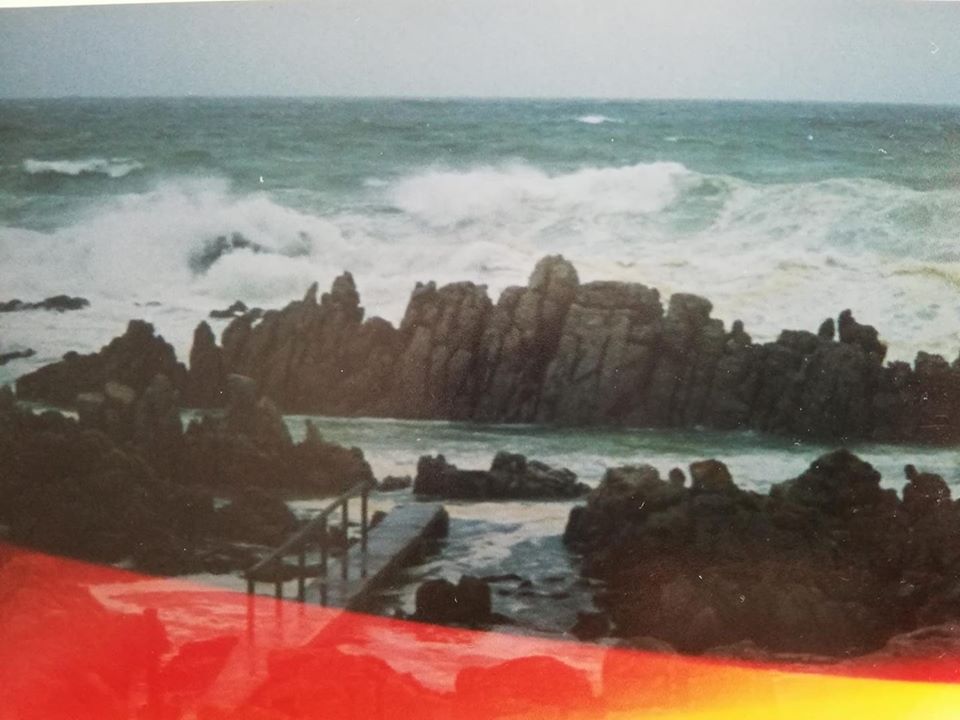
Before the town of Kleinmond was formally established, early holidaymakers in the 1800s referred to the area as Sandown Bay. Today, "Sandown Bay" often refers specifically to the spectacular 5km stretch of white sandy beach and the broader bay area where the town is located.It was a favourite vacation spot for farmers from the hinterland long before it became a permanent settlement. For years now, it has been difficult to access the tidal pool due to the bridge that washed away. This is, however, due to change Vleiland Slaghuis and Taurus Construction are busy constructing a new bridge. This is a very popular tidal pool. People do not just swim and dive in this pond but also fish in this pond. Die Bruggie Tidal pool is within walking distance from Xanske's Place.
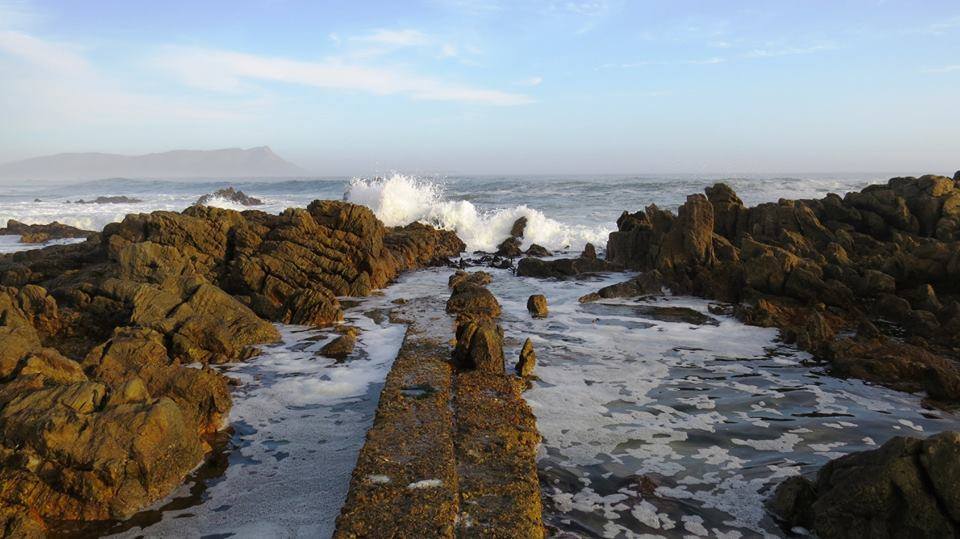
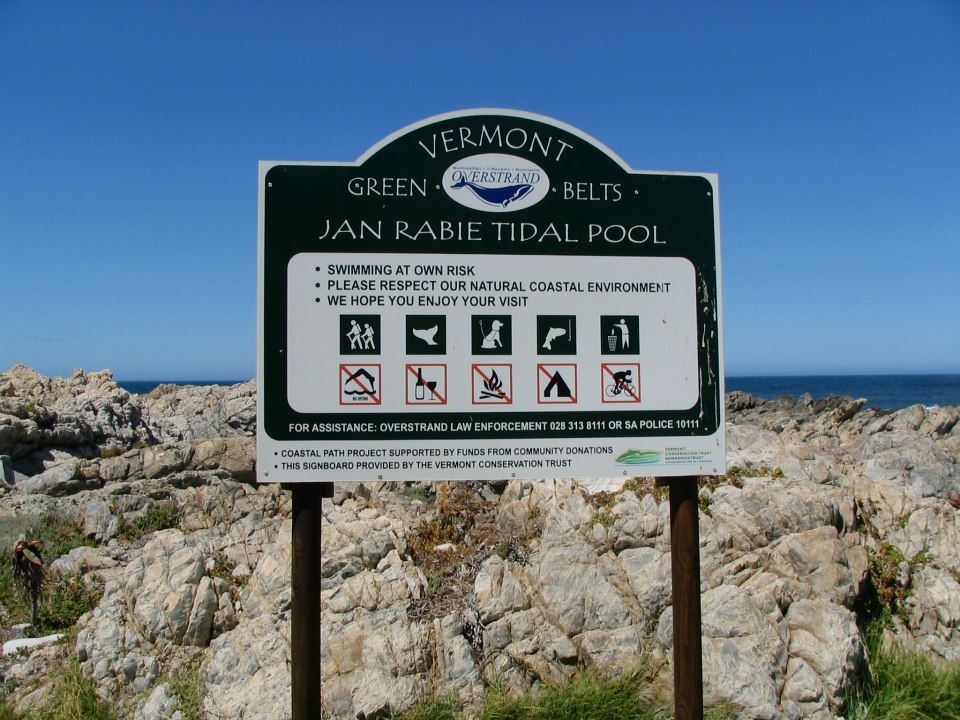
Onrusrivier offers two tidal pools. The first one was named after the author Jan Rabie, who was an Afrikaans writer of short stories, novels and other literary works. The Jan Rabie Tidal Pool is a small, scenic pool on the coastal path between Onrus and Vermont. It is great for swimming or just enjoying the sunsets, though during high tide, care should be taken as the waves crash into the pool.
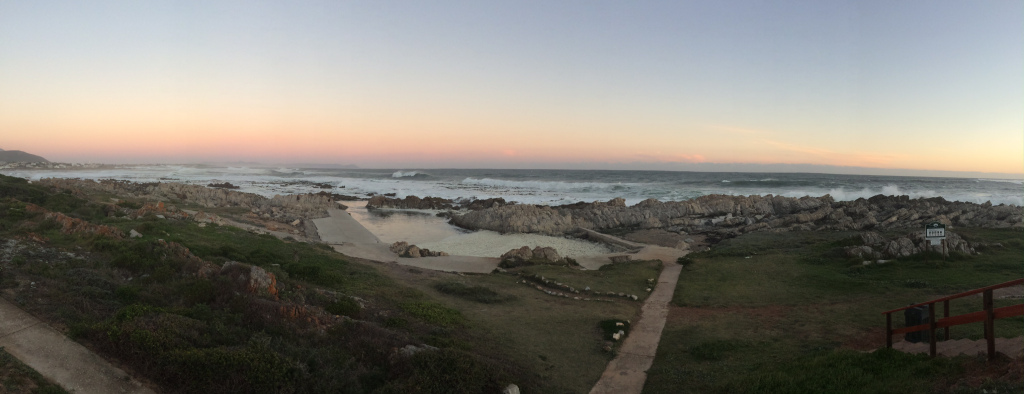
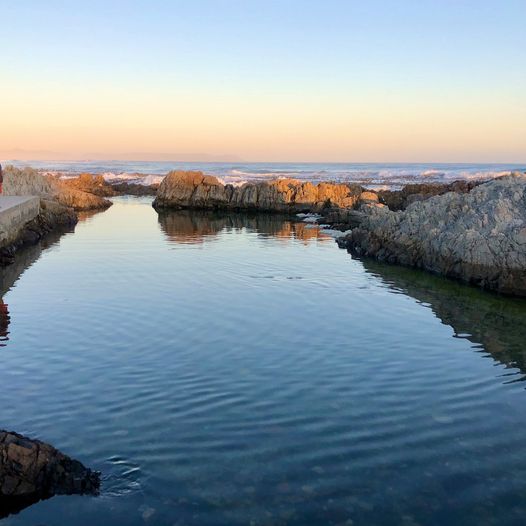
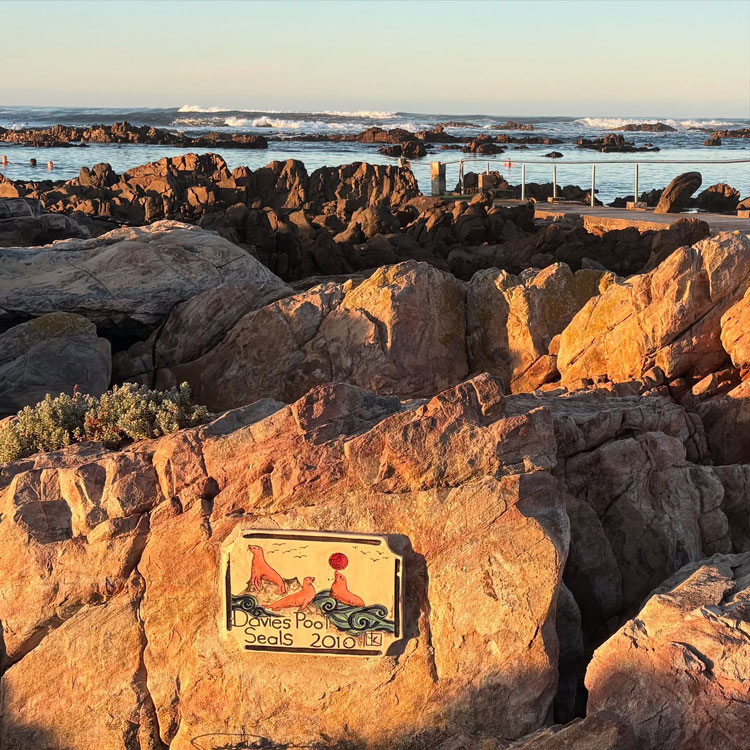
Just a short walk along the same path lies Davies Pool, right in front of the Onrus Caravan Park, constructed by Mr David Jonathan Davies. It was also locally known as "Mermaid's Pool".
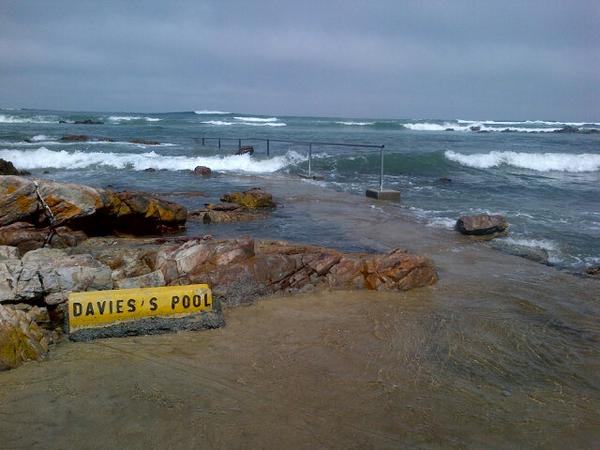
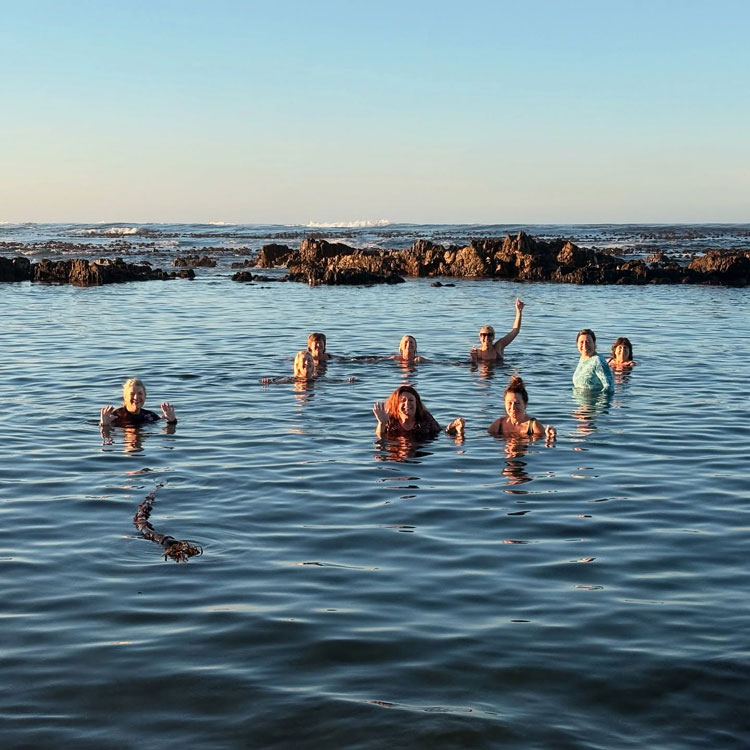
Davies Pool Onrus. It’s a tidal pool, a spa, a meeting place, time-out setting, coffee stop, outdoor gym, dog walkers gathering spot, sit and stare location - it's the heart of the Onrus community
Author: Seeff Hermanus, 24 May 2021, Area Focus
Built around 1933, the pool is ocean-fed by waves crashing over a concrete wall, keeping the water fresh and clean. It features a sandy bottom and is sheltered from the wind by high rock faces.
Today, Ficks is made up of a series of wooden decks that hug the cliff contours. There, broad umbrellas have been set up to provide shade for guests. The view is of shy resident dassies on the surrounding rocks, pods of dolphins beyond the tidal pool wall, or yachts in full sail tacking to the direction of the wind.
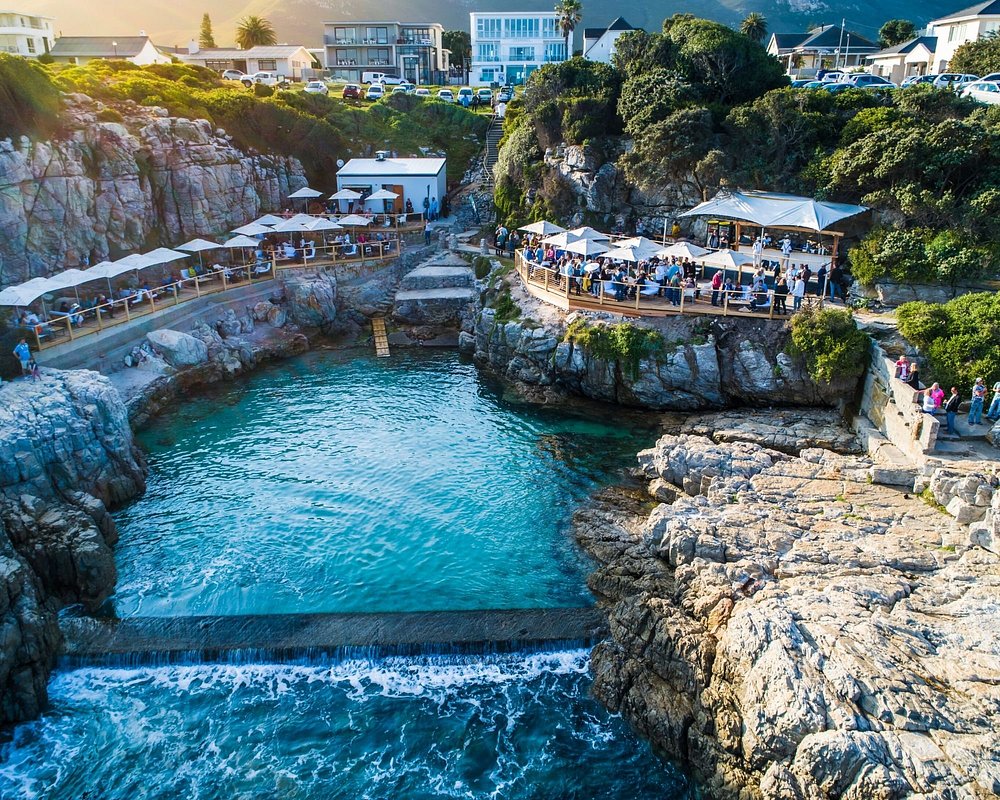
Fick’s Pool is situated below Marine Drive, where the formal houses on the seaside of the road come to an end. Look out for a tarred parking area next to a substantial thatched residence. At this point the ground drops away quite sharply towards the ocean, and Fick’s Pool comprises a narrow inlet from the open sea to a sheltered cove. This is one of the oldest parts of Hermanus. In 1854, while Hermanuspietersfontein was still the official name of the area and the first settler families had not yet left Herries Bay, the first twelve sites for houses were put up for sale by the Municipality just above Fick’s Pool at £1. 4 shillings each.
In the early 1930s a concrete wall was built across the opening of the cove, creating a tidal swimming pool. Waves break with considerable force into the pool and scour out sand and water that has stood for too long. As a result, swimming in the pool is a very refreshing experience. At present it is seriously under-utilised.
Who was Mr Fick?
There are two different explanations of how Fick’s Pool came into existence and who it was named after. Some accounts attribute it to Mr J J Fick, who was the principal of the only government school in Hermanus during the 1920s and early 1930s. Known as the ‘Klipskool’, it was situated at the foot of Klipkop, which we now call Hoy’s Koppie. Mr J J Fick lived in a house on one of the sites above the inlet, then named the ‘gat’.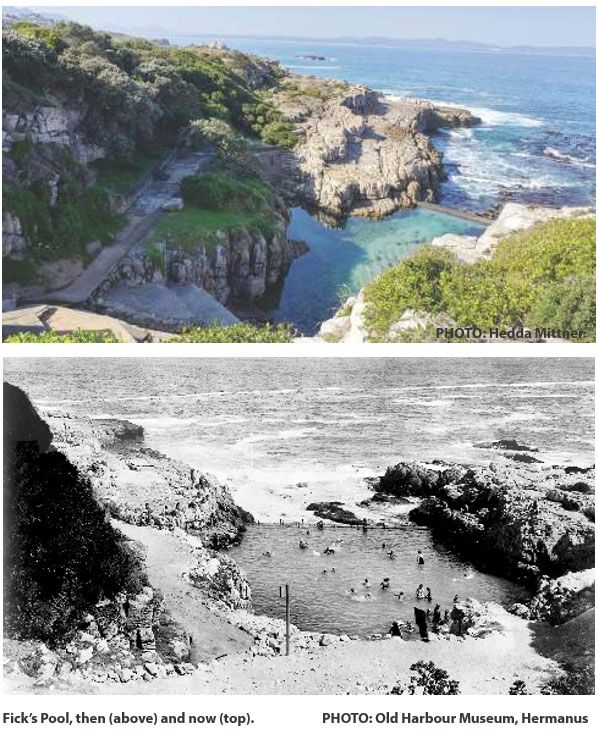
It was the time of the Great Depression, and times were tough economically. There was little money available to provide entertainment for pupils during weekends and holidays. Children from families living in Mossel River and Voëlklip had access to several beaches (Langbaai, Voelklip, Kammabaai and Grotto) and could entertain themselves. But there was not much to do in the town itself, except hanging around the Old Harbour, then known as ‘Visbaai’, watching the fishermen and getting into bad habits.
We know that the Oblowitz family, which owned a prosperous general dealers store at the corner of Main and Harbour Roads, actually sold up and returned to Cape Town because their only son, Sidney, could not be prevented from playing truant and hanging around with suspect companions at Visbaai. Sidney reveals this himself in a remarkable set of television interviews he gave at the age of 95 in 2010.
Mr Fick petitioned the Council to create a swimming pool in front of his house. This involved considerable blasting of the rocky cliffs and the removal of a large pointed rock that would have been in the middle of the pool. Then the concrete wall was built and, a little later, basic wooden changing facilities were added. These were painted white and were erected on the north side of the pool. They can be seen in old photographs and were attractive in themselves, unlike the unattractive face-brick building to be seen there now.
It seemed a good thing to name the pool after the man who had motivated its construction and so ‘Fick’s Pool’ came into existence, probably in 1933. It was an immediate hit with schoolchildren.
The other Mr Fick
The second explanation is more prosaic, but it contains more verifiable data. Another family with the name of Fick had been living in the Caledon area since at least the 1870s, according to Mr ‘Lampie’ Fick, the present owner of the farm Weltevreden and former Cabinet Minister. Documents exist proving that his ancestor Josias Servaas Fick served as Field Cornet for the Caledon ward from 1870 to 1885.
There is further documentary evidence that on 16 August 1889, an erf (plot) in Hermanus, adjacent to the twelve previously sold, was granted on a quitrent basis to the same Josias Fick. The erf extended from the northern end the pool, across Marine Drive (which had not yet been built) and all the way to Church Street, enabling the family to keep chickens, a cow and sheep. Josias Servaas Fick began to spend more time at this holiday home and got into the habit of going for a morning swim each day. He apparently also successfully persuaded others to join him and soon people were referring to “Fick se Gat”. This was later changed to the socially more acceptable ‘Fick se Poel’ and then anglicised into “Fick’s Pool” .
The summer haunt of 1940s teenagers…
Either way, by the mid-1930s young people were enjoying themselves at Fick’s Pool, using the term of endearment “Fikkie’s Pool”. Numerous photographs show numbers of people using the facilities, but the best written description I can find refers to Fick’s Pool in the 1940s. It was written in 2003 by Una Graven, a grandchild of Christiaan Warrington, of the original settler families. It is part of a contribution she made to S J du Toit’s Hermanus Stories
When we were approaching our teenage years, Fikkie’s Pool was our summer haunt. The beaches of Voëlklip and the New Beach as we called the Grotto Beach then, were out of our reach as none of us had any means of transport… Fikkie’s Pool was where it all happened – splashing in the tidal pool, being frightened when the high tide swept over the retaining wall, clambering over the large rocks and spreading a towel on the warm stone to lie for hours with the glow of the sun on your back. It was giggling, gossiping and taking shy peeks at the opposite sex. It was showing off and innocent flirting with the exciting uncertainties of romance. It was where the boys challenged each other to what seemed to us then, death-defying dives from the top of the cliff just outside the sea wall of the pool… Fikkie’s Pool was an idyll.
…And the site of tragedy
Another story linked to Fick’s Pool is tragic and concerns the death of a member of the same original settler family, the Warringtons. On a New Year’s Day in the late 1920s, Joe Warrington persuaded Skipper van Dyk, Tommy Montgomery and a couple of other men to go after a school of sardines just off Fick’s Pool. Unfortunately, a whale became interested in the boat and eventually capsized it. Arderne Tredgold describes the resultant events in this way:
Joe Warrington was fishing, as the custom was, with his lines tied to his big toes. He was thrown out of the boat, the lines must have twisted round his feet so that he could not swim, and he was drowned. The others managed to cling to the boat. They were not very far from the shore, but it would have been dangerous to swim to the rocks (around Fick’s Pool) with the waves breaking over them. They shouted for help but most of the village was resting after New Year’s celebrations and one or two who did hear them thought that someone was playing a New Year's joke.
The men were eventually rescued, but Joe Warrington’s body washed up some days later near the harbour. His feet had been severed by his lines.
General Jan Smuts
Fick’s Pool has yet another claim to fame. It was used frequently by General Jan Smuts. Smuts often visited Hermanus, staying in The Sanatorium, his sister being married to the owner and medical practitioner, Dr Joshua Hoffmann. Smuts started his daily routine with a swim in Fick’s Pool, followed by breakfast, working during the morning, rest in the early afternoon and then a brisk walk to the top of the mountain behind Northcliff before dinner.
For a relatively obscure site Fick’s Pool has a lot of history attached to it. There is no doubt that it deserves to be more widely known and appreciated in Hermanus.
Date: 02 July 2017
The tidal pool is situated at the foot of the cliffs in Central Hermanus, right in front of the hotel.
The hotel was originally established as the Golfers Hotel in 1897, before being renamed the Strand Hotel and eventually becoming The Marine Hotel in 1913. The primary structure, recognised as the historic landmark today, was completed in 1902. Today the Marine in Hermanus is a member of Small Luxury Hotels of the World (SLH). It is one of only a few hotels in South Africa to hold this prestigious endorsement,
The Hermanus Cliff Path is a world-renowned coastal walking trail in the Western Cape, South Africa. It is primarily famous for offering some of the best land-based whale watching in the world, particularly for observing Southern Right Whales during their migration from June to November. he path stretches approximately 11 to 12 kilometres (6.8–7.5 miles) one-way. It meanders along the rugged coastline from the New Harbour in the west to Grotto Beach and the Piet-se-Bos milkwood forest in the east.

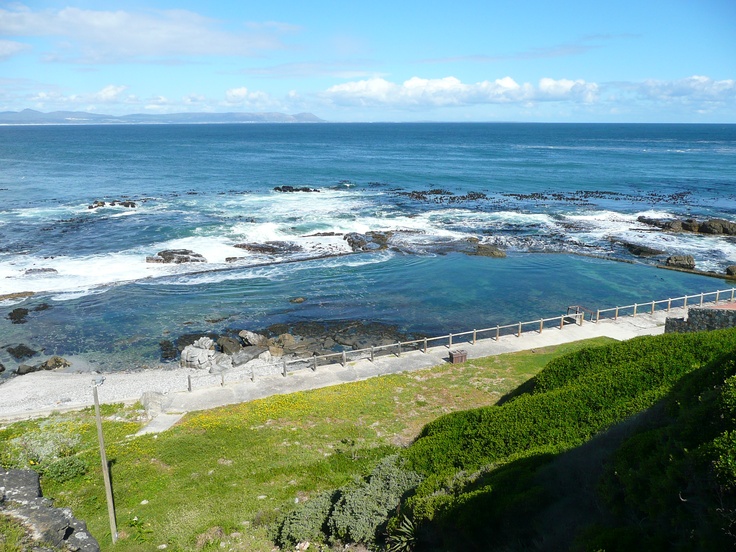
Gansbaai Tidal Pool can be found along the gravel road that is part of the Perlemoen Hiking Trail, which runs parallel to Kusweg in Gansbaai. The large tidal pool has been a popular gathering spot for generations of revellers who enjoy swimming, diving, braaing and late-night shenanigans. The Gansbaai Tidal Pool comprises one large pool that varies in-depth, depending on the tide, and a shallow freshwater kiddies pool which is filled with spring water that flows down from an underwater spring.
Gansbaai is known for its dense population of great white sharks and as a whale-watching location. It is also famous for being the site where the HMS Birkenhead sank in 1852.
The troopship HMS Birkenhead was wrecked off Danger Point in 1852. A barely visible rock 2 kilometres (1.2 mi) from Danger Point (now aptly called "Birkenhead Rock") was fatal for the troopship carrying young Welsh, Scottish and English soldiers and their officers and family on their way to Eastern Cape to fight the Xhosa. The Birkenhead became famous because it was the first shipwreck where the "women and children first" protocol was applied. All women and children were saved but 445 of the men, mostly soldiers, perished.
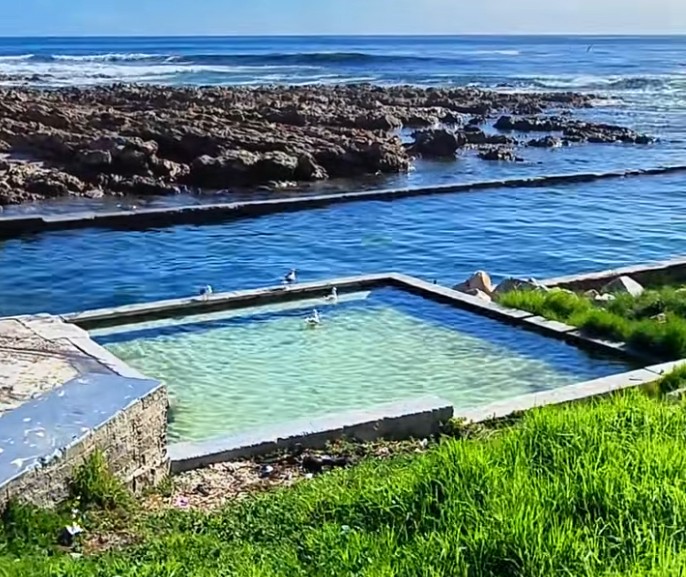
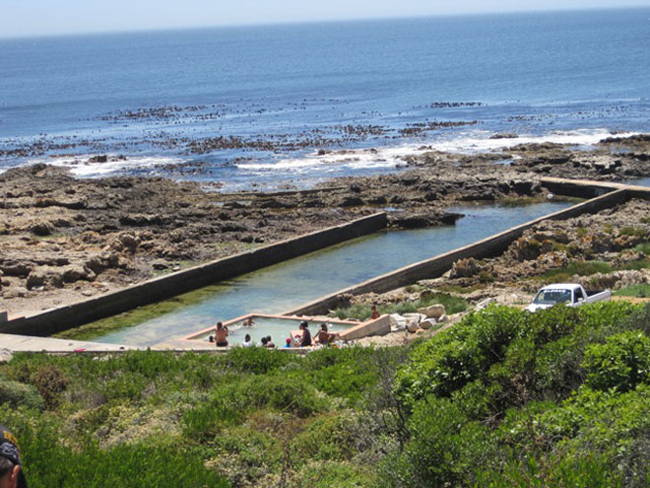
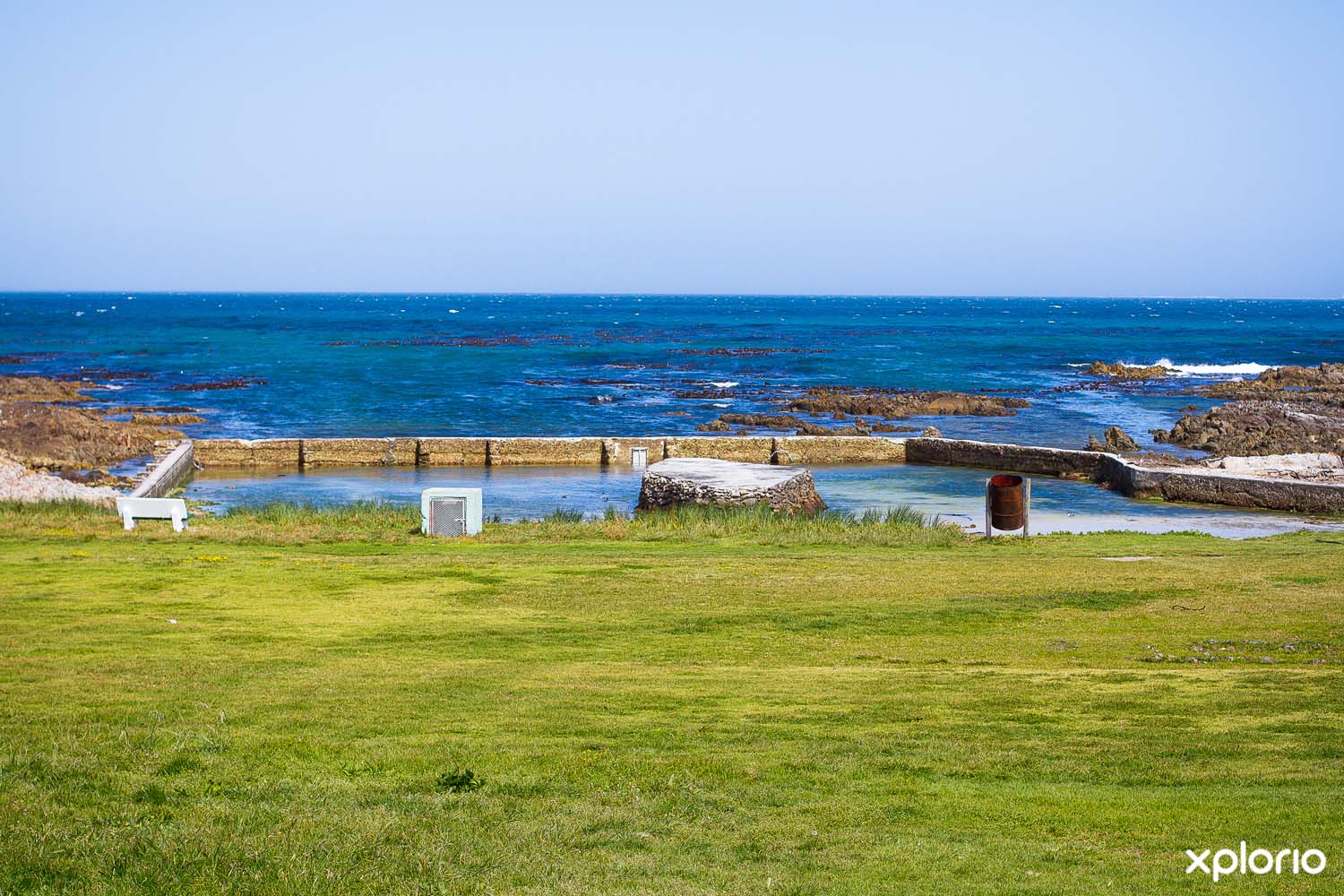
A large, well-kept lawn at the Kleinbaai Tidal Pool is ideal for picnics or lazy days reading your favourite book. The grassy alcove has a few outdoor gym equipment machines as well as a jungle gym for the little ones.
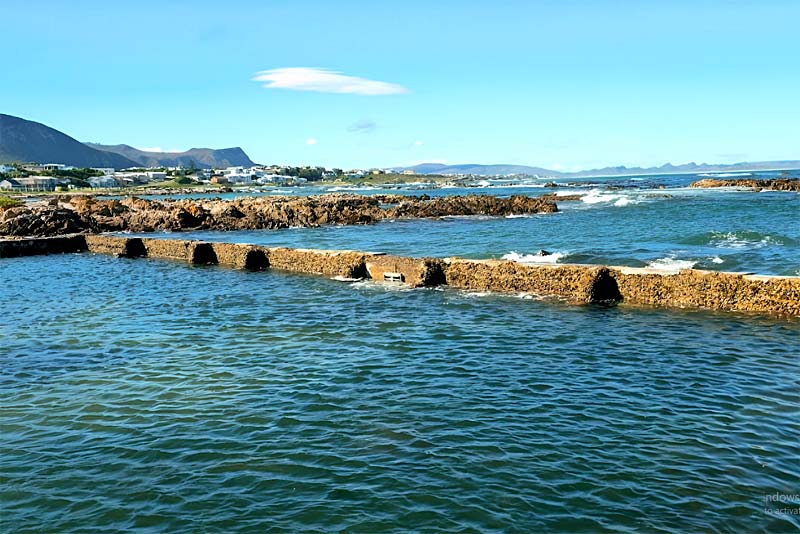
Cape Agulhas is the southernmost point of the African continent, where the town of L'Agulhas is located. Here, the waters of the southward-flowing warm Agulhas Current meets the northward flowing cold Benguela Current. Cape Agulhas has a gradually curving coastline with rocky and sandy beaches. The waters of the Agulhas Bank off the coast are relatively shallow and are renowned as one of the best fishing grounds in South Africa, which has attracted sports fishermen and led to the founding of the town of Struisbaai, which is 4km east of L'Agulhas.
The name "Agulhas" has a rich maritime history, originating from the Portuguese word "Agulha," meaning "needle." This name was bestowed by Portuguese explorers in the 15th century, who observed that around the Cape, the magnetic declination (the difference between magnetic north and true north) was zero. In other words, the compass needle pointed directly to true north, unlike in Europe where there was a noticeable difference.
To the sailors of old, it was a treacherous headland which saw the wrecking of numerous ships. The sea off Cape Agulhas is notorious for winter storms and mammoth rogue waves, which can range up to 30 metres (100 ft) high and can sink even large ships. The Cape has seen many shipwrecks since the first East Indiaman sank there in 1682. Situated at the southernmost tip of Africa, the Cape Agulhas lighthouse (built in 1849) is South Africa's second-oldest working lighthouse.
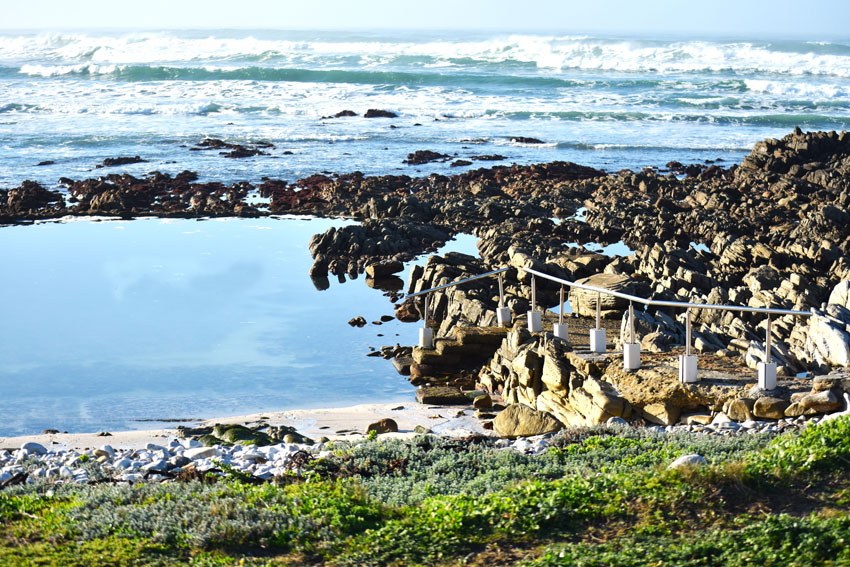
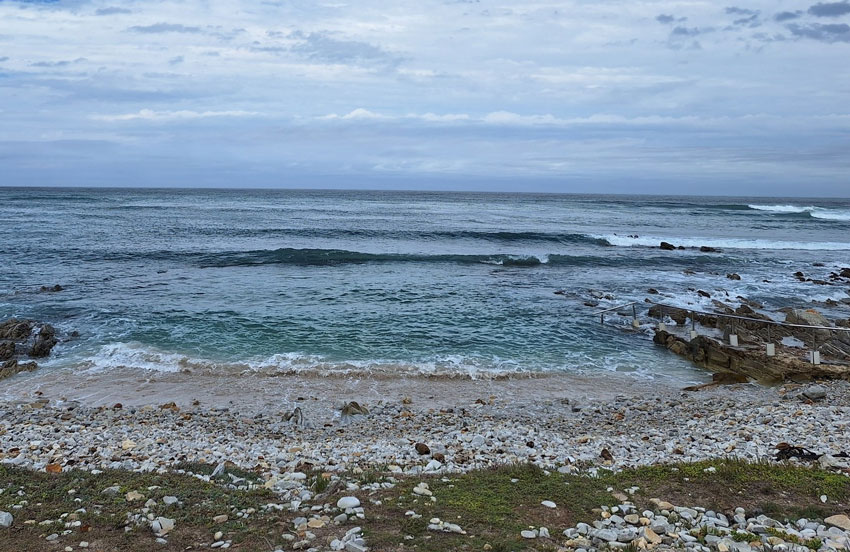
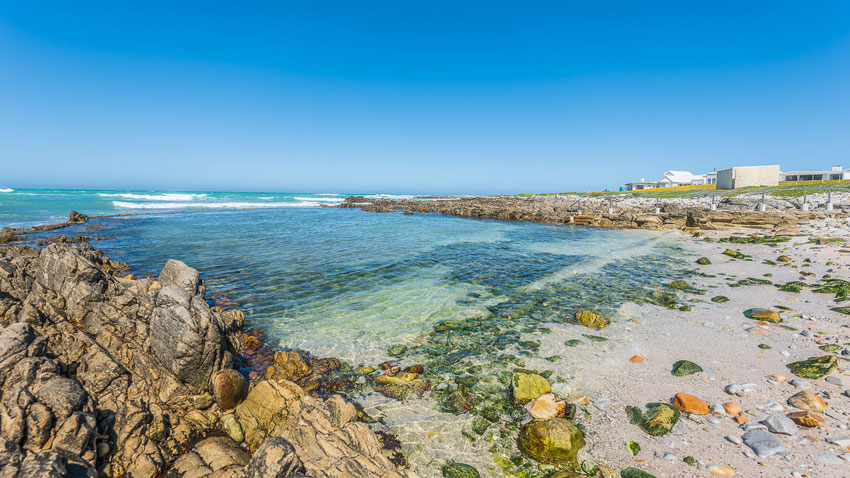
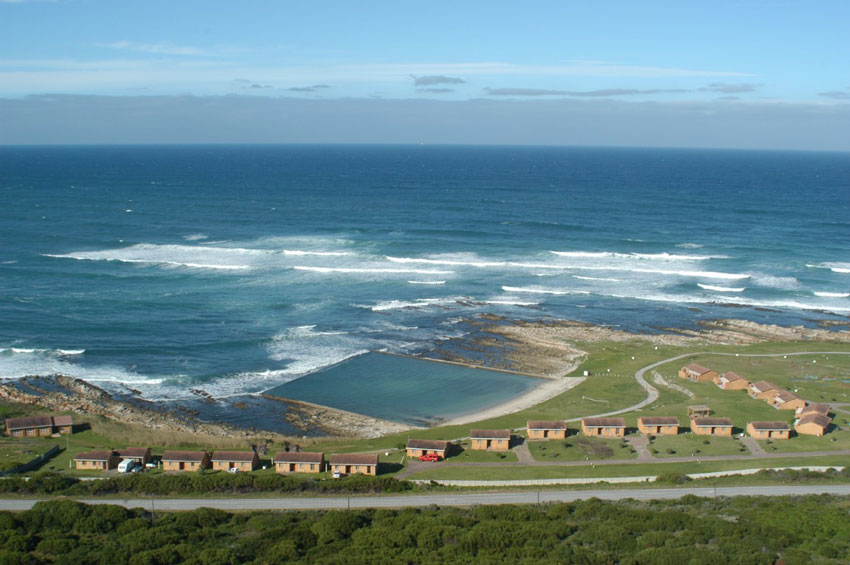
L'Agulhas and its close neighbour Struisbaai developed after 1950. Struisbaai attracted the fishermen who launched boats from the harbour built in 1959. Before 1950, the only buildings were a boarding house and a small shop. Holiday homes were only built after 1950. The rocky coast at L'Agulhas led to the creation tidal pools, while Struisbaai is at the start of a 14km long sandy beach and has no tidal pools.
There is a natural tidal pool, known as the lagoon, situated in the National Park west of the Cape.
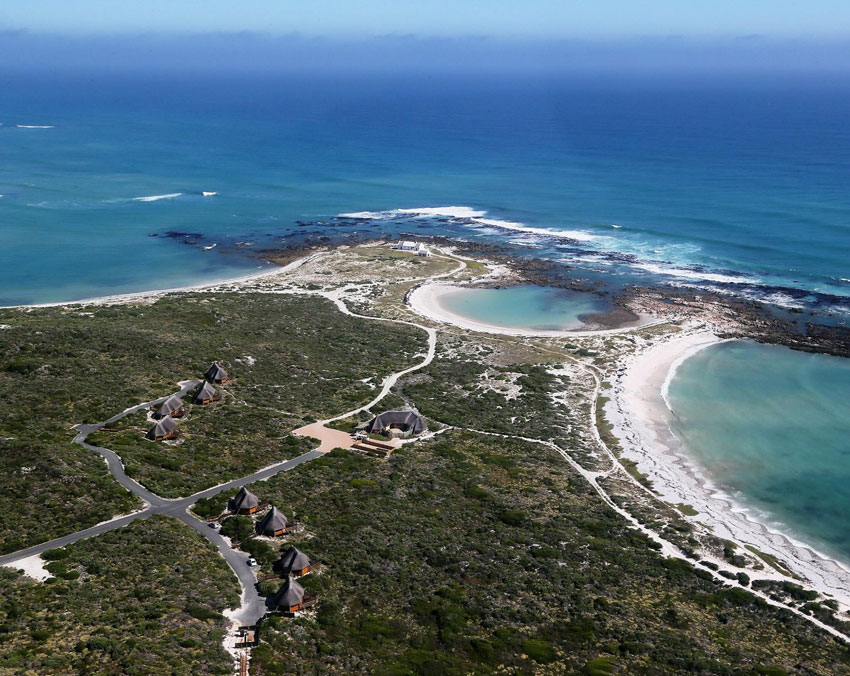
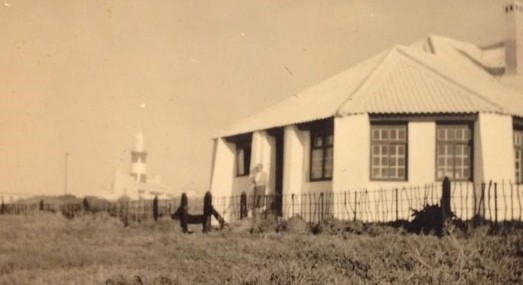
Southermost, (and no, it's not a spelling mistake), the first house in the village of L’Agulhas, is closest to the lighthouse. The southernmost private home on the continent of Africa was built in 1929 by Michiel van Breda as a family beach home. Today, it is a B+B venue. Originally, all the houses in L’Agulhas, when the village was established, were supposed to have been built according to the Southermost’s architectural style.
Michiel van Breda, the first Mayor of Cape Town, who was also known as the father of South Africa's merino sheep industry, owned the historic farm Zoetendals Vallei, which is still in the family today. In 1838, Michiel van Breda, founded the town of Bredasdorp. In 1848, when the urgent need for a lighthouse at Cape Agulhas arose, Michiel generously made available a portion of the family estate for this purpose.
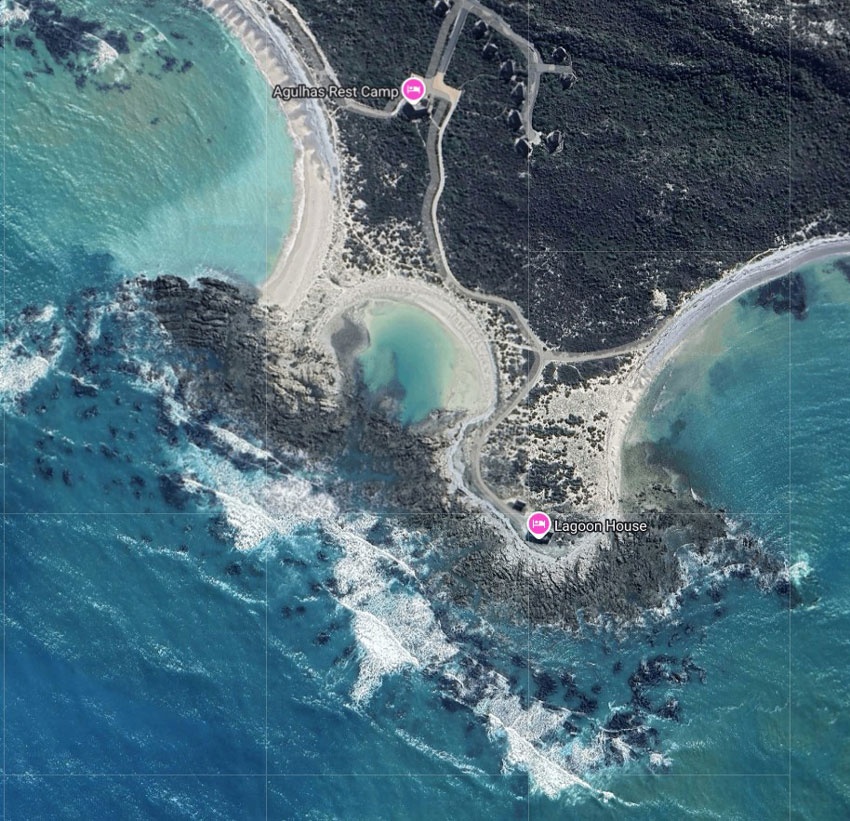
The town of L'Agulhas has two tidal pools, used by the local school for official swimming activities.
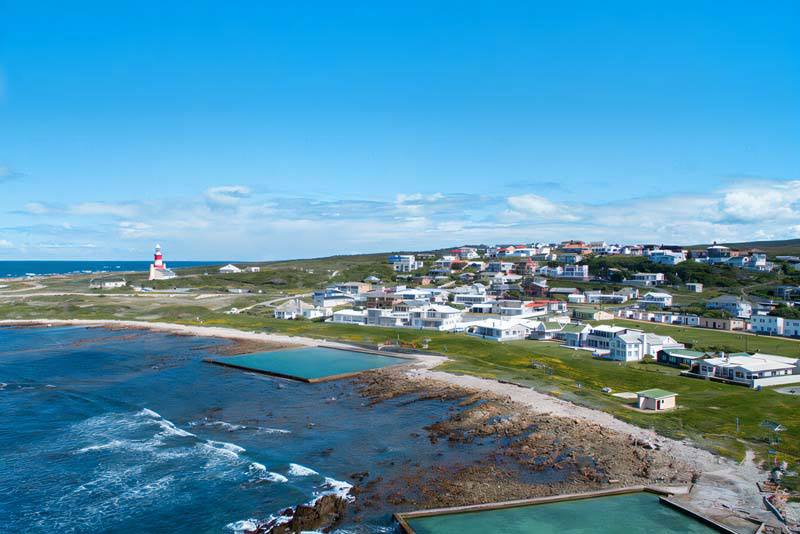
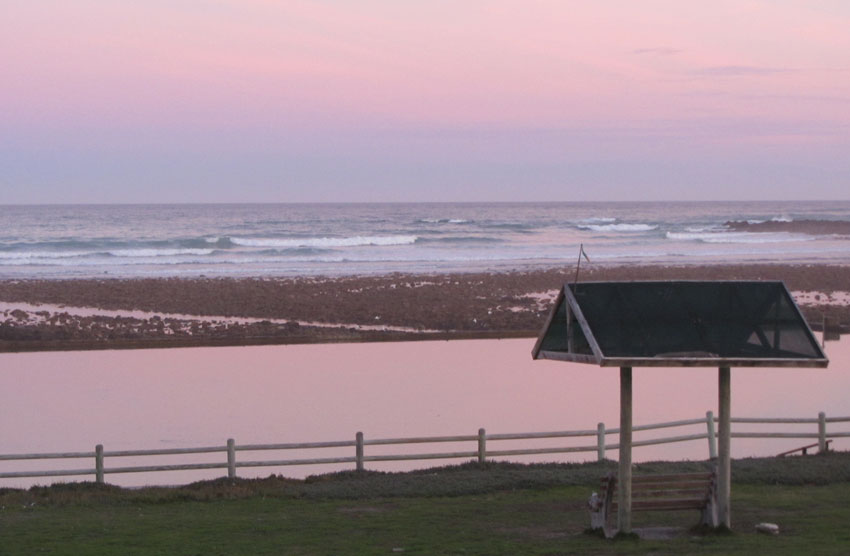
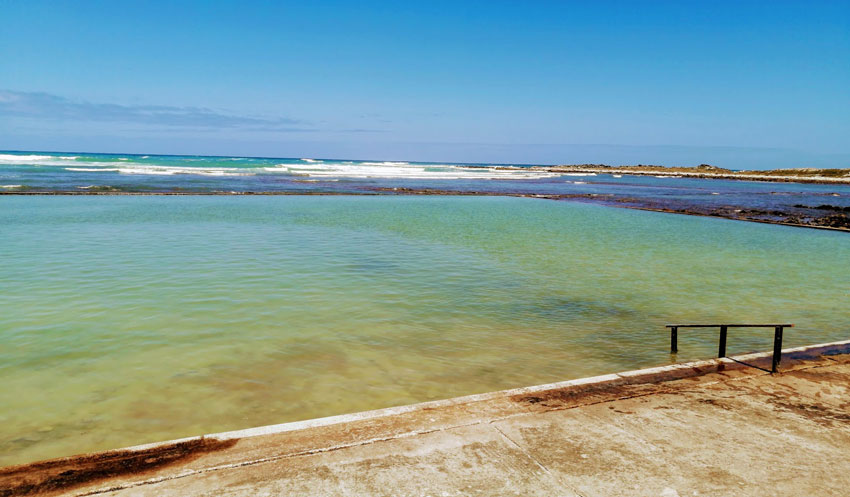
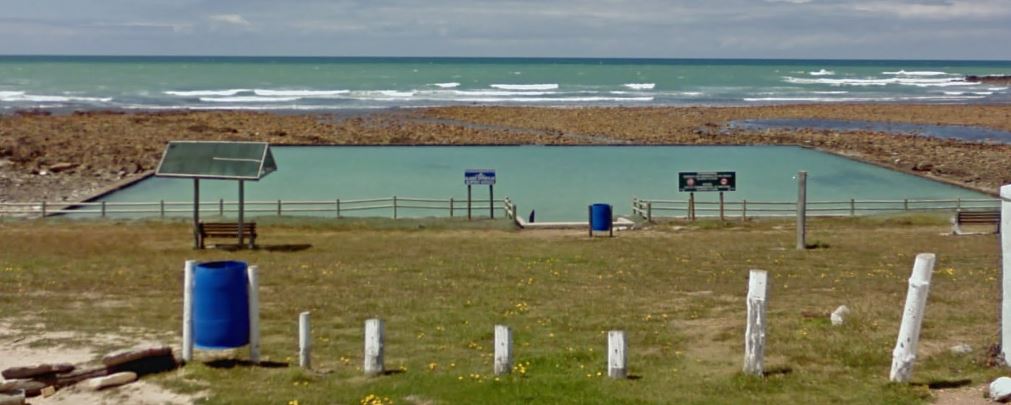
Swimming and triathlon races in the local tidal pool. Each year, the school hosts triathlons, which involve our learners swimming in the local tidal pool, a bicycle ride through a marked course along the roads running parallel to the ocean, as well as a run along the beachfront. There are usually 2 events, the first being in-house, and the second being an inter-school event.
Read more about the school →
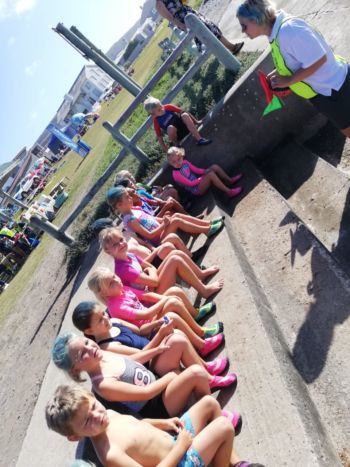
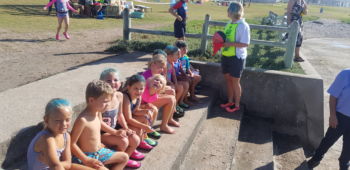
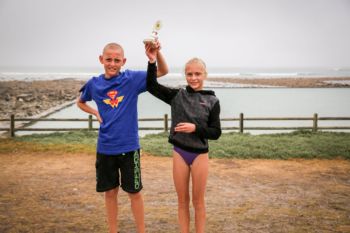
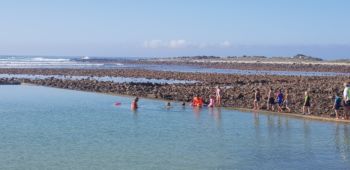
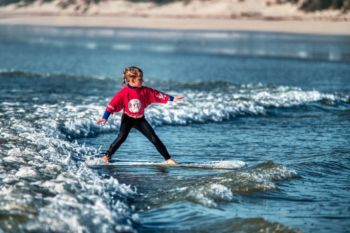
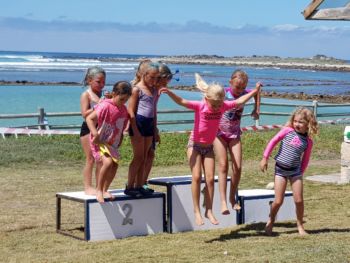
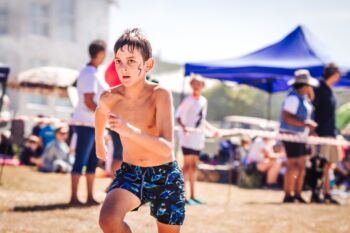
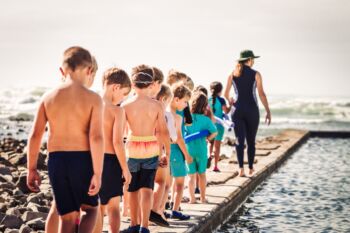
The pool was originally known as Wiener’s Pool, built before the Second World War (1939–1945) by a Mr Wiener, who is also credited with building "Shalom," the first house in the St Mungo's Point area of L'Agulhas. It earned the name "Soldatepoel" (Soldiers' Pool in Afrikaans) because soldiers and radar operators stationed at the nearby "Mount Pleasant" camp frequently visited the pool during WWII.
Click here to read more about the JB radar system developed in South Africa, under Professor Basil Schonland at Wits, and used in coastal installations during the war to detect German shipping. Many of the soldiers in the Special Signal Services Corps were women.
Further east, at the Hotel Minhetti outside Port Elizabeth, there was a tidal pool that was used by soldiers during the war.